



 Laily UPN
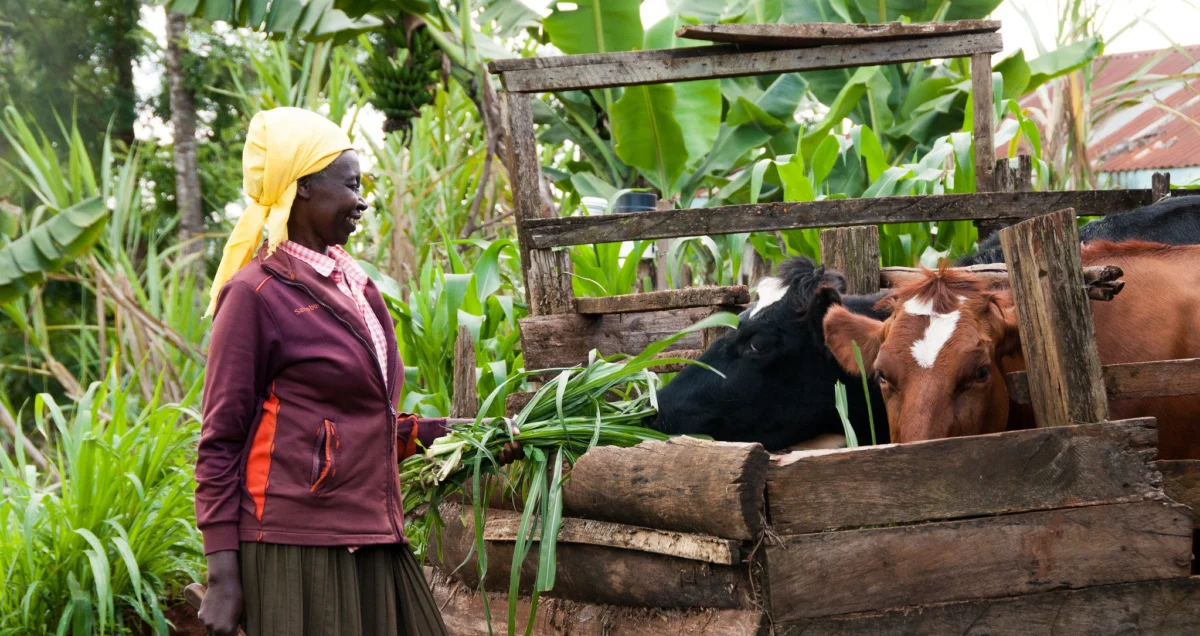
For millions across the Horn of Africa, the drylands are not merely a geographical designation; they are a theater of survival. When drought strikes, the impact transcends simple crop failure or economic loss. It represents a systemic collapse of identity, food security, and social cohesion. For the pastoralist, a herd is a living bank account, a source of nutrition, and a cultural bedrock. When climate shocks decimate these assets, they don’t just take away wealth—they take away the future.
This reality has served as the catalyst for a paradigm shift in how global development institutions approach agricultural finance. The core question is no longer just how to increase yields, but how to shield the vulnerable from the inevitable, catastrophic shocks of a changing climate.
The Genesis of Innovation: A Chronology of Risk-Informed Finance
The journey toward modern agricultural resilience began in the early 2000s, rooted in the harsh, arid landscapes where traditional aid models were proving insufficient.
- The Pre-Insurance Era (Pre-2005): Development efforts focused primarily on reactive measures—emergency food aid and post-disaster relief. These methods were inherently flawed, as they arrived only after assets had been liquidated and lives had been upended.
- The Pilot Phase (2006–2010): Researchers began exploring index-based livestock insurance (IBLI). Unlike traditional indemnity insurance, which requires costly and slow on-the-ground damage assessments, IBLI used satellite-based remote sensing to track forage conditions.
- The Scaling Milestone (2016): The success of these initiatives culminated in international recognition, including the Norman Borlaug Award for Field Research and Application. This marked a shift from academic curiosity to a proven tool for market-based development.
- The Institutional Integration (2018–Present): Today, the focus has moved beyond isolated insurance products to the systemic integration of "risk-informed finance" within major multilateral institutions, including the African Development Bank (AfDB).
The Vicious Cycle: Why Agriculture Remains Under-Capitalized
To understand the current state of agricultural finance, one must confront the "risk-cycle" that plagues the sector. The perception of agriculture as an inherently dangerous investment has become a self-fulfilling prophecy.
Because rural production is viewed as high-risk, commercial finance remains prohibitively expensive or entirely absent. Lenders, wary of climate volatility, impose high interest rates or demand collateral that smallholder farmers simply do not possess. Consequently, these producers under-invest in quality seeds, fertilizers, or mechanized equipment.
The result is low productivity, which in turn reinforces the lender’s belief that the sector is a poor investment. This cycle effectively chokes off the capital necessary to innovate, leaving millions of farmers trapped in a state of subsistence, highly vulnerable to the slightest shifts in rainfall or market prices.
Data-Driven Resilience: The Mechanics of Change
The core of this transformation lies in the marriage of disparate industries: the insurance sector, with its expertise in risk-pooling, and the financial sector, with its ability to allocate capital.
Bridging the Gap
Modern risk-management systems utilize advanced geospatial data and digital infrastructure to provide a safety net that is both transparent and timely. By identifying drought-related forage loss through satellite imagery, insurance triggers can be automated. This allows for payouts to occur before a farmer is forced to sell their remaining livestock to survive—a "pre-emptive" strike against poverty that preserves the household’s productive capacity.
The Role of Blended Finance
Public resources are currently being recalibrated to act as a "catalyst." In the past, government or donor funds were often spent on stop-gap measures. Today, the strategy is to use public capital to "de-risk" investment for the private sector. By offering guarantees or concessional financing, institutions can make it safer for commercial banks to lend to agri-SMEs and rural cooperatives. This shift turns a singular grant into a multiplier for private investment.
Expert Perspectives: A New Mandate for Growth
"The goal is not simply to finance agriculture," notes the current leadership within the African Development Bank’s agricultural departments. "The goal is to change the very conditions under which agriculture is financed."
According to financial analysts in the development space, the current mandate is clear: build systems that endure. A project that relies solely on external funding is fragile; a system that integrates insurance, credit, and local policy into a cohesive ecosystem is resilient.
- Policy Implications: Governments must shift from being the primary provider of relief to being the primary architect of a regulatory environment that encourages risk-sharing.
- Institutional Responses: Leading insurance firms are now looking at "parametric" insurance, which pays out based on an index rather than a claim, effectively removing the administrative bottleneck that once kept rural farmers from participating in formal financial markets.
The Implications: A Future Built on Protection
The implications of this transition are profound. If risk is properly understood, priced, and shared, the agricultural landscape of the African continent could see a surge in productivity and stability.
- Increased Private Investment: As de-risking mechanisms become more standardized, institutional investors—who have historically avoided agriculture—will find more entry points into the sector.
- Climate Adaptation: By embedding risk management into the financial architecture, farmers gain the confidence to invest in climate-smart technologies, knowing that a single bad season won’t result in total ruin.
- Inclusive Growth: Empowering agri-SMEs and cooperatives ensures that the wealth generated by agricultural growth stays within the communities that produce the food.
Conclusion: The Path Ahead
Africa’s agricultural future is inextricably linked to its ability to handle risk. We are entering an era where success will not be measured by the volume of aid delivered, but by the robustness of the financial systems that allow farmers to thrive independently of emergency interventions.
Innovation matters most when it reaches the people who need it most, at the time they need it most, and through channels that empower rather than dependent. By turning risk from an insurmountable barrier into a managed variable, we can build a food system that is truly inclusive, resilient, and ready to meet the challenges of the 21st century.
The lesson from the drylands remains as relevant as ever: we must stop asking farmers to carry the weight of climate and financial volatility alone. By financing smarter and protecting better, we ensure that those who feed the continent have the stability to grow alongside it.
Learn More
For further insights into the mechanics of risk management and the evolving landscape of agricultural finance, explore the resources provided by the Farming First experts.
Banner image courtesy of CIAT/Flickr.


 Evan Lee Salim

 Asep Darmawan





