


 Nana Muazin
Introduction: A Facade of Reform
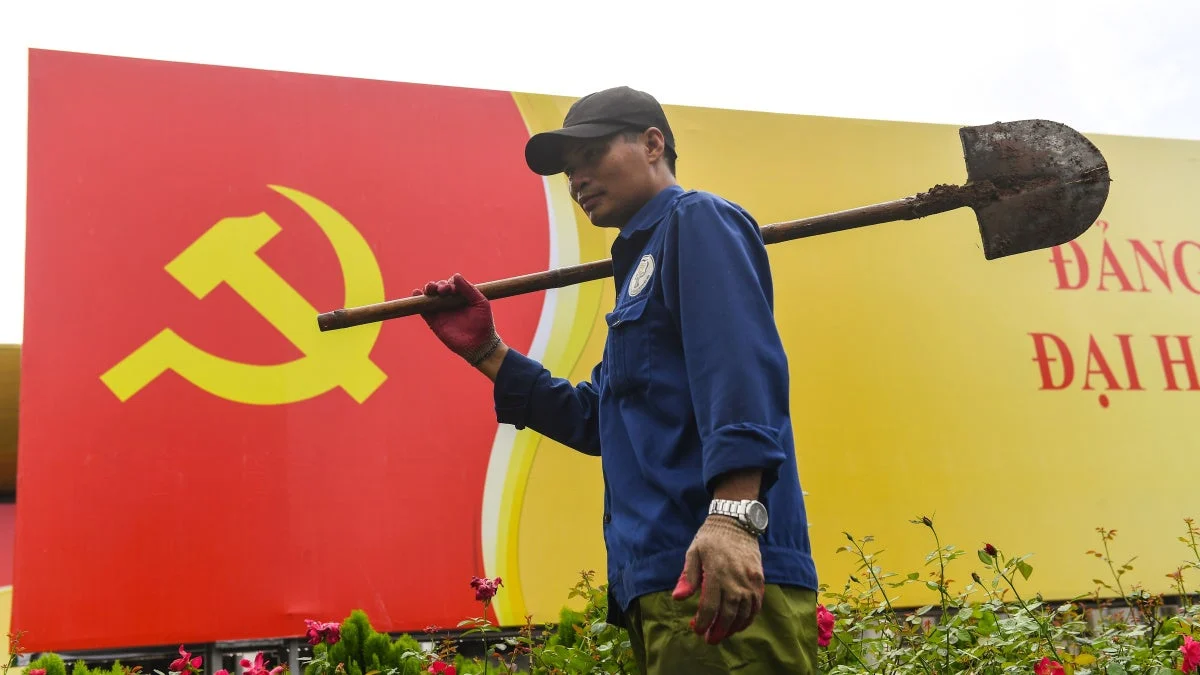
In the global race for manufacturing dominance, Vietnam has positioned itself as a premier destination for international investment, bolstered by a network of ambitious free trade agreements (FTAs). Yet, behind the country’s burgeoning export economy lies a stark, coercive reality for the millions of people who power its factories. According to a comprehensive new report by Human Rights Watch (HRW) titled "There Are No Independent Trade Unions in Vietnam: Hanoi’s Continuing Assault on Workers’ Right to Organize," the Vietnamese government is engaged in a systematic and calculated campaign to suppress the emergence of independent labor movements.
Despite high-profile pledges made to trading partners across the European Union, the United Kingdom, and the CPTPP member nations, Hanoi has failed to translate legislative promises into meaningful practice. Instead, the government has maintained a rigid, state-controlled labor structure that acts as a gatekeeper against worker autonomy, ensuring that the Communist Party of Vietnam (CPV) remains the sole arbiter of labor relations.
Main Facts: The Illusion of Representation
At the heart of the labor dispute is the Vietnam General Confederation of Labor (VGCL). While the government presents the VGCL as a representative body, it is, in effect, a state-mandated appendage of the ruling party. Under current Vietnamese law, the VGCL and its sub-units operate under the direct oversight of the Communist Party. Party officials hand-pick leadership at every administrative level, and the organization is funded by mandatory fees levied against both employers and workers.
HRW’s 49-page investigation confirms that this structure is fundamentally incompatible with international labor standards. Because the VGCL is an extension of the state, it possesses no mandate to challenge the status quo. It has never organized a strike or challenged corporate interests in a way that risks upsetting the political order. As one exiled labor organizer noted, "A union has to have its own freedom… But the party remains the leadership of all things in Vietnam."
The report highlights that even when the government ostensibly opened the door for "worker organizations" in 2021—a move designed to satisfy the terms of international trade agreements—it simultaneously failed to establish any regulatory framework to facilitate their creation. Consequently, the legal path for independent organizing remains effectively blocked.
Chronology: A History of Broken Pledges
The discrepancy between Vietnam’s international commitments and its domestic actions has been a point of contention for nearly a decade.
- 2019: Vietnam signs the Comprehensive and Progressive Agreement for Trans-Pacific Partnership (CPTPP), which includes explicit clauses requiring signatories to adhere to fundamental labor rights, including the right to form independent unions.
- 2020: The European Union-Vietnam Free Trade Agreement (EVFTA) is finalized. The EU, seeking to promote human rights through economic leverage, places significant weight on Vietnam’s commitment to labor reform.
- 2021: Under intense international pressure, Vietnam implements legislative changes that theoretically authorize the formation of independent worker organizations. However, the government fails to issue the necessary decrees to operationalize these laws.
- 2025–2026: Repression of civil society intensifies. Authorities jail over 50 dissidents in a two-year span, signaling a hardening stance against any form of independent organization, including those focused on labor.
- October 2026: Human Rights Watch releases its report, providing empirical evidence that despite years of trade-related concessions, the landscape for labor rights in Vietnam has not only failed to improve but has, in many sectors, grown more hostile.
Supporting Data: The Cost of Dissent
The HRW report is based on extensive interviews with more than 30 stakeholders, including workers, legal experts, and human rights defenders. The data gathered paints a grim picture of state-led intimidation.
The Weaponization of the Penal Code
The government’s primary tool for suppressing labor rights is not just policy, but the creative and overbroad application of criminal law. Vague statutes regarding "national security" are frequently invoked to charge anyone attempting to organize workers outside the state-approved framework. These individuals are often branded as "reactionary," "subversive," or "anti-state."
Detentions and Silencing
The atmosphere of fear is bolstered by the state’s track record of detention. Vietnam consistently holds between 150 and 180 political prisoners at any given time. This list includes not only journalists and bloggers but also activists who have dared to advocate for workers’ rights. In a move that highlights the regime’s internal paranoia, the government has even targeted its own officials who were previously involved in negotiating labor rights provisions with the European Union, demonstrating that even moderate reformism is viewed as a threat.
State Media Narratives
Government-controlled media outlets play a critical role in framing independent unions as existential threats to the state. Articles frequently warn of "sinister plots" designed to "sow social instability." By labeling independent organizers as agents of foreign interference, the state effectively justifies the use of police force and long-term imprisonment against activists.
Official Responses and Diplomatic Friction
The Vietnamese government’s official stance remains one of denial and deflection. When questioned by international bodies or trade partners, officials point to the existence of thousands of "grassroots trade unions" as evidence of a healthy labor environment.
However, John Sifton, Asia advocacy director at Human Rights Watch, argues that these claims are intentionally deceptive. "Officials in Hanoi have repeatedly made false, misleading, and deceptive claims about labor rights," Sifton stated. "In reality, the Vietnamese government remains deeply hostile to the very idea of independent trade unions, which is why none exist."
This friction has created a growing divide between Vietnam and its key economic partners. For years, many countries—eager to maintain supply chains—have accepted Hanoi’s promises of reform at face value. However, as the evidence of systemic repression mounts, the credibility of these trade agreements is increasingly being called into question.
Implications: The High Stakes of Inaction
The implications of this ongoing suppression extend far beyond the borders of Vietnam.
For the Vietnamese Worker
Without the right to form independent unions, the average worker in Vietnam is systematically disempowered. They lack the institutional support required to negotiate for better wages, safer working conditions, or meaningful redress for grievances. In a global economy where labor is often treated as a commodity, the lack of a collective voice leaves workers vulnerable to exploitation by both domestic and multinational corporations.
For International Trading Partners
The failure of Vietnam to honor its labor commitments poses a significant challenge to the efficacy of human rights clauses in modern trade deals. If the EU, the UK, and CPTPP nations continue to prioritize market access over the enforcement of agreed-upon rights, they risk legitimizing the suppression of labor movements globally.
As Sifton warned, "Vietnam’s trading partners need to face reality and make clear to the government that its broken pledges on labor rights carry consequences." The international community faces a pivotal choice: continue to provide the economic cover for a repressive regime, or demand that trade be contingent upon the fundamental dignity and rights of the workers who sustain it.
The Path Forward
To bridge this gap, Human Rights Watch recommends that Vietnam immediately ratify and enforce all relevant International Labour Organisation (ILO) treaties. This would include setting a clear, transparent timeline for the legalization and protection of independent unions.
Until such steps are taken, the "Vietnam model"—defined by high-speed growth and low-cost, state-controlled labor—will remain a testament to the fact that economic prosperity does not inherently lead to social or political freedom. For the workers of Vietnam, the fight for a seat at the table is not merely a struggle for better pay; it is a struggle for the basic right to organize, assemble, and exist outside the shadow of the state.

 Reynand Wu
 Layla Zulfa






