

 Suro Senen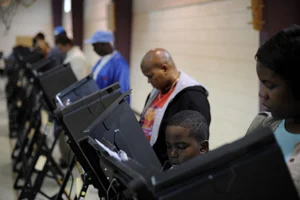
DEKALB, GEORGIA — A coalition of prominent civil rights organizations has launched a high-stakes legal intervention to prevent a mass purge of voter rolls in Georgia’s DeKalb County. The legal maneuver, filed in the DeKalb County Superior Court, aims to block a lawsuit initiated by the DeKalb County Republican Party and local activists that seeks to force the removal of over 5,000 voters just weeks before the November general election.
The coalition—comprising the Georgia State Conference of the NAACP, the New Georgia Project, the Georgia Coalition for the People’s Agenda, the A. Philip Randolph Institute, Common Cause Georgia, and the League of Women Voters of Georgia—contends that the proposed mass challenges are not only meritless but explicitly violate federal protections established to safeguard the integrity of the electoral process.
The Core Conflict: A Battle Over Federal Law and Voter Access
At the heart of the litigation is the National Voter Registration Act (NVRA) of 1993. This federal statute serves as a cornerstone of American election security, mandating that states maintain clean and accurate voter rolls while simultaneously prohibiting systemic purges of eligible voters in the immediate lead-up to a federal election.
The petitioners, representing the DeKalb County Republican Party and local activists, have demanded that the DeKalb County Board of Registration and Elections convene emergency hearings to adjudicate the validity of over 5,000 individual voter registrations. They allege that these voters are improperly registered, potentially having moved or otherwise become ineligible.
However, DeKalb County election officials have, to date, refused to facilitate these hearings. Officials have publicly maintained that they have followed existing, robust state procedures to verify voter eligibility and that the petitioners’ allegations are unfounded. By moving to intervene in the state court lawsuit and simultaneously filing a motion to dismiss, the civil rights coalition is seeking to bypass the potential for a localized, chaotic, and illegal purge that could disenfranchise thousands of voters—a disproportionate number of whom are voters of color—on the very eve of the November polls.
Chronology of the Legal Stand-Off
The current situation is the culmination of months of heightened tension surrounding Georgia’s election administration.
- Pre-Election Cycle: Following the implementation of controversial election legislation, such as Senate Bill 202, Georgia saw an increase in the ability of private citizens to lodge mass, unchecked challenges against their fellow residents’ voter status.
- The Petition: The DeKalb County Republican Party and associated activists filed suit in the DeKalb County Superior Court, demanding an immediate mandate for the County Board of Registration and Elections to conduct public hearings to purge the 5,000-plus names from the rolls.
- October 2, 2024: A broad coalition of voting rights groups, represented by legal heavyweights including the NAACP Legal Defense and Educational Fund (LDF), the Advancement Project, the Southern Poverty Law Center (SPLC), the Lawyers’ Committee for Civil Rights Under Law, and the law firm Arnold & Porter, formally entered the fray.
- The Filing: The coalition filed a motion to intervene in the pending case, asserting that the interests of the impacted voters are not currently represented. They also filed a formal motion to dismiss the Republican Party’s lawsuit, citing the 90-day "quiet period" mandated by the NVRA, which prohibits systematic removals from voter rolls shortly before federal elections.
Supporting Data and the "90-Day Window"
The legal arguments center on the NVRA’s "90-day window." This provision was designed specifically to prevent partisan actors from creating artificial "administrative crises" in the final stretch of an election. By attempting to force the DeKalb Board of Registration and Elections to hold public hearings now, the petitioners are effectively asking the court to ignore federal law.
Data from similar challenges in other Georgia counties suggests that these mass challenges rarely result in the discovery of legitimate, systemic voter fraud. Instead, they often result in the erroneous flagging of eligible voters—particularly those in transient populations, low-income households, or communities of color.
The civil rights groups point to ongoing federal litigation, including New Georgia Project v. Raffensperger and Georgia NAACP v. Raffensperger, as evidence that this is not an isolated incident in DeKalb County, but part of a broader, statewide pattern of using voter challenges as a tool for voter suppression.
Official Responses and Coalition Statements
The intensity of the response from the civil rights community underscores the severity of the threat they believe this lawsuit poses to the democratic process.
Janai Nelson, President and Director-Counsel of the Legal Defense Fund (LDF), was categorical in her assessment: "The last-minute voter challenges cannot stand because they are barred by federal law under the National Voter Registration Act. These challenges are a suppression tactic aimed at sowing confusion and attempting to attack the right of voters in DeKalb County, which is majority-Black."
The sentiment was echoed by Judith Browne Dianis, Executive Director of the Advancement Project, who described the effort as a "vehicle to sow chaos." She noted that the hearings would serve as a platform to "publicly air trumped up charges of illegal voting," creating an atmosphere of intimidation that could deter voters from turning out.
Damon Hewitt, president and executive director of the Lawyers’ Committee for Civil Rights Under Law, highlighted the demographic implications of the lawsuit. "It does not seem like mere coincidence that this eleventh-hour attempt to purge voters wholesale from the rolls is filed in a county where the majority of the population is Black," he stated. "It is an attack on democracy."
Dr. Roslyn Satchel, CEO of the New Georgia Project, emphasized the timing of the litigation, noting that with early voting beginning in mere days, the "litigation is necessary to protect the rights of voters of color in Georgia as they head to the polls to determine the future of our country."
Broader Implications for Democracy
The DeKalb County case serves as a microcosm for the national struggle over election integrity versus voter access. Legal experts warn that if the court allows the petitioners to succeed, it could create a dangerous precedent, effectively opening the floodgates for partisan operatives to challenge voters in every precinct across the state.
The Threat of Disenfranchisement
If the court were to order the hearings, the logistical burden on the DeKalb County Board of Registration and Elections would be immense. Staff, who should be focused on training poll workers, testing machines, and managing early voting sites, would instead be forced to devote their limited time and resources to defending the registration status of thousands of voters. Even if the voters are eventually cleared, the process itself serves to confuse the electorate and create doubt about the legitimacy of the process.
The Erosion of Public Trust
Perhaps the most significant long-term implication is the damage to public confidence. By casting aspersions on the validity of voter rolls, those filing these challenges are actively working to undermine the public’s faith in the electoral system. As Jay Young of Common Cause observed, "Pointless lawsuits like these are an attempt to prevent the public’s trust in our safe elections. They are a distraction and scare tactic."
A National Precedent
The involvement of national civil rights organizations indicates that this is viewed as a bellwether case. If the DeKalb coalition successfully halts the purge, it will set a strong legal standard that other counties in Georgia—and potentially other states facing similar challenges—can cite in their own defense.
As the election draws closer, the focus remains on the DeKalb County Superior Court. The outcome of the motion to dismiss will likely dictate whether the 2024 election cycle in Georgia proceeds with the protections of the NVRA intact, or if it will be defined by an unprecedented wave of eleventh-hour voter challenges. For the organizations involved, the message is clear: they are prepared to continue the fight to ensure that every eligible citizen has the opportunity to cast their ballot and have it counted, regardless of the political pressure being applied.
The civil rights coalition remains committed to the principle articulated by Gerald Griggs, President of the Georgia State Conference of the NAACP: "From criminal justice to reproductive rights, too much is at stake for us to cower. Let’s get to work."

 Lina Hope
 Neng Nana