

 Laily UPN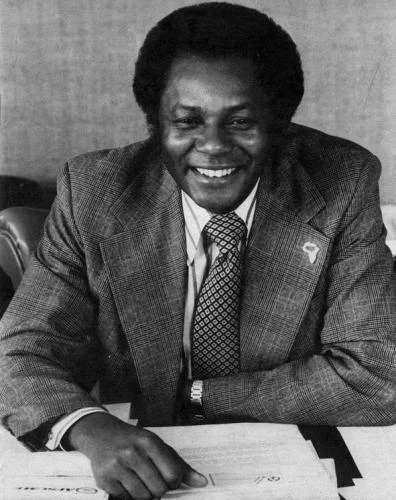
The landscape of American social justice lost one of its most steadfast architects this week. William “Bill” Lucy, a visionary labor leader, civil rights icon, and tireless advocate for human dignity, passed away in Washington, D.C., at the age of 90. His death marks the end of a seven-decade career that bridged the gap between the picket line and the halls of power, leaving an indelible imprint on the global fight for economic equity.
As the Legal Defense Fund (LDF) noted in a poignant tribute, Mr. Lucy was not merely a participant in the movements of the 20th century; he was a primary engine behind them. From his early days organizing in Memphis to his global leadership in the anti-apartheid movement, Lucy’s life serves as a masterclass in the power of collective action.
I. Main Facts: The Life of a Transformative Leader
William Lucy’s career was defined by a singular, unwavering commitment: the belief that economic rights are inseparable from human rights. For nearly 40 years, he served as the secretary-treasurer of the American Federation of State, County and Municipal Employees (AFSCME), the nation’s largest public-sector union. In this role, he managed the fiscal and operational health of a massive organization while ensuring its mission remained centered on the most vulnerable workers.
Beyond his administrative tenure, Lucy was a moral compass for the labor movement. He possessed the rare ability to articulate the intersectional struggles of Black workers, recognizing early on that racial justice and labor justice were two sides of the same coin. His influence extended from the local shop floor to the international stage, where he became the first African American president of Public Services International (PSI), a global federation of labor unions.
II. A Chronology of Impact: Seven Decades of Advocacy
To understand the scope of Bill Lucy’s contributions, one must look at the pivotal moments that defined his trajectory:
The Memphis Sanitation Strike (1968)
Perhaps the most visceral moment in Lucy’s career occurred in his hometown of Memphis, Tennessee. When Black sanitation workers—facing systemic discrimination, hazardous conditions, and poverty-level wages—walked off the job, Lucy was instrumental in organizing the support that brought national attention to their struggle. It was here that he marched alongside Dr. Martin Luther King, Jr. The strike, which became a focal point for the Poor People’s Campaign, solidified Lucy’s belief that labor unions were the most effective vehicle for social change.
The Founding of the CBTU (1972)
Recognizing that mainstream labor unions often sidelined the specific concerns of Black workers, Lucy co-founded the Coalition of Black Trade Unionists (CBTU). The organization provided a permanent, independent voice for Black workers within the labor movement, ensuring that issues of workplace discrimination and economic advancement remained at the forefront of the national agenda.
The Free South Africa Movement (1984)
Lucy’s vision was truly global. In 1984, he helped launch the Free South Africa Movement (FSAM), which became the primary catalyst for the anti-apartheid struggle within the United States. Through lobbying, demonstrations, and public pressure campaigns, Lucy and his allies helped shift American foreign policy, ultimately contributing to the dismantling of the apartheid regime.
A Lifetime of Public Service
Throughout the 1990s and 2000s, Lucy continued to leverage his position at AFSCME to support civil rights litigation. He worked closely with the Legal Defense Fund to defend desegregation efforts and protect the voting rights of marginalized communities, proving that his advocacy was not limited to the workplace but extended to every sphere of democratic participation.
III. Supporting Data: The Scale of His Influence
The impact of Mr. Lucy’s work can be measured not only in legislative victories but in the structural changes he brought to the American labor movement.
- Union Growth: During his four decades as an AFSCME leader, the union grew to represent over 1.6 million workers. Under his financial stewardship, the organization gained the political capital necessary to lobby effectively for the rights of public employees, who had historically been denied the right to collective bargaining.
- Global Reach: As President of Public Services International, Lucy represented over 20 million public sector workers across 150 countries. His leadership ensured that the struggle for worker rights in the United States was linked to the struggles of workers in developing nations, fostering a global solidarity network that persists today.
- Legislative Advocacy: Lucy was a key figure in the successful push for the Civil Rights Act of 1964 and subsequent voting rights legislation. His strategy of mobilizing union members to engage in the political process fundamentally changed the composition of local and state governments, creating a pipeline for more diverse representation.
IV. Official Responses: A Nation in Mourning
The outpouring of grief from civil rights organizations, labor unions, and political leaders reflects the immense stature of William Lucy.
Janai Nelson, President and Director-Counsel of the Legal Defense Fund (LDF), stated:
"We mourn the loss of William Lucy, an ardent champion for labor, civil, and human rights, and extend our deepest condolences to his loved ones and to the countless lives he touched. Over more than seven decades, Mr. Lucy was a fearless and transformative leader on the frontlines of the labor and civil rights movements who untiringly advanced initiatives to uplift vulnerable communities and advocate for justice, equity, and freedom."
Nelson further emphasized the LDF’s shared history with Lucy, noting his indefatigable support for litigation aimed at desegregation and political inclusion. She remarked, "As we reflect on Mr. Lucy’s life and his innumerable contributions to our nation and the world, we recognize his enduring legacy. His selfless dedication in the relentless pursuit of equality and justice will continue to inspire and shape future generations."
AFSCME leadership similarly lauded Lucy, describing him as the "conscience of the union," a man who never forgot his roots and who taught generations of organizers how to combine strategic planning with moral conviction.
V. Implications: The Legacy of a Visionary
The passing of William Lucy occurs at a critical juncture for both the labor movement and the broader civil rights struggle. As the United States grapples with widening wealth inequality, threats to voting rights, and a polarized political landscape, the absence of his steadying hand will be felt acutely.
Lessons for the Next Generation
Lucy’s legacy leaves behind several vital lessons for modern activists:
- The Necessity of Intersectional Solidarity: Lucy proved that a union is only as strong as its commitment to its most marginalized members. He did not separate the fight for a fair wage from the fight against systemic racism; he viewed them as a unified struggle.
- Institutional Building: He understood that protest is a spark, but organizations are the fuel. By building institutions like the CBTU and the FSAM, he ensured that the momentum of the 1960s did not fade, but was codified into organizations capable of sustaining long-term pressure.
- Global Perspective: Lucy’s leadership in the anti-apartheid movement and at the PSI reminds modern activists that the fight for justice is not contained by national borders. He recognized that labor rights and human rights are global concerns.
The Path Forward
As organizations like the Legal Defense Fund continue their mission to protect civil rights, the blueprints drafted by Bill Lucy remain essential. His life was a testament to the fact that progress is not inevitable; it is the result of relentless, organized, and courageous work.
In remembering William Lucy, we are reminded that the work of building a more just and equitable society is an ongoing process. He leaves behind a foundation that has supported millions of workers and provided a voice to the voiceless. While he has passed, the structures he helped build and the spirit of solidarity he fostered will continue to serve as a beacon for those who follow in his footsteps.
About the Legal Defense Fund (LDF)
Founded in 1940, the Legal Defense Fund (LDF) is the nation’s first civil rights law organization. LDF’s Thurgood Marshall Institute serves as a multi-disciplinary and collaborative hub, launching targeted campaigns and conducting innovative research to shape the civil rights narrative. While originally founded by the NAACP and sharing its commitment to equal rights, LDF has operated as an entirely independent organization since 1957.
For those wishing to honor Mr. Lucy’s memory, the LDF has published a comprehensive tribute documenting his extensive career, which can be viewed here. His life serves as a call to action for all who believe that justice is worth fighting for, every single day.

 Lina Hope
 Neng Nana