
 Evan Lee Salim

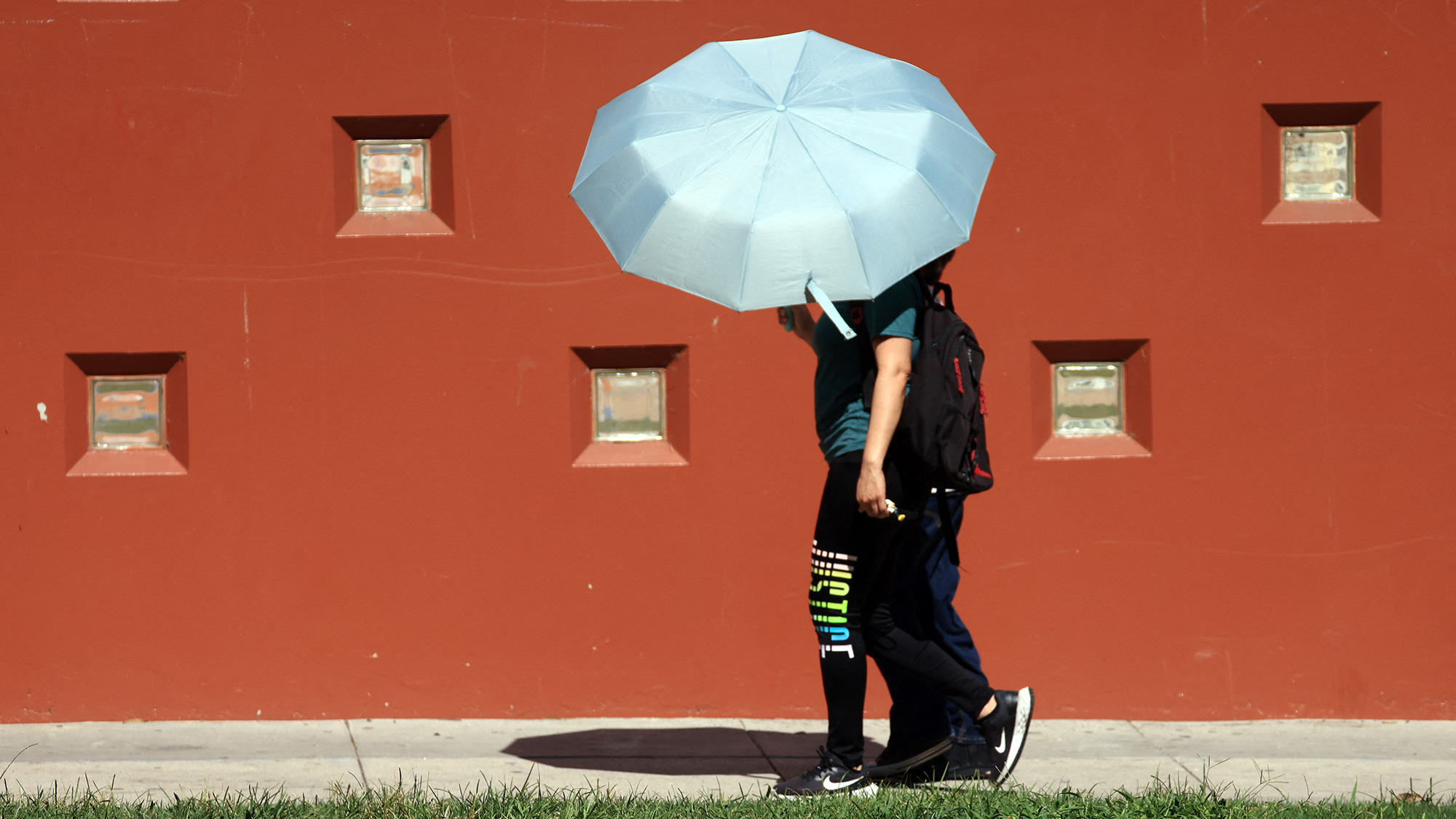
In the summer of 2024, Philadelphia appeared to be turning a corner. Data suggested the city was on track to record its lowest number of homicides since 1963, a significant milestone for a municipality that has long struggled with the scourge of gun-related crime. However, during the Fourth of July weekend, a relentless heat dome stretched from Maine to the Gulf of Mexico, trapping 165 million Americans in a sweltering grip of extreme temperatures.
In Philadelphia, temperatures soared above 100 degrees for three consecutive days. As the mercury rose, so did the sound of gunfire. Between July 2 and July 4, the Gun Violence Archive recorded nine separate shootings in the city, resulting in three deaths and nine injuries. While the overall trend for the year remained downward, the holiday weekend served as a stark reminder of a burgeoning scientific consensus: as the planet warms, the risk of interpersonal violence increases.
A landmark analysis by Climate Central, a nonprofit research organization, in collaboration with the gun violence newsroom The Trace, has finally put a number on this phenomenon. Their research estimates that approximately 2,000 shootings between 2021 and 2025 in the 100 U.S. cities most impacted by gun violence can be directly attributed to higher temperatures made more likely by human-caused climate change.
Main Facts: The Intersection of Temperature and Trauma
The link between heat and aggression is not merely anecdotal. It is a measurable, statistical reality that is now being exacerbated by global warming. The core findings of the Climate Central report indicate that climate change is acting as a "threat multiplier" for community violence.
Key findings include:
- Attributable Risk: Approximately 1.7 percent of all shootings in the top 100 most violent U.S. cities are linked to the additional heat caused by climate change.
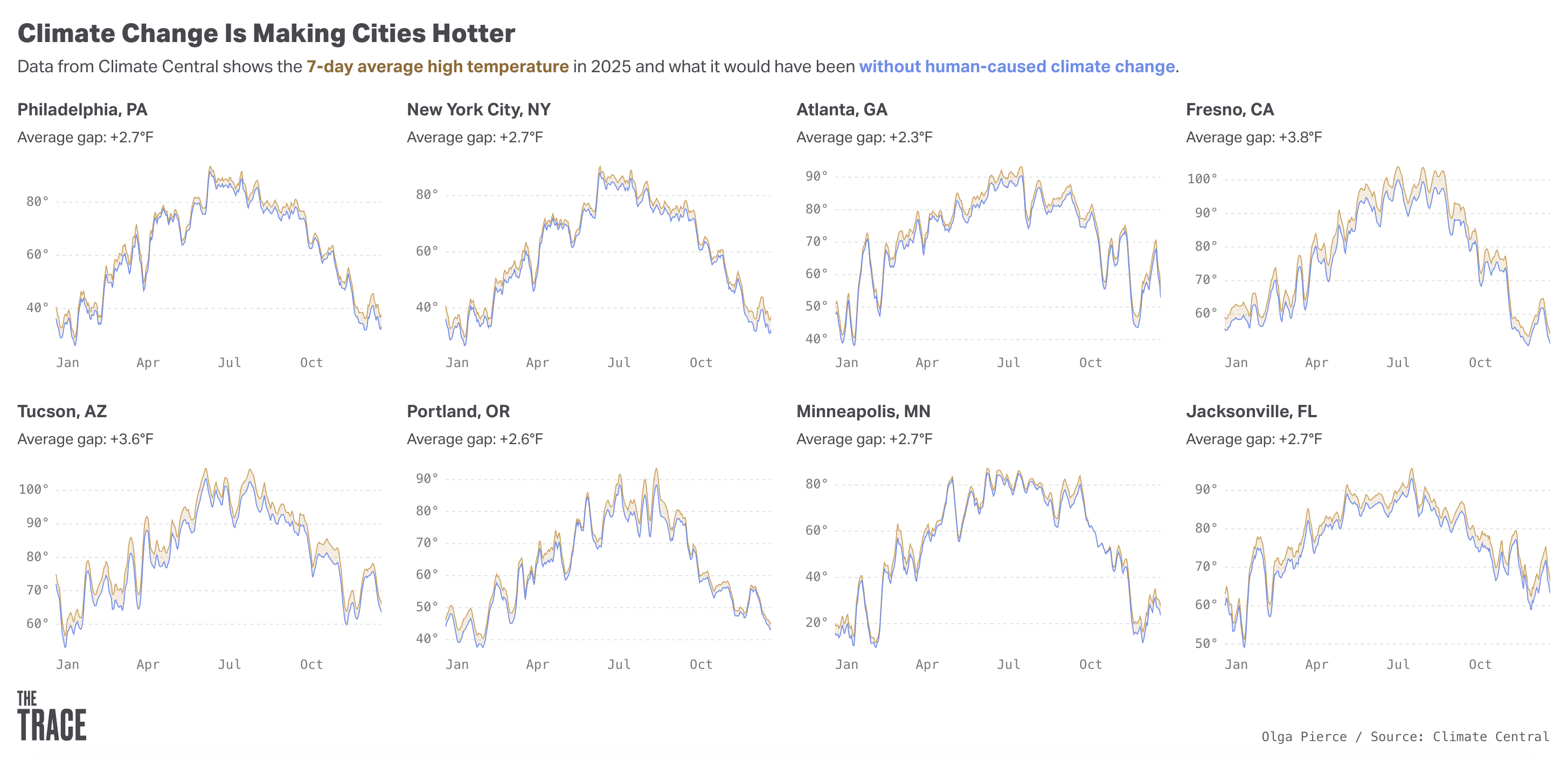
- The Philadelphia Impact: In Philadelphia alone, climate change contributed to an estimated 2.7-degree Fahrenheit increase in average temperatures, which researchers associate with 149 additional shootings over a five-year period.
- National Scope: Across the 100 cities studied, the typical day is now about 2.4 degrees Fahrenheit hotter due to climate change, with some cities like Fresno, California, seeing increases as high as 3.8 degrees.
- The Vulnerability Gap: The burden of heat-driven violence is not distributed equally. It falls most heavily on "urban heat islands"—neighborhoods with high proportions of pavement, low tree canopy, and aging infrastructure—which are often the same areas already struggling with systemic disinvestment and high rates of crime.
Chronology: From Historic Observations to Predictive Modeling
The understanding of the relationship between weather and crime has evolved through several distinct phases:
The Historical Context (1970s–1990s)
Social scientists first formalized the "Routine Activities Theory" in the late 1970s. This theory suggested that crime occurs when a motivated offender and a suitable target converge in space and time in the absence of a capable guardian. Warm weather, they observed, naturally increases these convergences as people leave their homes to congregate in public spaces.
The "Long Hot Summer" and Misconceptions (1960s–1980s)
The term "long hot summer" became a cultural shorthand for the civil unrest of 1967. At the time, the FBI and other authorities often minimized racial and economic grievances by blaming "summer heat" and "agitation" for the riots. This era established a dangerous precedent of using climate to justify racial stereotypes, a legacy that modern researchers are careful to dismantle by focusing on resource inequity rather than biological determinism.
The Rise of Attribution Science (2020–Present)
In the last five years, climate science has advanced to the point where researchers can now perform "attribution studies." By using complex climate models, scientists can compare our current world to a hypothetical "counterfactual" world without human-induced greenhouse gas emissions. The Climate Central report represents the first major attempt to apply this attribution science specifically to gun violence, moving from the general observation that "heat causes crime" to the specific claim that "climate change caused this much crime."
Supporting Data: The Mechanics of Heat-Induced Aggression
To understand why a warming planet leads to more shootings, researchers look at two primary drivers: biological physiology and sociological behavior.
The Biological Stress Response
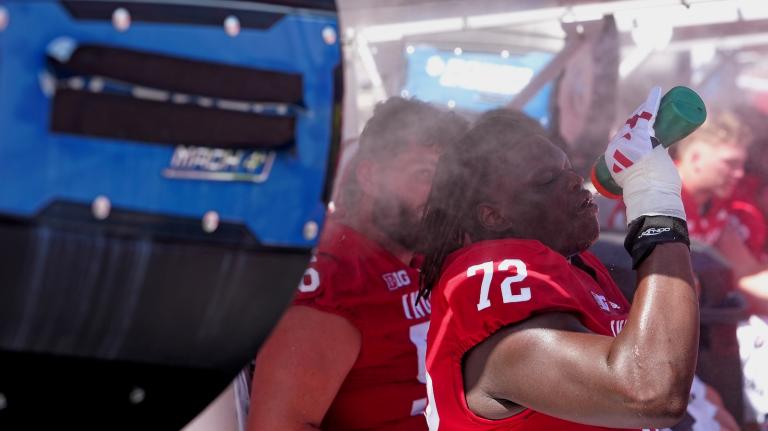
According to Kimberly Meidenbauer, an assistant psychology professor at Washington State University, the human body’s attempt to maintain a stable internal temperature—thermoregulation—is an energy-intensive process that affects the brain. When the hypothalamus detects extreme heat, it redirects resources to cool the body. This process creates significant physical discomfort, which frequently manifests as irritability, hostility, and a lowered threshold for frustration.
Furthermore, "environmental neuroscience" suggests that extreme heat impairs the prefrontal cortex, the area of the brain responsible for impulse control and rational decision-making. In a stressed, overheated state, individuals are more likely to perceive the actions of others as hostile. A minor dispute that might be resolved peacefully on a 70-degree day can escalate into a fatal encounter when the temperature hits 95.
The Attribution Model
The Climate Central study utilized 22 different climate models to simulate temperatures in 100 cities. By comparing actual recorded temperatures with these simulations, they identified the "climate signal"—the portion of heat directly caused by global warming.
In Philadelphia, the July Fourth weekend was found to be twice as likely to occur because of climate change. Across all 100 cities, the data showed that while gun violence overall may fluctuate due to policy changes or economic shifts, the "upward pressure" exerted by rising temperatures remains a constant, growing variable.
Official Responses: Mitigating the Heat-Violence Cycle
Government officials and nonprofit leaders are beginning to recognize that climate adaptation is a necessary component of public safety.
Urban Greening as Violence Prevention
In Philadelphia, the Pennsylvania Horticultural Society is leading a "Tree Plan" to reach a 30 percent tree canopy citywide. This is not just an aesthetic choice; it is a life-saving intervention. Some neighborhoods currently have as little as 2 percent tree cover, making them up to 22 degrees hotter than leafier, wealthier areas. A 2018 study in Philadelphia found that simply cleaning and greening vacant lots led to a 29 percent reduction in gun violence in nearby low-income neighborhoods.
Emergency Heat Measures
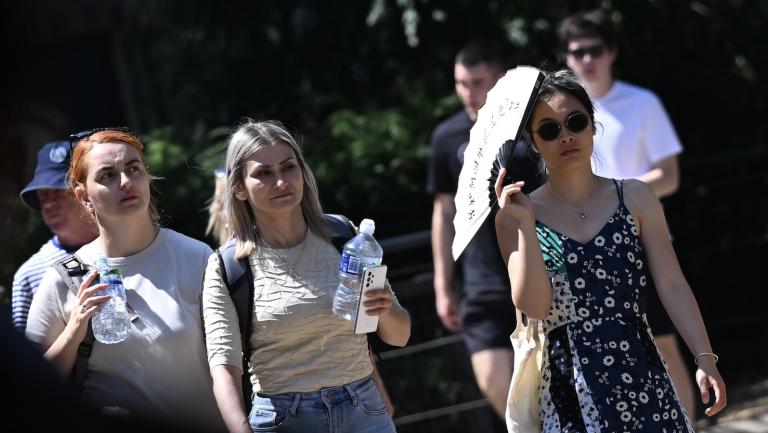
New York City has expanded its "cooling center" program, utilizing libraries and community centers. Recently, the Mayor’s Office announced mobile cooling vans and pop-up centers for outdoor workers. However, these are often criticized as "band-aid" solutions. Soledad Alvarado, a climate justice fellow at the Waterfront Alliance, points out that while 84 percent of Mott Haven residents have air conditioning, the astronomical cost of electricity—sometimes reaching $1,000 a month—prevents them from using it, forcing them back into the heat.
Behavioral Warnings
Psychologists like Meidenbauer suggest that public health officials should treat heat waves like mental health alerts. Current messaging focuses on hydration and heat stroke; future messaging may need to include warnings about "psychological heat stress," advising citizens to be aware of increased irritability and impaired judgment during extreme weather events.
Implications: A New Frontier for Public Policy
The intersection of climate change and gun violence poses a profound challenge for the 21st century. It suggests that traditional policing and legislative approaches to gun control may be undermined if the underlying environmental stressors are not addressed.
The Burden of Inequity
The research underscores a "triple threat" for disadvantaged communities: they are more likely to live in urban heat islands, more likely to lack the financial resources to pay for climate mitigation (like air conditioning), and more likely to live in areas with high baseline rates of gun violence. As Kristina Dahl, vice president for science at Climate Central, notes, "Climate change falls hardest on the people who have the fewest resources to cope with it."
Redefining Safety
If 1.7 percent of shootings are now attributable to climate change, then climate policy is public safety policy. Deep cuts to global emissions are the long-term solution, but in the short term, cities must prioritize "thermal equity." This means investing in "cool pavements," massive reforestation of marginalized neighborhoods, and subsidies for low-income cooling.
The Long-Term Outlook
The analysis by Climate Central and The Trace serves as a warning. Even as many U.S. cities celebrate a post-pandemic decline in violent crime, the warming climate is creating a "floor" beneath which crime rates may not be able to fall. John Roman of the University of Chicago’s NORC center summarizes the stakes: "If we still had the same climate we had in 1980, I think we’d see even lower violence than we see today."
As the world enters an era of permanent "unprecedented" heat, the link between the thermometer and the trigger will likely become one of the most pressing social issues facing urban America. The data is clear: to stop the violence, we must also cool the streets.

 Nana Wu

 Asro