
 Lina Irawan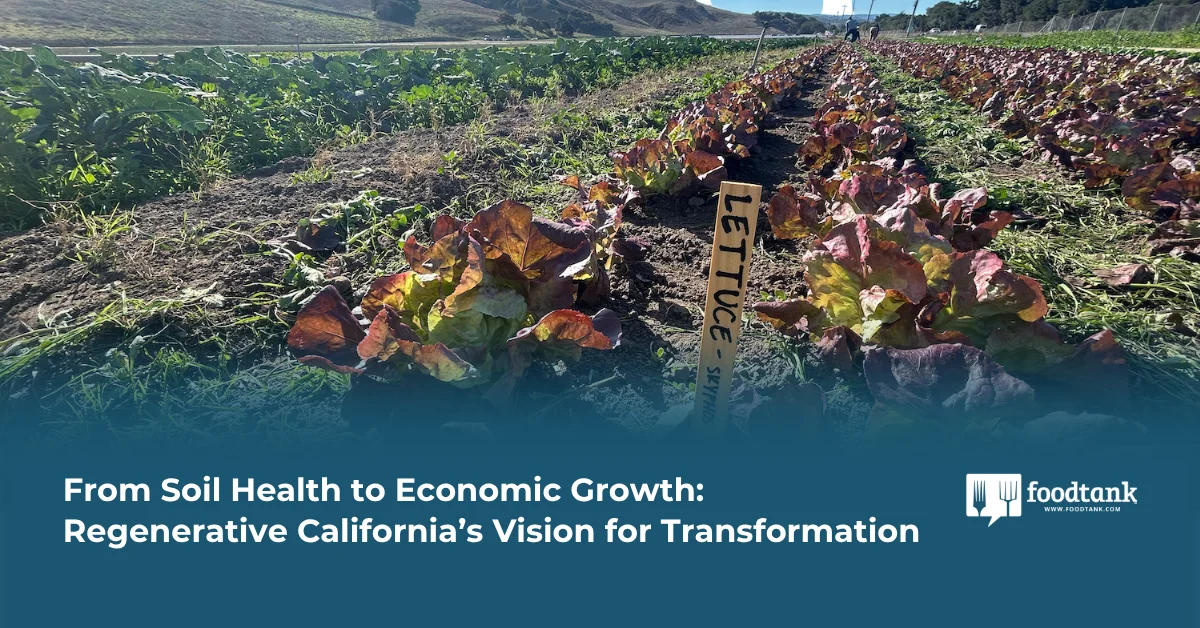
In the heart of the Salinas Valley—a region globally celebrated as the "Salad Bowl of the World"—a quiet revolution is taking root. California, a state historically defined by its pioneering spirit in social, economic, and ecological progress, finds itself at a crossroads. Despite holding the title of the world’s fourth-largest economy, its foundational systems remain stubbornly extractive, prioritizing short-term output over long-term resilience.
Enter Regenerative California, a nonprofit organization dedicated to flipping this narrative. By bridging the gap between community-led development and cutting-edge ecological science, the organization is attempting to prove that a regenerative economy is not just a utopian ideal, but a scalable, practical blueprint for the future. At the center of this mission is the Regenerate 68! Farm, a 70-acre "Petri dish" designed to demonstrate that the future of California’s food system lies in soil health, community equity, and systemic integration.
The Genesis of a Movement: From Extraction to Regeneration
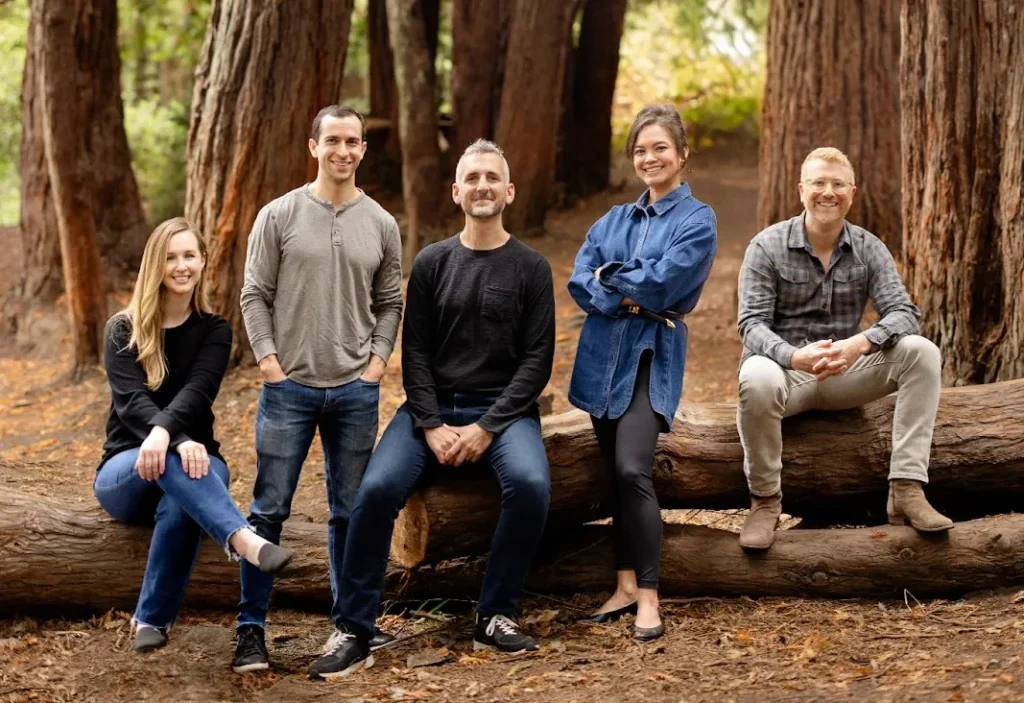
The vision for Regenerative California began with a fundamental question posed by Co-Founder and CEO Kristin Coates: "What could the future look like if the state prioritized regenerative systems?"
Coates and her team identified Monterey County as the ideal pilot location. The county presents a profound paradox: it is home to immense agricultural wealth and advanced technology, yet it simultaneously struggles with significant socioeconomic disparities. By focusing on this region, the team sought to prove that a transition to regenerative organic agriculture could simultaneously heal the landscape and provide a rising tide for the community.
Chronology: Building the Foundation
- Initial Concept Phase: The team began by conducting deep-dive interviews with local stakeholders, farmers, and community leaders to identify the most pressing challenges in the region.
- Defining the Pillars: From these discussions, two core pillars emerged as essential for a resilient economy: the systemic transition to regenerative organic agriculture and the revitalization of the "blue economy" (ocean-based sustainability).
- Establishing the Site: Partnering with the Big Sur Land Trust, the team secured a 70-acre parcel along Highway 68, establishing the Regenerate 68! Farm.
- The Pilot Period (Present): The farm serves as a training ground and research center, with 2026 marking the inaugural year for comprehensive environmental and socio-economic data monitoring.
The Regenerate 68! Farm: A "Petri Dish" for Systemic Change
While 70 acres may seem modest in the context of California’s massive agricultural output, the Regenerate 68! Farm is intended to serve as a catalyst. The philosophy here is that local success creates a proof-of-concept that can be exported, adapted, and scaled.
Integrating Conservation and Production
The farm is situated within a larger ranch stewarded by the Big Sur Land Trust. This positioning is intentional. It serves as a living demonstration that high-yield, nutrient-dense organic farming does not have to exist in opposition to conservation. Instead, it proves that farming can be a tool for environmental restoration. By employing regenerative practices—such as cover cropping, minimal soil disturbance, and holistic grazing—the farm seeks to sequester carbon, improve water retention, and foster biodiversity.
The Role of Data
Beginning in 2026, the organization will shift into a high-intensity monitoring phase. They are not merely tracking crop yields; they are measuring "success" through a multi-dimensional lens:
- Ecological Metrics: Soil carbon sequestration, water table health, and native pollinator population growth.
- Economic Metrics: Profitability for small-to-mid-sized farmers and the viability of local food supply chains for institutional buyers.
- Social Metrics: Community engagement, labor conditions, and access to nutrient-dense food for underserved local populations.
Official Perspective: The "Flywheel" Effect
Kristin Coates remains pragmatic about the scope of the challenge. She acknowledges that a solution for the Salinas Valley will not look identical to a solution for the Central Valley or the North Coast. However, she believes in the power of the "flywheel"—the idea that by generating momentum in one region, the energy will carry over to others.
"We can create a flywheel," Coates tells Food Tank. "And we really, genuinely believe that California can lead that work."
This leadership is already catching on. According to Coates, a dozen other regions have expressed interest in adopting the Regenerative California model. This indicates a growing appetite for a process that prioritizes listening, community engagement, and local momentum over "top-down" mandates.
Supporting Data: Why Regeneration Matters
The push for regenerative practices is backed by mounting evidence regarding the fragility of current industrial agricultural systems.
- Soil Degradation: According to the UN Food and Agriculture Organization (FAO), approximately 33% of the earth’s soils are already degraded. In California, intensive farming has historically depleted soil organic matter, leading to increased water demand and dependency on synthetic fertilizers.
- Climate Resilience: Regenerative agriculture has the potential to mitigate climate change by transforming farms from carbon sources into carbon sinks. Studies suggest that increasing soil organic matter by just 1% can increase water holding capacity by roughly 20,000 gallons per acre.
- Economic Viability: As synthetic fertilizer costs fluctuate wildly due to global market instability, regenerative systems—which often rely on natural nutrient cycling—offer a level of price insulation that traditional industrial farms lack.
Implications: A New Model for California’s Economy
The work being done by Regenerative California has implications far beyond the boundaries of Monterey County. If successful, the model could serve as a template for state policy, private investment, and land-use regulation.
Implications for Institutional Buyers
One of the key hurdles to regenerative agriculture has been the disconnect between farm-gate production and institutional demand. Hospitals, schools, and government agencies often procure food based on the lowest price point, which rarely accounts for the "true cost" of food (e.g., environmental damage or community health impacts). By demonstrating that regenerative supply chains can be robust, the organization is positioning itself to influence procurement policies at a state level.
Scaling Social Equity
The most profound implication of the Regenerative California model is its focus on the "human" element of the economy. By engaging community members from the outset, the nonprofit is avoiding the common pitfall of "green gentrification." The project aims to ensure that the workers who till the land are the primary beneficiaries of the economic shifts occurring within the food system.
Conclusion: The Path Ahead
The transition to a regenerative economy is not a sprint; it is a generational endeavor. The Regenerate 68! Farm acts as a beacon, illuminating a path that many are hesitant to tread. By grounding their work in the realities of California’s geography, labor force, and climate challenges, Regenerative California is moving the needle from abstract sustainability goals to concrete, actionable progress.
As the state looks toward the future, the lessons learned in Monterey County will likely serve as a vital guide. Whether this movement remains a localized success story or evolves into a statewide transformation depends on the continued collaboration between organizations like Regenerative California, land trusts, policymakers, and the public.
California has long been a trendsetter for the rest of the nation. In the coming years, the state’s most significant export may not be technology or entertainment, but a new, sustainable way of feeding the world—one that prioritizes the health of the earth as much as the vitality of its people.
This article was produced in collaboration with the insights of Katherine Albertson. For those interested in supporting the movement toward a more resilient food future, consider joining the community at Food Tank to help amplify the stories of those working on the front lines of agricultural change.


 Dwi Wanna
 Asep Darmawan