
 Jia Lissa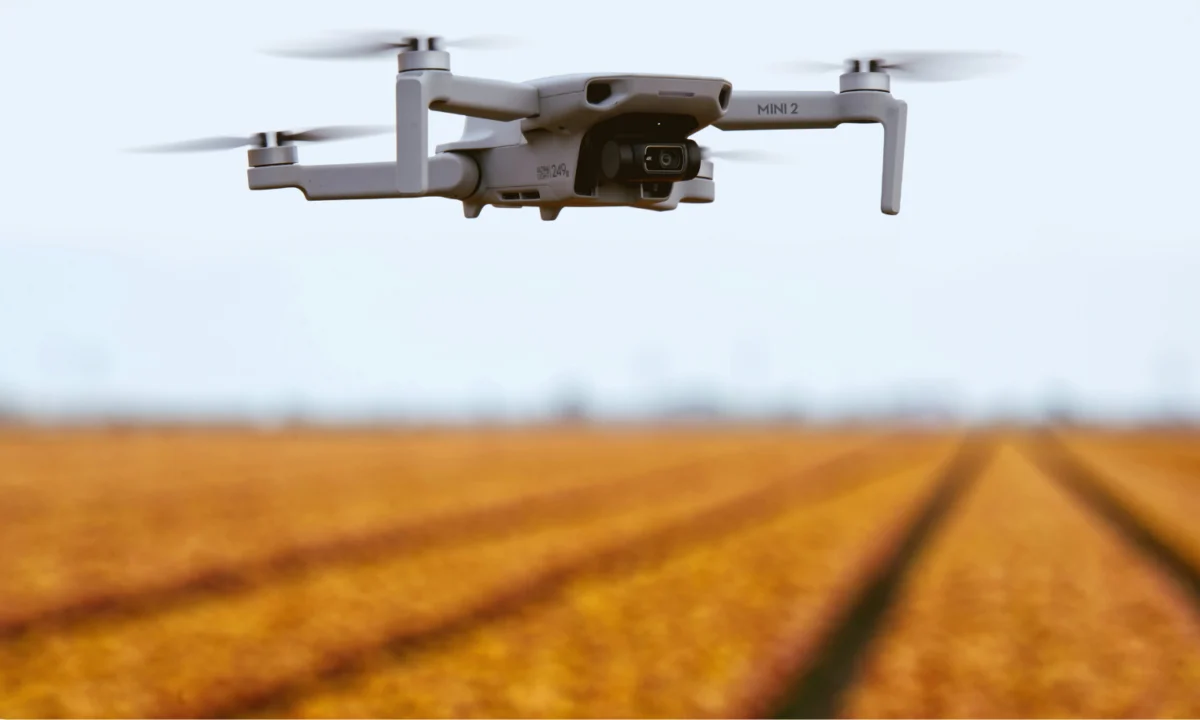
This article is part of Food Tank’s primer series, "Food Tank Explains." Each installment unpacks the ideas, innovations, and challenges shaping today’s food and agriculture systems, offering clear insights into complex topics.
The modern farm is increasingly resembling a high-tech laboratory. Where once agriculture was defined by the intuition of the farmer and the rhythm of the seasons, it is now being rapidly transformed by a suite of digital tools. Known as "precision agriculture," this data-driven management approach utilizes Global Positioning Systems (GPS), advanced sensors, autonomous drones, and Artificial Intelligence (AI) to collect granular data on crops, soil chemistry, and micro-climatic conditions in real time.
While the industry promises a future of hyper-efficient, high-yield farming, a growing chorus of experts, economists, and advocates are questioning whether this technological revolution is a genuine path toward sustainability—or a corporate-led consolidation of the global food system.
The Mechanics of Precision: How Data Shapes the Field
At its core, precision agriculture is about managing variability. Every field contains patches of varying soil quality, moisture retention, and pest pressure. Traditional farming methods often applied inputs like water, fertilizers, and pesticides uniformly across an entire field. Precision agriculture flips this script.
Key Technological Pillars
- GPS-Guided Operations: By utilizing precision guidance, tractors and harvesters can navigate fields with centimeter-level accuracy. This minimizes overlaps in chemical application and ensures that machinery travels the most fuel-efficient routes, reducing soil compaction and fuel consumption.
- Yield Monitoring: These systems record data at the point of harvest. By mapping yield variances, farmers can identify precisely which areas of a field underperformed, allowing them to adjust their planting and fertilization strategies for the following season.
- Remote Sensing and Drones: High-resolution aerial imagery provides a "bird’s-eye view" of crop health. By detecting shifts in leaf color or moisture levels, these tools allow farmers to spot pest infestations or nutrient deficiencies long before they are visible to the naked eye.
- Variable Rate Technology (VRT): Perhaps the most sophisticated tool in the arsenal, VRT allows for the real-time adjustment of input application. If a sensor detects that a specific zone of a field has sufficient nitrogen, the sprayer will automatically reduce its output in that area, saving money and preventing nutrient runoff.
The goal is an elegant synthesis of resource efficiency and profitability. By optimizing inputs, proponents argue that farmers can boost their bottom lines while simultaneously reducing the environmental footprint of their operations.
A Multi-Billion Dollar Evolution: A Chronology of Growth
The trajectory of precision agriculture has mirrored the broader digital transformation of the global economy.
1990s: The Dawn of GPS
The origins of the sector lie in the opening of GPS to civilian use. Early adopters began using satellite-guided navigation to steer tractors, a move that immediately signaled the end of the "eye-balling" method of row-spacing.
2000s: The Data Collection Phase
As computing power became cheaper and more portable, yield monitors began to appear in combine harvesters. This decade saw the creation of the first "yield maps," which provided farmers with their first digital glimpse into the hidden variability of their land.
2010s: The Rise of Connectivity and AI
The proliferation of high-speed rural internet and the refinement of machine learning algorithms ushered in the era of "Big Data" in farming. Ag-tech firms began integrating disparate data streams—weather, soil, market prices, and satellite imagery—into unified, subscription-based cloud platforms.
2020–2025: The Corporate Consolidation
By 2025, the digital farming sector had evolved into a massive industry, valued between US$10 billion and US$30 billion. As investment accelerated, the narrative shifted from "tools for the farmer" to "integrated ecosystems" owned by a handful of global agribusiness giants. Projections now suggest the industry could double in size over the next decade.
The Inequality Gap: Who Benefits from Innovation?
Despite the glowing projections of industry analysts, the reality on the ground is starkly divided. Precision agriculture, in its current form, is a capital-intensive pursuit.
The Barrier to Entry
For a smallholder farmer, the "barrier to entry" is not just the price of a sensor or a drone. It is the requirement for high-speed, reliable internet, the cost of technical training, and the necessity of specialized hardware that can cost hundreds of thousands of dollars.
Data from the International Panel of Experts on Sustainable Food Systems (IPES) underscores a troubling statistic: while smallholder farms represent roughly 85 percent of all farms globally, the adoption of these high-tech tools remains almost entirely concentrated among large-scale, industrial operations.
The Risk of Disparity
Authors of a recent HEAL Food Alliance report warn that this technological divide is not neutral. It is actively exacerbating existing racial and economic inequities in the food system. By favoring operations with deep pockets, precision agriculture risks pushing small-scale producers—who often employ more diversified and ecologically resilient practices—out of the market entirely.
Official Responses and Expert Analysis: A "Distraction"?
As the hype around "Ag-Tech" reaches a fever pitch, several independent organizations are sounding the alarm.
The IPES-Food Critique
The International Panel of Experts on Sustainable Food Systems has recently published a report, Head in the Cloud, which argues that the digital revolution is facilitating a dangerous level of farm consolidation. According to IPES, the primary goal of the largest agribusiness and tech firms is to secure control over the entire "data chain"—from the seeds farmers plant to the data harvested during their growth. By dictating the technological standards, these corporations are effectively shaping the future of global food production to suit their own balance sheets rather than the needs of the public.
The Sustainability Paradox
Perhaps the most controversial finding in recent research is the lack of evidence supporting the "environmental" claims of precision agriculture. While industry marketing often frames these tools as the "green" solution to climate change, Celize Christy, Member Organizing Lead at the HEAL Food Alliance, tells Food Tank that this is a "conflation between efficiency and sustainability."
The manufacturing, maintenance, and operation of millions of sensors, satellites, and server farms create a significant carbon footprint of their own. If the primary result of these technologies is to increase the scale of industrial monocultures—rather than to foster biodiversity or soil health—then their long-term climate benefit remains, at best, unproven.
Implications: Reclaiming Innovation for the Future
If precision agriculture is to be more than a corporate-led optimization of the status quo, the narrative must change. Experts suggest a shift in focus from "what the technology can do" to "who the technology serves."
A Call for Public Oversight
IPES-Food argues for "reclaiming innovation for people and planet." This requires:
- Strengthening Public Oversight: Ensuring that agricultural data is treated as a public good rather than a private asset for proprietary algorithms.
- Limiting Power Concentration: Implementing anti-trust measures to prevent a handful of firms from dictating the technological path of the global food system.
- Prioritizing Regenerative Practices: Shifting investment toward tools that support soil regeneration, agroecology, and the strengthening of local rural economies.
The Human-Centric Perspective
The HEAL Food Alliance emphasizes that the ultimate test of any agricultural innovation should be its ability to serve communities, not corporations. True innovation in farming should not just be about doing the same thing faster or with less waste; it should be about creating a resilient, equitable, and sustainable system that provides healthy food for all, regardless of the size of the farm.
As the industry continues its rapid expansion, the debate over precision agriculture will likely intensify. The question is no longer whether we can use technology to farm, but whether we should allow that technology to determine the shape of our future food system.
"Climate solutions should serve communities," Christy reminds us. "Not corporations."
Articles like the one you just read are made possible through the generosity of Food Tank members. Can we please count on you to be part of our growing movement? Become a member today by clicking here.
Photo courtesy of Job Vermeulen, Unsplash


 Dwi Wanna
 Asep Darmawan