

 Azzam Bilal Chamdy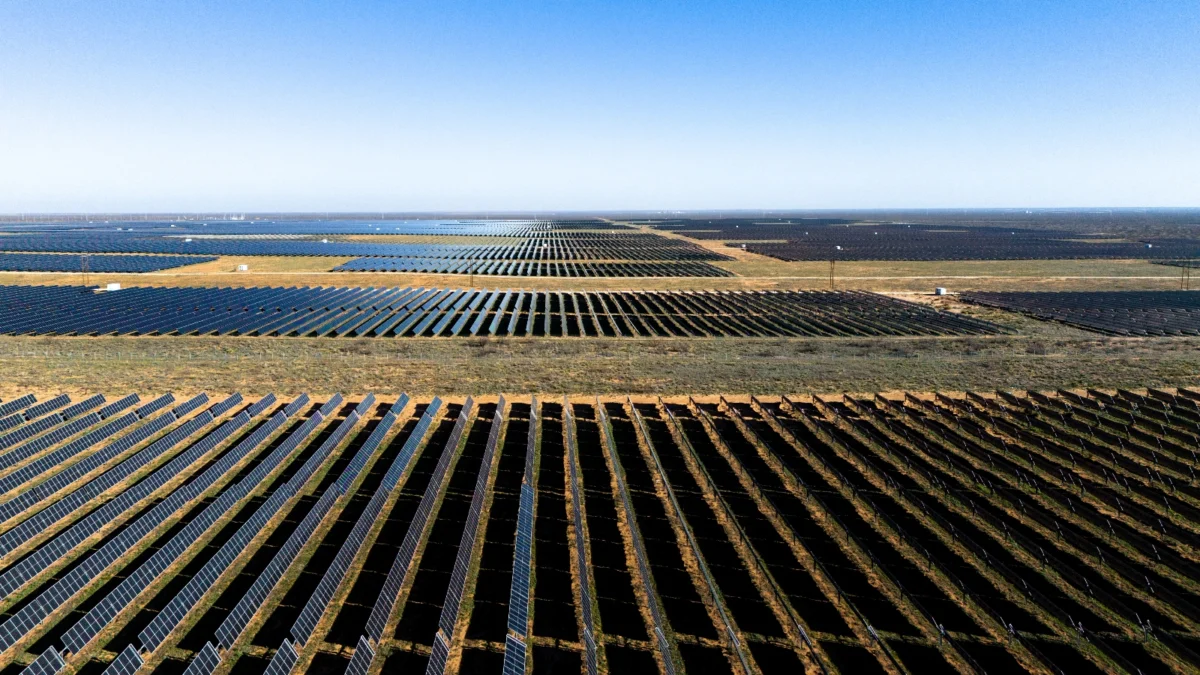
This story was originally published by Yale E360 and is reproduced here as part of the Climate Desk collaboration.
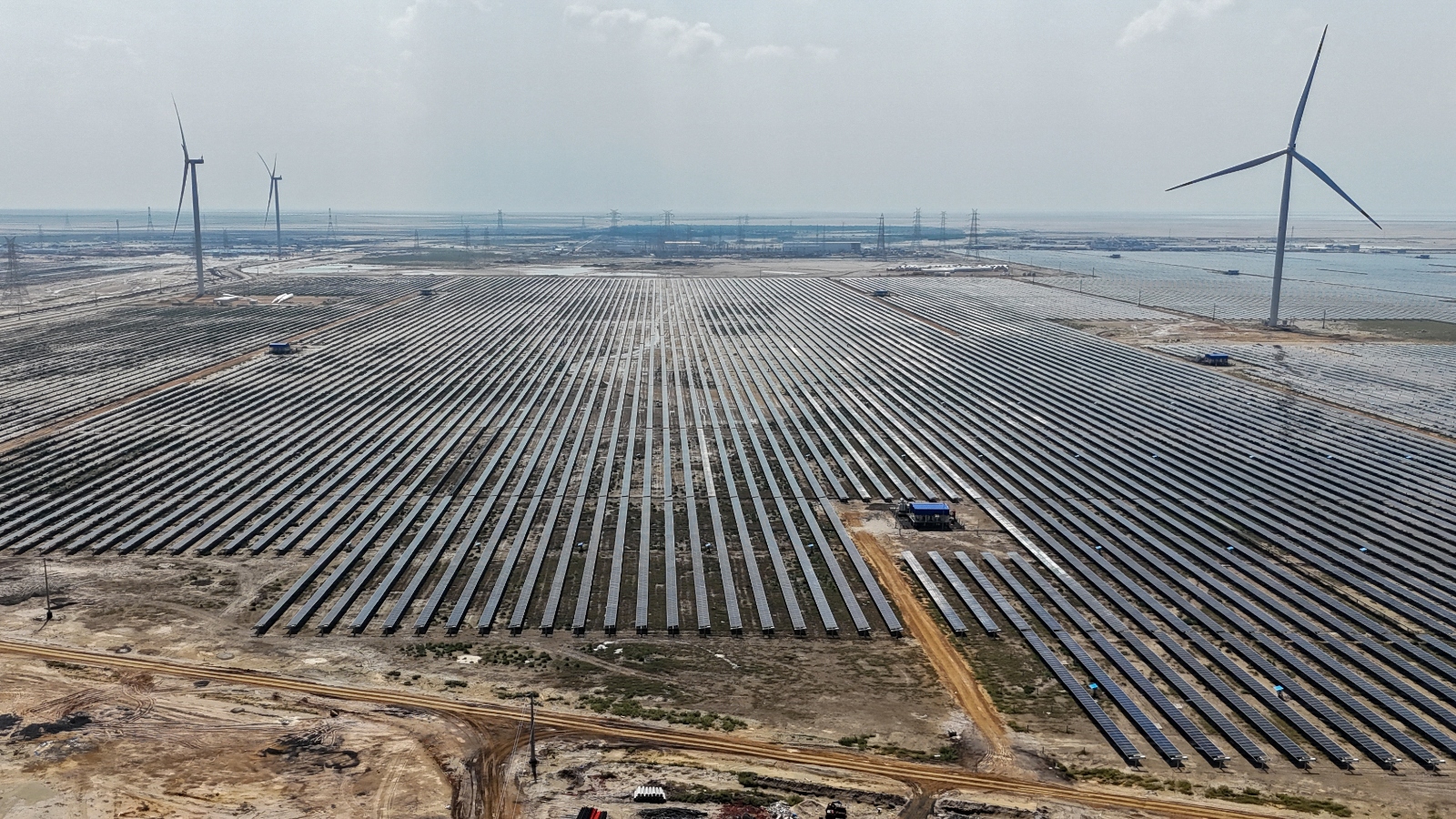
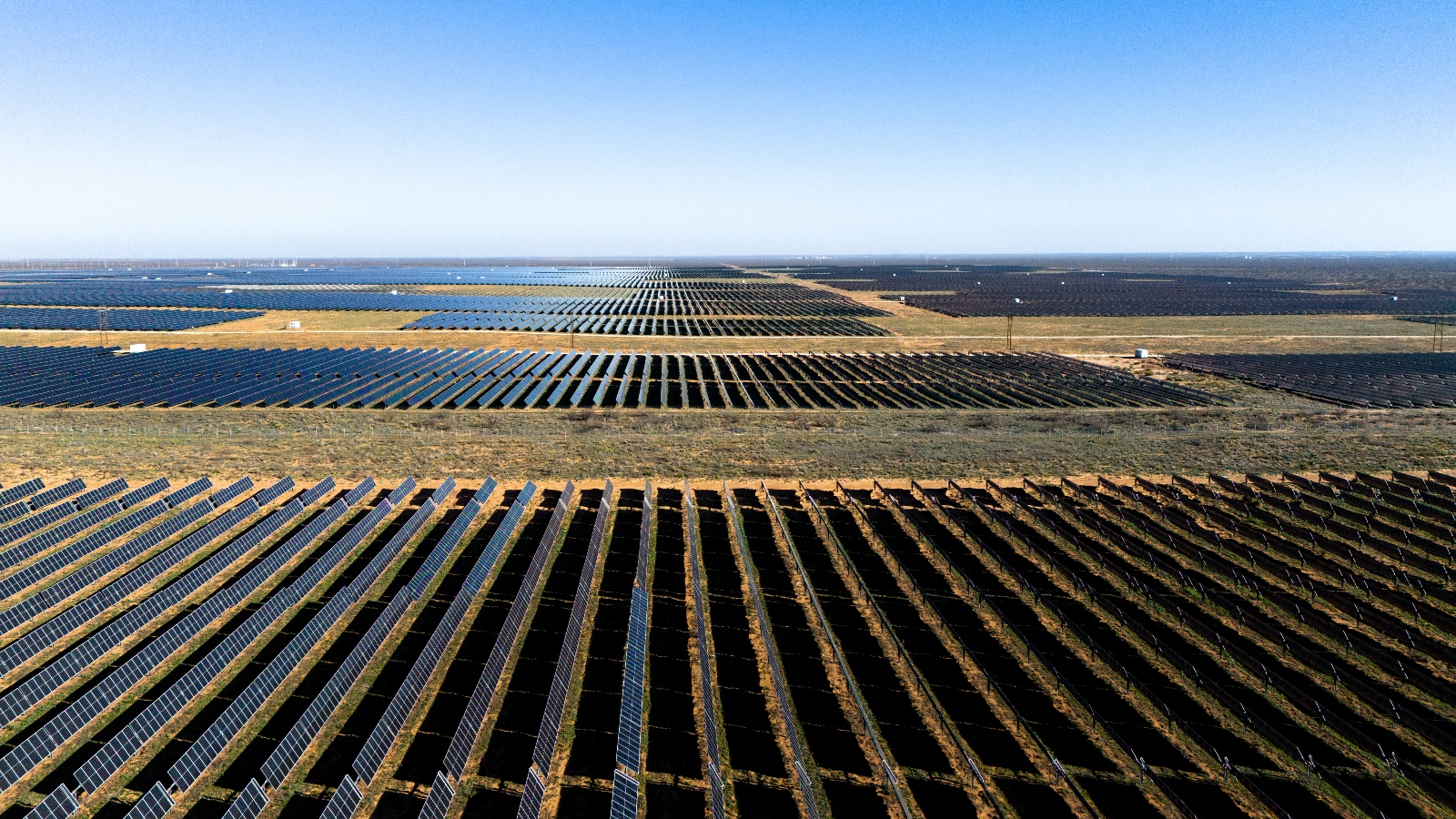
In the heart of the Rann of Kutch, a sprawling, sun-scorched salt desert along India’s border with Pakistan, a monumental transformation is underway. What was once a desolate, windswept landscape is being rapidly blanketed by a sea of photovoltaic silicon. By 2029, nearly 60 million solar panels will span 280 square miles of this arid expanse. This is the Khavda solar park, a project of such immense scale—30 gigawatts of generating capacity—that it eclipses the output of 30 typical coal or nuclear power stations. It is, quite literally, a power plant the size of a small nation, capable of generating enough electricity to power the entirety of Austria.
Khavda serves as the physical embodiment of India’s aggressive, breakneck sprint toward electrification. As the world’s most populous nation charts a path toward becoming a global industrial powerhouse, it is attempting a feat never before accomplished: scaling its economy while skipping the carbon-intensive "fossil fuel detour" that defined the rise of the West and, more recently, China.
The Shift: A Paradigm of Sun-Powered Development
For decades, the standard narrative of economic development was inextricably linked to coal. To industrialize was to burn carbon. However, India’s current trajectory suggests a new, greener playbook. "Cheap solar is enabling India to develop without the long fossil-fuel detour taken by the West and China," says Kingsmill Bond, an energy strategist at the U.K.-based think tank Ember. "China built on coal; India is building on sun. And what India is doing could also be mirrored in other emerging economies."
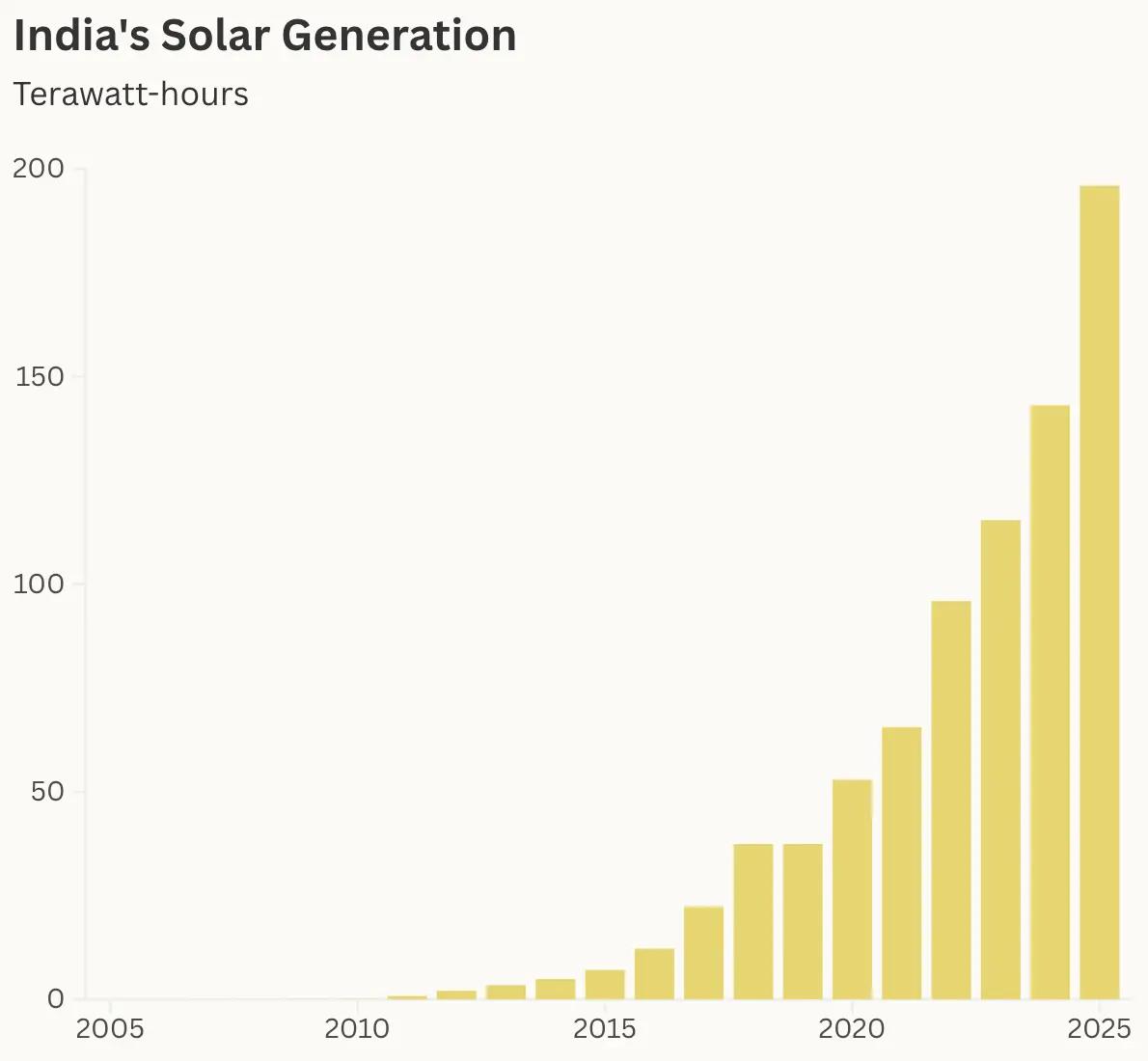
The statistics are staggering. India’s installed solar capacity is expanding at a rate of 40 percent annually. As of March 2026, the country surpassed the 150-gigawatt milestone, and current projections suggest that capacity will double again by 2030.
A Chronology of Transformation
The current solar surge is all the more remarkable given the political climate of just a decade ago.
- 2015: Shortly after his inauguration, Prime Minister Narendra Modi pledged to double the nation’s coal output by 2020. At the time, India was viewed as a staunch defender of fossil-fuel-led industrialization.
- 2021 (COP26): Environment Minister Bhupender Yadav famously challenged the international community at the Glasgow climate summit, arguing that expecting developing nations to abandon coal while they are still fighting poverty was fundamentally unjust.
- 2022–2024: Behind the scenes, economic realities shifted. The plummeting costs of solar technology and the increasing efficiency of domestic manufacturing began to outpace coal’s viability.
- 2025–2026: The government quietly abandoned its goal to double coal production. Simultaneously, the Khavda project began hitting major capacity milestones, signaling a definitive pivot in national policy.
The Adani Factor and the Geopolitics of Energy
Leading the charge is the Adani Group, helmed by Gautam Adani, a figure whose meteoric rise is as controversial as it is influential. As the world’s second-largest solar developer, the conglomerate has been the primary architect of the Khavda project.
However, the project has not been without scrutiny. In 2023, the Indian government relaxed military protocols—which had strictly prohibited construction within six miles of the Pakistani border—just weeks before the Adani Group gained control of that specific land. Furthermore, 2024 brought legal turbulence when the U.S. Department of Justice alleged that Adani executives had funneled hundreds of millions of dollars in bribes to Indian officials to secure supply contracts. While the case was dropped in May 2026 following massive U.S. investment pledges by the group, the incident remains a flashpoint for critics who question the role of political patronage in India’s green transition.
Data-Driven Challenges: The Grid and Storage Gap
Despite the technological marvels of the Khavda park—where automated, waterless robots clean the panels under the desert sun—the transition faces significant technical bottlenecks. While solar accounted for 28 percent of India’s installed capacity last year, it provided only 9.4 percent of the actual electricity supplied to the grid.
The Transmission Deficit
The primary culprit is an outdated transmission infrastructure. India’s grid is currently struggling to bridge the distance between the remote, sun-drenched deserts of the west and the high-demand urban industrial centers. Reports indicate that at times, nearly 40 percent of potential solar generation is curtailed—essentially wasted—because the grid cannot absorb the surge.
"Solar plants typically take 18 to 24 months to build, while transmission projects usually take about five years," explains Charith Konda, an energy researcher at the Institute for Energy Economics and Financial Analysis. "The grid is trying to catch up." To bridge this divide, the Ministry of New and Renewable Energy has committed $100 billion to expand the grid by 29 percent by 2032.
Solving the Storage Puzzle
The second hurdle is intermittency. Solar power is useless when the sun goes down or during the thick cloud cover of the monsoon season. India is tackling this through two major strategies:
- Pumped Hydro Storage: By utilizing surplus solar energy to pump water into high-altitude reservoirs, the country is creating massive "water batteries." A 1.4-gigawatt project at Gandhi Sagar and a 3-gigawatt project near Mumbai are leading the way.
- Lithium-Ion Integration: As global battery prices have dropped by 58 percent since 2023, the government has mandated that new solar farms must include storage. The Khavda complex is currently building the world’s largest battery array, designed to provide a three-hour discharge of over a gigawatt every evening.
Implications for the Global Climate
The "elephant in the room" remains the heavy industries, particularly steel. Steel production requires intense, sustained heat, which is historically provided by coal. With India aiming to double its steel manufacturing capacity by 2036, the sector poses a significant threat to decarbonization goals.
However, the success story in other sectors is undeniable. India’s railway network, spanning 42,000 miles, is now almost entirely electrified. Furthermore, the country is the global leader in the electrification of motorized rickshaws—a crucial step for reducing urban air pollution in some of the world’s most smog-choked cities.
The Moral Weight of Energy
The global importance of this transition cannot be overstated. Currently, the average Indian’s electricity consumption is roughly one-third of the global average, and less than one-tenth of that of an American. As the country matures into a modern industrial economy by 2047—the centenary of its independence—it will inevitably require more power.

If India were to follow the traditional, coal-reliant trajectory of China or the West, the environmental consequences would be catastrophic for the planet. By choosing the path of solar—a path dictated by necessity, economic pragmatism, and technological opportunity—India is setting a precedent.
"The question is no longer whether solar can power India’s electricity system," says Kostantsa Rangelova of Ember, "but how quickly it can scale." As the panels continue to multiply across the Rann of Kutch, the world watches to see if this sun-drenched desert will indeed become the foundation for a new, sustainable industrial age. If India succeeds, it will prove that economic prosperity and climate stewardship are not mutually exclusive—they are, in fact, the only viable way forward.


 Rifan Muazin
 Layla Zulfa