

 Lina Irawan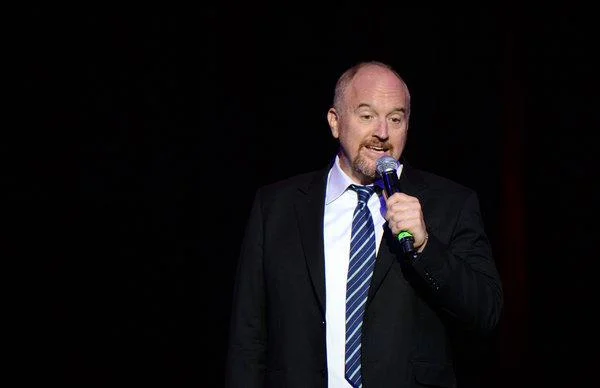
The contemporary American political landscape is currently defined by a volatile tension between traditional power structures and a burgeoning demand for social accountability. Recent weeks in Virginia have served as a microcosm for this national friction: the political careers of Governor Ralph Northam and Attorney General Mark Herring were thrown into disarray following the surfacing of historical instances of blackface, while Lieutenant Governor Justin Fairfax faced serious allegations of sexual assault.
As Democratic leadership moved with uncharacteristic speed to demand resignations, a familiar narrative began to crystallize across the media landscape. Critics from across the political spectrum were quick to dismiss these calls for accountability as the latest iteration of "political correctness" run amok. However, this reactionary framing ignores a deeper, more systemic reality: the term "political correctness" has been systematically weaponized to silence marginalized voices and preserve the status quo, creating a dangerous double standard in how we define, police, and value speech.
A Chronology of Selective Outrage
To understand the hypocrisy inherent in the "anti-PC" movement, one must look at the data regarding media coverage and public reaction to controversial speech.
In early 2019, Representative Rashida Tlaib ignited a firestorm of controversy when she used an expletive to describe the necessity of impeaching President Donald Trump. The reaction was immediate, bipartisan, and overwhelmingly disproportionate. Media tracking revealed that Tlaib’s profane call to action received five times the cable news coverage that Representative Steve King’s explicit defenses of white supremacy received during the same timeframe.
This chronology of outrage reveals a disturbing truth: the political and media establishment is far more concerned with the tone used by a marginalized woman of color than it is with the substance of a white male politician’s promotion of white supremacist ideology. When Tlaib’s language was treated as a national scandal, it stood in stark contrast to the relative apathy directed toward the President’s own inflammatory rhetoric. From the dissemination of xenophobic falsehoods regarding border security to the usage of language that arguably incited national discord, the President’s record is replete with instances that, by any objective standard, violate the norms of civil discourse. Yet, those who decry "PC culture" are often the most ardent defenders of the President’s right to speak without consequence.
Supporting Data: The Anatomy of a Double Standard
The disparity in coverage is not merely a matter of editorial choice; it is a structural phenomenon that reinforces power dynamics. When institutions characterize the demands of marginalized groups for dignity as "attacks on free speech," they are engaging in a form of gaslighting.
Data consistently shows that speech from marginalized groups—often involving profanity or sharp critiques of power—is subject to "overblown, disproportionate outrage." Conversely, when those in power engage in dehumanizing speech, it is frequently reframed as "telling it like it is" or "refreshing honesty."
Consider the return of comedian Louis CK to the stage following his admitted history of sexual harassment. In his comeback sets, CK directed his ire toward the "excesses" of modern empathy, specifically mocking the use of preferred pronouns for transgender and non-binary individuals. He framed these groups as "royalty" for requesting basic linguistic respect. This rhetoric is particularly insidious given that the trans and non-binary community faces some of the highest rates of homicide and suicide in the country. By characterizing their request for recognition as an act of oppression against him, CK effectively performed the quintessential "anti-PC" maneuver: the inversion of victimhood.
Official Responses and the Rebranding of Accountability
The response from the establishment to these controversies has been revealing. When demands for accountability are raised, the immediate counter-narrative is that the "left" has become too sensitive or "puritanical." This framing suggests that the primary danger to American society is not systemic racism, sexual violence, or the erosion of democratic norms, but rather the "policing" of language.
This logic suggests that powerful figures are the true victims of a cultural shift that expects them to answer for their past actions. When Louis CK or other public figures face professional consequences, they often frame their exclusion as a loss for free speech rather than a natural consequence of their own conduct. This self-victimization complex is a hallmark of the current cultural war. It suggests that if a person of power is held to the same standard as everyone else, that standard is inherently "excessive."
The Real Stakes: Survival vs. Sentiment
The critique of "political correctness" is often presented as a debate over etiquette—the "don’t say this, don’t say that" narrative. However, this trivializes the reality of the people who are speaking up. For many, the ability to demand better treatment is not a matter of social etiquette; it is a matter of survival and the ability to participate in public life.
When pro-choice activists speak out against rising maternal mortality rates, or when Black Lives Matter activists highlight the lethal consequences of police brutality, they are not policing speech; they are drawing attention to systemic failures that result in the loss of life. The label of "PC culture" is used to dismiss these vital, life-saving conversations as mere "sensitivity." By systematically marginalizing these voices, the institutions that dominate our discourse contribute to the persistence of violent outcomes.
Implications for the Future of Free Speech
The current obsession with the "dangers" of political correctness has obscured the true meaning of free speech. In the eyes of many, free speech is a one-way street: it is the right of the powerful to say whatever they please, regardless of how dehumanizing or dangerous, without being challenged.
However, a more democratic understanding of free speech recognizes that it must be an inclusive, two-way street. It must include the right of marginalized communities to say: "That demeans me," "That hurts me," or "Think about what you are saying."
The shift toward inclusivity, thoughtfulness, and safety is not a threat to free speech; it is an expansion of it. It allows for a greater diversity of voices to participate in the public square, rather than being silenced by the exclusionary standards of the past.
As we look toward the future, the challenge is to move past the binary of "PC vs. anti-PC" and address the underlying power imbalances. We must reject the notion that accountability is synonymous with censorship. We must recognize that the outrage directed at those who speak up is, at its core, a resentment of societal progress.
True free speech requires the courage to hear truths that are uncomfortable and to accept that the era of unchallenged, dehumanizing rhetoric is coming to an end. It requires us to protect the voices of those who have historically been silenced, ensuring that their demands for respect are not merely the punchline of a joke, but the foundation of a more equitable and inclusive society. The movement for social progress will continue to be met with backlash, but as history has shown, the arc of progress is fueled by those who refuse to be silent in the face of their own oppression.


 Neng Nana
 Iffa Jayyana