


 Nana
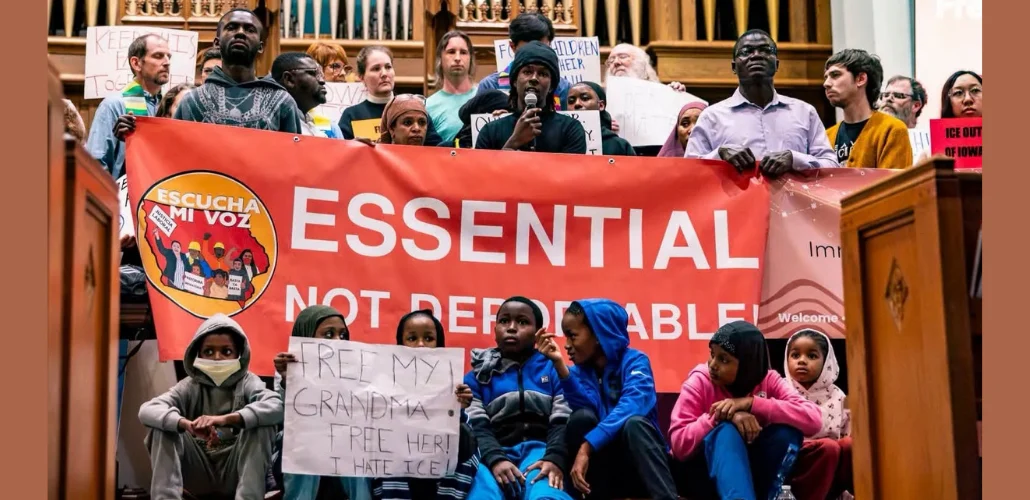
On the morning of Thursday, September 24, Fatou Traore’s routine was shattered. A dedicated custodian at the University of Iowa Hospitals and Clinics (UIHC) and a pillar of the Iowa City community, Traore was apprehended by U.S. Immigration and Customs Enforcement (ICE) agents while en route to the job she had performed faithfully for over a decade. Less than three weeks later, on October 12, she was deported to Sierra Leone—a country with which she holds no meaningful connection.
Traore, a mother of four, including a three-year-old child, possessed legal immigration status and maintained a spotless record. Her swift removal from the country has not only torn a family apart but has ignited a firestorm of advocacy among her coworkers, labor unions, and local immigrant rights organizations. Her story has become a flashpoint for a broader conversation about the dehumanization of essential workers and the systemic failures within the U.S. immigration apparatus.
Chronology of a Displaced Life
The events surrounding Traore’s detention and subsequent removal occurred with a speed that left her legal counsel and supporters scrambling to intervene.
- September 24: Traore is detained by ICE agents while commuting to her shift at UIHC. The detention sends shockwaves through the hospital’s custodial staff and AFSCME Council 61, Local 12, of which Traore is a member.
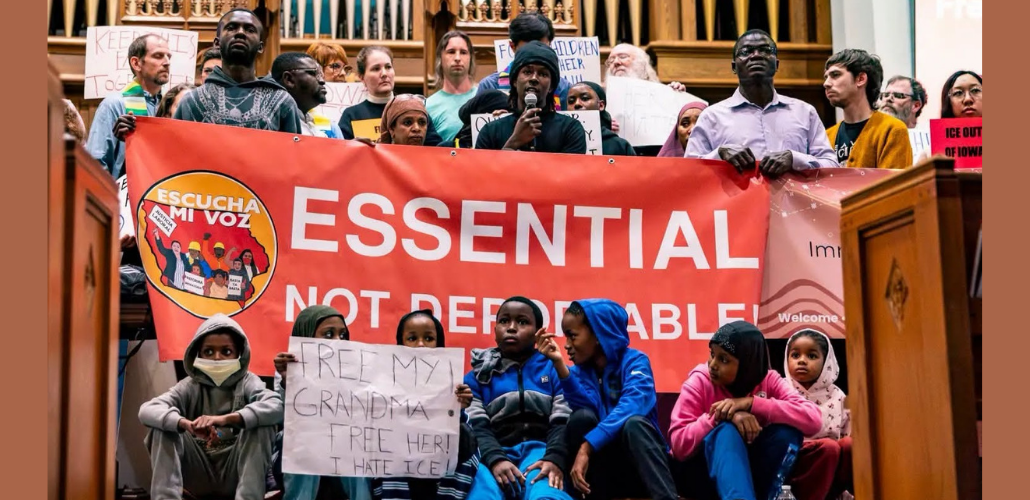
- Late September – Early October: A grassroots campaign led by colleagues, the Immigrant Welcome Network, the Iowa City Catholic Worker, and Escucha Mi Voz Iowa begins. Petitions are circulated, and community members leverage their personal and professional networks—from the Iowa Writers’ Workshop to local church groups—to raise awareness.
- The Legal Gap: During the weeks of her detention, Traore’s legal team files motions for a stay of removal. Crucially, she requests a "credible fear" interview—a standard procedure for individuals who fear persecution in their country of origin.
- October 12: Despite ongoing legal proceedings and a pending motion for a stay, federal authorities carry out her deportation to Sierra Leone. The government acted before a judge could issue a ruling, effectively bypassing the due process protections that are central to the American judicial system.
The Silence of Institutional Power
As the community rallied, one entity remained notably quiet: the University of Iowa Hospitals and Clinics. For many, the hospital’s lack of public support was as damaging as the deportation itself.
Sara Gilmore, a phlebotomy technician at UIHC and a vocal advocate for Traore, recalls the frustration of attempting to mobilize institutional power. "Months earlier, a petition had circulated to change an unpopular parking policy the hospital wanted to put in place," Gilmore notes. "The hospital was responsive to that. Yet, when we asked the administration to speak out against the detention of one of their own, they refused."
The official stance provided by hospital administration—that employees could voice opinions as private citizens but the institution could not issue a formal statement—is viewed by many as a form of moral abdication. This silence creates a dangerous precedent: it signals that the institution views its workforce as "disposable," prioritizing the neutrality of a corporate entity over the lives and livelihoods of the workers who keep its facilities operational.
The Anatomy of a Due Process Failure
The deportation of Fatou Traore is a textbook example of what immigration advocates describe as "due process by name only." When the government deports an individual while a stay motion is pending, it effectively renders the judicial process moot.
Mazahir Salih, a representative of the Immigrant Welcome Network, emphasizes that the issue goes beyond administrative errors. "Due process means giving people a meaningful opportunity to be heard before the government takes an action with devastating consequences," Salih stated. By denying Traore a credible fear interview and ignoring the legal motions filed on her behalf, ICE utilized a procedural loophole to expedite her removal, denying her the fundamental right to contest the government’s actions in court.
This lack of transparency raises significant questions about federal oversight. Why was she deported before the judicial process had run its course? Why was a credible fear request, a critical component of international and domestic asylum law, summarily ignored? These questions remain unanswered, leaving her family and community to grapple with the consequences of an opaque system.
The "Disposable" Workforce: Implications for Essential Labor
The dehumanization of workers is a central theme in the fight to bring Traore home. In the medical field, there is a visible hierarchy: doctors and administrators occupy the foreground, while custodians, phlebotomists, and other support staff are often relegated to the background.
"I’m a phlebotomist and she’s a custodian, so we’re kind of in a similar role where we’re coming in and out of patient rooms, mostly doing our work behind the scenes, and very underappreciated," Gilmore explains. "People have the impression that we don’t matter—that if we’re not there to do our job, then they can fill it with anybody else. It’s just not true."
The implication here is profound. When an institution fails to protect its most vulnerable employees, it reinforces the societal perception that these individuals are interchangeable parts rather than essential, human components of a community. Traore’s ten-year tenure at the hospital is a testament to her resilience and commitment; her sudden removal by the state suggests that, in the eyes of the government, her decade of service to the Iowa community holds no weight against the bureaucratic machinery of deportation.
A Call for Collective Action
The campaign to bring Fatou Traore home has not ceased with her departure. Her advocates are now focused on mounting pressure on Iowa’s congressional delegation to demand a full accounting of the case. They are calling for:
- Congressional Intervention: A formal inquiry into why Traore was deported while legal motions were pending and why her credible fear interview was denied.
- Institutional Accountability: A change in the culture at UIHC and other large organizations that enables them to remain silent while their employees are targeted.
- Community Solidarity: Continued rallies, letter-writing campaigns, and local pressure to keep the spotlight on the human cost of current immigration policies.
For the community in Iowa City, the fight for Traore is not just about one woman; it is about the soul of the community. If a beloved mother, a hard-working custodian, and a long-time resident can be taken without warning and without legal recourse, then the security of every immigrant worker in the state is in question.
Conclusion: The Path Forward
The story of Fatou Traore serves as a sobering reminder of the power imbalances that define contemporary American life. It is a story of a woman whose work improved the health and well-being of countless patients, only to have her own well-being treated as an afterthought by the state and her employer.
As the petitions continue to circulate and the calls to state representatives grow louder, the message from Iowa City is clear: Fatou Traore is not a statistic, and she is not disposable. She is a neighbor, a mother, and a colleague who belongs in the community she helped build. The fight to bring her home continues, fueled by the conviction that justice, when denied to one, must be demanded by all.
Sara Gilmore is a phlebotomy technician at the University of Iowa Health Care Medical Center and a dedicated advocate for immigrant rights.


 Muslim
 Rifan Muazin