



 Layla Zulfa
We hear the phrase "the game of life" so often that it has become a staple of our cultural vernacular. From board games like the Milton Bradley classic—first introduced in 1860 and still a fixture on family game nights—to the deluge of self-help literature on Amazon promising the secrets to "winning at life," we are conditioned from childhood to view our existence as a series of levels, milestones, and high scores.
But beneath this pervasive metaphor lies a dangerous psychological shift. Increasingly, individuals are internalizing the mechanics of competition, viewing their careers, social status, and even the upbringing of their children as metrics in an ongoing contest. This article explores why treating life as a competitive game is a profound misunderstanding of the human experience and why it may be the primary source of modern unhappiness.
The Anatomy of a Game: A Brief History
To understand the danger of the metaphor, we must first define the parameters of a "game." Historically, games have served as essential human diversions. Whether it is the ancient origins of board games or the structured intensity of modern athletics, games are defined by artificiality.
Chronology of the "Life as a Game" Paradigm
- 1860: Milton Bradley releases The Checkered Game of Life, the first popular American board game. It was designed to teach morality, but its structure—moving from birth to "Happy Old Age"—cemented the idea of a linear path toward a specific, pre-defined "win."
- 1960s–1990s: Televised commercials for updated iterations of the game solidified the board game as a rite of passage, embedding the "career, house, kids" trajectory into the American psyche as the default objective.
- The Digital Age: With the rise of social media, the "game" has become real-time. Platforms like LinkedIn and Instagram act as scoreboards, allowing for the immediate quantification of success—job titles, follower counts, and filtered representations of domestic bliss.
The Fallacy of the Competitive Framework
A game is, by definition, an activity where the primary goal is to defeat an opponent. It relies on arbitrary, externally imposed rules that the players did not create but must follow. In a finite game, there is a clear winner and a vast majority of losers.
Why Games Fail as a Template for Existence
The tragedy of the "game of life" metaphor is that it encourages us to treat subjective experiences as objective data. Consider the core pillars of a "good life":
- Meaningful Relationships: How does one "win" at friendship? Is the person with the most friends winning? Or the person with the deepest connection? Because this is subjective, it cannot be ranked.
- Ethics and Morality: One cannot compete in honesty or integrity. To treat ethics as a competition is to turn virtue into a performance rather than a character trait.
- Fulfilling Work: The satisfaction derived from one’s vocation is internal. When we turn career growth into a game, we stop asking, "Does this work align with my values?" and start asking, "Does this job status make me look more successful than my peers?"
When life is viewed as a competition, we gravitate toward things that are easily measured: the size of a house, the prestige of a university, or the model of a car. These are the "trivial prizes" of the game. By prioritizing these, we inadvertently subordinate the intangible, deeply meaningful aspects of life that define human fulfillment.
The Corrosion of Human Connection
Perhaps the most damaging implication of the "life as a game" mindset is its effect on our social fabric. Competition and intimacy are diametrically opposed.
The Zero-Sum Trap
In a competitive framework, another person’s success is often perceived as your loss. If you view your career or social standing as a ladder with limited rungs, your neighbor’s promotion feels like a threat to your own progress. This mindset poisons the roots of friendship.
True intimacy requires us to be "rooting" for others. When we are caught in the competitive game, our support for friends and family becomes performative or, worse, begrudging. We move through life in a state of chronic insecurity, where we are simultaneously trying to maintain closeness with those we love while secretly, or subconsciously, attempting to outperform them. This creates an environment of ambiguity that makes genuine vulnerability impossible.
Autonomy and the "Pyrrhic Victory"
One of the most profound costs of playing the "game of life" is the surrender of individual autonomy. When you accept the rules of the game—the social pressure to follow a specific career path or adopt a specific lifestyle—you are living by a script you did not write.
The Cost of External Validation
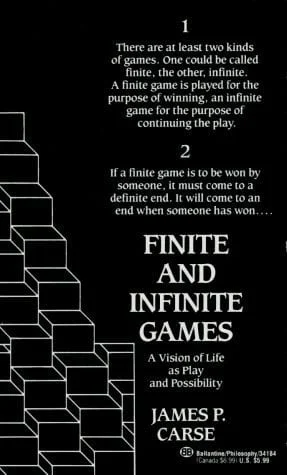
If your definition of success is defined by what society dictates, you are essentially outsourcing your happiness to the opinions of others. James Carse, in his seminal work Finite and Infinite Games, posits that finite players (those playing to win) are trapped by the rules of their games. Infinite players, however, play for the purpose of continuing the play.
When you prioritize society’s "scorecard" over your own internal values, you risk achieving a Pyrrhic victory: you win the game, but you lose your sense of self. You may have the status, the wealth, and the accolades, but because those goals were not your own, you feel empty. You have spent your finite time on this earth chasing someone else’s definition of a win.
Implications of the "Loser" Narrative
In any zero-sum game, the vast majority of participants are, by technical definition, "losers." If we apply this to life, we create a society plagued by unnecessary shame.
The Psychological Toll
- The 99.99% Reality: For the overwhelming majority of people, life will not result in being the top 0.1% of earners or influencers. Setbacks are not just likely; they are guaranteed.
- Shame as a Catalyst: When we view these setbacks as "losing the game," we experience them not as lessons or natural parts of the human condition, but as personal failures. This leads to profound, unnecessary shame.
- The Specter of Public Defeat: Because we view life as a competition, we fear that our failures are visible to others. This creates a state of perpetual anxiety, where we are terrified of being "found out" or perceived as failing in the eyes of our peers.
This is a paralyzing way to exist. It forces us to live in a state of defense rather than exploration.
Conclusion: Reframing the Experience
It is vital to distinguish between a healthy hobby and a toxic philosophy. There is nothing wrong with enjoying a round of golf, a 5k run, or a fantasy football league. In these contexts, competition is fun, engaging, and healthy. The problem arises only when we bleed that competitive energy into the foundational areas of our lives.
Life is not a game to be won; it is a reality to be experienced.
To live well, we must consciously reject the urge to quantify our worth against others. We must replace the competitive impulse with one of cooperation, curiosity, and internal reflection. When the workday ends, or when you close your social media apps, the true measure of your life is not how many people you have surpassed. It is the depth of your relationships, the integrity of your actions, and the peace you have found in being yourself.
By stepping off the board, we don’t lose the game—we gain our lives.


 Pevita Pearce





