




 Evan Lee Salim
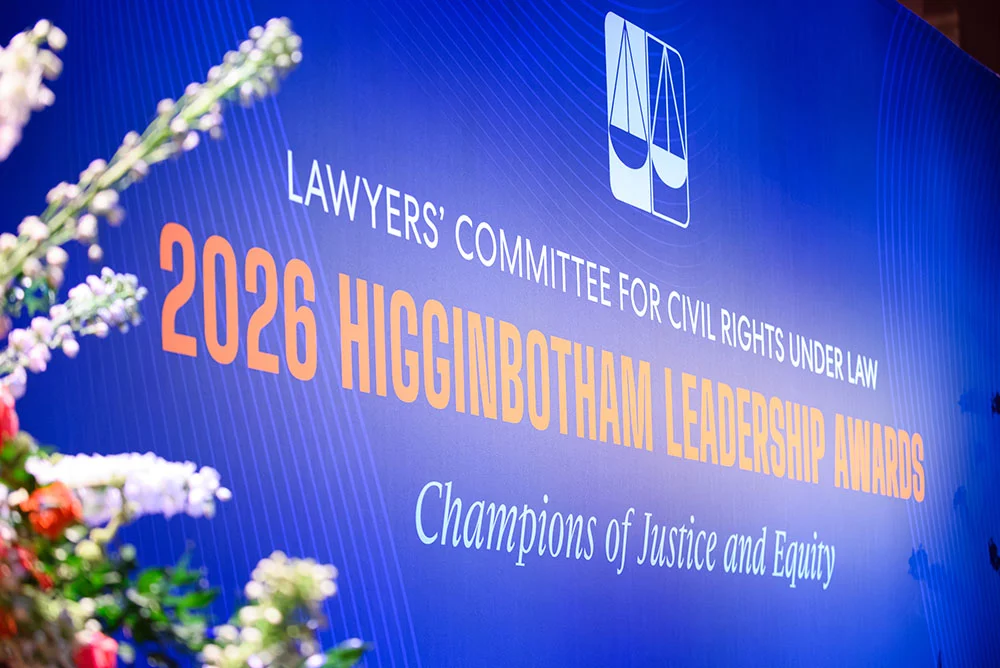
NEW YORK — Against the backdrop of an increasingly polarized political landscape and a series of high-stakes challenges to the foundational tenets of American democracy, the Lawyers’ Committee for Civil Rights Under Law convened its 2026 Higginbotham Leadership Awards Gala. The evening, held on September 23 at the historic Cipriani Wall Street in New York, served as both a celebration of resilience and a clarion call for the protection of hard-won civil liberties.
The event, which brought together a powerful coalition of legal scholars, activists, and policymakers, centered on the recognition of individuals who have dedicated their lives to dismantling systemic barriers to equality. As the nation grapples with shifting judicial precedents and persistent disparities, the 2026 gala underscored the urgency of the organization’s mission: to secure, protect, and promote the legal rights of Black people and other communities of color.
Main Facts: Honoring the Architects of Change
The focal point of this year’s gala was the presentation of the prestigious Robert F. Kennedy Justice Prize to Stacey Abrams. An activist, acclaimed author, and trailblazing political leader, Abrams was honored for her relentless advocacy for voting rights and her history-making career as the first Black woman to secure a gubernatorial nomination for a major party in the United States. Her work, particularly through organizations like Fair Fight, has fundamentally altered the conversation surrounding voter access, registration, and political mobilization in the 21st century.
Complementing this recognition was the presentation of the Courageous Client Award to Mamie Cunningham. Representing the plaintiffs in the landmark litigation Mississippi State Conference of the NAACP v. Mississippi State Board of Election Commissioners, Cunningham stood as a symbol of the grassroots mobilization required to challenge entrenched disenfranchisement. The lawsuit, which seeks to ensure that Black voters in Mississippi possess a fair opportunity to elect representatives of their choosing, is widely regarded as a critical test case for the future of the Voting Rights Act.
Chronology: A History of Advocacy and Litigation
The Lawyers’ Committee for Civil Rights Under Law has long operated as a vanguard in the legal fight for equality. To understand the significance of the 2026 gala, one must view it as the culmination of decades of strategic litigation.
- 1963: The Inception. Founded at the request of President John F. Kennedy, the Lawyers’ Committee was established to enlist the private bar’s resources to address the civil rights crisis of the era.
- 1965–2013: The Voting Rights Era. Throughout the late 20th century, the Committee played an instrumental role in enforcing the Voting Rights Act (VRA), ensuring that Section 5 preclearance requirements were upheld in jurisdictions with histories of racial discrimination.
- 2013–2023: Post-Shelby Challenges. Following the Supreme Court’s decision in Shelby County v. Holder, which gutted the enforcement mechanisms of the VRA, the Committee shifted focus toward state-level litigation. This era saw an increase in cases involving gerrymandering and voter identification laws.
- 2024–2026: The Current Frontier. The Mississippi State Conference of the NAACP v. Mississippi State Board of Election Commissioners case represents the current phase of this trajectory. It focuses on the intersection of legislative representation and equitable political power, challenging the "dilution" of Black voting strength in state-wide districts.
The selection of Abrams and the Mississippi plaintiffs for the 2026 honors is a deliberate acknowledgment that the struggle for civil rights is not a closed chapter of history, but an ongoing process that requires constant legal and civic intervention.
Supporting Data: The State of Voting Rights in America
The gravity of the gala’s message is backed by sobering statistics. According to data tracked by the Lawyers’ Committee and affiliated civil rights organizations, the United States is currently witnessing a historic wave of restrictive voting legislation.
- The Legislative Surge: Since 2021, over 30 states have introduced or passed laws that impose stricter voter identification requirements, reduce early voting periods, or consolidate polling locations in predominantly minority neighborhoods.
- The Representation Gap: In states like Mississippi, where the Black population exceeds 35%, electoral outcomes often do not reflect the demographic reality due to historical practices of racial gerrymandering. The Mississippi State Conference of the NAACP case argues that the current political map effectively suppresses Black political power by packing or cracking communities of color to ensure specific legislative outcomes.
- Economic Disparities: The gala also highlighted the intersection of voting rights and economic opportunity. Research indicates that communities with higher rates of voter participation correlate with more robust local investment and better outcomes in education and healthcare, further emphasizing why political disenfranchisement is a root cause of systemic economic inequality.
Official Responses: Voices from the Frontlines
Damon Hewitt, president and executive director of the Lawyers’ Committee, provided the keynote address, framing the awards not merely as accolades but as symbols of necessity.
"The people we honored this year demonstrate what it means to meet a difficult moment with courage, persistence, and an unwavering belief in our collective power," Hewitt stated. He noted that the political climate has turned hostile toward established protections, making the roles of activists and plaintiffs more dangerous and vital than ever. "Stacey Abrams has spent years expanding pathways for people to exercise their voice and power, while our courageous clients in Mississippi stood up for their communities and refused to accept a political system that diminished Black voting power. At a time when hard-won civil rights protections are under attack, their leadership reminds us that progress has never simply been given to us. It has always required people willing to stand up, fight back, and build something better."
Shaylyn Cochran, deputy executive director, echoed these sentiments, emphasizing the strategic importance of the coalition. "This year’s gala was a celebration of the powerful civil rights coalition we’ve built, and it marked our re-commitment to fighting for the futures our communities deserve," Cochran remarked. "Stacey Abrams and our Mississippi clients have worked tirelessly in pursuit of a fairer, truly representative democracy. They continue to shape the roadmap for protecting Black political power. We honor their contributions and will draw inspiration from their resolve as we face these ongoing challenges."
Implications: The Road Ahead for Civil Rights
The 2026 Higginbotham Leadership Awards Gala leaves the legal and civil rights community with several clear takeaways for the future.
The Litigious Future
The success of cases like the Mississippi litigation will likely set the tone for the next decade of American democracy. If the courts continue to uphold legislative maps that dilute minority voting power, the Lawyers’ Committee and its allies are prepared to escalate their arguments to the highest levels of the judiciary, even in an era of conservative legal dominance.
The Role of Public-Private Partnerships
The gala emphasized that civil rights advocacy is no longer the sole domain of government agencies or public interest firms. The involvement of private bar associations, high-profile authors, and grassroots organizers creates a "full-spectrum" defense of democracy. This model of advocacy—blending litigation with public awareness and policy pressure—is expected to be the primary strategy for the remainder of the decade.
Preparing for 2028 and Beyond
The speakers at the gala were forward-looking. The awards were presented with an eye toward the 2028 election cycle and beyond, suggesting that the work of protecting the vote is a continuous cycle of preparation. By honoring Abrams and the Mississippi clients, the organization is signaling to the nation that the fight for representation is non-negotiable.
In closing, the gala served as a reminder that the "Higginbotham" name—honoring the legacy of Judge A. Leon Higginbotham Jr.—is synonymous with the belief that the law can be an instrument of justice, provided there are people with the fortitude to wield it. As the guests departed Cipriani Wall Street, the overarching message was clear: the struggle for equality is ongoing, the stakes are rising, and the movement to protect the democratic process is more organized, more resilient, and more determined than ever before.



 Nila Kartika Wati






