


 Laily UPN
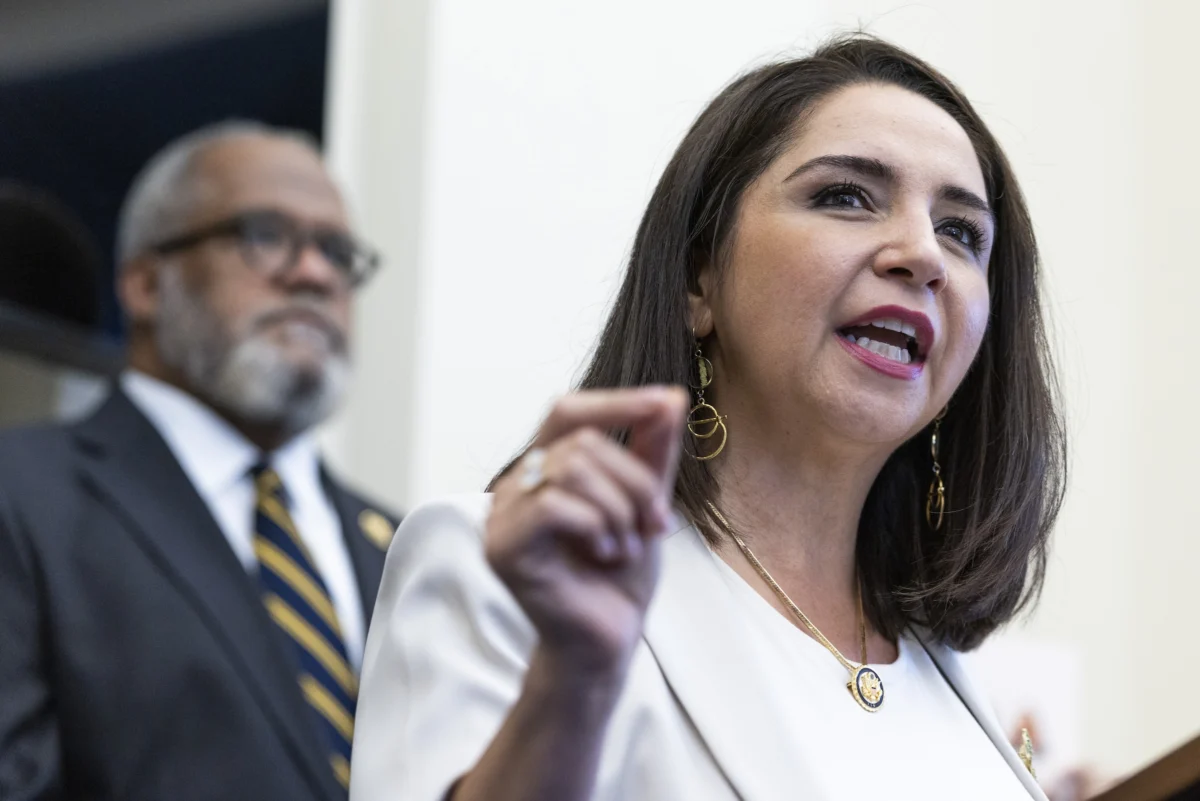
WASHINGTON, D.C. — In a move that represents the most significant challenge to the United States’ national security architecture in nearly a quarter-century, Representative Delia C. Ramirez (D-Illinois) has introduced the "Reimagining Safety Act." The sweeping legislation seeks to repeal the Homeland Security Act of 2002, effectively abolishing the Department of Homeland Security (DHS) and its enforcement arms, including Immigration and Customs Enforcement (ICE) and Customs and Border Protection (CBP).
The bill arrives at a moment of intense national polarization, as the DHS—an agency born from the ashes of the September 11 attacks—finds itself at the center of a domestic political firestorm. For proponents, the bill is a necessary correction to decades of "mission creep" and human rights abuses. For critics, it is a radical dismantling of the nation’s primary defense against terrorism and border instability.
Main Facts: The Architecture of the Reimagining Safety Act
The Reimagining Safety Act is not merely a budgetary cut but a total restructuring of the federal executive branch. If passed, the legislation would dismantle the third-largest Cabinet department in the U.S. government, which currently employs over 240,000 personnel.
The Abolition of ICE and CBP
The core of the bill targets the agencies responsible for immigration enforcement. By repealing the 2002 statutes, the bill would permanently shutter ICE and CBP. Under the proposed framework, all immigration detention centers would be closed, and the "shadowy detention network" that has expanded over the last two decades would be dismantled.
Redistribution of Essential Functions
Recognizing that the DHS currently houses a wide array of non-enforcement functions, the bill proposes a redistribution of these responsibilities to other federal authorities:
- The Transportation Security Administration (TSA): Would be moved to the Department of Transportation.
- The U.S. Coast Guard: Would be transitioned to a different administrative authority, likely the Department of Defense or Transportation.
- Citizenship and Immigration Services (USCIS): Would be restored as an independent or differently housed agency focused on service delivery rather than enforcement.
- Customs Functions: The trade and revenue functions of CBP would be separated from the paramilitary border patrol functions.
The Department of Community Safety
In place of the DHS, the legislation proposes the creation of a cabinet-level "Department of Community Safety." Unlike its predecessor, which is rooted in a counter-terrorism and policing mandate, this new department would adopt a "public health-based approach" to safety. Its mission would encompass addressing gun violence, disaster relief, and community-led safety initiatives, stripping away the militarized tools currently used by federal agents.
Chronology: From the War on Terror to the 2026 Crackdown
To understand the impetus behind the Reimagining Safety Act, one must trace the 24-year evolution of the DHS from a defensive necessity to an expansive enforcement machine.
2002–2008: The Genesis
Following the 9/11 attacks, the Bush administration pushed for the consolidation of 22 different federal agencies into one department. The goal was to "connect the dots" between intelligence and enforcement. This period saw the passage of the USA PATRIOT Act, which provided the legal scaffolding for expanded surveillance and detention.
2009–2020: The Era of Expansion
Despite shifts in political leadership, the DHS continued to grow under both the Obama and Trump administrations. The Obama era saw record-high deportations and the refinement of the "expedited removal" process. The first Trump administration then utilized the agency’s infrastructure to implement the "Muslim Ban" and family separation policies at the border, signaling a shift toward using the DHS as a tool of ideological and racialized enforcement.
2021–2024: Failed Reform and Persistence
While President Joe Biden campaigned on a platform of "humane" immigration, the DHS infrastructure remained largely intact. Efforts to close the Guantánamo Bay detention center stalled, and the administration continued to use Title 42 and other DHS mechanisms to manage border crossings, frustrating progressive advocates who argued that the agency was inherently unreformable.
2025–2026: The Current Crisis
As of late 2026, the DHS has become the primary engine for what Representative Ramirez describes as a "fascist campaign of mass deportation." In the first months of the current term, DHS agents have been linked to the deaths of at least eight individuals on U.S. streets, including the high-profile killings of Renee Good and Alex Pretti. Reports of "disappeared" detainees and the use of Guantánamo Bay to house Somali immigrants have pushed progressive lawmakers to conclude that the agency cannot be fixed—only abolished.
Supporting Data: The Cost of the Status Quo
The legislative push is backed by a mounting body of data regarding the human and financial costs of the DHS.
- Human Mortality: According to ACLU reports and data cited in the bill, the mortality rate for people in ICE detention has more than doubled in recent years. At least 57 deaths have been recorded in immigration detention during the current administration’s term.
- Judicial Defiance: Federal judges have recently blasted ICE for violating nearly 100 judicial decrees in a single month, highlighting an agency that critics say views itself as above the law.
- Budgetary Weight: The DHS has ballooned into one of the most expensive agencies in the federal government. Proponents of the bill argue that the billions spent on surveillance and detention could be more effectively used in the proposed Department of Community Safety for public health and disaster resilience.
- Civil Rights Violations: The "Reimagining Safety Act" summary highlights that over 1,200 documented actions by ICE in the last year involved warrantless searches, racial profiling, and the targeting of journalists and elected officials.
Official Responses: A Divided Capitol
The introduction of the bill has elicited sharp reactions across the political spectrum, reflecting the deep-seated divisions regarding the definition of "national security."
The Proponents
Representative Ramirez, joined by co-sponsors Adelita Grijalva (D-Arizona), Jim McGovern (D-Massachusetts), and Rashida Tlaib (D-Michigan), framed the bill as a moral imperative.
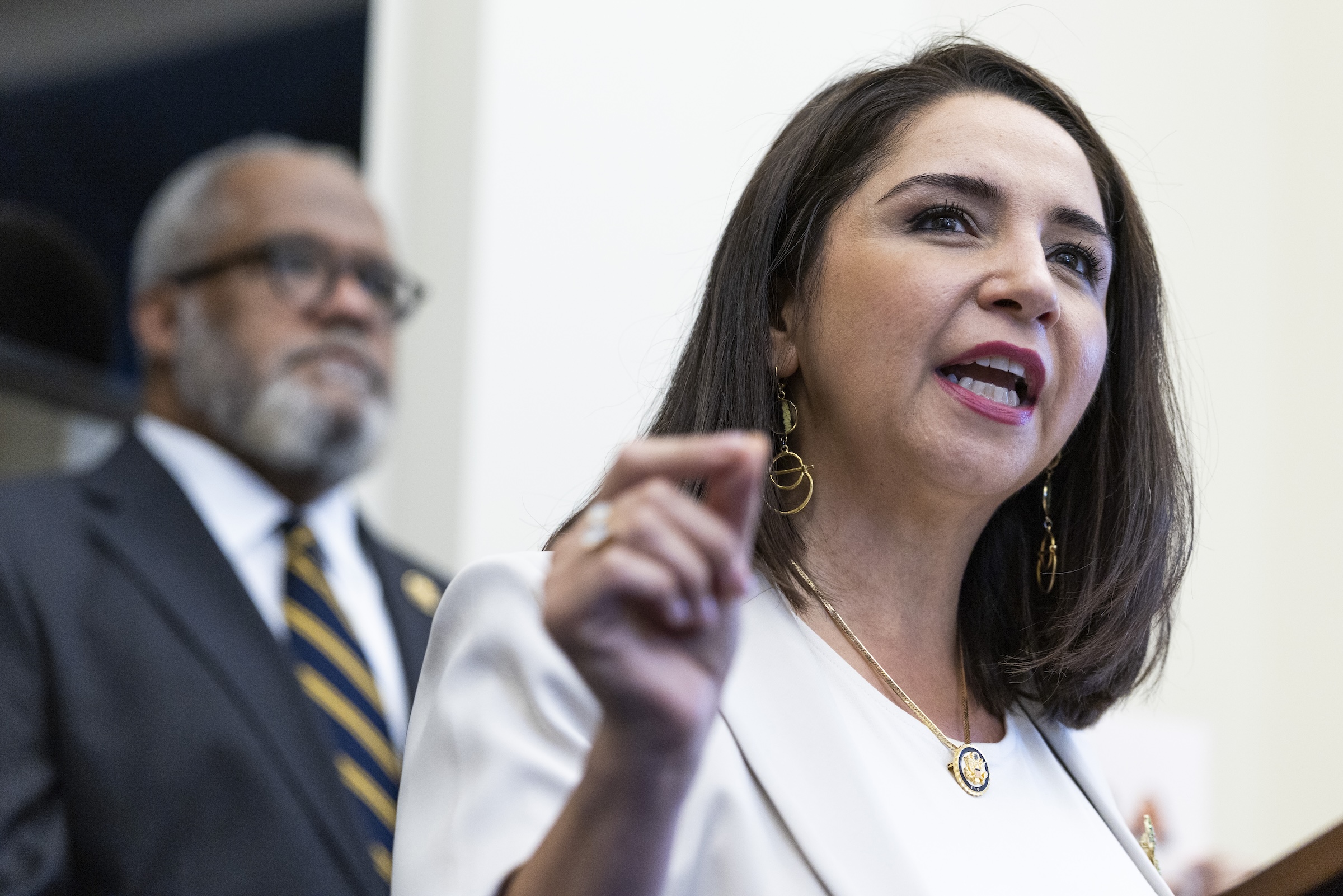
"We know that DHS was intentionally established with an overbroad mission and unchecked power," Ramirez stated during a press conference at the Cannon House Office Building. "The last two years have made it visible what so many communities have been saying for decades: That DHS, frankly, is the single greatest threat to our public safety today. We must strip away every single tool they are using to terrorize us."
Advocacy groups, including over 40 progressive organizations, have signaled their support, calling the DHS a "weaponized" entity that uses the pretense of safety to violate constitutional rights.
The Opposition
While the executive branch has not issued a formal statement on the specific text of the bill, administration officials have historically defended the DHS as essential for preventing terrorism and managing the border. Republican leaders in the House and Senate have already labeled the bill "dead on arrival," characterizing it as an invitation to chaos that would leave the nation’s borders "wide open" and its skies unprotected.
Moderate Democrats have also expressed reservations, fearing that abolishing the department rather than reforming it could lead to a security vacuum and political backlash in the upcoming midterms.
Implications: A New Paradigm for Public Safety
If the Reimagining Safety Act were to become law, it would represent a paradigm shift in how the United States interacts with its residents and the world.
The End of the "Terrorism" Pretext
The bill specifically targets Section 219 of the Immigration and Nationality Act, which allows the government to designate "foreign terrorist organizations." By repealing the statutory grounds that render noncitizens inadmissible based on "terrorist" affiliations, the bill seeks to end the use of broad, often politically motivated labels to justify indefinite detention and deportation.
Geopolitical Repercussions
The closure of Guantánamo Bay and the cessation of using it for immigrant detention would signal a major shift in U.S. foreign policy. It would effectively end the "legal black hole" created during the Bush era, potentially restoring some of the U.S.’s standing regarding international human rights treaties, such as the Geneva Conventions.
The Shift to Public Health
The proposed Department of Community Safety represents an experiment in "de-policing." By focusing on the root causes of violence—such as poverty, lack of mental health resources, and environmental disasters—the bill attempts to decouple "safety" from "enforcement." The success of such a shift would depend on the federal government’s ability to build trust in communities that have, for 24 years, viewed federal agents as an occupying force.
Conclusion
The Reimagining Safety Act is more than a policy proposal; it is a manifesto against the post-9/11 security state. While its path through a divided Congress is fraught with obstacles, its introduction marks a turning point. The conversation has shifted from how to manage the DHS to whether the department should exist at all. For Rep. Ramirez and her supporters, the answer is clear: the architecture of the "War on Terror" has become a war on the American people, and the only solution is to tear it down.


 Jia Lissa

 Suro Senen