


 Layla Zulfa
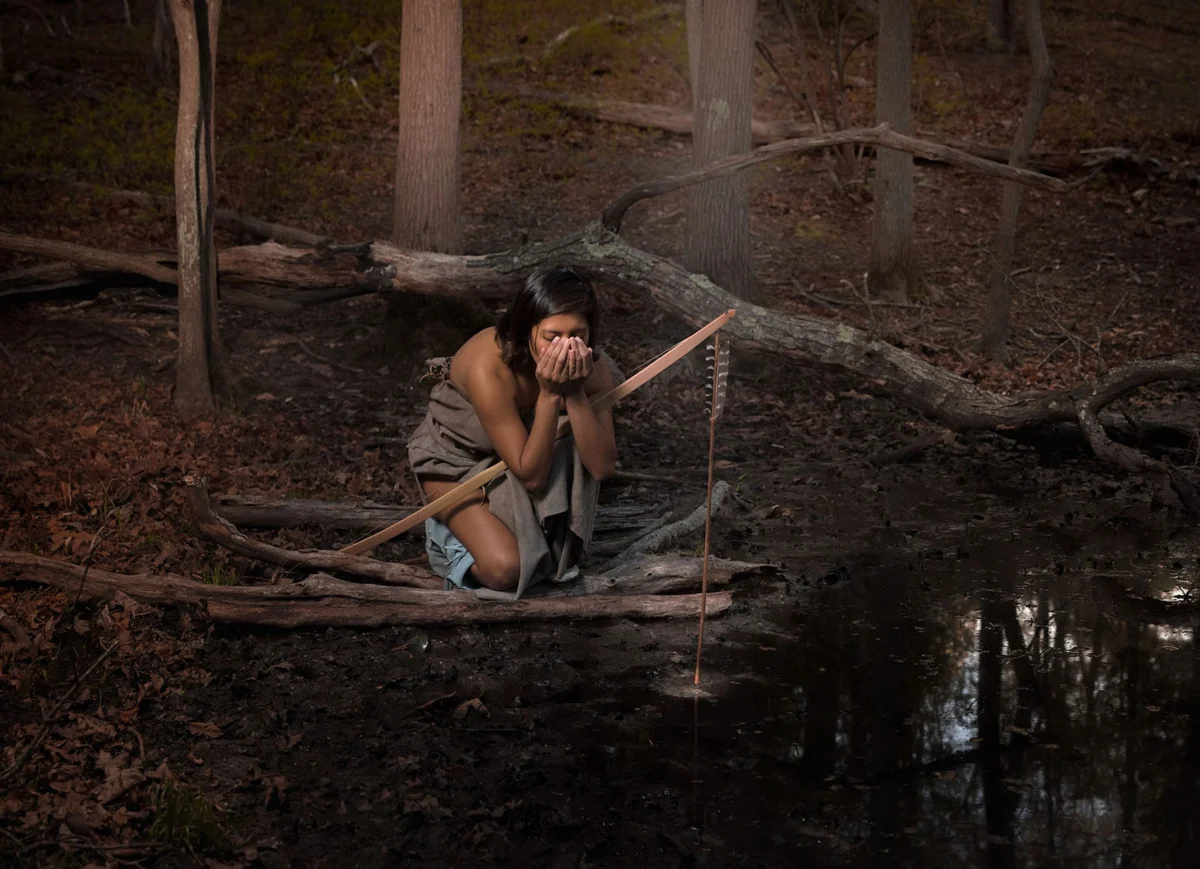
To commemorate Indigenous Peoples’ Day, New York’s cultural landscape offers a profound opportunity for reflection. Across Manhattan’s galleries, the Hessel Museum of Art at Bard College, and the Long Island Museum in Stony Brook, a series of ongoing exhibitions highlights the vital work of Native artists. These presentations do more than preserve history; they engage in what scholars term "survivance"—a concept coined by Anishinaabe cultural theorist Gerald Vizenor that transcends mere survival, actively rejecting narratives of victimhood and dispossession in favor of creative, assertive, and future-oriented expression.
From the late weeks of October through the coming spring, these exhibitions serve as essential sites of inquiry. They invite viewers to engage with the diverse tapestry of Indigenous populations across Turtle Island, challenging institutional gaps in representation and upending colonial tropes through satire, traditional reinvention, and personal narrative.
Main Facts: The Architecture of Memory
The current exhibition cycle features a diverse range of artistic practices, spanning from the stark, material critiques of Cannupa Hanska Luger to the intimate, photographic investigations of Shelley Niro. Each artist approaches the colonial past not as a closed chapter, but as an active presence that must be deconstructed.
Cannupa Hanska Luger: American Traditional
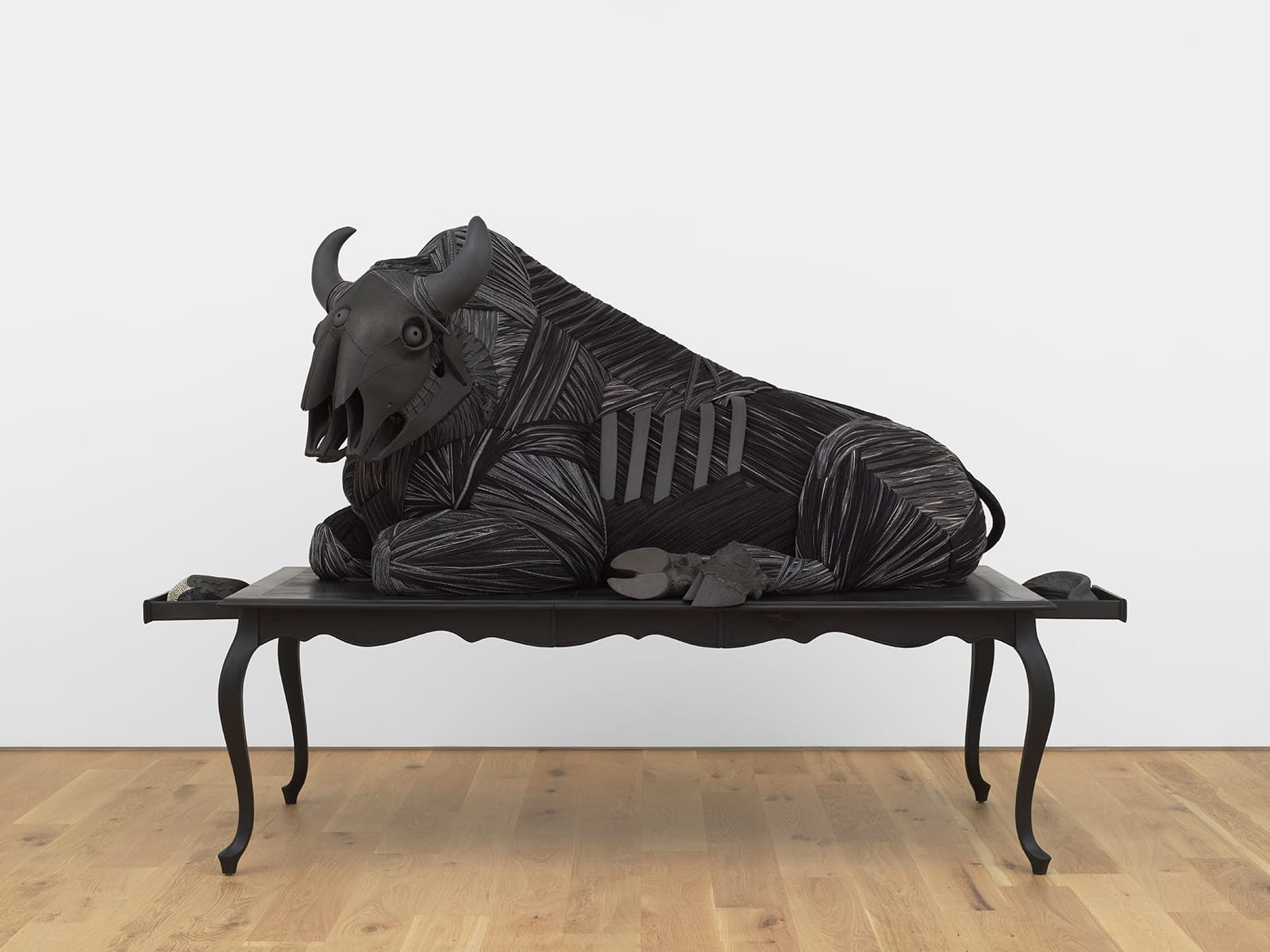
Inaugurating the new space of the Garth Greenan Gallery in SoHo, Cannupa Hanska Luger (Mandan, Hidatsa, Arikara, and Lakota) presents American Traditional. This body of work marks a distinct aesthetic departure for the artist, who is often recognized for his vibrant, multi-media installations. Here, the palette is reduced to matte-black, utilizing ironstone clay, sumi ink, and the residue of fire.
The centerpiece, a striated sculpture of a skinned bison atop a colonial-style dining table, acts as a haunting meditation on the commodification of the American West. By binding these forms with yarn and embellishing them with industrial artifacts—railroad spikes and Pulaski axes—Luger creates a visual lexicon of displacement. The work explicitly confronts the "bizarre and horrific history of colonialism," suggesting that the mutilation of animal forms reflects the broader, violent manipulation of collective memory.
Shelley Niro: In Her Lifetime
At Hales Gallery in Chelsea, Shelley Niro (Turtle Clan, Kanyen’kehá:ka/Mohawk) presents a retrospective selection that traces her career’s evolution. In Her Lifetime serves as an intimate chronicle of Indigenous womanhood. By revisiting her seminal photographic sequences from the 1990s—notably the 1992 work from which the exhibition takes its name—Niro employs humor as a strategic tool. Her addition of hand-painted elements and decorative patterns to these archival prints serves to reclaim the image of the Indigenous subject, asserting an agency that has long been sidelined by Western ethnographic photography.
Chronology of Indigenous Art Advocacy in New York
The presence of these exhibitions is part of a broader, decades-long shift in how New York’s elite institutions interact with Native art.
- 1990s: The emergence of artists like Shelley Niro marked a pivotal moment in the visibility of Native creators within the contemporary art market, as photography began to be used as a primary tool for subverting colonial media portrayals.
- 2010s: A gradual increase in institutional acknowledgments and the formalization of "Indigenous Peoples’ Day" celebrations began to shift the curatorial focus from historical artifacts to contemporary, living Indigenous voices.
- 2023–2025: A surge in solo exhibitions featuring Indigenous artists across major galleries indicates a market correction, moving away from "token" group shows toward deep-dive retrospectives and site-specific commissions.
- October 2026: The current exhibition cycle marks a high point in this trend, with major galleries in SoHo and Chelsea dedicating their primary fall programming to Indigenous survivance.
Supporting Data: The Impact of Native Representation
The necessity of these exhibitions is underscored by data regarding institutional representation. According to reports from the Association on American Indian Affairs and various independent arts equity studies, Indigenous art remains under-represented in the permanent collections of the "Big Five" New York museums by a margin of nearly 80% compared to the population of Indigenous artists active in the country.

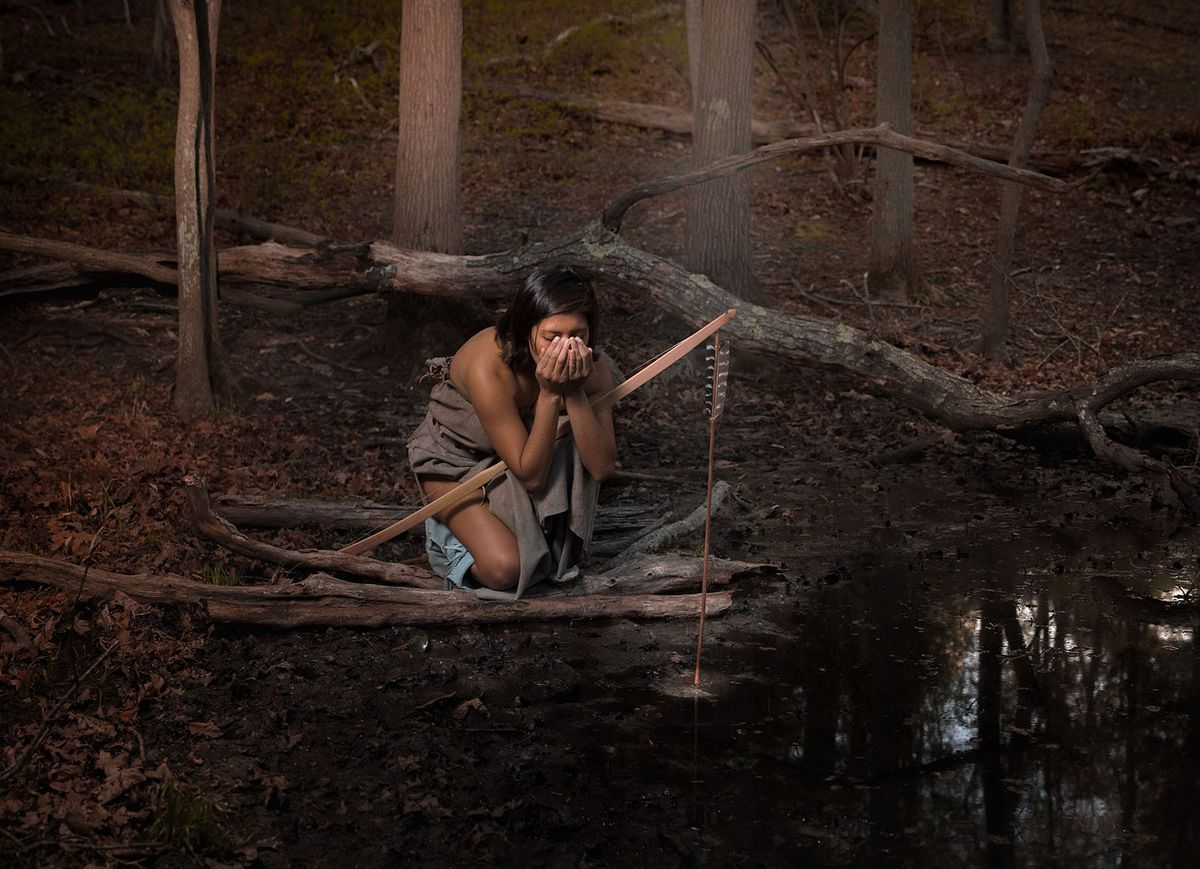
However, the "gallery-to-museum" pipeline is changing. The focus on solo shows, such as those at Garth Greenan and Hales, provides the financial and critical validation required for these artists to enter larger institutional archives. Furthermore, the interest in works like those of Jeremy Dennis—whose exploration of Long Island’s Indigenous history challenges the suburban erasure of the Shinnecock and other local nations—shows that there is an increasing demand from the public for "place-based" history that respects the sovereignty of local Indigenous populations.
Official Responses and Curatorial Intent
Curators and gallery directors have emphasized that these exhibitions are not merely "political statements," but essential cultural contributions that redefine the parameters of contemporary art.
"The goal is not to force a dialogue, but to provide the platform where Indigenous perspectives are the default, not the exception," noted a spokesperson for the Garth Greenan Gallery during the opening of Luger’s American Traditional. The gallery’s commitment to dedicating its flagship space to a project of this weight signals a shift in the commercial valuation of Native art, moving beyond decorative motifs into the realm of rigorous, conceptual critique.
Similarly, the Hessel Museum at Bard College has framed their current programming as an act of "decolonial pedagogy." By placing the work of artists like Sarah Sense alongside traditional archival pieces, the Hessel aims to show that Indigenous art is not static. It is a living, breathing, and rapidly evolving discipline that responds to the technological and sociopolitical pressures of the 21st century.
Implications: The Future of Survivance
The implications of these exhibitions extend far beyond the white walls of Manhattan’s galleries. By centering Native history and futurity, these shows challenge the viewer to confront the "settler-colonial gaze."
- Challenging Institutional Erasure: By presenting Indigenous history through the eyes of the people who lived it, these exhibitions force institutions to acknowledge their own roles in the erasure of Native narratives.
- Redefining "American" Art: The work of Luger and Niro forces a redefinition of what constitutes "American Art." If the narrative of the westward expansion is revealed to be a series of "bizarre and horrific" acts of violence, the art that documents it must necessarily change.
- The Role of the Artist as Historian: These artists are not just creators; they are researchers. Whether through the archival digging of Jeremy Dennis or the familial reconstructions of Shelley Niro, the artists function as keepers of memory, ensuring that local and national histories are not lost to the march of urban development.
As we move through this season of reflection, these exhibitions provide a roadmap for a more inclusive future. They demonstrate that Indigenous art is not a relic of the past; it is a forward-looking, highly critical, and deeply necessary intervention in our collective understanding of history. By supporting these programs, New York’s art community takes a significant step toward acknowledging that the land upon which these galleries sit is not merely a site of business, but a landscape layered with deep, enduring, and sovereign Indigenous meaning.
Whether one is a scholar of Native history, an avid art collector, or a casual observer, these shows are vital stops for anyone interested in the true, complex narrative of the American story.

 Pevita Pearce

 Rifan Muazin






