


 Dwi Wanna
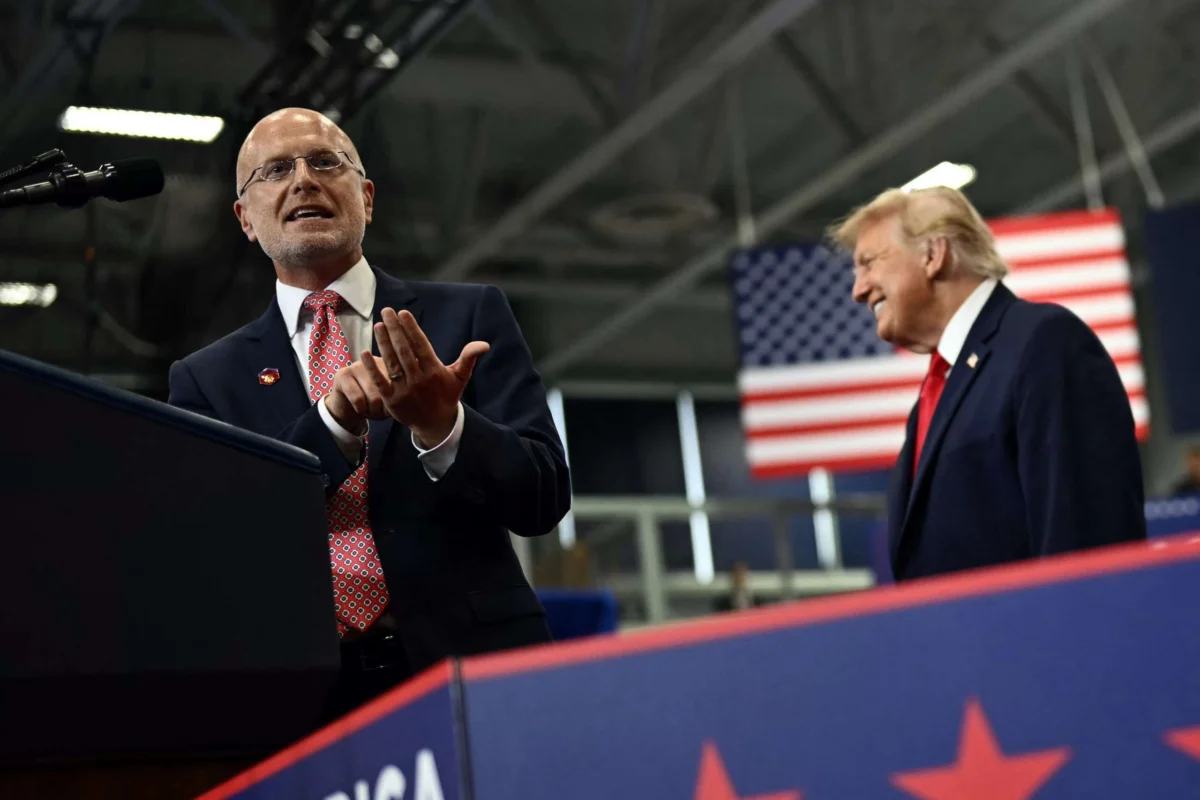
In a move that has sent shockwaves through the American media landscape, Federal Communications Commission (FCC) Chairman Brendan Carr issued a stern, unprecedented warning to the nation’s broadcasters on Wednesday. Carr suggested that television stations airing opinion polls that he characterized as “fake” could be in violation of their federal licensing requirements, citing concerns over “news distortion” and the potential to negatively influence voter enthusiasm.
The declaration, delivered via social media, represents a significant escalation in the ongoing friction between the federal government and the institutional press. While Carr did not cite a single specific instance of a fraudulent poll, nor name a specific news organization, the timing of his comments—barely two weeks before a major election—has prompted immediate accusations of government-sanctioned censorship and a potential slide toward authoritarian governance.
The Chronology of the Controversy
The controversy began on Wednesday when Chairman Carr posted a statement on social media platforms, targeting the media’s dissemination of polling data. Carr argued that broadcasters are “amplifying or airing these polls without regard to basic journalistic ethics and without informing the public that those polls lack a scientific, accurate, or even real basis.”
Carr’s rhetoric closely mirrors the language frequently employed by President Donald Trump, who has consistently labeled unfavorable polling data as “fake news.” As the President’s nominee to lead the FCC, Carr’s intervention is being viewed by critics as a strategic effort to weaponize federal regulatory power against information that casts the administration in a negative light.
The warning quickly transitioned from a critique of journalistic standards to a veiled legal threat. Carr reminded broadcasters that their public interest obligations prohibit them from engaging in “news distortion or promoting broadcast hoaxes.” By grouping public opinion polls under the umbrella of “hoaxes,” Carr signaled that the FCC may be prepared to investigate or penalize stations that report on data that is politically inconvenient for the White House.
Understanding the Regulatory Landscape: News Distortion and Licensing
To understand the gravity of Carr’s comments, one must examine the FCC’s long-standing, yet sparingly used, “news distortion” policy. Historically, the Commission has maintained a hands-off approach regarding the content of news broadcasts to avoid running afoul of the First Amendment. The policy against “staging” news—the deliberate fabrication of events or the falsification of news reports—is narrow by design.
Legal experts have noted that reporting on a publicly available, albeit flawed or inaccurate, opinion poll does not meet the legal threshold for news distortion. A station reporting on a poll is merely relaying data; they are not creating the data themselves.
Steve Herman, the former White House bureau chief at Voice of America, was among the first to sound the alarm on the legal instability of Carr’s position. “The FCC threatening broadcasters for airing specific political data is a chilling content-based restriction on speech,” Herman wrote. He emphasized that the FCC possesses no legal authority to mandate how a broadcaster contextualizes a poll, and that any attempt to enforce such a mandate would almost certainly be struck down by federal courts as a violation of the First Amendment.
Official Responses and Internal Dissent
The internal reaction at the FCC was swift and condemnatory. Commissioner Anna Gomez, a Democratic member of the Commission, issued a sharp rebuttal to the Chairman’s assertions.
“Pollsters who intentionally mislead the public should answer for it,” Gomez stated, drawing a clear distinction between the entities that produce data and the broadcasters that report it. She clarified that “broadcasters who report publicly available polling data should never be punished when a poll is wrong. FCC rules on news distortion or hoaxes do not apply to a station that reports this data in good faith.”
The dissent from within the Commission highlights a deepening partisan and ideological divide over the role of federal agencies in policing the information ecosystem. While Carr appears to view his role as a guardian against perceived “misinformation,” his colleagues and outside legal scholars see an agency overstepping its statutory authority to influence political discourse.

The “Chilling Effect” on Local News
Perhaps the most tangible danger cited by observers is the “chilling effect” this rhetoric will have on local newsrooms. Local general managers and news directors operate under tight budgets and rely on FCC license renewals to maintain their business operations. Even the mere suggestion of a regulatory investigation can be enough to compel risk-averse stations to pull certain types of coverage.
Chris Gloninger, a former television meteorologist who has experienced the pressures of modern broadcast management, expressed profound concern. “Holy shit, this is dangerous,” Gloninger wrote. “Two weeks before an election, the FCC chair is threatening broadcaster licenses over polls he calls ‘fake.’ No GM will risk that, so polls vanish.”
This sentiment was echoed by media analysts who warn that if broadcasters stop covering electoral data for fear of retribution, the public’s ability to assess the political climate in the final days of a campaign will be severely compromised.
Broader Implications: Democracy and the Press
The broader implications of Carr’s statement have triggered a fierce debate about the health of American democracy. Critics argue that by labeling data that highlights President Trump’s historic unpopularity as “fake,” the government is effectively attempting to suppress the truth.
Mark Jacob, a former metro editor at the Chicago Tribune, characterized the move as an anti-free-speech action, arguing that the administration is leveraging the state’s power to punish outlets that report on the President’s standing with the electorate. “We are sliding into a dictatorship,” Jacob asserted, “and it would be helpful if major media would do their duty and warn the public.”
Adam Klasfeld, editor-in-chief at All Rise News, labeled Carr the administration’s “censorship czar,” arguing that the warning serves as a blueprint for the state to punish the dissemination of any data—scientific, economic, or political—that is disfavored by those in power.
Princeton historian Kevin Kruse took the critique a step further, suggesting that the threat is an impeachable offense. “The president shouting ‘fake news’ is bad enough,” Kruse noted, “but the FCC commissioner threatening to punish broadcasters for promoting ‘fake news’ like ‘the president is historically unpopular’ is so much worse.”
Conclusion: The Legal and Political Fallout
As the election cycle enters its final, decisive weeks, the standoff between the FCC and the broadcasting industry shows no signs of abating. Democratic strategist Adam Parkhomenko encapsulated the frustration of many observers with a simple reminder: “It’s not illegal to tell the American people that Trump is a failed president.”
The reality, as legal scholars point out, is that the First Amendment provides a robust shield for the press. However, the psychological and administrative burden of defending against a federal agency is immense. Whether broadcasters will stand their ground or succumb to the pressure of an increasingly aggressive regulatory body remains the central question of the closing campaign season.
For now, the controversy has underscored a stark reality of the current political moment: the line between regulatory oversight and political censorship has become dangerously thin. As the nation watches to see if the FCC will take further action against specific stations, the media remains caught in a high-stakes tug-of-war between the obligation to inform the public and the fear of state-sponsored retaliation.

 Rifan Muazin
 Ammar Sabilarrohman






