


 Siti Muinah
From the bustling streets of New York during Climate Week to the smoke-filled horizons of Indonesia and the high-stakes courtrooms of Spain, the past week has served as a poignant reminder of the global nature of environmental activism. Greenpeace’s latest efforts highlight a multifaceted struggle: one that balances legal battles for the right to protest, urgent warnings about corporate exploitation, and the fight for the integrity of the natural world.
Through the lens of photo-journalism and direct action, activists are documenting a world at a turning point, where the intersection of human rights, political policy, and ecological survival has never been more critical.
The Sagunto Case: A Legal Precedent for Protest
The Facts
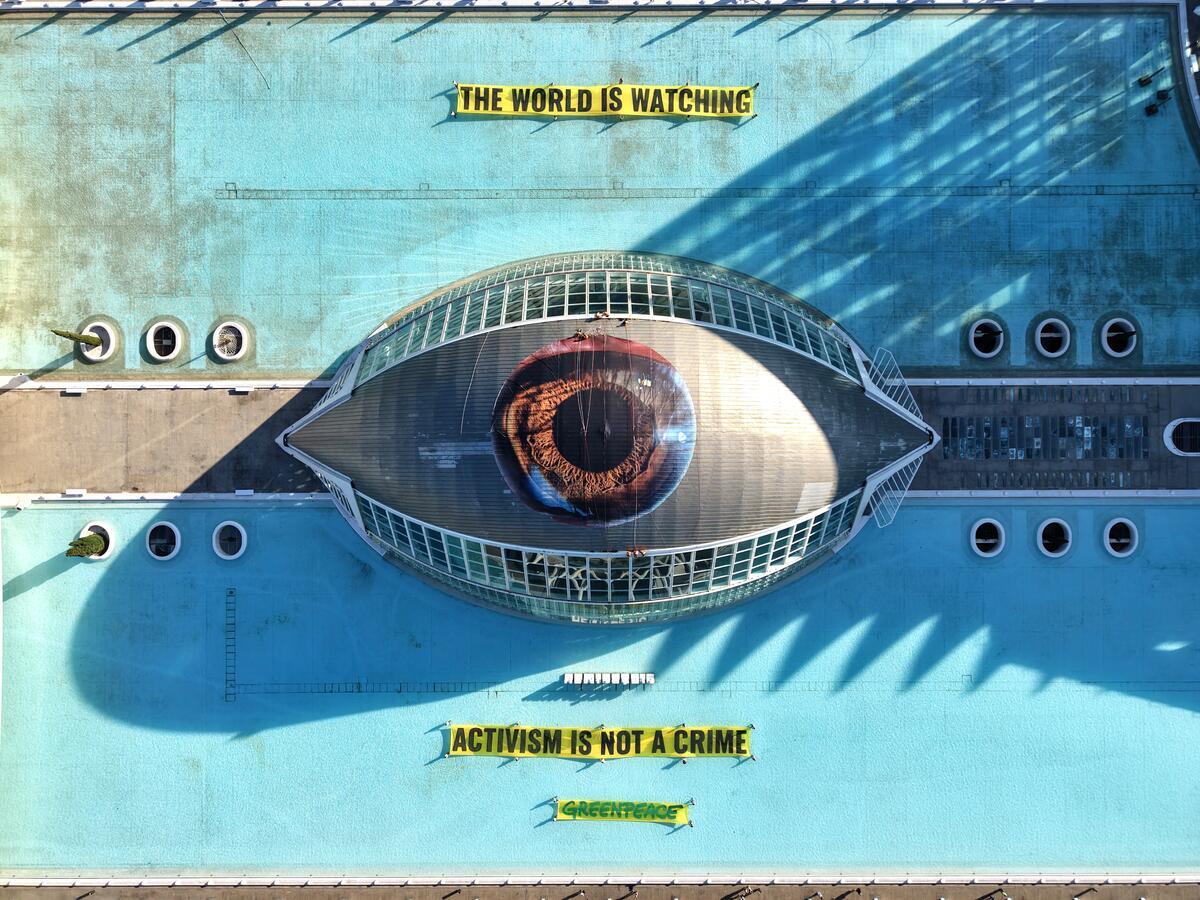
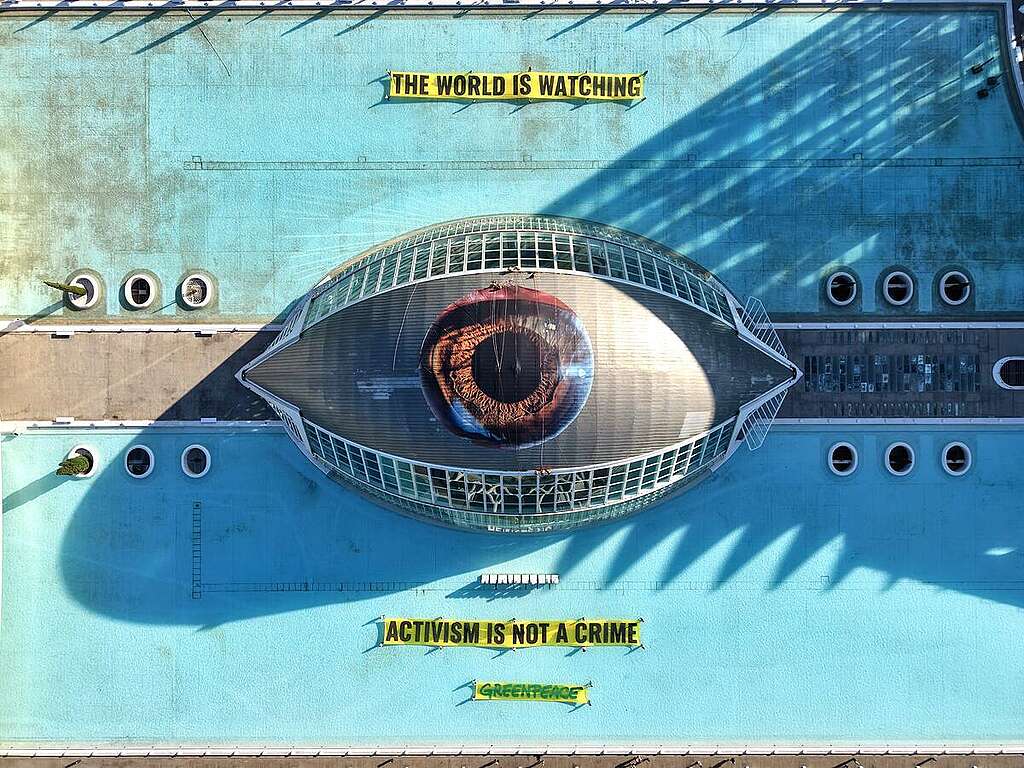
In Valencia, Spain, the stakes for climate activists have reached an unprecedented height. A massive 530-square-meter eye was unfurled at the Hemisfèric, emblazoned with the message, "The world is watching." This dramatic visual display served as the backdrop for a gathering of over 40 Greenpeace activists, all standing in solidarity with 11 of their colleagues facing trial this week at the Ciudad de la Justicia.
The Legal Implications
The defendants are being prosecuted for a 2021 peaceful protest involving a gas tanker at the port of Sagunto. The prosecution is currently seeking a five-year prison sentence for each individual. Human rights organizations and legal experts are closely monitoring this case, as it represents one of the harshest sentencing demands ever sought for peaceful civil disobedience in Europe. The outcome of this trial could set a dangerous precedent, potentially chilling the right to protest for environmental causes across the continent.
Global Snapshots: A Chronology of Action
The diversity of Greenpeace’s operations this week illustrates the breadth of the challenges currently facing the planet.
Brazil: The House of Cards
In Brasília, activists constructed a precarious "House of Cards" in front of the National Congress. This visual metaphor was designed to highlight the volatility and instability of the upcoming 2026 Senate elections. Part of the broader #YourVoteMatters campaign, the "Desembaralho do Senado" (Untangling the Senate Mess) project seeks to pressure policymakers to prioritize environmental legislation over political maneuvering.
Indonesia: The Ongoing Crisis of Peatland Fires
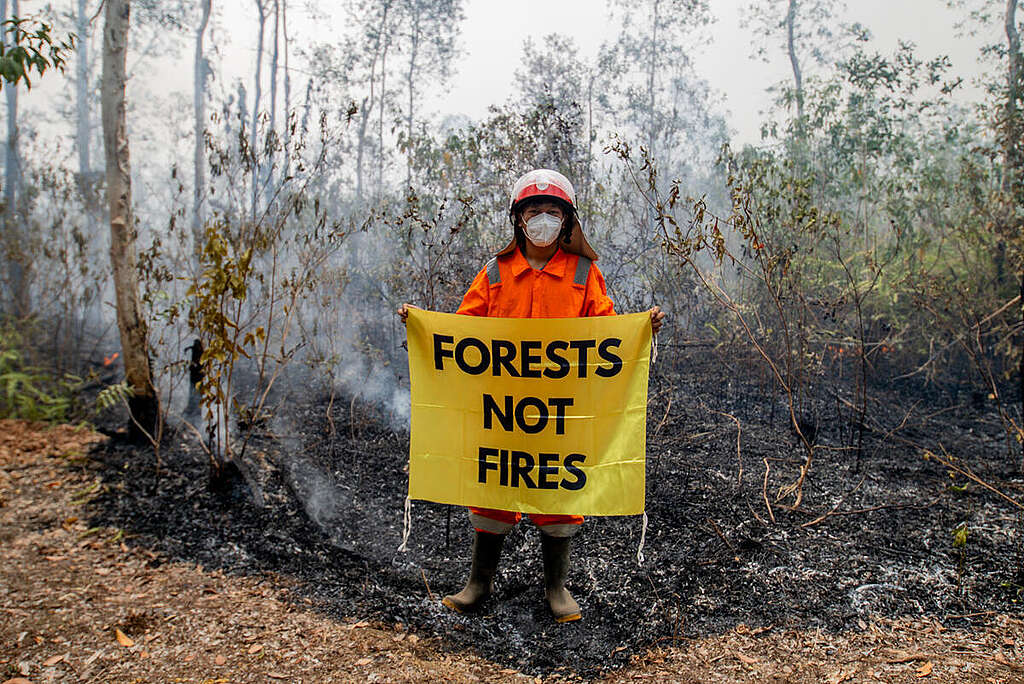
In South Sumatra, the reality of climate change is not a theoretical debate but a respiratory crisis. Ali, a member of the Greenpeace Indonesia Fire Prevention Team, was documented holding a banner that read "Forest Not Fires" within the PT Bintang Harapan Palma (BHP) concession area.
The recurring fires in this region are a primary driver of toxic haze, which disproportionately affects vulnerable populations. Children and the elderly in Palembang and surrounding areas are seeing a spike in acute respiratory infections (ARI). These fires are not merely an environmental tragedy but a public health emergency, exacerbated by land management policies that favor industrial palm oil interests over community safety.
New Zealand: A Stand for Conservation
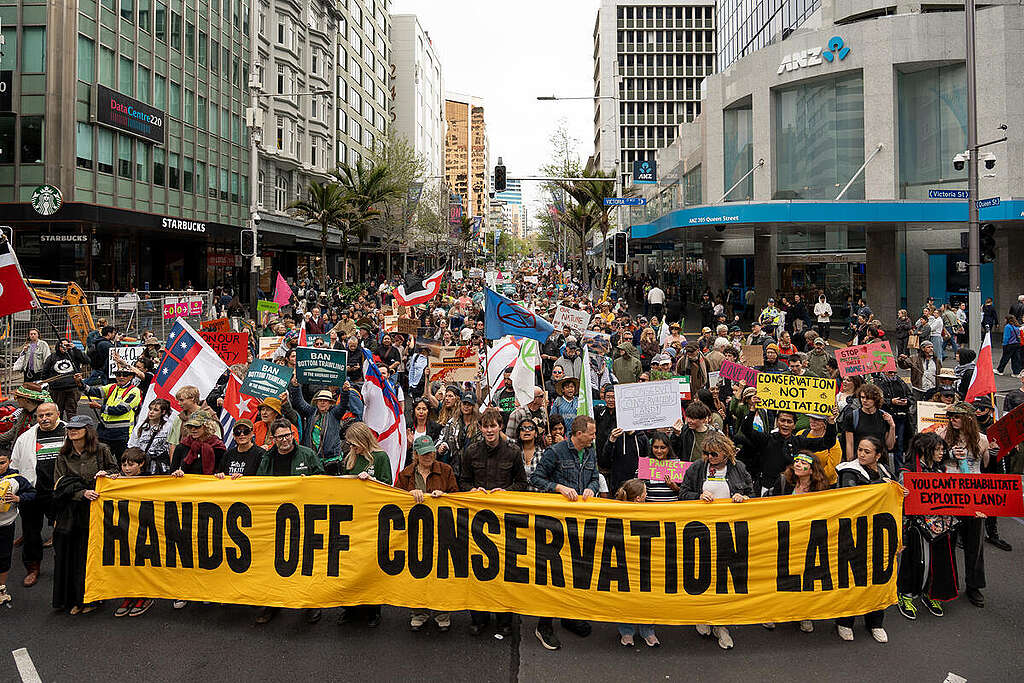
On September 19, thousands of New Zealanders took to the streets to oppose the "Conservation Amendment Bill." The proposed legislation, viewed by critics as a threat to Aotearoa’s ecological heritage, would open protected conservation lands to commercial exploitation. The scale of the protests suggests a growing national consensus against the commodification of protected wilderness.

Climate Week NYC: Challenging the Corporate Narrative
As the United Nations General Assembly (UNGA) convened in New York, the city became the epicenter of a different kind of resistance. Greenpeace USA utilized the week to target the intersection of corporate power and environmental degradation.
The "Resist" Projections
Greenpeace projected massive, high-contrast messages onto the AT&T building and the Manhattan Bridge, framing the climate crisis through the lens of human rights: “Defend your Freedoms + Defend your Rights = Defend the Planet. RESIST!” By linking climate justice to the protection of democratic freedoms, activists aimed to hold billionaires and political autocrats accountable for their role in the ongoing environmental crisis.
Deep Sea Mining and Corporate Ties
One of the most specific interventions involved a digital billboard truck circling the New York Times building during the "Climate Forward" event. The message directly challenged TMC (The Metals Company) CEO Gerard Barron. The campaign highlighted concerns regarding TMC’s efforts to fast-track deep-sea mining permits via the U.S. administration, effectively bypassing international oversight.
Environmental scientists remain deeply skeptical of deep-sea mining, arguing that the practice lacks safety protocols and ecological necessity. Greenpeace’s move to bring this issue to the Times—a media hub—was a strategic effort to force the public to examine the "green" labels often applied to speculative mining ventures.
The AI Infrastructure Burden
Wall Street, the traditional heart of global finance, was confronted with the physical reality of the digital age. Activists deployed "AI bubbles" to highlight the environmental impact of hyperscale data centers. These facilities, essential for the AI boom, are projected to become some of the largest contributors to carbon pollution due to their immense energy requirements and reliance on gas. The protest aimed to shine a light on the financial institutions fueling this infrastructure expansion without adequate climate safeguards.
Analysis: The Intersection of Policy and Protest
The common thread linking these diverse actions is the refusal to accept the status quo. Whether in the courtroom in Valencia or the boardroom in New York, the central argument remains the same: Environmental justice cannot be separated from political and economic reform.
Supporting Data and Trends
- Legal Risks: The Sagunto case marks a shift in how governments are treating climate activism, moving from administrative fines to criminalizing dissent with potential multi-year prison terms.
- Health Costs: In Indonesia, the economic burden of respiratory illnesses linked to forest fires is estimated to cost the regional healthcare system millions of dollars annually, a cost rarely factored into the profits of the entities causing the fires.
- Infrastructure Impact: Research cited by Greenpeace suggests that if current data center expansion trends continue, the energy consumption of these facilities could potentially negate the progress made in renewable energy transitions in several major economies.
Official Responses and Stances
While the entities targeted by these protests—including corporations and government bodies—often maintain that their actions are within the bounds of the law or necessary for economic development, the public outcry suggests a deepening disconnect between these institutions and the general populace. The recurring theme in the rhetoric of Greenpeace is the "urgent need for transparency"—a call for deep-sea mining to be subjected to international law, for Senate votes to be made transparent, and for the climate costs of AI to be acknowledged by investors.
Conclusion: Bearing Witness
For over 50 years, Greenpeace has utilized "bearing witness" as a cornerstone of its activism. By documenting environmental injustice through high-impact photography and direct action, the organization seeks to make the invisible visible. Whether it is the smoke of a burning Indonesian peatland or the projection of a message on a Manhattan bridge, these images are intended to serve as a call to action.
As the world navigates a complex political landscape, these events remind us that environmental progress is not a passive process. It is a series of active, often uncomfortable, confrontations with those in power. As the Sagunto trial begins and the debates over conservation and energy infrastructure continue, one thing remains clear: the eyes of the global community are indeed watching, waiting for the institutions of power to reconcile their actions with the reality of a changing planet.

For those interested in the ongoing documentation of these campaigns, the full collection of imagery can be accessed through the Greenpeace Media Library.


 Nila Kartika Wati

 Dwi Wanna