




 Lina Hope
By Anna Lee and Phillip Pyle
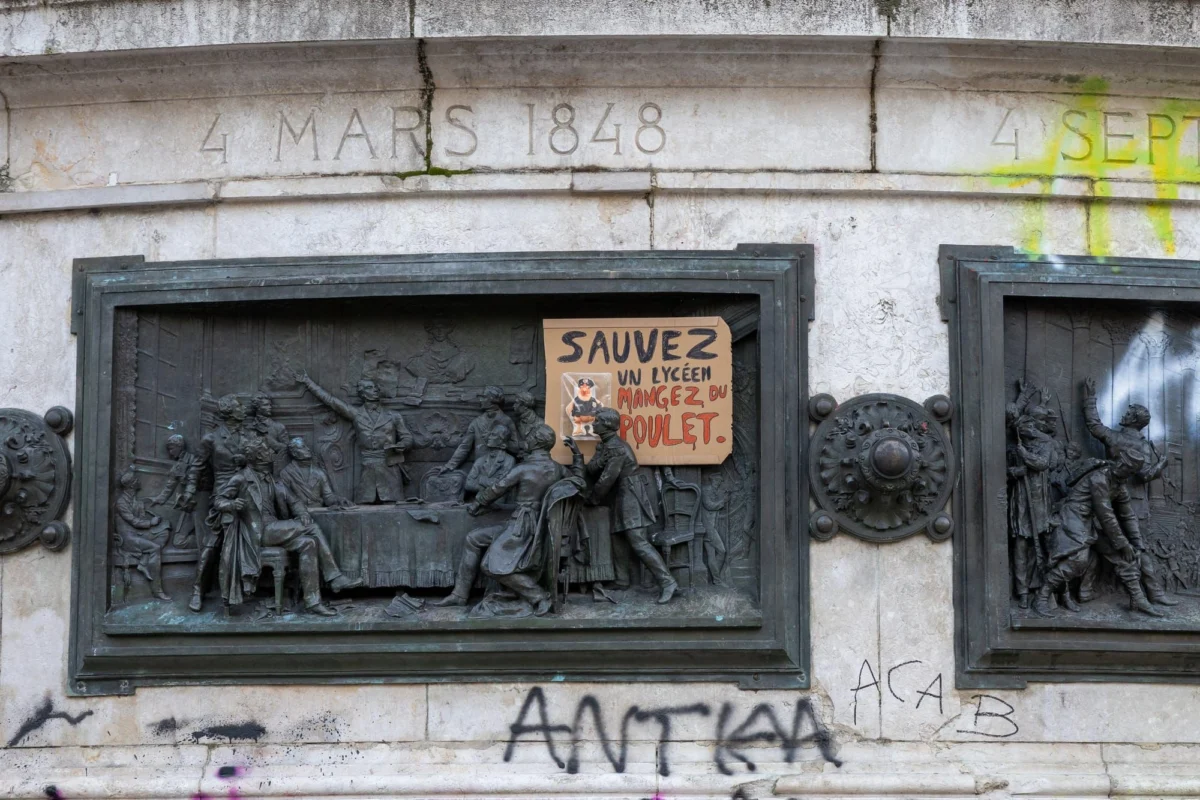
Across the plazas of Paris, Marseille, and Toulouse, the bronze and stone figures that define France’s historical identity are being transformed. Statues of Marianne, the allegorical personification of the French Republic, are no longer silent observers of history; they have become active, dressed participants in a burgeoning student-led movement. As youth across the country take to the streets to protest under-resourced schools, a deepening cost-of-living crisis, and systemic police violence, they are leveraging the nation’s public landmarks to force a dialogue with the state.
This tactical repurposing of monuments is not a novel invention, but a deliberate invocation of the spirit of May 1968. By placing yellow vests on statues, streaking the eyes of revolutionary icons with black tears, and hoisting banners of solidarity, today’s youth are signaling that the promises of the French Revolution—Liberté, Égalité, Fraternité—are, in their view, currently being betrayed.
A Legacy of Uprising: From May ’68 to 2026
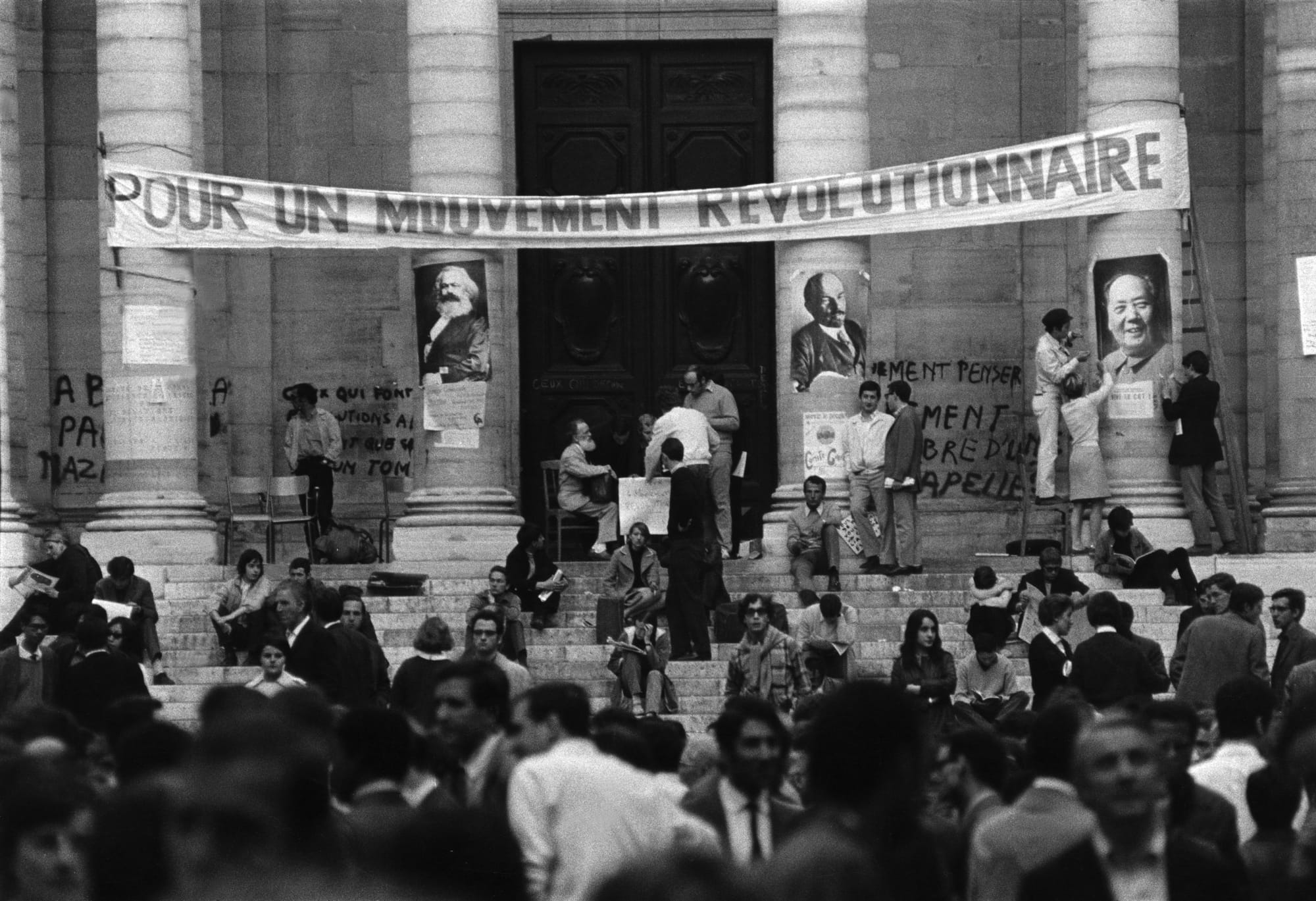
To understand the current fervor, one must look back to the spring of 1968, a watershed moment when French students and workers paralyzed the country. The visual language of that era—flags draped over the pillars of the Sorbonne, portraits of Marxist leaders placed in the hands of Louis Pasteur and Victor Hugo—established a blueprint for civil disobedience.
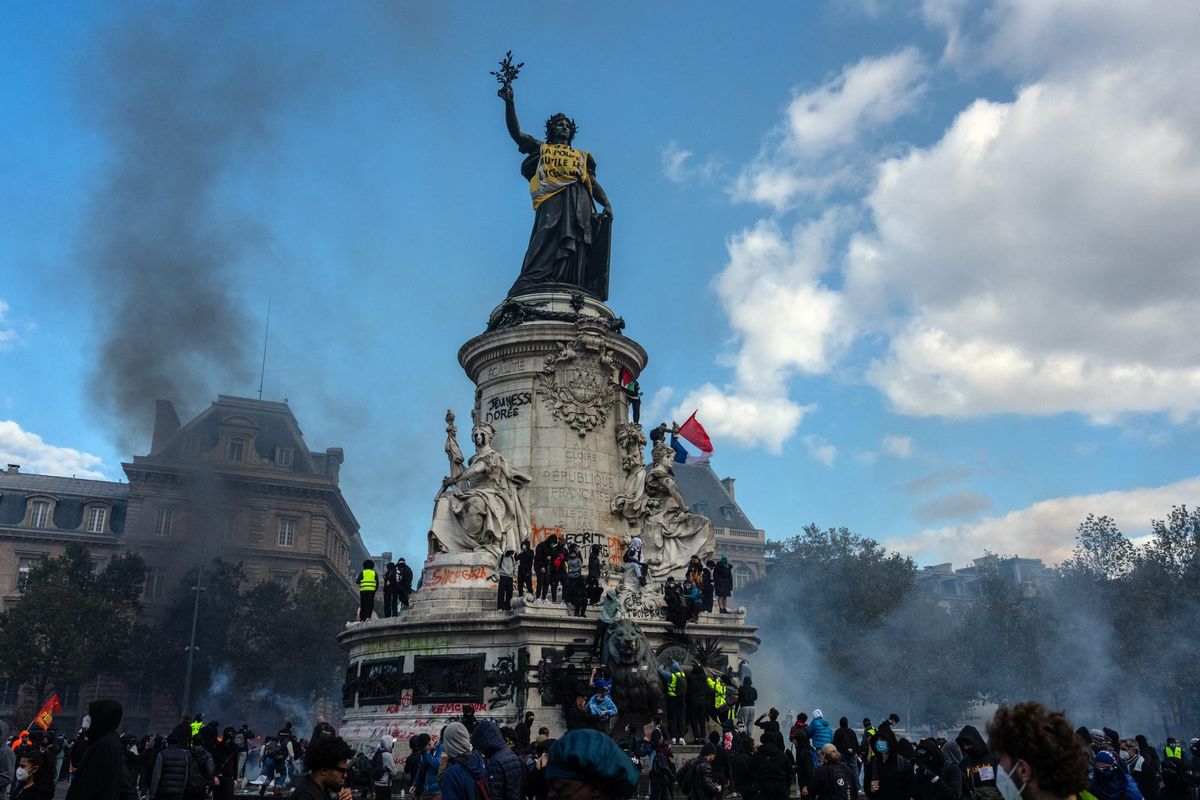
During the historic demonstrations of May 1968, the Monument à la République in Paris became a sacred ground for activists. Today, that same monument has been reclaimed. Earlier this month, demonstrators draped the statue in a stark white garment bearing the message: “Neglected high schools, youth sacrificed.” The message was an indictment of the current educational climate: grueling hours, chronic staff shortages, and a curriculum that students argue leaves them ill-equipped for a modern, precarious economy.
The echoes of the past are intentional. Protest art seen in recent weeks includes signs reading “Generation 67 brings you May 68,” while others serve as direct warnings to the government: “If you pull a fast one on us, we will give you a May 68.”

Chronology of Escalation: October 2026
The current wave of unrest began to intensify in early October, fueled by a mixture of economic frustration and a series of high-profile confrontations between students and the French riot police.
- October 4: Large crowds gathered at the Monument à la République, with students climbing the structure to hold it as a command post, mirroring the tactical occupations of the late 1960s.
- October 17: Protesters performed a “wardrobe change” on the Marianne statue, adorning her in a yellow vest—a clear reference to the gilets jaunes (yellow vest) movement of 2018–2020. The vest carried the haunting inscription: “2026: The police mutilates high schoolers.”
- October 19: Tensions reached a fever pitch as students from the École du Louvre staged a blockade at the main entrance of the Louvre Museum, forcing a temporary closure of the world’s most visited cultural institution.
- Late October: In Marseille, the symbolic stakes were raised further when protesters broke into City Hall, knocking a bust of Marianne to the floor—an act of iconoclasm that has sparked a fierce national debate regarding the limits of political protest and the sanctity of state symbols.
The Cost of Compliance: Police Violence and Youth Safety
Central to the students’ anger is the state’s heavy-handed response to these demonstrations. According to recent reports, police have arrested thousands of minors since the protests began, with hundreds of students requiring medical attention after clashes with riot squads.
French human rights lawyers and advocacy groups have begun to document what they describe as "war-like injuries" inflicted upon teenagers. Accounts include a 14-year-old boy in a Parisian suburb who was maimed by a tear gas grenade, and numerous reports of baton beatings during dispersal operations.

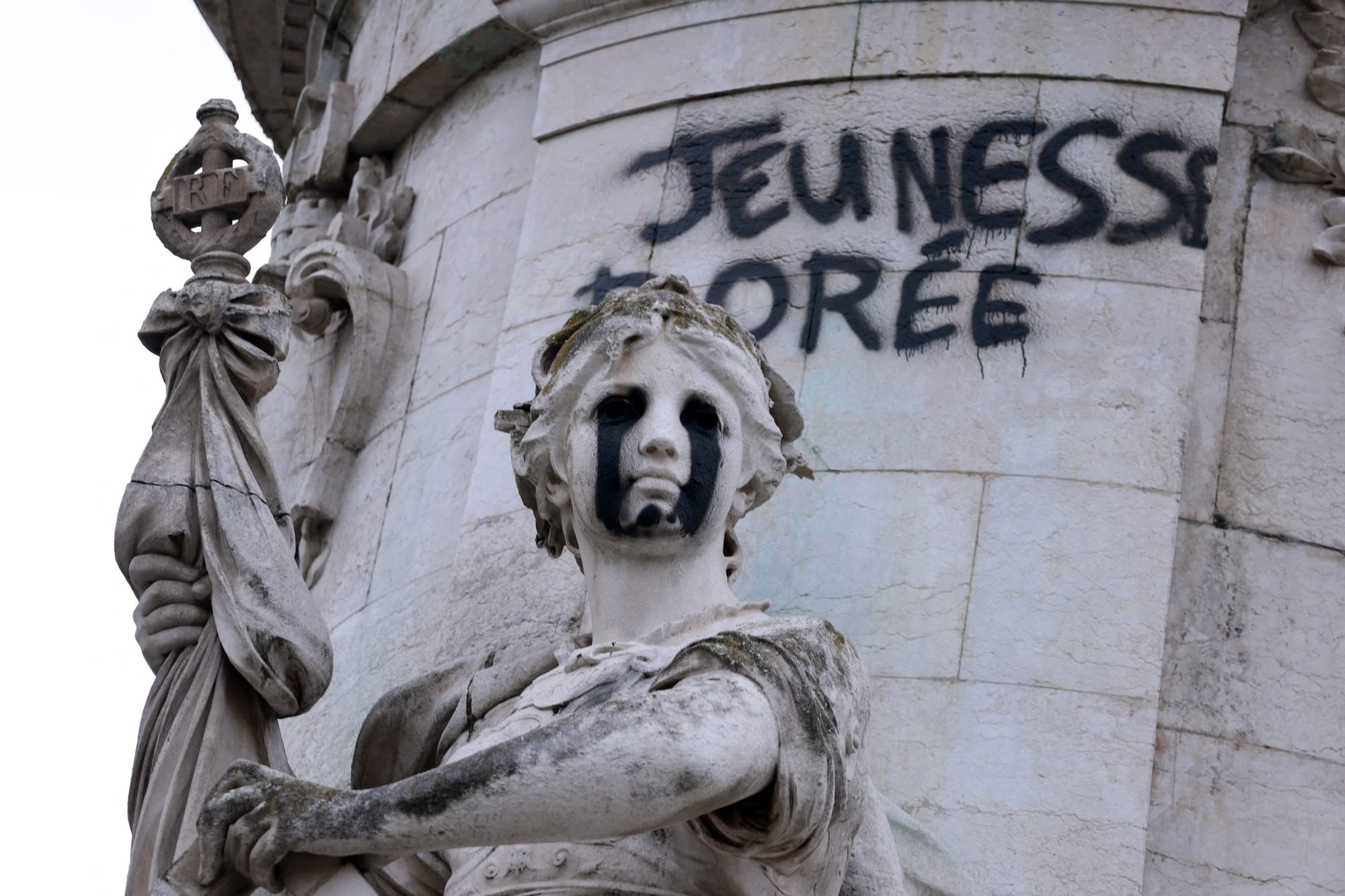
The juxtaposition of these injuries with the imagery of the “Yellow Vest” statue—a symbol of the working class and the marginalized—highlights the widening chasm between the French administration and its youth. By painting “black tears” onto the statues of Liberty, Equality, and Fraternity, students are effectively accusing the state of abandoning the very principles it claims to uphold. The statues, once icons of national pride, are now serving as mirrors held up to a government that protestors accuse of authoritarian overreach.
Universal Solidarity and Global Context
The movement has also sought to align itself with broader international struggles, a tactic that mirrors the anti-Vietnam War sentiments of 1968. In Toulouse, activists placed a Palestinian flag atop a statue of Joan of Arc, draping it in a yellow vest. The rapid removal of these items by local authorities ignited a firestorm on social media, with critics labeling the act an assault on French national identity, while supporters argued that the flag serves as a necessary symbol of universal human rights.
This is part of a global phenomenon. From the toppling of Christopher Columbus statues in the United States to the removal of colonial figures like King Leopold II in Belgium, the monument has become the primary site of contestation in the 21st century. By transforming these static figures, protesters are not just vandalizing property; they are engaging in a sophisticated form of performance art that forces the public to reconsider who and what these monuments represent in a changing society.
Official Responses and Political Implications
The French government, led by a cabinet grappling with a worsening cost-of-living crisis, has struggled to find a cohesive response. President Emmanuel Macron’s administration has condemned the “vandalism” of public monuments, framing the protests as a threat to public order and the preservation of French heritage.
“The sanctity of our national symbols is not a matter for negotiation,” a spokesperson for the Ministry of the Interior noted in a press briefing last week. However, the government faces a political dilemma: the more they crack down on the protesters, the more they validate the students’ claims of police brutality.
Education Minister officials have attempted to open dialogues regarding school funding, but student unions—emboldened by the current momentum—have largely rejected these offers, calling them “performative concessions” that fail to address the core issues of economic inequality and the structural neglect of the public education system.
Implications for the Future
The current protest movement in France suggests that the nation is entering a period of significant social re-evaluation. The use of public space as a canvas for dissent is a powerful indicator that the current generation is not satisfied with the traditional avenues of political participation.
As winter approaches and the cost-of-living crisis threatens to worsen, the statues of Paris may continue to evolve. Whether these demonstrations lead to substantive policy changes in education and policing remains to be seen. What is clear, however, is that the youth of France have successfully weaponized the history of their nation to challenge its present.
By reclaiming the imagery of the Republic, they have declared that if the state will not listen to their voices, it will at least be forced to look at the statues they have transformed—statues that now stand as testaments to the pain, the rage, and the unresolved aspirations of a generation that feels left behind. The monuments of France are no longer silent; they are speaking, and they are demanding to be heard.


 Pevita Pearce

 Rifan Muazin






