


 Asro
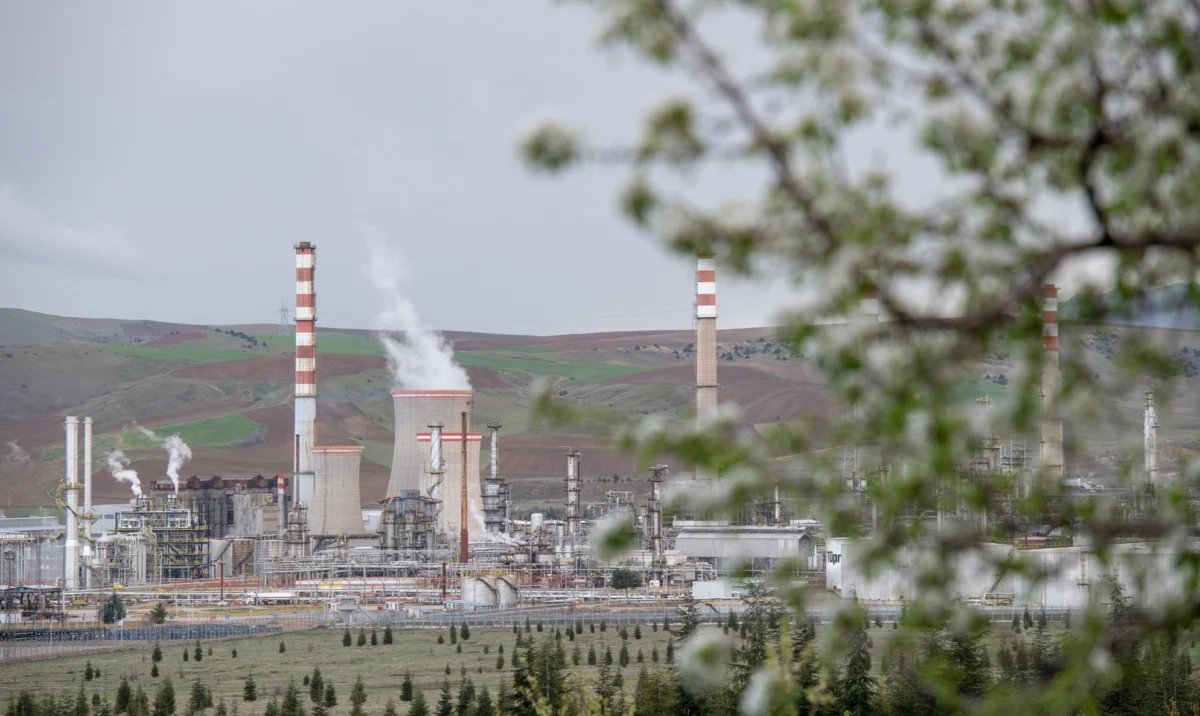
In a move that underscores the precarious balance between immediate economic stability and long-term environmental commitments, the UK government has officially approved the extraction of natural gas at the controversial Jackdaw field in the North Sea. The decision, spearheaded by Energy Secretary Miatta Fahnbulleh, marks a significant juncture in British energy policy, highlighting the internal friction between fulfilling industrial manifesto promises and maintaining global climate leadership.
While the government maintains that the project is a vital component of national energy security, the approval has reignited a fierce national debate. The administration acknowledged in its formal briefing that authorizing new extraction in a sensitive climate era could weaken the UK’s diplomatic leverage when urging developing nations to transition away from fossil fuel dependency.
Main Facts: The Jackdaw Approval
The Jackdaw gas field, located approximately 150 miles east of Aberdeen, has been a flashpoint for political contention for years. On Wednesday, the Department for Energy Security and Net Zero (DESNZ) confirmed that the project would proceed. The approval comes after a period of intense legal and political scrutiny, during which the project’s viability was weighed against its carbon footprint.
The economic arguments provided by the government are substantial. According to official estimates, the project is projected to contribute £2.9 billion ($3.88 billion) to the UK economy over its operational lifespan. Beyond the macro-economic benefits, the government emphasizes the protection of hundreds of high-skilled jobs in the North Sea oil and gas sector—a workforce currently facing the daunting transition toward renewable energy.
Secretary Fahnbulleh defended the decision by framing it as a "pragmatic necessity." By utilizing domestic reserves, the UK aims to reduce its reliance on volatile international energy markets, which have been severely disrupted by geopolitical instability in the Middle East and the ongoing repercussions of the war in Ukraine.
Chronology of the Jackdaw Controversy
The path to this week’s approval has been long and arduous, marked by changing political administrations and shifting environmental priorities.
- 2022: The Jackdaw field receives initial regulatory approval under the previous Conservative government. Environmental groups, most notably Greenpeace and Uplift, launch legal challenges, arguing that the environmental impact assessment failed to account for the full lifecycle emissions of the gas extracted.
- 2023: The project faces significant delays as courts demand more rigorous scrutiny regarding the "Scope 3" emissions—the carbon released when the gas is eventually burned by consumers.
- Early 2024: The UK General Election brings the Labour Party to power. During the campaign, Labour pledged to stop issuing new oil and gas licenses, creating uncertainty for existing projects like Jackdaw.
- Mid-2024: High-profile political pressure mounts. International figures, including US President Donald Trump, weigh in on global energy production, indirectly influencing the discourse surrounding UK domestic output.
- September 2024: Following a review of the legal standing and the existing licensing framework, Miatta Fahnbulleh issues the formal approval for the project to proceed, maintaining that it adheres to the letter of the Labour manifesto by not constituting a "new" license.
Supporting Data: Energy Security vs. Climate Targets
The central tension of the Jackdaw project lies in the conflicting data points provided by economists, climate scientists, and energy analysts.
Economic Projections
The government’s estimate of a £2.9 billion boost to the economy is predicated on sustained high demand for natural gas throughout the transition period. Proponents argue that the Jackdaw field is particularly efficient, as it is located near existing infrastructure (the Shearwater platform), which reduces the capital expenditure required to bring the gas to market.
Carbon Accounting
The government asserts that Jackdaw gas is "cleaner" than imported alternatives. This argument relies on the reduced carbon intensity of transport—shipping liquefied natural gas (LNG) across the Atlantic or pipelines from across Europe often involves significant methane leakage and shipping emissions. By utilizing domestic gas, the UK government argues that it is effectively minimizing the carbon cost of its energy supply.
The "Net Zero" Conflict
Despite these arguments, climate advocacy groups point to the 2050 Net Zero target. The UK Climate Change Committee (CCC) has repeatedly warned that any new fossil fuel development is fundamentally at odds with the path to net zero. Critics argue that even if the Jackdaw field is "consistent" with existing licenses, the cumulative effect of ongoing drilling projects makes the 2050 goal increasingly unattainable without aggressive carbon capture and storage (CCS) technology, which remains unproven at scale.
Official Responses and Political Maneuvering
The decision has elicited a polarized response from across the political spectrum and the industrial sector.
The Government Position
Secretary Fahnbulleh has been careful to frame the decision within the parameters of the Labour manifesto. By emphasizing that the field was already licensed, the government avoids the accusation of breaking its core environmental promise to cease new exploration. "This is about stability," a government spokesperson stated. "We are committed to the transition, but we cannot leave our citizens vulnerable to global supply shocks in the interim."
Industrial and Union Reactions
The offshore industry has largely welcomed the decision, citing it as a necessary step for "energy sovereignty." Unions representing North Sea workers have expressed relief, noting that an abrupt halt to all drilling would have devastated coastal communities that rely on the oil and gas sector. They argue that a "just transition" requires these projects to fund the retraining of workers for the wind and hydrogen industries.
The Environmentalist Critique
Environmental NGOs have reacted with indignation. "This is a betrayal of the UK’s climate leadership," said a spokesperson for a leading climate watchdog. They argue that by approving Jackdaw, the UK government has lost the moral authority to pressure other nations, such as Brazil or Indonesia, to preserve their forests or halt coal production. "How can we look other countries in the eye at COP summits when we are still opening new taps in the North Sea?"
Implications: The Global and Domestic Fallout
The approval of the Jackdaw field has implications that extend far beyond the North Sea.
Diplomatic Repercussions
The UK has long positioned itself as a world leader in climate policy, often setting the pace for other G7 nations. This decision invites scrutiny from international partners who may view the UK’s climate policy as performative rather than substantive. If the UK, a wealthy nation with vast renewable potential, continues to favor fossil fuel extraction, it provides a convenient excuse for emerging economies to delay their own transitions.
Domestic Policy Stability
Domestically, the government is walking a tightrope. To keep its environmental base satisfied, the government is expected to pair this approval with significant investments in green hydrogen and offshore wind. However, the move may embolden segments of the Conservative opposition and the Reform party to push for further drilling, framing any future green restrictions as "anti-growth."
The Energy Transition Pathway
The Jackdaw decision essentially codifies a "middle way" for the UK: a period of continued, albeit declining, reliance on fossil fuels, managed through existing infrastructure while simultaneously ramping up renewable energy capacity. The success of this strategy hinges on whether the UK can meet its carbon targets through carbon sequestration or if this approval will be viewed by future historians as a missed opportunity to fully decouple from fossil fuels.
Ultimately, the Jackdaw field represents a microcosm of the global climate struggle. It illustrates the visceral tension between the immediate, tangible benefits of energy security and the abstract, yet catastrophic, risks of climate change. As the rigs move into place and drilling commences, the eyes of the global community remain fixed on Westminster, waiting to see if this project is the final act of a dying industry or the stumbling block of a new, greener era. The government insists it is the former; the climate, however, will be the ultimate judge.


 Layla Zulfa
 Neng Nana