

 Basiran
By HIAS Staff | July 3, 2026
As the United States reaches the quarter-millennium mark of its existence, the nation finds itself at a profound crossroads. Two hundred and fifty years ago, the Founding Fathers articulated a vision that all people are created equal—a revolutionary, if deeply flawed, declaration. Forged in a society simultaneously built upon the enslavement of millions, the systemic displacement of Indigenous nations, and a political structure designed as much for exclusion as for liberty, the promise of the American dream has remained a fragile, oscillating reality.
Today, as the U.S. faces a climate of intense political polarization, the historical struggle over who "belongs" in America has once again taken center stage. As the world’s oldest refugee agency, HIAS (formerly the Hebrew Immigrant Aid Society) continues to bear witness to this history, standing at the front lines of a national reckoning that pits the country’s foundational ideals against an increasingly restrictive administrative reality.
A Braided Narrative: The History of Arrival and Exclusion
American history is not a linear progression toward inclusivity; it is a "braided narrative" defined by tension. It is the story of radical welcome, where new communities were granted safety and opportunity, countered by periods of institutionalized rejection.
The Chronology of Struggle
The American experience is inextricably linked to the stories of those who arrived on its shores, often under duress or in search of a sanctuary that was not always willing to provide it:
- The Era of Forced Labor: Millions of Africans were brought to the continent in chains, their forced labor building the economic foundations of a nation that systematically denied them their humanity and freedom for generations.
- The 19th Century Migrations: The Irish, fleeing the ravages of famine, arrived to face severe xenophobia and economic exploitation. Simultaneously, Chinese laborers, who were essential to the construction of the transcontinental railroad, became the first immigrant group to be legally excluded from the country via the Chinese Exclusion Act of 1882.
- The Early 20th Century: Despite the promise of Ellis Island, Jewish refugees fleeing the rising tide of European fascism found their passage blocked by stringent quotas and nationalistic restrictions, a failure of moral courage that HIAS has spent over 120 years rectifying.
- The Post-War and Modern Era: From the sustained contributions of Mexican workers in agriculture and infrastructure—who were nonetheless pushed to the margins of national identity—to the more recent arrival of Afghan refugees following decades of war, the cycle of integration and rejection has remained constant.
Supporting Data: The Impact of Integration
The historical arc of the United States proves that the groups once viewed with the most suspicion—the "outsiders" of their time—invariably become the architects of the next era of American progress.
Data shows that the descendants of those who faced extreme nativism now serve in the highest echelons of American society. They command armed forces, hold seats in Congress, lead Fortune 500 companies, drive scientific innovation, and define the nation’s cultural output. The "uniqueness" of the United States, as evidenced by its economic and cultural dominance, is derived directly from its diversity.
However, current trends suggest a sharp departure from this historical trajectory. The current political climate, characterized by the weaponization of state power—including mass deportations, the expansion of detention facilities like those at Delaney Hall in New Jersey, and the forced hiding of vulnerable populations—has shifted the U.S. from being a global beacon of welcome to a symbol of exclusion.
Official Stances and the Role of Advocacy
HIAS, with its history spanning over 120 years, maintains that the current administrative approach toward immigration is a rejection of the nation’s core values. In the face of policies implemented by the current administration, the organization has doubled down on its advocacy.
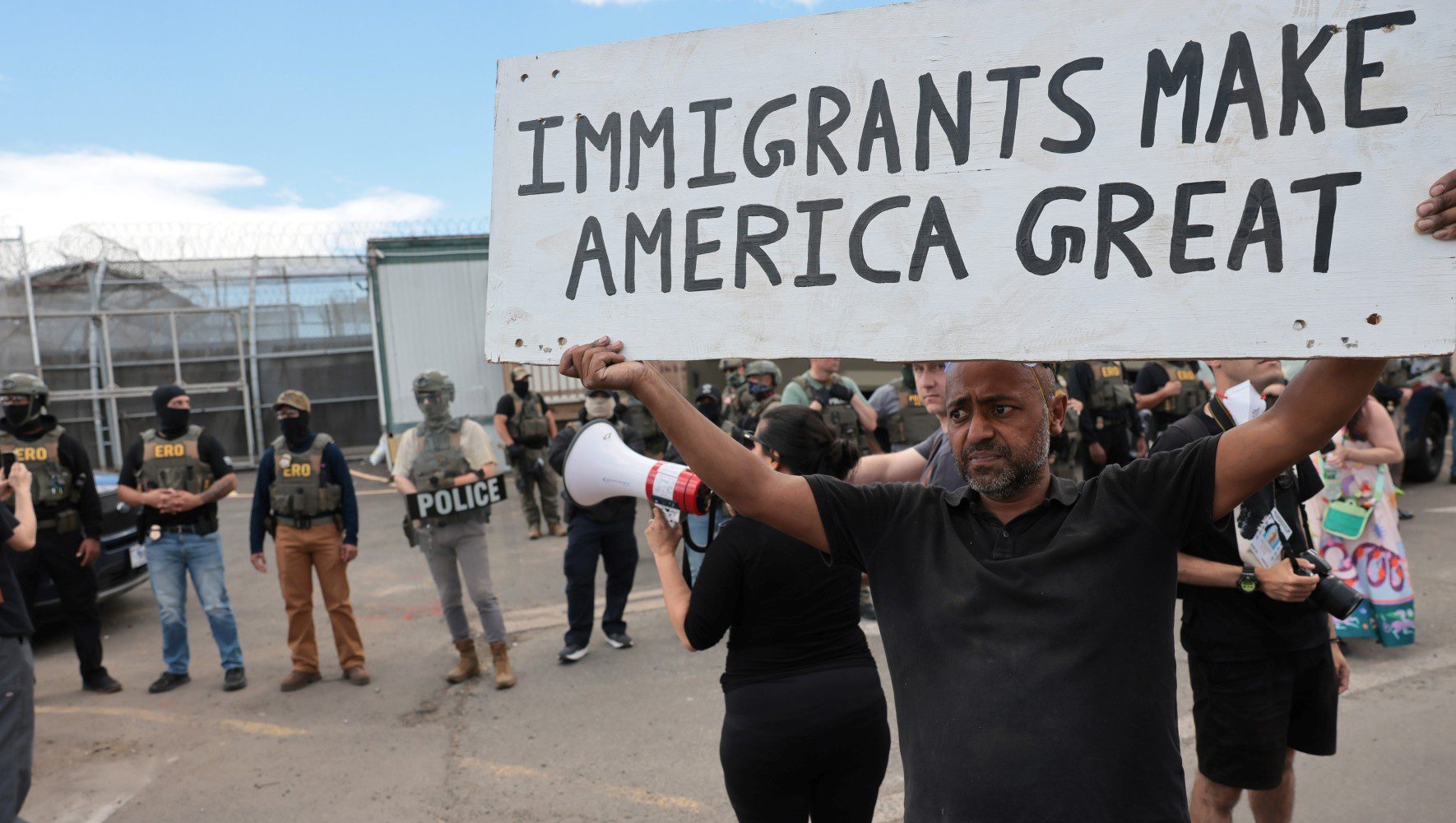
"HIAS will always stand for refugees—no matter who is president," the organization stated in a recent policy briefing. The agency emphasizes that the current crisis is not a policy failure to be "solved" through incarceration, but an opportunity to be embraced through humanitarian leadership.
The Grassroots Response
The resistance to these policies is not merely happening in federal courts or on Capitol Hill; it is occurring in local communities across the country.
- Synagogue Support: Religious institutions are providing food, shelter, and legal support to undocumented neighbors.
- Volunteer Protection: Citizen networks are actively working to protect community members from the surveillance and enforcement operations of Immigration and Customs Enforcement (ICE).
- Legal Pro-Bono Work: Lawyers are donating significant time to navigate the complex, often intentionally obstructive, bureaucratic paperwork required to maintain legal status for those under threat.
The Implications of the 2026 Midterm Elections
As the nation approaches the midterm elections this fall, the implications for the future of American immigration policy are stark. The current political environment has been marked by a "powerful minority" that feels threatened by demographic shifts, utilizing the language of exclusion to justify the expansion of the carceral state.
The upcoming elections are framed by activists not just as a standard political contest, but as a referendum on the American identity. Candidates who view immigration as a "problem" are contrasted with those who view it as a "blessing." The outcome will determine whether the U.S. continues down a path of isolationism or attempts to reclaim its status as a global leader in humanitarian relief.
Conclusion: Moving the History Forward
The despair felt by many regarding current headlines is tempered only by the knowledge that this cycle has occurred before. The promise of equality, while never fully realized, has served as a catalyst for 250 years of activism.
Whether it was the abolitionist movement, the civil rights struggle, or the fights for refugee recognition, the progress of the United States has always been driven by those who refused to accept the status quo. Today, the call to action remains: to support neighbors, to challenge harmful state policies, and to redefine the boundaries of American identity in a way that includes, rather than excludes.
As HIAS continues its work, the message remains clear: History is not a static document; it is a living, breathing project. The challenges of the present moment—the fear, the instability, and the political hostility—are the latest chapters in a long, difficult, but ultimately hopeful story. The history of the United States marches forward, and as we look toward the next 250 years, the responsibility to ensure that march is toward equality lies with every American.
For those looking to support the mission of protecting the displaced and marginalized, HIAS invites you to participate in their advocacy efforts. Whether through volunteering, legal assistance, or financial contribution, the organization remains committed to the fundamental belief that every human being deserves a safe place to call home.

 Lina Hope
 Suro Senen