

 Laily UPN

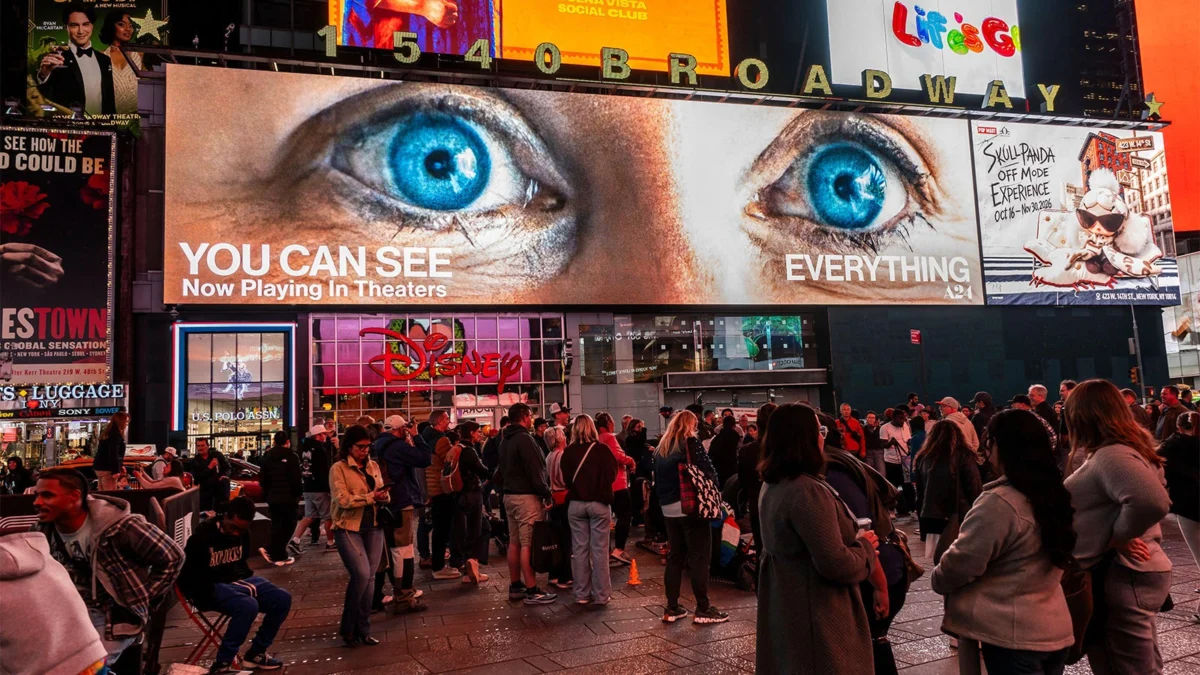
In an era defined by the relentless digital hum of targeted advertisements and the frictionless convenience of "one-click" purchasing, the modern consumer lives under a state of perpetual persuasion. From the moment we wake to the glow of our smartphones to the evening hours spent scrolling through curated social media feeds, we are subjected to a sophisticated, multi-billion-dollar apparatus designed to convince us that our lives are incomplete.
The promise is universal: buy this, and you will be more comfortable. Buy that, and you will be more successful. Buy this, and you will finally be happy. Yet, for millions, the reality is a claustrophobic existence defined by overflowing closets, garages that can no longer house vehicles, and a mounting sense of anxiety fueled by the clutter of unused possessions.
To combat this, a growing movement of minimalists and behavioral economists is proposing a radical, yet deceptively simple, intervention. It is a five-word psychological audit that forces a pause in the impulsive feedback loop of consumerism: “But what if I don’t?”
The Anatomy of the Consumerist Trap
To understand why this question is so transformative, one must first understand the landscape of modern consumerism. We are currently living through what historians may eventually call the "Age of Accumulation." Advances in logistics, manufacturing, and digital marketing have collapsed the barrier between the desire for an object and its arrival at our doorstep.
However, this ease of acquisition masks the true cost of consumption. Every item we bring into our home requires a tax—not just in currency, but in time, energy, and space. We pay for items when we purchase them, but we continue to pay for them as we clean, organize, maintain, insure, and eventually dispose of them.
The psychological toll is equally significant. Research in the field of behavioral economics suggests that the "hedonic treadmill"—the tendency of humans to quickly return to a relatively stable level of happiness despite major positive or negative events—is accelerated by material goods. The thrill of the new purchase dissipates within hours or days, leaving behind a void that the marketing apparatus is all too eager to fill with the next "must-have" item.
Chronology of a Purchase: The Path to Impulse
The journey from impulse to acquisition usually follows a predictable trajectory, often occurring in mere seconds:
- The Stimulus: An advertisement, a social media influencer’s post, or a targeted email notification triggers a latent desire.
- The Rationalization: The brain begins to build a narrative. "I deserve this," "It will make me more productive," or "It’s on sale, so I’m actually saving money."
- The Transaction: The purchase is executed. The dopamine hit occurs at the moment of payment or confirmation.
- The Arrival: The product arrives. The "newness" effect provides a fleeting sense of satisfaction.
- The Integration: The item is placed in a drawer or on a shelf. It becomes part of the background noise of the home.
- The Regret/Neglect: Months later, the item is discovered during a cleaning session, rarely used, serving only as a reminder of a misguided financial decision.
By inserting the question, “But what if I don’t?” at stage two—the rationalization phase—the consumer effectively disrupts the sequence, forcing the brain to shift from reactive desire to proactive calculation.
Supporting Data: The Opportunity Cost of "Stuff"
The power of this question lies in its ability to highlight "opportunity cost," a fundamental economic principle. Every dollar spent on a non-essential item is a dollar that cannot be directed toward other, potentially more life-altering goals.
Consider the financial implications of habitual spending. If an individual spends $200 a month on "impulse" purchases—items that provide little to no long-term utility—that amounts to $2,400 a year. Over a decade, assuming a conservative 7% annual return in a market index fund, that "small" habit costs the individual roughly $34,000 in lost wealth.
Beyond raw currency, there is the "freedom cost." Every physical object we own represents a portion of the time we spent working to earn the money to buy it. When we purchase an item we don’t need, we are essentially trading our finite hours of life—the time spent in the office, the commute, the stress—for an object that will eventually be donated, sold for pennies on the dollar, or sent to a landfill.
Professional Perspectives: Behavioral Psychology and Minimalism
Psychologists who specialize in consumer behavior argue that the "But what if I don’t?" framework acts as a "cognitive circuit breaker."
"When we are in a state of ‘wanting,’ our brain’s reward centers are hijacked," says Dr. Elena Vance, a behavioral researcher. "We lose the ability to perform long-term cost-benefit analyses. By introducing a conscious, verbalized question, we force the prefrontal cortex—the part of the brain responsible for impulse control and rational thought—to come back online. You are moving from a state of emotional reaction to a state of logical evaluation."
Minimalist practitioners, who have spent years studying the impact of decluttering on mental health, emphasize that the question is not about deprivation. It is about prioritization. It is not asking you to stop buying, but to stop buying mindlessly.
The Implications: A Shift in Lifestyle
If one were to adopt this question as a permanent filter for all future purchases, the implications would be profound.
1. Financial Liberation
The most immediate impact is the rapid accumulation of capital. By redirecting funds from impulse buys to debt repayment, emergency funds, or investments, the consumer transitions from a state of financial fragility to one of resilience. The "emergency fund" is perhaps the greatest mental health tool one can possess; it is the physical manifestation of the freedom to say "no" to circumstances that no longer serve us.
2. Environmental Stewardship
The environmental cost of modern consumerism is staggering. From the water and raw materials required to produce goods to the carbon footprint of global shipping and the eventual waste management crisis, our consumption habits have a direct link to environmental degradation. Buying less is, inarguably, the most effective form of personal environmental activism.
3. Psychological Clarity
There is a documented link between physical clutter and cortisol levels. A cluttered space often leads to a cluttered mind. By intentionally choosing not to fill our homes with unnecessary items, we create an environment that fosters peace, creativity, and focus. We are no longer managing our possessions; our possessions are no longer managing us.
4. The Reclaiming of Time
Perhaps the most overlooked benefit is the reclaiming of time. Less shopping, less cleaning, less organizing, and less repairing leads to an abundance of time. That time can be reinvested into relationships, hobbies, physical health, and professional growth—the things that truly compound in value over a lifetime.
Conclusion: Saying "No" to Say "Yes"
The promise of consumerism is that more is better. It is a promise that has been proven hollow by the sheer volume of material goods discarded every year. The question, “But what if I don’t?” is a quiet rebellion against that promise.
It allows us to ask what we might be able to do instead. If you don’t buy the latest smartphone, could you use that money to take a trip that builds memories? If you don’t upgrade your furniture, could you pay off a credit card that has been looming over your head for years? If you don’t purchase the latest fashion trend, could you contribute to a cause that aligns with your values?
With every purchase, we are making a choice about how we spend our limited resources and our finite lives. By asking this one question, we shift the power dynamic. We stop being the passive targets of a marketing machine and become the active architects of our own lives. The next time you find yourself standing at the checkout counter, or hovering your cursor over the "buy now" button, pause. Ask yourself, “But what if I don’t?”
You may find that the answer is not a loss of anything, but the gain of something far more valuable: your freedom.


 Pevita Pearce