


 Nana Wu
In a move that has sent shockwaves through the public health sector, the Centers for Disease Control and Prevention (CDC) has announced it will not renew its flagship five-year HIV prevention grant program (PS21-2102) for community-based organizations (CBOs). This decision marks a historic pivot in federal health policy, ending a model of direct federal-to-community support that has served as a cornerstone of the American HIV response since the late 1980s.
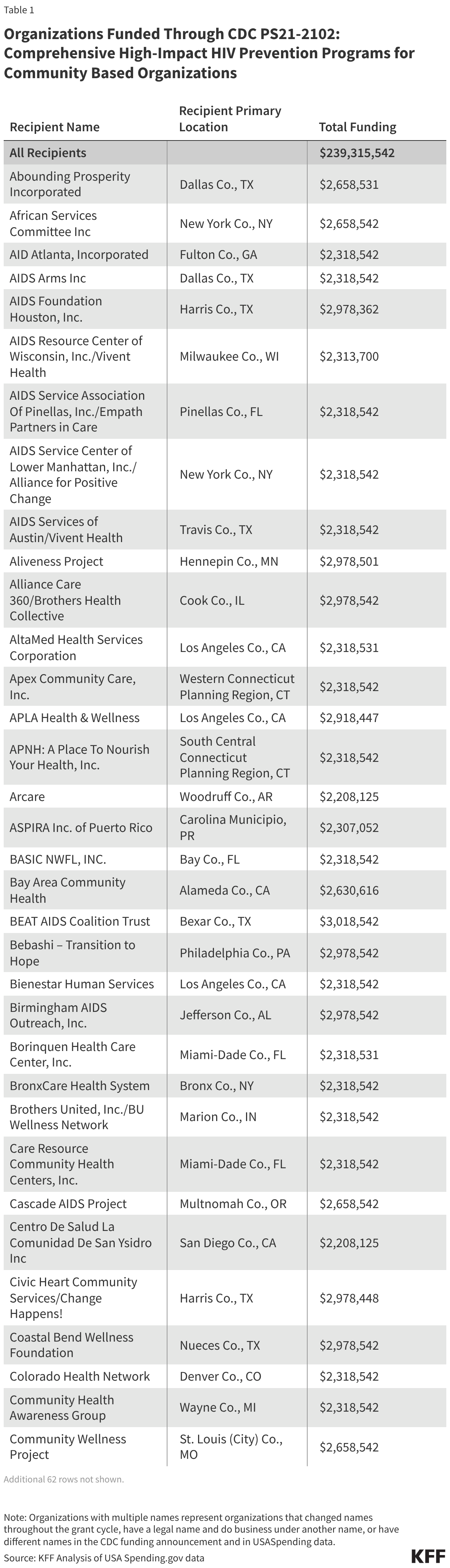
As the dust settles, health advocates, researchers, and bipartisan members of Congress are sounding the alarm. With over $230 million in funding at stake, the abrupt shift threatens to destabilize local organizations that have long been the frontline defense against the HIV epidemic, particularly in the most vulnerable and underserved communities across the United States.
The Core of the Crisis: What Is Being Lost?
For nearly four decades, CBOs have been recognized by federal authorities as the most effective conduits for HIV prevention services. According to the original grant announcement for PS21-2102, these organizations were chosen specifically because of their "accessibility, history, and credibility in the community." Unlike large, bureaucratic health departments, CBOs operate on the ground, often embedded within the very populations that require the most sensitive and targeted care.
Under the expiring grant, CBOs provided a comprehensive suite of high-impact services, including:
- Routine and diagnostic HIV and STI testing.
- Aggressive linkage-to-care protocols for those newly diagnosed.
- PrEP (Pre-Exposure Prophylaxis) navigation and support.
- Partner services and risk-reduction counseling.
By cutting off direct funding, the CDC is dismantling a structure that allowed these specialized entities to operate with relative autonomy, prioritizing cultural competence and rapid response times.
A Chronology of the Shift
The unraveling of this program did not happen in a vacuum. The timeline of this transition reflects a broader ideological shift within the federal executive branch.
- 1980s–2025: For nearly forty years, the CDC maintained a consistent policy of funding CBOs directly, recognizing that community-level expertise was essential to curbing the spread of HIV.
- Early 2026: The Trump administration’s FY2027 budget request signaled an intent to eliminate CDC HIV prevention funding entirely, an effort that was ultimately rebuffed by Congress. However, the intent to downsize these programs remained clear.
- July 2026: Reports surfaced indicating that the Office of Management and Budget (OMB) had directed the CDC to cease the renewal of the PS21-2102 grant.
- July 14, 2026: The CDC issued updated guidance for a separate, existing grant mechanism (PS24-0047), shifting the focus of funding to state and local health departments.
- July 20–29, 2026: A wave of bipartisan pushback began, with members of Congress and advocacy groups formally questioning the decision and expressing deep concern over the potential for increased infection rates.
Analyzing the Data: The Financial Impact
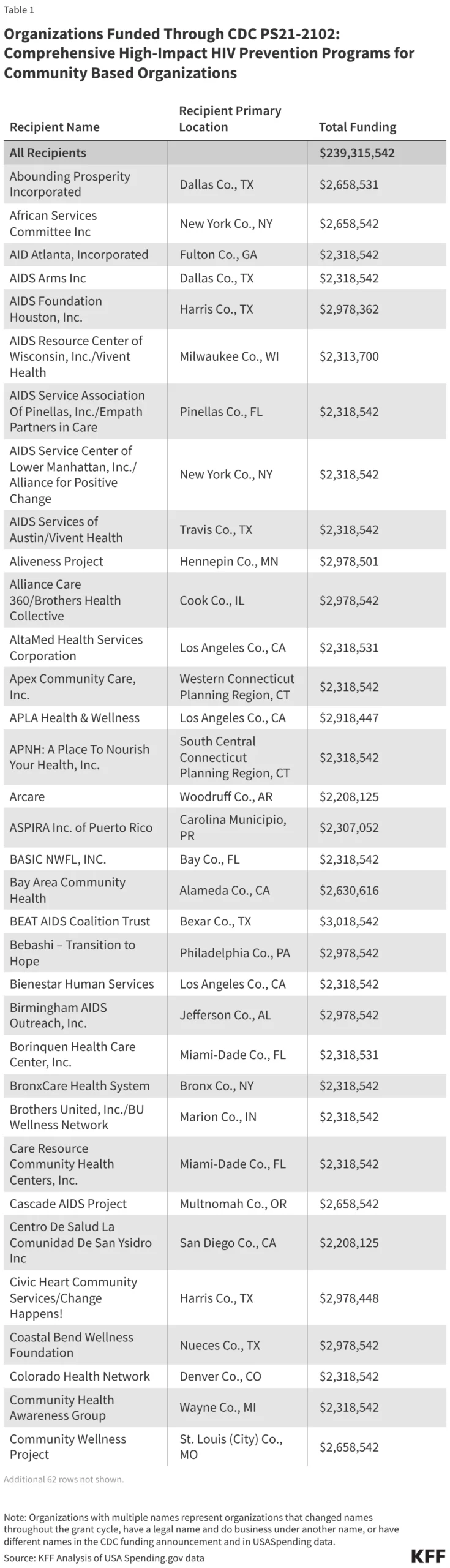
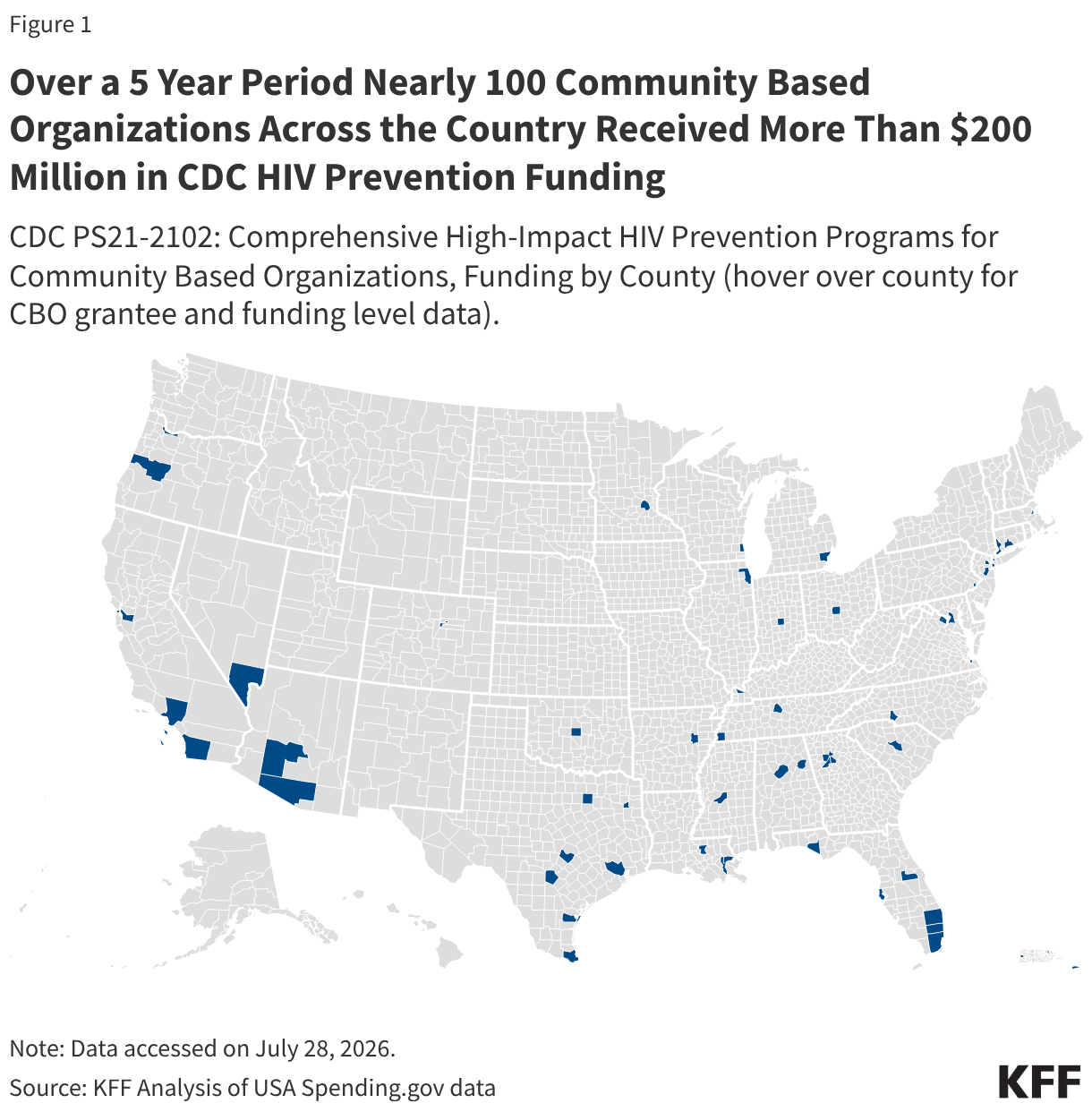
To quantify the impact of this policy change, an analysis of data from USAspending.gov provides a sobering look at the funding landscape. The findings indicate that nearly 100 community-based organizations, many of which are based in the Southern United States—the region currently bearing the highest burden of HIV diagnoses—stand to lose their primary source of federal revenue.
The Shift to "Supplemental" Funding
The CDC’s current strategy is to fold what was once direct CBO funding into supplemental grants for state and local health departments. Under this new framework (PS24-0047), health departments are "encouraged" but not required to allocate a portion of these funds to their local CBO partners.
The CDC has provided two distinct benchmarks for these sub-allocations:
- General Jurisdictions: A suggested 10% minimum allocation for CBO partnerships.
- "Ending the HIV Epidemic" (EHE) Jurisdictions: A suggested 25% minimum allocation.
The mathematical reality, however, is stark. Even if every health department chooses to meet these "minimum" recommendations, the total amount flowing to the community will be significantly lower than the historical levels provided under the direct PS21-2102 grant. Many organizations that previously operated with direct federal oversight will now be forced to compete for smaller, indirect pots of money, subject to the administrative priorities of local government offices.
Official Responses and Political Friction
The decision has ignited a firestorm of controversy. Advocates argue that the redirection of funds is not merely an administrative reshuffling but a targeted assault on health equity.
"This is a fundamental breakdown of the partnership between the federal government and the people who actually do the work," said one representative of a national HIV advocacy group. "By forcing CBOs to beg for scraps from state health departments, the CDC is adding layers of bureaucracy that will inevitably result in fewer people being tested, fewer people starting PrEP, and, ultimately, more preventable HIV transmissions."
Congressional members, in a formal inquiry to the OMB, pointed to the administration’s broader pattern of executive actions aimed at limiting funding for LGBTQ+ health and programs addressing racial and ethnic health disparities. Because many of the organizations affected by this cut specifically target Black, Latino, and transgender populations, critics argue the move will exacerbate existing health inequities.
The administration, for its part, has maintained that the consolidation of funding is designed to streamline administrative processes and grant the states more authority over local health strategy. However, they have yet to offer a solution for how organizations that lose their primary funding will sustain their operations during this transition.
Implications for the Future of Public Health
The long-term consequences of this policy shift are significant and potentially irreversible.
1. The Erosion of Community Trust
The success of HIV prevention is predicated on trust. For decades, CBOs have built deep-rooted relationships with high-risk populations who might otherwise avoid traditional clinical settings. If these organizations are forced to close their doors due to insolvency, the populations they serve may be left without a safety net, leading to a "testing desert" in many high-prevalence areas.
2. Administrative Burden and Fragmentation
By pushing funding through state health departments, the CDC is increasing the administrative burden on both the state and the CBOs. Health departments, already stretched thin, may prioritize their own internal programs over external partnerships. Furthermore, the lack of a federal mandate for these sub-allocations means that in some states, CBO funding could drop to near zero, creating a patchwork of care where access to life-saving prevention services depends entirely on a person’s zip code.
3. Increased Vulnerability
Public health experts warn that the transition period—the time it takes for health departments to design new RFPs and for CBOs to apply—will create a "funding cliff." During this gap, the continuity of care for thousands of patients will be interrupted. For individuals currently on PrEP or engaged in HIV-positive retention-in-care programs, this disruption could lead to treatment fatigue, viral rebound, and increased transmission risk.
Conclusion
The decision to end direct funding for CBOs via the PS21-2102 grant mechanism is a pivotal moment in American public health history. It represents a move away from a specialized, community-focused approach toward a more centralized, state-led model. While proponents argue this provides for greater local control, the immediate reality for nearly 100 community-based organizations is one of uncertainty and impending budget shortfalls.
As the nation grapples with the goal of ending the HIV epidemic, the question remains: Can a decentralized, indirect funding model achieve the same level of reach and effectiveness that direct federal support provided for nearly forty years? For now, the answer appears to be a source of profound anxiety for the organizations on the front lines, and a test of the federal government’s true commitment to health equity.

 Lina Hope