



 Neng Nana
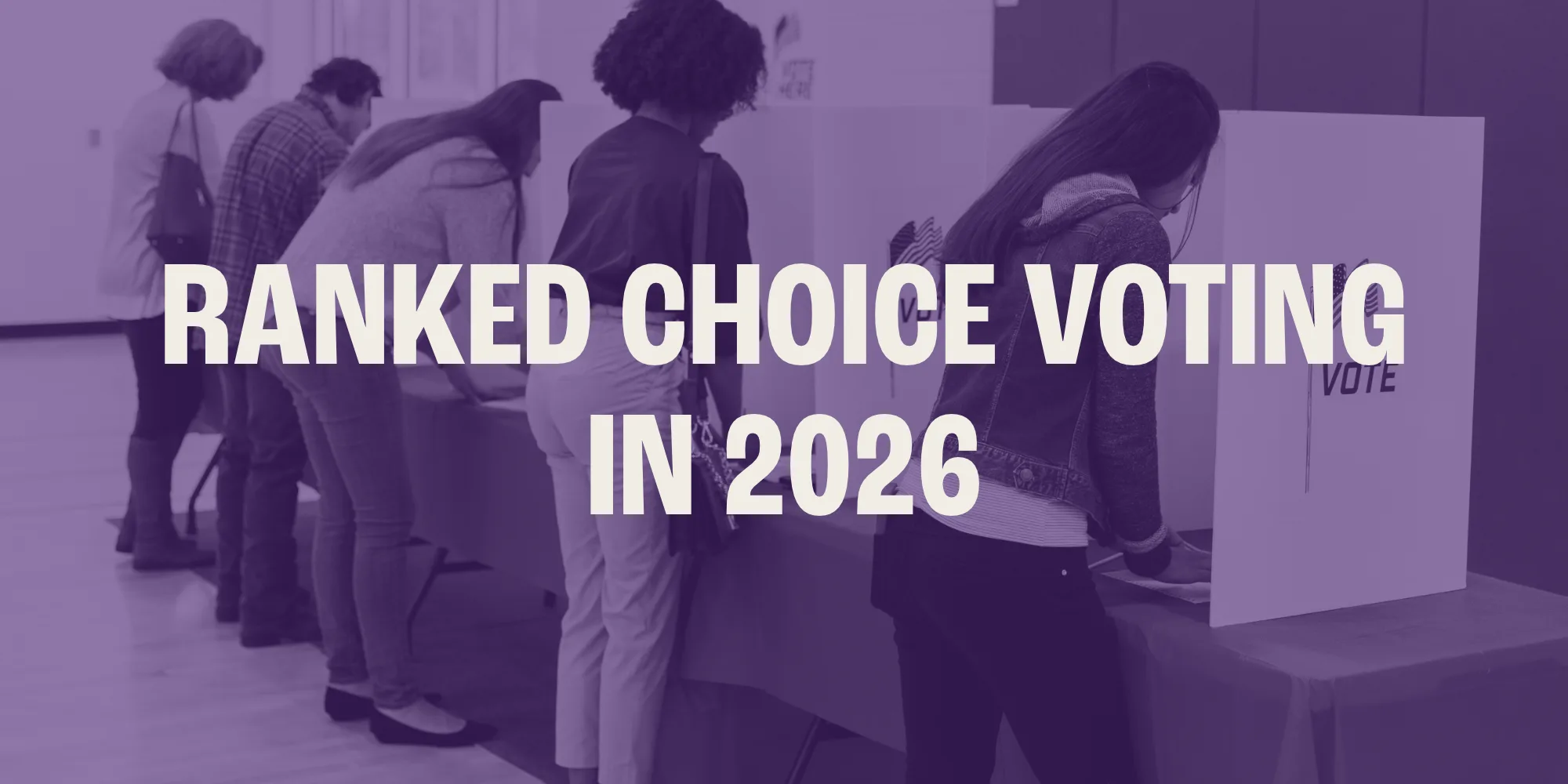
As the United States approaches the November 2026 general elections, a quiet but profound transformation is occurring in how voters cast their ballots. Across Alaska, Maine, and a diverse array of municipalities from Washington, D.C., to Boulder, Colorado, Ranked Choice Voting (RCV) is moving from a niche electoral experiment to a cornerstone of the democratic process. By allowing voters to rank candidates in order of preference rather than selecting a single name, this reform is designed to increase voter agency, foster consensus-driven outcomes, and diminish the influence of hyper-partisanship.
With the balance of power in Congress potentially hinging on outcomes in states utilizing this system, the 2026 cycle stands as a critical test for the longevity and efficacy of RCV.
Main Facts: The Scope of the RCV Rollout
Ranked choice voting is fundamentally changing the calculus of campaigning and the experience of voting. In 2026, its application is widespread, encompassing federal, state, and local contests.
The mechanism is straightforward: voters rank candidates by preference (1st choice, 2nd choice, etc.). If a candidate secures an outright majority of first-choice votes, they win. If no candidate reaches that threshold, the candidate with the fewest votes is eliminated, and their supporters’ votes are redistributed to their next-ranked choice. This process continues until a majority winner emerges, ensuring that the final victor has the broadest possible support among the electorate.
For the 2026 cycle, the following jurisdictions are confirmed to utilize RCV:
- States: Alaska (U.S. Senate, U.S. House, Governor, State Legislature) and Maine (U.S. Senate, U.S. House).
- District of Columbia: U.S. House Delegate, Mayor, City Council, and School Board.
- California Municipalities: Albany, Berkeley, Oakland, San Francisco, and San Leandro.
- Oregon: Corvallis (Mayor, City Council), Multnomah County (Chair, Commissioner), and Portland (City Council).
- Other Jurisdictions: Boulder, CO (Mayor); Arden, DE (Board of Assessors); and Arlington County, VA (County Board).
Chronology: The Evolution of a Movement
The current implementation of RCV did not happen overnight; it is the culmination of years of grassroots advocacy and legislative debate.
- 2022 Milestone: Multnomah County, Oregon, made a historic shift when voters approved RCV with 69% of the vote. This set the stage for the county’s first RCV implementation in 2026.
- 2023 Proof of Concept: Boulder, Colorado, successfully piloted RCV for its mayoral election. Post-election surveys revealed that 86% of voters found the ballot easy to complete, while 77% expressed high satisfaction with the process, providing a powerful data point for proponents of the reform.
- 2024 Scaling: Portland, Oregon, adopted proportional ranked choice voting for its City Council elections, demonstrating that RCV can be effectively scaled to multi-seat districts.
- 2026 Testing Ground: The current cycle represents the most expansive test of the system to date. With high-stakes congressional control at risk, the eyes of the nation are fixed on the performance of RCV in the "Last Frontier" of Alaska and the congressional districts of Maine.
Supporting Data: Why Jurisdictions are Turning to RCV
The push for RCV is largely driven by data suggesting that traditional "plurality" voting—where the person with the most votes wins, even if they lack majority support—is increasingly inadequate for a polarized electorate.
In Washington, D.C.’s June 2026 primaries, RCV proved its value in crowded fields. The city saw its highest turnout in three decades. More importantly, the system ensured that votes remained relevant even when a voter’s first-choice candidate was eliminated. For instance, in the Democratic primary for at-large Council, over 34,000 voters whose initial pick did not reach the final round had their second or third choices contribute to the final outcome. This "vote value" retention is a primary argument for the system: it minimizes "wasted votes."
Furthermore, in places like Portland and Multnomah County, the system has encouraged civic engagement. Community groups and labor unions, such as SEIU Local 503 and East County Rising, have begun issuing "ranked endorsements." These allow organizations to support multiple candidates they trust, signaling to voters a broader coalition of support rather than a single, binary choice.
Official Responses and Political Implications
The transition to RCV has not been without friction. In Alaska, the epicenter of the RCV debate, the reform is currently under fire. A repeal effort, titled "Measure 2," appears on the ballot this November. Opponents of RCV argue that the system is overly complex and that it dilutes the power of traditional party primaries. Proponents, however, point to the state’s bipartisan coalition government—which has functioned effectively since the adoption of RCV—as proof that the system encourages moderation and cross-aisle cooperation.
In Maine, the dynamic is different. While the state uses RCV for federal races, the limited number of candidates on the ballot means the system acts primarily as a safety net for write-in candidates. If a major-party candidate fails to secure a majority, the write-in rankings become the deciding factor, potentially creating a "spoiler-proof" election environment.
Meanwhile, the appetite for reform continues to grow. As of November 3, 2026, voters in Honolulu, HI; Irvine, CA; and Longmont, CO, are heading to the polls to decide whether to join the RCV movement for their own local elections.
Strategic Implications: The 2026 Battlegrounds
Alaska: The National Bellwether
The Alaska Senate race is arguably the most significant contest using RCV this year. Because the state utilizes open primaries and RCV, it creates an environment where candidates must appeal to a broad base of voters, not just their ideological fringes. The bipartisan coalition currently holding the state legislature is watching closely; if they maintain control, it will be viewed as a signal that RCV fosters stable, long-term governance.
Multnomah County and Portland: The Proportional Model
The use of proportional RCV in Portland is a glimpse into a potential future for local governance. By electing three council members per district, the system ensures that different voting blocs are represented in proportion to their actual size. This move away from "winner-take-all" dynamics is being studied by political scientists as a potential solution to urban legislative gridlock.
The Congressional Impact
While RCV is a local and state-level reform, its impact on the U.S. House and Senate cannot be understated. In competitive districts where third-party or independent candidates often run, RCV eliminates the "spoiler effect." Voters can support their preferred candidate without fear of inadvertently helping their least-preferred candidate win. As the margins of control in Congress remain razor-thin, the ability of RCV to ensure that the winner is the true choice of the majority is becoming a central feature of modern American election strategy.
Conclusion: The Path Forward
The expansion of ranked choice voting in 2026 marks a turning point in American electoral history. Whether it is in the high-stakes Senate chambers of Alaska or the city council meetings of suburban California, the system is fundamentally altering how voters engage with their government.
Critics will continue to challenge the complexity of the ballot, but the early data from places like Boulder and Washington, D.C., suggests that voters are not only capable of navigating the system but are appreciative of the extra voice it gives them. As the results come in this November, the nation will receive a definitive answer on whether RCV is the sustainable, inclusive, and fair solution its proponents claim it to be.
For those interested in following these developments, FairVote continues to track these key races, providing real-time data on how RCV is influencing campaign strategies and final tallies. As we look beyond 2026, one thing is certain: the conversation around how we vote is no longer just about the candidates—it is about the integrity and accuracy of the democratic process itself.

 Raul Delapena Setiawan
 Sagoh






