




 Nana
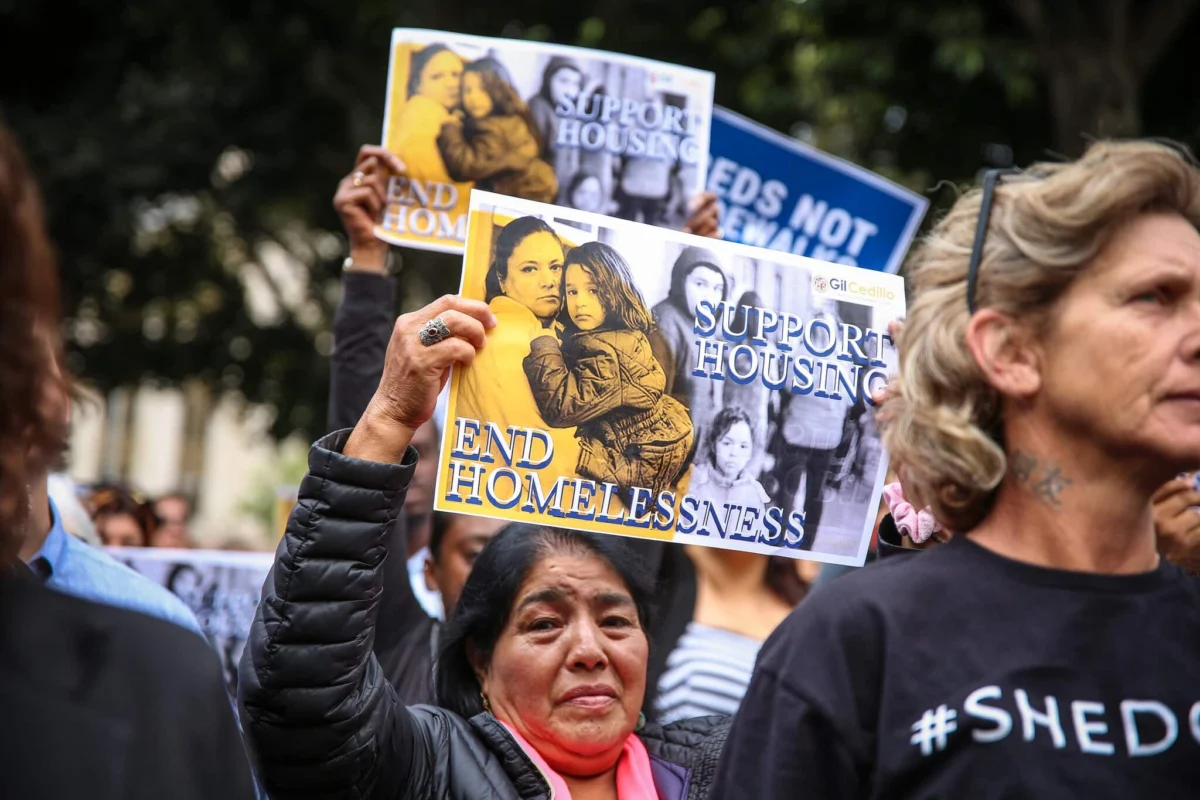
For decades, the bedrock of American homelessness policy has been "Housing First"—a straightforward, evidence-backed strategy that prioritizes placing unhoused individuals into permanent housing without preconditions such as sobriety or employment. However, a significant ideological and structural shift is currently underway. On September 16, the First Circuit Court of Appeals issued a stay on a lower court ruling that had previously blocked the Department of Housing and Urban Development (HUD) from implementing sweeping changes to its funding allocation.
At the center of this controversy is a proposal to divert up to $1.3 billion of the annual $4 billion homelessness services budget away from permanent supportive housing and toward transitional housing and mandatory treatment programs. As advocates and researchers warn of an impending surge in homelessness, the move represents a return to the "Treatment First" models of the 1980s, raising urgent questions about the future of the federal safety net.
A Chronology of Policy Regression
The Housing First model gained traction during the George W. Bush administration and remained the standard across both Republican and Democratic leadership for over twenty years. Its core philosophy is simple: human beings cannot address complex challenges like addiction or mental health struggles while living on the streets. By providing a stable roof, individuals are better equipped to engage with voluntary support services.
The current administration, however, has signaled a return to a 1980s-era "Treatment First" approach, where access to housing is contingent upon completing mandated rehabilitation programs.
- 2025–2026: HUD began aggressively pursuing a policy overhaul, signaling an intent to prioritize transitional facilities over permanent housing.
- August 2026: A federal judge initially blocked HUD’s proposed policy, citing a failure to follow the Administrative Procedures Act—a statute designed to ensure federal agencies allow for public comment and transparent, evidence-based rule-making.
- September 16, 2026: The First Circuit Court of Appeals suspended that injunction, allowing HUD to move forward while the legal battle continues.
- The Current Risk: Experts fear that by the time the court reaches a final verdict, the new funding formulas will have already been integrated into this year’s grant cycles, making the damage to local programs difficult to reverse.
The Evidence: Does Housing First Actually Work?
The administration’s shift is being framed by supporters as a necessary pivot to address the rising tide of homelessness, despite data that suggests the rise is driven by systemic failures rather than policy flaws.
David Phillips, a research professor of economics at the University of Notre Dame, notes that the empirical evidence supporting Housing First is overwhelming. "Several randomized controlled trials point to the same conclusion: that long-term housing, provided alongside optimal mental health and substance use treatment—and that’s optional—helps people leave homelessness," Phillips says.
The success of the HUD-VA Supportive Housing program (HUD-VASH) serves as the "gold standard" for this approach. By providing veterans with housing vouchers and access to a basket of voluntary services, the federal government successfully halved the number of veterans experiencing homelessness since 2007. Advocates argue that if the model works for veterans, it is a proven blueprint for the rest of the population.

The Economics of "Musical Chairs"
Critics of the current administration’s policy argue that blaming Housing First for rising homelessness is a fundamental misdiagnosis. According to Bob Palmer, policy director at Housing Action Illinois, the issue is not the model, but the scale.
"It’s sort of like a game of musical chairs, but you’re starting out the game with a hundred people and only 20 chairs," Palmer explains. In Illinois alone, there is a deficit of approximately 300,000 rental units for extremely low-income households.
Furthermore, because federal grants are tied to fair market rents, which are currently skyrocketing, a large portion of the "record" $4 billion budget is consumed simply by maintaining existing units. Katie Eighan, of the Alliance to End Homelessness in Suburban Cook County, notes that HUD’s new funding opportunity could force organizations to convert hundreds of permanent housing units into transitional ones.
"If we couldn’t find other sources of funding, it would mean evictions," Eighan warns. The result, she suggests, is a system that is "treading water" rather than expanding, leaving the most vulnerable—many of whom are disabled and on fixed incomes—to bear the brunt of the instability.
Behind the Scenes: Ideology and Influence
The push to dismantle Housing First is not occurring in a vacuum. Investigative reporting has highlighted the influence of the Cicero Institute, a far-right think tank that has drafted model legislation favoring the criminalization of homelessness and the mandatory treatment model.
The institute’s founder, Joe Lonsdale, is also a co-founder of Palantir, a data-mining and software giant that has seen its federal government contracts grow exponentially in recent years. In December 2025, HUD signed a contract with Palantir for a "platform demonstration" to modernize its grant management systems. Critics argue that the intersection of these private-sector interests and public policy dictates suggests a shift driven by ideological agendas and corporate partnerships rather than the needs of the homeless population.
The Human Cost: A Return to the "Bowery" Era
For those who have worked on the front lines for decades, the current policy shift feels like a grim repeat of history. Lynn Lewis, founder of the Picture the Homeless Oral History Project, recalls the Reagan era, when the dismantling of federal housing support led to a massive, visible surge in homelessness.

"In many ways, the safety net is even more shredded today," Lewis says, pointing to the widening gap between stagnant social security payments and the rapidly rising cost of rent. She notes that the "Treatment First" model effectively strips individuals of their agency, ignoring their personal choices and dignity.
Lewis shared an anecdote about a man she worked with in Florida who, when offered a small budget to furnish his first apartment, requested a television rather than a bed. "I’ve been sleeping on cardboard for years," he told her. "I want a fucking television in my house." By respecting his choice, the organization helped him maintain stability in that apartment for years. "It just seems a lot of [the new policy] is based on just denying or ignoring their preferences and choices and just not treating them as people," says Sue Watlov Phillips, executive director of the Metropolitan Interfaith Council on Affordable Housing.
Implications: A System at a Crossroads
As the legal battle winds through the court system, the practical implications for homelessness service providers are dire. The uncertainty of federal funding prevents local agencies from planning, hiring, or signing long-term leases for their clients.
The consensus among advocates is that front-line workers do not care about the branding of a program—whether it is called "Housing First" or something else—as much as they care about what works. Their experience has shown that when you remove the barriers between a person and a home, health and stability follow. By reintroducing these barriers, the federal government risks creating a "revolving door" where individuals cycle through shelters, hospitals, and jails, ultimately increasing costs to taxpayers and causing irreparable harm to the individuals involved.
As Cathy Alderman of the Colorado Coalition for the Homeless poignantly summarized: "If [HUD] ties the funds to these requirements, they will create more homelessness." Whether the judicial system will intervene in time to stop this regression remains to be seen, but for now, the nation’s most vulnerable populations are caught in the crosshairs of a policy shift that ignores decades of proven success in favor of a failed past.


 Siti Muinah

 Nana Wu






