
 Reynand Wu
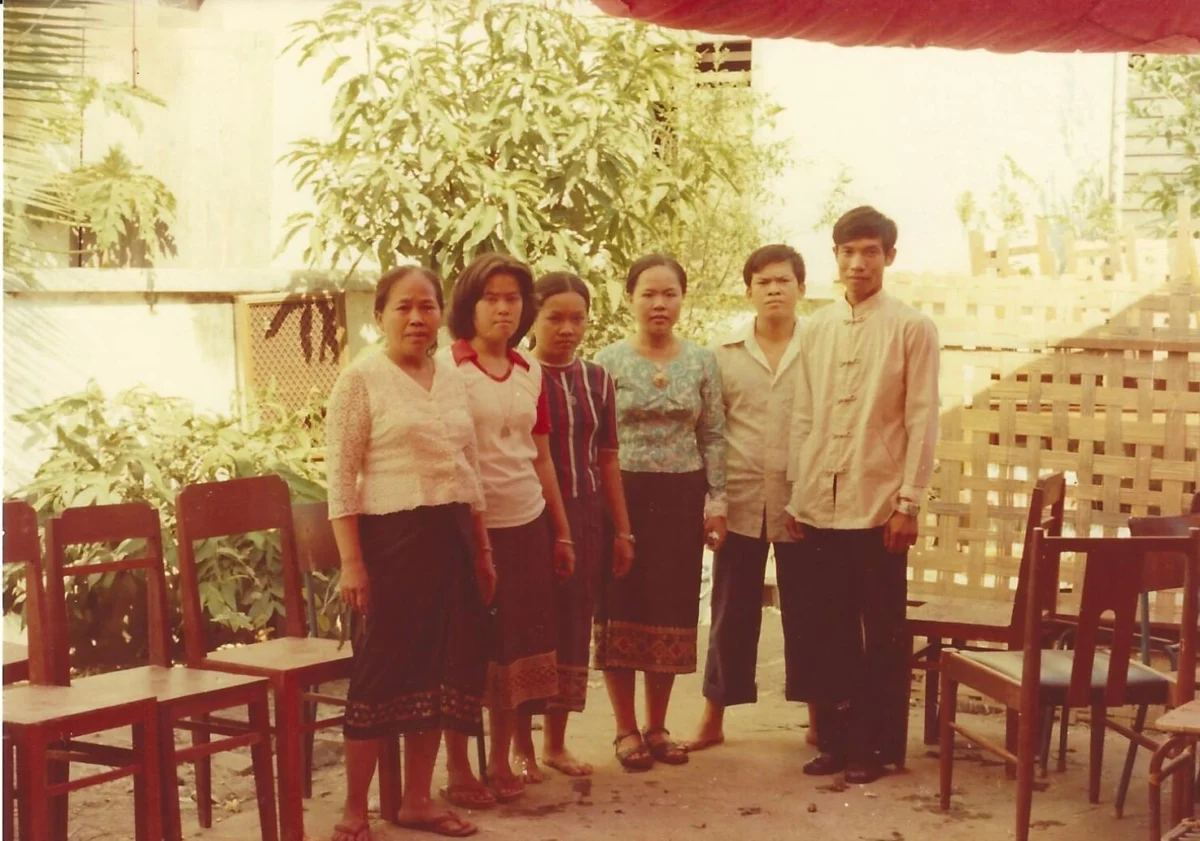
For generations, the residents of the Fairmount neighborhood in Woonsocket, Rhode Island, have tended to their backyard gardens, bartered local seafood, and navigated the rhythmic, grueling demands of factory labor. Among them are families like that of Vimala Phongsavanh, who have called this working-class enclave home for 45 years. To the casual observer, Fairmount is a classic study of a struggling American mill town—a place defined by under-resourced schools and decades of economic disinvestment.
However, beneath the surface of this Rhode Island neighborhood lies a story of global consequence that remains largely absent from American textbooks: the story of the "Secret War" in Laos and the subsequent forced migration of thousands of Lao families. The truth, as Phongsavanh—a community advocate and curator—has come to realize, is that the American history she was taught in school and the family history she lived at home were never separate entities. They were, and remain, inextricably linked.
The Secret War: A Forgotten Tragedy of the 20th Century
Between 1964 and 1973, the United States conducted a covert bombing campaign in Laos, a nation that was officially neutral in the Vietnam War. This operation, largely kept hidden from the American public and the U.S. Congress, transformed the small Southeast Asian nation into the most heavily bombed country per capita in history.
The geopolitical catalyst was the U.S. government’s fervent fear of communist expansion in Southeast Asia. To disrupt supply lines and neutralize opposing forces, the U.S. military dropped more than two million tons of ordnance on Laos. The scale of the destruction was absolute: entire villages were leveled, and generations of ancestral farmland were rendered unusable by unexploded cluster munitions.

For the families who lived through it, the conflict was not a distant geopolitical maneuver; it was an existential rupture. Phongsavanh recalls her own family’s whispered stories of tragedy: members lost to the Mekong River, the terror of escaping war zones, and the heartbreak of loved ones taken to reeducation camps. This era of violence created a massive displacement crisis, leading to the creation of refugee camps where families spent years in limbo, waiting for a chance at a future that had been systematically dismantled.
A Chronology of Displacement and Resettlement
To understand the presence of Lao American communities in cities like Woonsocket, one must look at the timeline of the late 20th century:
- 1964–1973: The "Secret War" occurs. The CIA and U.S. military conduct intensive, unauthorized bombing missions across Laos.
- 1975: The Pathet Lao seize control of the government, triggering a massive exodus of refugees who fear persecution.
- 1975–1980: Thousands of refugees reside in camps in Thailand, such as the Nong Khai camp, where they wait for sponsorship or resettlement opportunities.
- 1980: The passage of the U.S. Refugee Act provides a legal framework and a path for resettlement, allowing families like Phongsavanh’s to begin life anew in the United States.
- 1980s–1990s: Lao immigrants integrate into the workforce of New England’s industrial cities, often taking high-labor, minimum-wage factory jobs in places like Woonsocket.
- 2020s: A second generation of Lao Americans begins to document these oral histories, bridging the gap between historical silence and public memory.
The Myth of the "Model Minority" and Data Invisibility
The absence of this history in public consciousness has allowed for the entrenchment of damaging stereotypes, most notably the "Model Minority" myth. This narrative suggests that all Asian Americans are universally successful, highly educated, and self-sufficient. While seemingly positive, the myth is a tool of erasure. It implies that these communities do not require public investment or resources, ignoring the systemic struggles and historical traumas that many families face.
Phongsavanh, in her work as an advocate for data disaggregation, argues that when the government aggregates data for all "Asian Americans," it masks the specific challenges faced by refugee communities. "Without disaggregated data, policymakers can’t see who needs resources because the data tells them no problem exists," she notes. When the experiences of refugees from war-torn nations are flattened into a single, monolithic category, poverty, lower educational attainment, and health disparities remain hidden from the view of those in power.

Implications for Civic Responsibility
The failure to teach the history of the Secret War has profound implications for how the United States views its own global footprint. By treating refugee migration as a simple "pursuit of the American Dream," the nation ignores the reality that these individuals are often here precisely because of American intervention abroad.
"I thought my family came to America," Phongsavanh reflects, "but I later understood that America had already come to Laos."
A More Inclusive Public Memory
The effort to reclaim this narrative is gaining momentum. Phongsavanh’s exhibit, The Heart of Wattayai, presented at the Museum of Work & Culture in Woonsocket, serves as a model for how local institutions can rectify historical omissions. By centering the story of her grandmother—a survivor of the war—the exhibit bridges the gap between the mill history of Rhode Island and the international legacy of the Vietnam War era. It asserts that Lao refugees are not peripheral figures in the story of the American city; they are central to its labor, its culture, and its future.
The Ongoing Struggle for Recognition
The impact of the war did not end when the planes stopped flying. Today, many Southeast Asian families who found safety in the U.S. continue to live with the threat of deportation and detention. The legal uncertainty facing many who have lived in the U.S. for decades adds a layer of precarity to their experience, forcing them to fight for the right to remain in the only home they have known.

Conclusion: Toward a Shared Responsibility
Recognizing the truth about the Secret War does not diminish the American story; it deepens it. If society accepts that refugee communities exist as a direct result of American policy decisions, the narrative shifts from one of "charity" to one of "civic responsibility."
The struggles of these communities are not "someone else’s story." They are part of the American fabric. By acknowledging that "we are here because America was there," the country has the opportunity to move toward a more honest, inclusive, and equitable future. For those in Woonsocket and beyond, the path forward involves acknowledging the ghosts of the past to ensure that the communities built from the ashes of war are recognized, supported, and truly understood as an essential chapter of the American experience.
This article is part of the "Not My Narrative" series, which aims to debunk pervasive myths that justify inequity and elevate the voices of those working to change the status quo. For more, check out the podcast on Apple and Spotify.


 Siti Muinah
 Nana Wu






