

 Ali Ikhwan
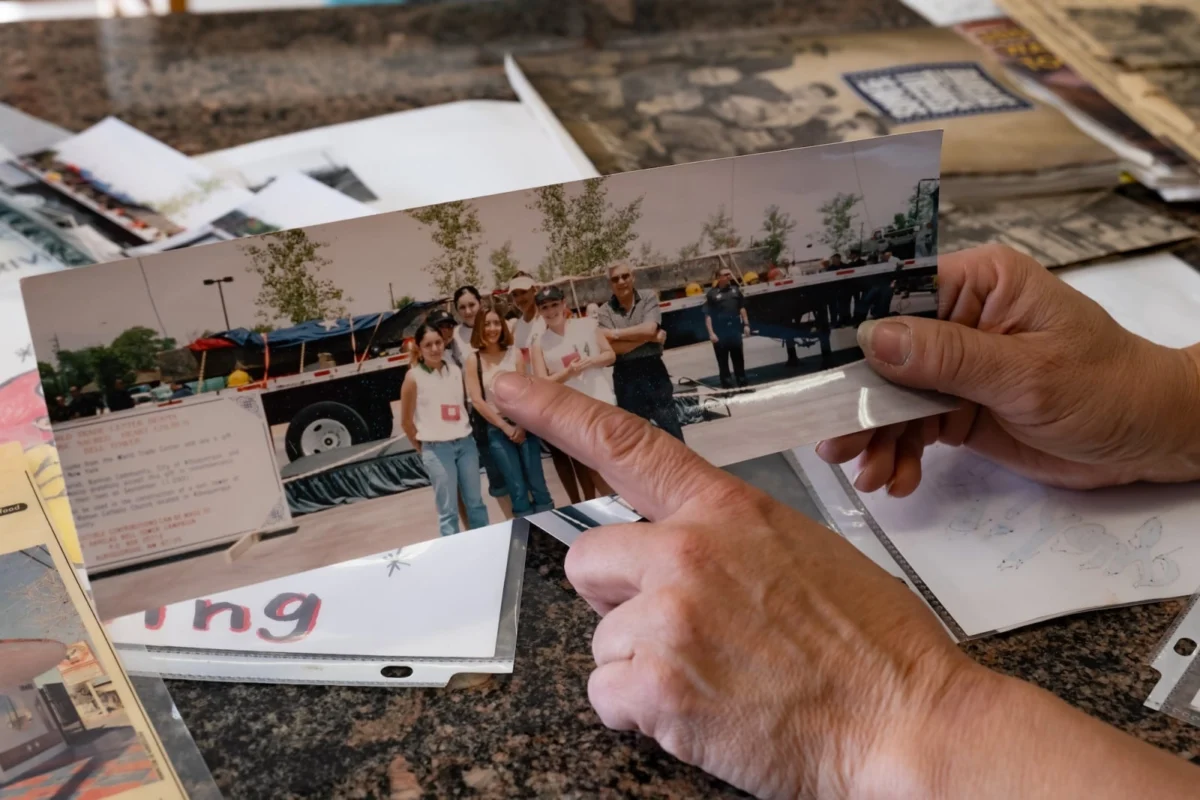
In the United States, the act of remembering is inherently political. Every society constructs a narrative architecture—a series of stories that define who belongs, who shaped the nation, and whose contributions are relegated to the footnotes of history. As the U.S. approaches its 250th anniversary, the battle over this historical narrative has intensified, pitting a push for a more inclusive, nuanced accounting of the past against a concerted effort to "whitewash" the national record.
At the heart of this struggle is the field of historic preservation. For decades, institutions like the National Register of Historic Places have served as the gatekeepers of national identity. However, these institutions have historically prioritized an Anglo-centric view of the past, focusing on colonial architecture and figures of European descent while systematically sidelining the histories of Black, Latino, Indigenous, and immigrant communities.
The Structural Erasure of the American Past
The statistics reveal a stark disparity in how the nation honors its history. According to data from the National Park Service, which oversees the National Register of Historic Places, the list remains overwhelmingly homogenous. As of 2021, of the more than 96,000 sites designated as historically significant, fewer than 10% were deemed representative of the nation’s actual demographic diversity. When looking specifically at sites dedicated to Black, Latino, or Native American histories, the numbers are even more abysmal, hovering between less than 1% and 3% of the total.
Sehila Mota Casper, the inaugural executive director of Latinos in Heritage Conservation (LHC), argues that this exclusion is not accidental. "There are so many histories that are undocumented or unknown, and there’s a reason for that," Casper says. "There are a lot of structures and systemic inequities that ensure those stories never get told."
The issue is rooted in a narrow definition of "historic significance." Traditional preservation models prioritize physical structures, grand architecture, and documents that fit into a neat, 250-year-old timeline. This framework ignores the intangible heritage—oral histories, foodways, music, and communal memory—that has sustained marginalized groups for centuries.
A Chronology of Exclusion and Resistance
The trajectory of American historic preservation has been marked by a cyclical tension between erasure and reclamation:
- 1966: The National Historic Preservation Act (NHPA): Designed to protect the nation’s heritage, the act established the National Register. While vital, its implementation was heavily influenced by the prevailing social hierarchies of the mid-20th century, which favored the preservation of landmarks linked to white political and cultural leaders.
- 2014: The Birth of LHC: Frustrated by the limitations of federal institutions, a volunteer-led network of heritage practitioners, scholars, and advocates formed Latinos in Heritage Conservation to fill the void left by formal preservation channels.
- 2016–2023: Landmark Successes: The advocacy of grassroots organizations led to major wins, including the National Historic Landmark designation for Chicano Park in San Diego (2016) and the Rio Vista Farm in Socorro, Texas (2023), a site that served as a critical reception center for Bracero migrant laborers.
- 2025: A Regulatory Shift: Following the inauguration of the Trump administration in January 2025, federal efforts to broaden the scope of historic preservation were halted. New executive orders prioritized a return to a singular, traditional narrative, explicitly targeting Diversity, Equity, and Inclusion (DEI) initiatives and attempting to "sanitize" historical interpretation within national parks and public education.
The False Origin Story: 1776 vs. Reality
A primary point of contention in the current political climate is the obsession with 1776 as the "true" starting point of the nation. This narrative conveniently ignores the thousands of years of human habitation that preceded the Declaration of Independence.
"As a historian and as a preservationist, I know that the concept of the 250th is just that—it’s a constructed concept," Casper explains. "That’s like saying that the nation’s past started 250 years ago, when in reality, we already had inhabitants here. As a historic preservation organization, we look at this through a critical lens to ensure that the stories of peoples who were here before—Indigenous peoples, and those of us from Indigenous roots in South and Central America—are recognized and celebrated."

By focusing solely on the revolutionary era, the state ignores the "living" history of the nation. For example, the Midwest is often portrayed as a region whose history began with European migration in the 19th century. Yet, as Casper notes, Latino populations have been integral to the Midwest’s mining and manufacturing sectors since the 1880s. When these histories are ignored, it creates a vacuum that allows xenophobic narratives to flourish, characterizing these groups as "new" or "alien" to the land.
Implications: Preservation as Repair
The pushback against teaching "difficult" histories—such as those of enslavement, imperialism, and systemic displacement—is not merely about curriculum; it is about the power to define who belongs in the American project.
"When communities are repeatedly absent from archives, textbooks, and historic designations, that absence can be used to reinforce the idea that they were never here or do not belong here," says Casper. "Historical erasure is not simply a lack of recognition; it can become a tool for reshaping public memory and determining who is understood as belonging to this land."
The work of groups like LHC is an attempt to pivot from "preservation as freezing a moment in time" to "preservation as repair." This requires a radical decentralization of power. Instead of top-down designations determined by federal agencies, the future of preservation must be community-led. This involves:
- Reframing Significance: Valuing the lived experience of the community over the architectural pedigree of a structure.
- Elevating Intangible Heritage: Recognizing that memory, language, and cultural practices are just as worthy of protection as physical monuments.
- Active Partnership: Treating residents and cultural bearers as the primary researchers and interpreters of their own histories.
The Road Ahead: Why the Public Disagrees
While political rhetoric often suggests a deep divide regarding the teaching of history, public opinion tells a different story. Recent polling indicates that a significant majority of Americans support the preservation of a broad, comprehensive history—including the nation’s most difficult chapters. The public, it seems, is far more comfortable with the complexities of the American story than the politicians attempting to censor it.
For educators, museum curators, and historians, the mandate is clear: continue to document the stories that others want to forget. By centering the voices of those who have been marginalized, the field of preservation can move beyond mere nostalgia and toward a truthful accounting of the American experience.
"We’re at a moment right now where we need to be thinking critically about our practice," Casper concludes. "It means examining who has traditionally had the authority to decide what is historically significant, what evidence counts, and whose knowledge is treated as expertise. We’re not just looking at documents; we’re looking at the lived experience and allowing that to shift the narrative. There is repair and healing in that."
As the nation marks its 250th year, the true test will not be the grandeur of its celebrations, but the depth of its honesty. By reclaiming the histories of those who built the nation from the margins, we do not just save buildings—we save the truth of who we are.

 Ammar Sabilarrohman

 Basiran






