

 Rifan Muazin

As the November 3, 2026, election approaches, California finds itself at the center of a historic fiscal showdown. At the heart of the debate is Proposition 40, a ballot initiative that proposes a one-time, 5-percent levy on the net worth of individuals residing in California who held billionaire status as of January 1, 2026. The measure represents one of the most aggressive attempts in American history to address wealth inequality, with 90 percent of the projected revenue earmarked for healthcare programs, while the remaining 10 percent is dedicated to food assistance and public education initiatives.
However, the proposal has ignited a firestorm of opposition from the very demographic it targets. A significant faction of the state’s 231 billionaires has mobilized, pouring massive financial resources into campaign efforts to defeat the measure. This conflict has laid bare the widening chasm between the state’s ultra-wealthy elite and the median Californian household, sparking a broader national conversation about the responsibility of extreme wealth in a time of economic volatility.
The Financial Scope of the Opposition
A report released in September 2026 by the Institute for Policy Studies and "Tax the Ultra-Rich Now" (TURN) identified 22 specific California billionaires who have emerged as the most vocal and well-funded opponents of Proposition 40. Together, these individuals have funneled over $150 million into "No on 40" campaign groups, with contributions continuing to pour in daily.
The roster of opposition donors reads like a who’s-who of the global tech and venture capital elite. It includes high-profile figures from the crypto industry, prominent AI developers shaping the future of global infrastructure, and investors with long-standing, controversial reputations.
The financial data regarding these opponents is stark. Between January 1, 2025, and September 1, 2026—a span of less than 20 months—the combined wealth of these 22 individuals surged from $439.8 billion to $722.1 billion. This represents a staggering 64 percent increase in personal wealth in under two years. To put this in perspective, the proposed 5 percent tax would equate to only a small fraction of the gains they have realized during this short period.
Chronology of the Wealth Surge and Political Mobilization
The trajectory of this conflict began in the shadow of post-pandemic economic recovery.
- January 1, 2025: Baseline measurements established. The 22 primary opponents of Prop 40 held a combined $439.8 billion in assets. At this stage, the legislative groundwork for a wealth tax was still in its infancy.
- Early 2026: As the ballot initiative gained momentum, the "No on 40" campaigns began to organize, seeking to frame the levy as an "exodus-inducing" policy that would drive innovation out of the state.
- August 12, 2026: Reports surfaced that Google co-founder Sergey Brin had committed over $102 million to oppose the measure, marking him as the single largest donor to the opposition.
- September 1, 2026: The follow-up assessment revealed that despite the ongoing political battle, the wealth of these 22 individuals had ballooned to $722.1 billion, an increase of $282.6 billion.
- November 3, 2026: The date set for the California electorate to cast their votes on the mandate.
Data-Driven Disparity: A Comparative Analysis
The data reveals a widening gap between the billionaire class and the average resident. As of September 2026, California is home to 231 billionaires, holding a combined fortune of $2.117 trillion. Just 20 months prior, that figure stood at $1.685 trillion with 178 billionaires. In contrast, the median net worth of a California household has seen only modest growth, moving from $288,000 to $303,000—a 5.2 percent increase over the same period.
Key Opposition Profiles
- Sergey Brin: The Google co-founder has seen his personal wealth climb from $148 billion to $253 billion—a 70 percent increase. His current net worth is roughly 83,498 times that of the median California household.
- Peter Thiel: The Palantir co-founder, who has been vocal in encouraging other billionaires to relocate out of California, saw his own wealth grow by 120.27 percent, rising from $14.8 billion to $32.6 billion.
- Chris Larsen: The Ripple founder has contributed significantly to opposition committees. His personal wealth grew 23.5 percent over the 20-month period, reaching $12.6 billion.
- John Doerr: The venture capitalist, a major donor to the "No" campaign, saw his wealth rise nearly 48 percent, from $14.8 billion to $21.9 billion.
While a few individuals in the billionaire cohort saw minor declines in net worth, the overwhelming trend has been one of exponential accumulation, largely outpacing the inflationary pressures felt by the average family.
Official Responses and Rhetoric
The "No on 40" campaign has characterized the proposed levy as an unfair "double taxation" that punishes success. Prominent figures like Peter Thiel have suggested that such policies create a hostile business environment, potentially leading to a "brain drain" of talent and capital. They argue that the tax is not a sustainable policy, but a punitive measure that will discourage future investment in California’s tech sector.
Conversely, proponents of the measure, including advocates from the Institute for Policy Studies, argue that the current tax system is fundamentally regressive. Economists Gabriel Zucman and Emmanuel Saez have noted that during the 2019–2025 period, California billionaires paid an average of only 0.26 percent of their wealth in state income taxes. Some individuals, such as Brin and Page, were found to have paid as little as 0.07 percent of their annual wealth in state taxes. Proponents argue that a one-time 5 percent levy is a modest contribution toward funding essential public services that support the very ecosystem that allowed such immense fortunes to be built in the first place.
Societal and Economic Implications
The debate over Proposition 40 carries significant implications for the future of California’s social contract.
1. Public Infrastructure and Welfare
The injection of revenue into healthcare and education is designed to alleviate the strain on public services. Supporters argue that the wealth gap has reached a level that threatens the social fabric of the state, and that the ultra-wealthy—who have seen their assets grow by trillions—have a moral and civic obligation to support the population that provides the workforce, consumers, and public infrastructure they utilize.
2. The Migration Debate
A core argument of the opposition is that the wealthy will leave. This "capital flight" theory suggests that if California imposes unique tax burdens, it will lose its status as the world’s leading hub for innovation. However, proponents point out that the infrastructure, talent pool, and cultural advantages of California remain unparalleled, and that the state remains a primary location for the world’s most profitable companies regardless of one-time tax adjustments.
3. A Precedent for the Nation
If Proposition 40 passes, it will likely serve as a blueprint for other states and potentially federal-level legislation. The outcome will test the limits of populist economic policy in a state that has long been the bellwether for American social and economic trends.
Conclusion
As California voters prepare to head to the polls, they are faced with a fundamental question regarding the nature of extreme wealth. Is the current trajectory of wealth concentration sustainable, or is a fiscal intervention necessary to ensure the state’s long-term health and stability?
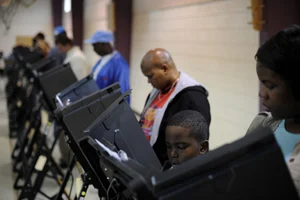
For the 231 billionaires currently residing in California, Proposition 40 represents an unwelcome intrusion into their personal finances. For the millions of Californians struggling with the rising cost of living, however, it represents a long-overdue mechanism for wealth redistribution. Regardless of the outcome on November 3, the intensity of the opposition and the sheer scale of the wealth involved have ensured that the discourse surrounding the "Billionaire Wealth Tax" will continue to resonate long after the final ballot is cast.


 Nana Wu