

 Asro
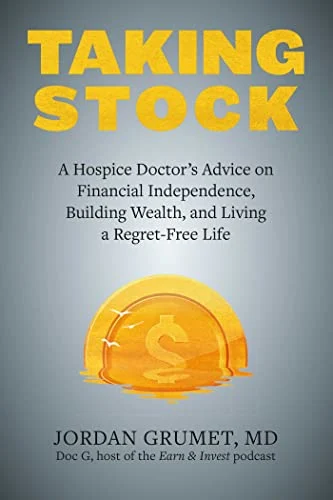
In the high-stakes world of personal finance, we are often obsessed with the mechanics of wealth: asset allocation, tax-loss harvesting, and the relentless pursuit of compounding interest. However, according to Dr. Jordan Grumet, a physician who has spent his career in the quiet, reflective halls of hospice care, our preoccupation with the "bottom line" often blinds us to the true nature of capital.
Drawing from his book Taking Stock, Dr. Grumet suggests that when we view life through the lens of those facing their final days, the definition of an "investment" shifts dramatically. For the terminally ill, the bank balance becomes secondary to the legacy of experiences, relationships, and self-forgiveness. As Grumet famously notes, "When the undertaker speaks, you should really listen."
The Philosophy of the Final Ledger
The genesis of Dr. Grumet’s investment philosophy began with an unlikely mentor: a patient who worked as an undertaker. Through their conversations, Grumet realized that both the medical professional and the funeral director occupy a unique vantage point—the intersection of life’s end and the memories left behind.
Most people spend their lives accumulating financial assets, assuming that wealth is the ultimate hedge against uncertainty. However, in the hospice room, that narrative often unravels. Grumet observes that the most "successful" patients are not necessarily the ones with the largest portfolios; they are the ones who have diversified their life investments into areas that provide emotional, intellectual, and relational dividends.
Chronology of Human Regret
To understand what matters most, one must look at the trajectory of a life. Grumet recounts the case of a patient named Gerald, whose story serves as a cautionary tale of misaligned investments.
- The Catalyst: Gerald lost his job in corporate America decades before his terminal diagnosis. This event triggered a spiral of self-blame and professional identity crisis.
- The Descent: Unable to reconcile his situation, Gerald turned to alcohol. The addiction acted as a "negative investment," compounding not interest, but destruction.
- The Erosion: His marriage dissolved, and he became estranged from his daughter, Sandy.
- The Realization: During his final days, the "life review" process revealed that the loss of his relationship with his daughter was far more painful than the loss of his career.
Gerald’s journey highlights a universal truth: we spend too much time looking backward at failures rather than investing in the present. If he had practiced self-forgiveness earlier, he might have broken the cycle of addiction and salvaged his most precious assets—his family.
Supporting Pillars of Non-Monetary Wealth
Dr. Grumet argues that we must broaden our portfolio to include five essential non-monetary asset classes. These are the investments that pay out when the market volatility of life hits its peak.
1. The Power of Self-Investment and Forgiveness
Self-forgiveness is the most undervalued asset in a human’s portfolio. Remorse is a universal experience, but it is often toxic. While introspection is necessary for growth, dwelling on past mistakes—actions taken or relationships neglected—is a form of "emotional debt" that yields no returns. The key is to adopt the wisdom of the serenity prayer: change what you can, and forgive yourself for the rest.
2. Education as an Emergency Fund
Knowledge is the only currency that cannot be devalued by inflation. Grumet emphasizes that education shouldn’t be confined to a four-year degree. In the modern era, the avenues for learning are endless. "Knowledge is the emergency fund in which you shield your happiness," Grumet writes. When all other resources are exhausted—whether due to job loss or health crises—your skills, your capacity to learn, and your ability to adapt become your primary survival mechanisms.
3. The Compounding Interest of Human Connection
If money grows through interest, human connection grows through presence. A dying patient’s room is a diagnostic tool for their life’s success. Those who invested in others are surrounded by photographs, letters, and a revolving door of friends. Those who prioritized money over people often find themselves in quiet, solitary rooms. Investing in others is a long-term strategy; it ensures that your essence continues to live on in the memories of those you influenced.
4. Legacy and the Next Generation
Investing in children—not just with financial inheritance, but with time, values, and mentorship—is the ultimate long-term play. By teaching children about money, character, and resilience, you are planting seeds that will grow long after you are gone. This is the "ripple effect" of a life well-lived.
5. Physical and Mental Equilibrium
Financial security is moot if you lack the health to enjoy it. The body and mind form the framework upon which all other success is built. Grumet warns against the trap of "perfect being the enemy of good enough." You do not need to be a marathon runner to invest in your physical health; thirty minutes of daily movement can provide compounding dividends in energy and longevity.
Official Perspectives on Financial Reality
While Dr. Grumet advocates for a shift in perspective, he is careful to acknowledge that ignoring the stock market is a mistake. He posits that getting your financial house in order is a necessary prerequisite to living a meaningful life.
The "official" stance of Taking Stock is that financial literacy is the foundation, not the structure. By managing your money correctly—through disciplined saving and sound investment principles—you buy yourself the freedom to focus on the "higher-order" investments. Financial independence is not just about the freedom to quit a job; it is about the freedom to dedicate your time to the things that define your identity.
Implications for the Future
The implications of this philosophy are profound for anyone currently in the "accumulation phase" of their life. We are conditioned to measure our success by net worth, yet hospice care suggests that at the end of the journey, the scorecard is entirely different.
The practical steps for the reader are clear:
- Audit your time: Are you spending your energy on things that compound in value, or things that depreciate?
- Practice the "Yes" principle: Say yes to new experiences and uncomfortable requests. This is how you expand your knowledge base.
- Conduct a Non-Monetary Investment Inventory: Every few months, sit down in silence and catalog your assets—your relationships, your skills, your health, and your legacy.
The Final Takeaway: A Balanced Portfolio
The conclusion is inescapable: be as prepared for life as you are for death. The process of building a life of purpose is taxing, requiring as much discipline as building a retirement fund. It requires the emotional labor of maintaining relationships, the intellectual labor of constant learning, and the physical labor of self-care.
As you navigate your path, remember that the most successful investors are those who can close their eyes at the end of the day—or the end of a lifetime—and see a portfolio filled with love, knowledge, and meaningful experience. Money is the tool, but the life you build with it is the true investment.
Exercise: Inventory of Non-Financial Wealth
To begin your transition, try this simple exercise:
- Clear your schedule: Find a quiet space for one hour.
- The Three-Column Method:
- Column 1: Relationships. List the ten people who matter most. Are you investing enough time in these connections?
- Column 2: Skills and Education. List ten things you’ve learned this year that make you a better, more capable human.
- Column 3: Well-being. List ten habits that contribute to your physical and mental longevity.
- Analyze: Once complete, you have a ledger of your non-financial net worth. If these columns are empty, your portfolio is dangerously lopsided, regardless of how many dollars are in your brokerage account. Start balancing your ledger today.


 Pevita Pearce





