



 Nana
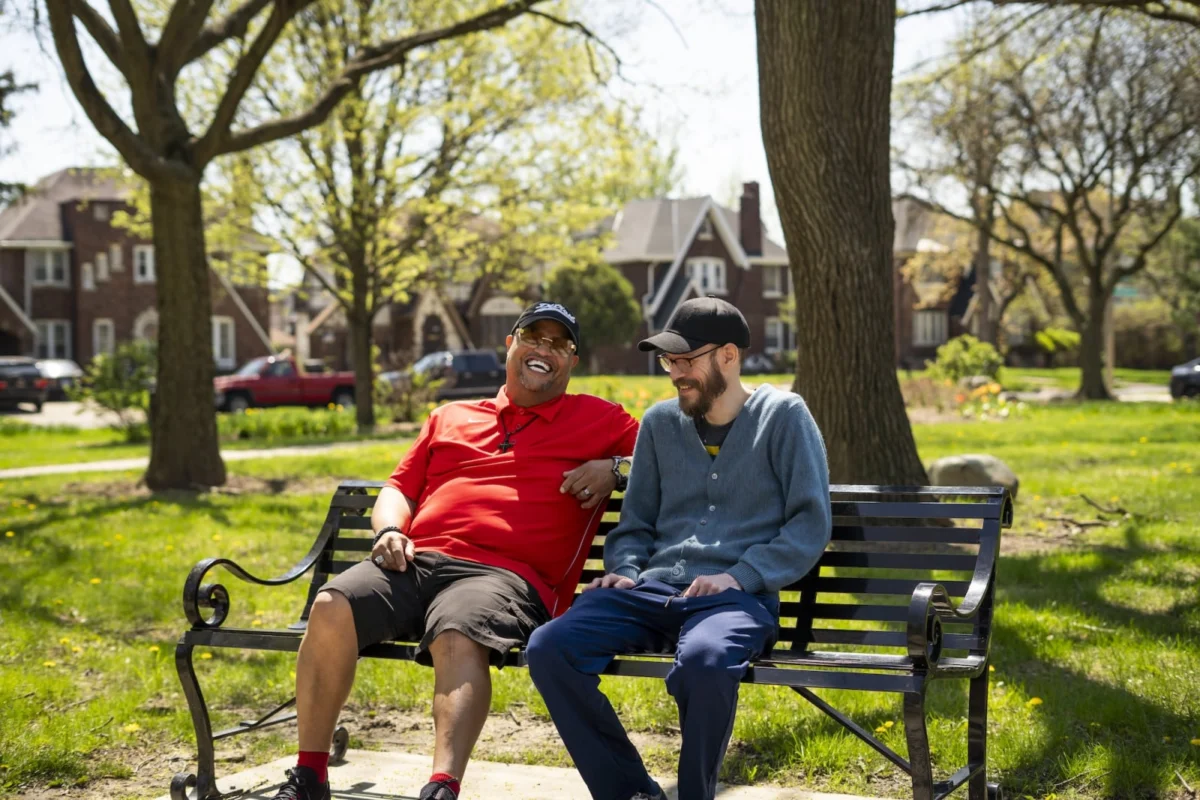
As Detroit accelerates its $300 million investment in the Joe Louis Greenway—a sprawling 29-mile loop designed to connect neighborhoods, municipalities, and cultural landmarks—the city finds itself at a familiar crossroads. The project, which promises to link Detroit with Hamtramck, Highland Park, and Dearborn, is heralded by officials as a transformative engine for economic vitality. Yet, for residents in the project’s northwest footprint, the promise of progress is inextricably linked to the anxiety of displacement.
The Vision and the Reality: A Project in Motion
The Joe Louis Greenway is more than a trail; it is an ambitious urban planning strategy aimed at stitching together a city fragmented by decades of disinvestment. Since its inception in 2017, the city has successfully secured $220 million in funding to bring the vision to life. The project leverages existing assets like the Dequindre Cut and the Detroit Riverwalk, with city officials targeting 15 miles of completed trails by the end of 2026, and full completion by 2030.
For newcomers and long-term residents alike, the greenway represents a tangible shift in Detroit’s landscape. Ryan Marie Davis, who recently purchased a historic 4,200-square-foot home in the Russell Woods neighborhood, views the greenway as a major perk of her housing investment. "The city’s completely changed from when I lived here prior," Davis says. "It’s definitely an added benefit."

However, for others, the greenway serves as a stark reminder of the city’s volatility. In the northwest neighborhoods of Dexter-Linwood, Russell Woods, and Nardin Park, residents have spent years enduring the uncertainties of a "weaker market." While the city views the greenway as a "fertilizer" for growth, the community remains wary of whether this growth will include them or replace them.
A Chronology of Transformation
The trajectory of the Joe Louis Greenway is defined by several distinct phases:
- 2017: The project is officially announced, and construction begins. The city begins the long process of planning the route through historically underinvested corridors.
- 2019: The City of Detroit holds visioning sessions, looking to other cities—specifically Atlanta—for models of success and lessons in cautionary development.
- 2021: The city releases its formal Framework Plan, identifying the northwest neighborhoods as "challenged" due to declining population and depreciating property values.
- 2022-2024: Significant federal and local funding, including $21.5 million in American Rescue Plan Act (ARPA) funds, is directed toward the Helen Moore Community Center and streetscape improvements on Dexter Avenue.
- 2025: The city releases a new Neighborhood Planning Study, focusing on stabilization and the prevention of displacement, acknowledging the fears of residents who have seen property values climb as development nears.
Supporting Data: The Economics of the Greenway
The impact on real estate is already being felt. Realtors report a surge in interest from out-of-state buyers and those seeking historic charm at competitive price points. Heather Dell, a Detroit realtor, notes that while inventory was once characterized by vacant and blighted homes, the corridor is now seeing significant price appreciation.

"The prices of homes have gone up significantly in that pocket," Dell explains. "There was a tremendous amount of inventory, and there were a lot of empty homes or vacant homes."
For instance, the home purchased by Ryan and Justin Davis in 2025 sold for under $425,000, yet public records show a trajectory of rapid appreciation: the same property sold for $44,000 in 2015, $70,000 in 2017, and $162,000 in 2024. This rapid escalation is not unique, but it highlights the precarious nature of the local market. Currently, 52% of vacant lots in the area are owned by the Detroit Land Bank Authority, which manages over 2,300 residential properties in the northwest section alone.
Official Responses and Strategic Planning
City officials, including project manager Michelle Flourny of the Planning and Development Department, maintain that the city’s primary directive is to serve existing residents. The city’s "Neighborhood Planning Study Playbook" emphasizes that the key to long-term affordability is the preservation of existing buildings rather than demolition.

"The first priority is always to serve the residents who are already in these neighborhoods," Flourny states. When questioned about the potential for gentrification, the city distinguishes Detroit from other markets like Atlanta, noting that Detroit’s greenway is not disrupting an already "thriving" economic situation, but rather building from the ground up in areas that were previously neglected.
However, the shadow of Atlanta’s Beltline looms large. In Atlanta, the Beltline became a massive economic success but also a "poster child" for displacement, where property values skyrocketed and long-term residents were pushed out by high-end, market-rate developments. While Detroit officials have studied the Beltline, they have not proposed similar measures, such as light rail, which critics argue were key components missing from the Atlanta model.
The Human Element: Voices from the Neighborhood
For many, the greenway is a welcome sight in an area that was once "written off." Melvin Chuney, president of the Russell Woods-Sullivan Area Association, has seen his property values rise significantly—from a $35,000 investment for five properties to an estimated $200,000 per home today. "This part of the city was written off at one point," Chuney says. "There was nothing around here and people were just surviving. So just to see this bright light, if you will, it’s welcome."

Yet, not everyone shares this unbridled optimism. Eddie Respress, a 74-year-old resident, questions why the city continues to focus on demolition when there are structures that could be rehabilitated. "If you have houses on the spot that can be fixed up, why not put a person in them, instead of paying $10,000 to $15,000 to tear the house down?" he asks.
Rita Ross, whose family has deep roots in the district, worries that the development will cater to young, wealthy professionals rather than the families who have sustained the neighborhood for generations. "We don’t need apartment buildings, we need homes," she says. "The new developments need to be created with current residents in mind."
Implications: The Search for Equitable Growth
The ultimate success of the Joe Louis Greenway will not be measured by the length of the trail or the number of new luxury units constructed, but by whether the existing community can remain as the neighborhood transforms.

Mark Head, a resident who moved to Russell Woods in 2020, captures the sentiment of many who appreciate the improvements but fear the loss of community identity. "A house is a house," Head says. "You can let it fall into disrepair and you can improve it, but the people and the community, that’s priceless."
As the greenway nears completion, the challenge for Detroit is to ensure that "mixed-use" development means more than just high-end retail and market-rate apartments. Residents are calling for grocery stores, diners, and services that cater to the "layperson."
The city is currently accepting proposals for mixed-use retail, and the promise is that these spaces will be designed to support, not displace, the current population. Whether this vision holds true remains the defining question for the Joe Louis Greenway. As the city moves forward, it must balance the economic necessity of development with the moral imperative to preserve the fabric of the neighborhoods that have called Detroit home through its most difficult years.

In the end, the greenway has the potential to be a symbol of Detroit’s resurgence. But for it to be truly successful, the "bright light" that Melvin Chuney sees must illuminate the path for everyone, ensuring that the legacy of the city’s historic neighborhoods is not replaced by the gleaming facade of a new, unaffordable skyline. The greenway is a physical path, but the social path it creates will determine the future of the city.


 Siti Muinah
 Nana Wu






