



 Lina Hope
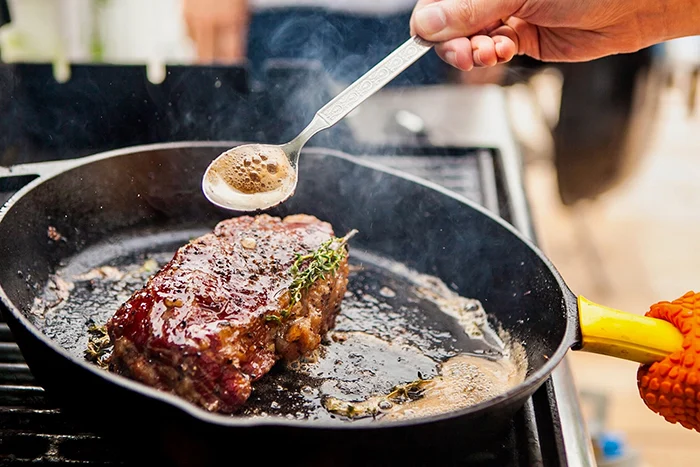
As the smog-choked skies of Los Angeles continue their decades-long evolution, the city’s battle against air pollution is shifting into an unexpected arena: the kitchen. While policymakers have spent years focusing on tailpipe emissions, industrial smokestacks, and the transition to electric vehicles, recent research from the National Oceanic and Atmospheric Administration (NOAA) reveals that the aroma of a searing steak or a frying onion carries a hidden environmental cost.
According to a groundbreaking study published in the journal Atmospheric Chemistry & Physics, volatile organic compounds (VOCs) released during the cooking process are now a major driver of ozone production in the Los Angeles basin. These emissions, often dismissed as mere culinary byproducts, now rival the VOC contribution of all on-road and off-road motor vehicles combined.
Main Facts: The Invisible Pollutants
Ozone—a gas that is beneficial in the upper atmosphere but harmful to human health at ground level—is not emitted directly. Instead, it is formed through complex chemical reactions involving nitrogen oxides (NOx) and volatile organic compounds (VOCs) in the presence of sunlight.
Historically, atmospheric scientists categorized VOCs primarily as byproducts of fossil fuel combustion—the exhaust from cars, trucks, and industrial machinery. However, the NOAA study indicates a significant paradigm shift. Researchers found that cooking-related VOCs are responsible for more than 25% of the total ozone production attributed to human-generated VOCs in the LA basin.
These compounds, which include complex organic molecules released when fats and oils are heated, react with the existing chemical cocktail of the urban atmosphere to accelerate the formation of ground-level ozone. Because LA’s topography traps air against the mountains, these compounds have ample time to bake in the Southern California sun, creating a persistent smog layer that defies traditional mitigation strategies.
Chronology: A Changing Landscape of Air Quality
To understand the significance of these findings, one must look at the historical trajectory of Los Angeles air quality.
The Era of Tailpipe Dominance (1970–2000)
For decades, the "War on Smog" in Southern California was fought almost exclusively at the tailpipe. Aggressive state mandates, such as the California Air Resources Board’s (CARB) emission standards, successfully curtailed the massive amounts of nitrogen oxides and unburned hydrocarbons coming from millions of passenger vehicles.
The Rise of Non-Traditional Sources (2000–2020)
As vehicle engines became cleaner, researchers began to notice that pollution levels were not dropping at the expected rate. By the 2010s, atmospheric chemists began investigating "urban off-gassing." This included everything from household cleaning products and paints to personal care items. These consumer products were identified as significant contributors to the VOC pool, but the role of commercial and residential cooking remained largely underestimated in climate modeling.
The Cooking Emissions Breakthrough (2020–2025)
The recent NOAA research represents the latest milestone in this chronology. By integrating specific chemical signatures associated with cooking—such as oxidized organic compounds from cooking oils—into advanced air quality models, scientists were finally able to quantify what was previously "missing" from the data. The results, published in 2025, confirmed that as the "low-hanging fruit" of vehicle exhaust is addressed, cooking emissions have emerged as a dominant, yet largely unregulated, contributor to the city’s ozone problem.

Supporting Data: The Chemical Breakdown
The NOAA team utilized high-resolution air quality models to simulate the chemical environment of the LA basin. The data suggests that the sheer volume of cooking activity in a metropolis of over 10 million people creates a constant, non-point source of pollution.
- The 25% Threshold: Cooking emissions currently account for approximately one-quarter of the total ozone-forming potential from human-made VOCs in the region.
- The Vehicle Parity: In a startling comparison, the study highlights that the ozone-producing potential of VOCs from cooking is now roughly equivalent to the VOCs generated by all mobile sources—cars, trucks, construction equipment, and heavy-duty transport—combined.
- The Chemical Complexity: Unlike simple hydrocarbons found in gasoline, cooking emissions are comprised of a "soup" of oxygenated volatile organic compounds (OVOCs). These compounds are often more reactive in the atmosphere, meaning they contribute to ozone formation more efficiently than some of the simpler compounds regulated under current clean air laws.
Official Responses and Scientific Perspective
The findings have sent ripples through the atmospheric science community and local regulatory agencies. NOAA researchers emphasize that this is not an indictment of home cooking, but rather a call for more precise atmospheric modeling.
"We are seeing a maturation of our understanding of urban chemistry," said one lead researcher involved in the project. "When we remove fossil fuel sources, the relative importance of other sources—like cooking—naturally increases. It’s a success story for electric vehicles and cleaner engines, but it’s also a sign that we need to broaden our regulatory scope."
Regulatory bodies, including the South Coast Air Quality Management District (SCAQMD), have acknowledged the study. While there are no immediate plans to restrict cooking, the data provides a new imperative for the development of advanced filtration technologies for commercial kitchens. The focus is likely to shift toward large-scale industrial or restaurant exhaust systems rather than individual home stoves, which remain difficult to monitor and regulate.
Implications: The Future of Urban Planning and Health
The implications of this research are far-reaching, affecting everything from public health policy to urban architectural design.
Public Health Concerns
Ground-level ozone is a potent respiratory irritant. It can trigger asthma attacks, reduce lung function, and exacerbate chronic bronchitis. If a quarter of the ozone in the LA basin is tied to cooking, public health officials may need to rethink how they issue air quality alerts, potentially factoring in high-density dining districts or industrial food production areas.
The Regulatory Frontier
For policymakers, the challenge is how to address a source that is fundamental to human lifestyle. Unlike the automotive industry, which can be forced to innovate through emissions standards, cooking is decentralized. Possible future strategies include:
- Incentivizing Advanced Filtration: Tax credits or grants for restaurants to install catalytic converters or high-efficiency particulate air (HEPA) and carbon-scrubbing systems in their exhaust hoods.
- Urban Zoning: Evaluating whether high-density restaurant clusters in areas with poor ventilation contribute to localized "ozone hotspots," potentially influencing future urban development plans.
- Continued Research into Aerosols: Beyond VOCs, cooking also releases organic aerosols (tiny particles). Researchers are now looking at how these particles interact with ozone to create a secondary layer of health risks that may be even more dangerous than previously thought.
The "Clean Air" Paradox
The most profound implication is the "Clean Air Paradox": as we succeed in cleaning up our energy systems, the "background" emissions of daily life become the new frontier of pollution control. The NOAA study suggests that the path to a zero-smog Los Angeles will not just involve the transition to electric vehicles or renewable energy, but a comprehensive reassessment of the chemical footprint of our daily lives—down to the very smells emanating from our kitchens.
As Los Angeles moves forward, this study serves as a reminder that the environment is a holistic system. Every action, from the ignition of a car engine to the searing of a protein on a stove, contributes to the complex chemical equilibrium of our atmosphere. By identifying these cooking emissions, scientists have provided the city with a new piece of the puzzle, one that will be essential for ensuring that the air in the City of Angels remains breathable for generations to come.


 Nila Kartika Wati

 Dwi Wanna




