
 Sagoh
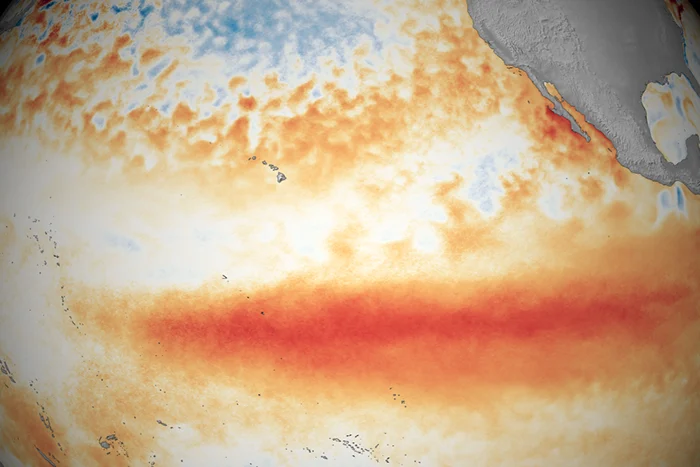
El Niño-Southern Oscillation (ENSO) events are among the most powerful drivers of global climate variability. By shifting the temperature of the tropical Pacific Ocean, these phenomena exert a domino effect that influences rainfall patterns, agricultural yields, and economic stability across every continent. Because the stakes are so high, the precision of ENSO forecasting is a pillar of modern climate science. However, a new study published in npj Climate and Atmospheric Science has illuminated a persistent, high-stakes vulnerability: the "spring predictability barrier."
Researchers have identified that climate models frequently exhibit an unjustified level of overconfidence when predicting El Niño during the months of March, April, and May. This discrepancy between model confidence and actual outcomes represents a critical gap in our ability to prepare for extreme weather.
Main Facts: The Anatomy of a Forecasting Gap
The study, authored by Aaron Levine of the University of Washington alongside Michelle L’Heureux and Caihong Wen of the NOAA Climate Prediction Center, centers on the inherent limitations of current meteorological modeling.
The "spring predictability barrier" refers to a well-known phenomenon in oceanography where climate models lose their skill—the ability to accurately predict future states—during the boreal spring. During these months, the tropical Pacific is often in a state of transition, making the coupling between the ocean and the atmosphere less stable.
The core finding of the research is that while current models often issue high-confidence forecasts during this window, these predictions are frequently inaccurate. The study reveals that these models suffer from a systemic "overconfidence bias." They tend to rely too heavily on internal signals from the tropical Pacific—such as sea surface temperature anomalies—while failing to account for the nuanced influence of extra-tropical factors. In essence, the models are "looking" in the wrong place, ignoring the external atmospheric forces that can derail or accelerate an El Niño event during the spring months.
Chronology: The History of the Barrier
The concept of the spring predictability barrier is not new, but its persistence in the era of high-performance computing is concerning.
- Early 1980s: As the first coupled ocean-atmosphere models were developed, researchers noticed a distinct dip in predictive skill during the spring. At the time, this was attributed to the lack of computing power and insufficient satellite observation.
- The 1997-1998 "Super" El Niño: This event acted as a wake-up call for the scientific community. While some models hinted at the magnitude of the event, the timing and the rapid onset in the spring were poorly captured, demonstrating that the barrier was more than a statistical curiosity—it was a societal risk.
- 2000s to 2010s: Increased investment in the Tropical Atmosphere Ocean (TAO) array and satellite monitoring improved the quality of data feeding into models. However, the barrier remained, leading many scientists to believe it was a physical limitation of the climate system itself rather than just a data problem.
- 2025 (The Current Study): The research by Levine, L’Heureux, and Wen moves the conversation forward by identifying the specific cause of the persistent error: the failure to incorporate extra-tropical atmospheric influences. By quantifying how models overweight tropical Pacific data, the team has provided a roadmap for future algorithmic adjustments.
Supporting Data: Why the Models Mislead
To understand why the models struggle, one must examine the variables they prioritize. Climate models are complex, multi-layered simulations that balance ocean currents, heat transport, and wind stress.
The "Tropical Bias"
The researchers found that models are essentially "trained" to expect that the tropical Pacific will follow a self-contained logic. If the water is warm in March, the models assume a high probability of a full-blown El Niño by autumn. However, the atmosphere is not a closed loop. The study highlights that mid-latitude wind patterns and pressure anomalies—often occurring thousands of miles away from the equator—can act as a "spoiler," suppressing or triggering the ocean-atmosphere feedback loop required for El Niño.
Statistical Overconfidence
When a model produces a forecast, it also generates an "ensemble spread"—a range of possible outcomes. When the spread is tight, the model is considered "confident." The researchers analyzed historical forecast data and found that during the spring, the models consistently produced tight, high-confidence spreads that did not correlate with the actual observed variability. This suggests that the internal physics of the models are not capturing the true range of uncertainty that exists in the real world during the spring transition.
Official Responses and Scientific Perspective
The implications of this research have been felt throughout the meteorological community.

"We are essentially looking at a ‘blind spot’ in our predictive architecture," noted Dr. Michelle L’Heureux in discussions surrounding the paper. "When we provide a forecast to the public or to humanitarian organizations, that forecast comes with a level of trust. When the model is overconfident, it can lead to decision-making that is, at best, inefficient, and at worst, dangerous for food security."
The climate science community has responded with a call for "multimodel" approaches. By combining the results of many different models—some that prioritize oceanic data and others that incorporate more complex atmospheric dynamics—researchers hope to "de-bias" the final outlook.
Furthermore, the National Oceanic and Atmospheric Administration (NOAA) and similar global bodies are beginning to emphasize "calibrated" forecasts. Instead of taking a raw model output at face value, human experts are now spending more time adjusting for historical model performance, specifically during the spring months, to ensure that the public receives a more honest representation of the uncertainty involved.
Implications: From Risk Management to Policy
The fallout of a failed El Niño forecast is not merely academic; it is deeply tied to global human security.
1. Agricultural Planning
Farmers in regions vulnerable to ENSO, such as Southeast Asia, Australia, and parts of South America, rely on seasonal forecasts to decide which crops to plant and when to apply fertilizers. A false sense of confidence in a "dry" or "wet" forecast can lead to catastrophic crop failure. If a model predicts a drought-driven El Niño that never arrives, farmers may lose an entire season of investment.
2. Economic and Disaster Preparedness
Governments allocate billions of dollars to disaster preparedness based on these models. Flood defenses, energy grid management, and humanitarian aid distribution are all tuned to the pulse of the Pacific. When models are overconfident, they can lead to the misallocation of resources—either by failing to prepare for an event that does occur or by over-preparing for one that does not.
3. The Path Forward
The study by Levine et al. provides a clear path for future development. By integrating "extra-tropical" influences—such as the North Pacific Oscillation or Southern Hemisphere atmospheric pressure shifts—into the next generation of climate models, researchers hope to break the spring predictability barrier.
"We are moving toward a paradigm where we stop treating the tropics as an island," says the research team. "To predict the pulse of the Pacific, we must look at the global heartbeat of the atmosphere."
As climate change continues to alter the baseline temperatures of the world’s oceans, the relationship between the tropics and the rest of the globe is shifting. Understanding the spring predictability barrier is no longer just about fixing a math problem; it is about ensuring that global policy remains grounded in reality, even when the climate system is at its most unpredictable.
Conclusion
The research published in npj Climate and Atmospheric Science serves as a sobering reminder of the limits of modern technology. While our computational power has grown exponentially, our understanding of the complex, interconnected nature of the global climate remains a work in progress. By identifying the overconfidence bias in spring ENSO forecasts, Levine, L’Heureux, and Wen have provided a critical service to the scientific community, paving the way for more nuanced, cautious, and ultimately more accurate climate forecasting. As we look toward future climate cycles, the focus must shift from merely building bigger models to building smarter, more self-aware systems that recognize their own limitations.

 Laily UPN
 Lina Irawan