



 Lina Hope
Main Facts: The Arrests at Jantar Mantar
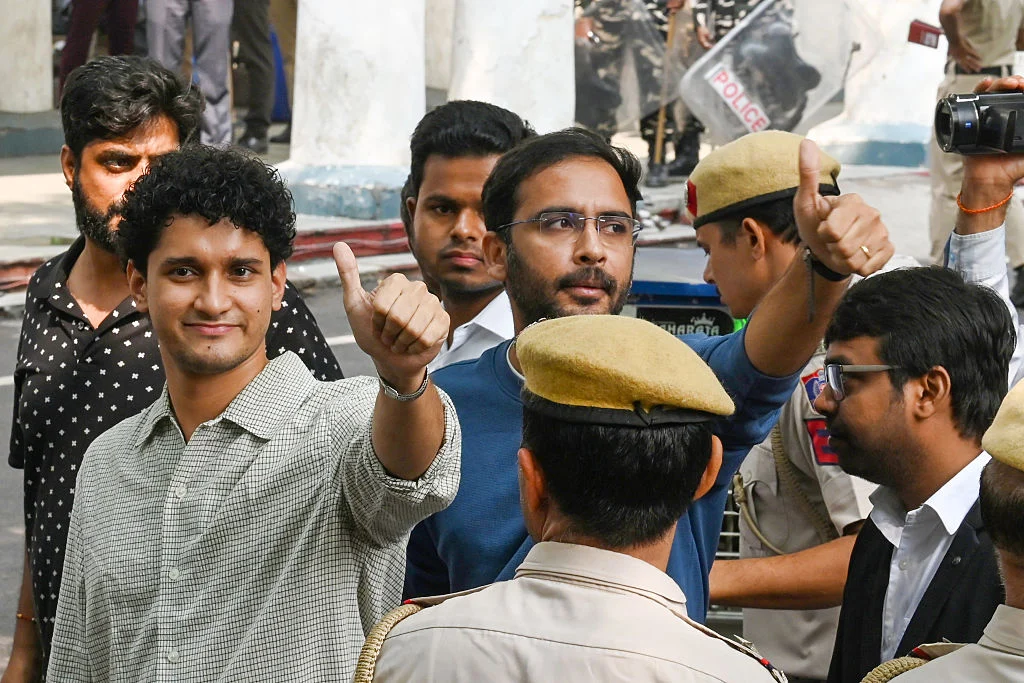
The democratic fabric of India faces renewed scrutiny following the arrest and subsequent five-day judicial remand of Saurav Das and Ashutosh Ranka, two prominent leaders of the youth-led political movement, the Cockroach Janta Party (CJP). Their detention, which occurred on Tuesday following an attempt to assemble at the iconic Jantar Mantar, marks a significant escalation in the ongoing tension between grassroots activists and the state.
The arrests were executed shortly after Delhi authorities officially denotified Jantar Mantar as a designated protest venue. According to legal filings and reports from the CJP’s legal team, led by Ratna Singh, both Das and Ranka were formally remanded on Wednesday. The charges brought against them include criminal trespass, disobedience of orders, and breach of bond. A third member, Ajinkya Shinde, was released on a personal bond of INR 5,000 after being held under preventive detention. These legal actions have drawn sharp rebukes from human rights observers, who view the move as a deliberate attempt to stifle public discourse at a time when the CJP is demanding accountability regarding electoral-roll revisions and the conduct of the Chief Election Commissioner, Gyanesh Kumar.
Chronology of the Escalation
The recent events are not isolated incidents but part of a calculated campaign to consolidate control over public space. The timeline of this suppression is as follows:
- October 10–11, 2026: A wave of preventive detentions sweeps across India. In Mumbai, over 600 protesters attempting to gather at the historic August Kranti Maidan are taken into custody. Similar reports emerge from Bengaluru, where 100 individuals are detained while marching toward the Karnataka Chief Electoral Officer’s office.
- October 12, 2026: The Delhi Police formally remove Jantar Mantar from the list of authorized protest sites, citing Supreme Court directives regarding alternative venues.
- October 13, 2026: CJP leaders Saurav Das, Ashutosh Ranka, and Ajinkya Shinde attempt to organize a peaceful assembly at Jantar Mantar to protest the exclusion of their venue and broader electoral grievances. All three are detained by police.
- October 14, 2026: Formal charges are filed. Das and Ranka are remanded to five days of judicial custody, while Shinde is released on bond.
- Ongoing: Reports continue to surface of protesters from Gujarat and Maharashtra being intercepted and detained while traveling to the national capital to join the movement.
Supporting Data: The Anatomy of a Crackdown
The scale of the current operation against the CJP and other dissenters is unprecedented in its reach. Beyond the physical arrests, authorities have deployed a multi-layered strategy to dismantle the movement’s infrastructure:
- Digital and Logistical Barriers: Protesters have reported widespread restrictions on public transport and the imposition of mobile internet blackouts in sensitive zones, hindering the ability of organizers to coordinate.
- Targeting the Press: The crackdown has extended to the media, with journalists—particularly women—reporting physical mistreatment, the confiscation of equipment, and, in some instances, sexual harassment by police personnel. This systematic obstruction prevents the public from receiving verified accounts of police conduct.
- Legal Obstacles: Lawyers representing the detainees have faced significant hurdles, including being denied timely access to their clients, which complicates the due process and violates established legal safeguards.
- Alternative Venue Inadequacy: While the state has offered venues such as Ramlila Maidan, Burari Ground, and CBD Ground as alternatives to Jantar Mantar, these locations are often criticized for their distance from the centers of political power. By moving protests to the periphery, the state effectively mutes the "sight and sound" of dissent, rendering the right to protest functionally obsolete.
Official Responses and Human Rights Concerns
Aakar Patel, Chair of the Board of Amnesty International India, has been vocal in condemning the state’s reliance on the criminal justice system to punish peaceful assembly. "The authorities cannot claim to protect the right to protest while denotifying established sites and arresting people who attempt to use them," Patel stated. He emphasized that the right to assemble is not a privilege to be granted by the state, but a fundamental right that must be exercised in spaces accessible to the public.
From a constitutional perspective, Articles 19(1)(a) and 19(1)(b) of the Indian Constitution guarantee the rights to freedom of expression and peaceful assembly. While "reasonable restrictions" are permitted in the interest of public order, the Supreme Court of India established in Mazdoor Kisan Shakti Sangathan v. Union of India (2018) that such regulations must seek to accommodate the rights of protesters rather than impose blanket prohibitions. International bodies, including the UN Human Rights Committee, have similarly affirmed that peaceful assemblies should, in principle, be permitted in all spaces to which the public has access. By ignoring these legal precedents, the state is effectively challenging the judiciary’s role in balancing citizen rights against administrative convenience.
Implications: The Death of Public Dissent?
The implications of the CJP crackdown are profound. By criminalizing the act of protest, the state is signaling a shift toward an authoritarian model where dissent is not merely managed, but eradicated.
The CJP Phenomenon
The Cockroach Janta Party itself represents a new wave of youth-led activism. Born in June 2026 from the frustration of students and job seekers over systemic examination irregularities and paper leaks, the group utilizes satire and digital mobilization to challenge the Union Education Minister and the broader establishment. Their growth from an online movement to a physical force on the streets has clearly rattled the administration.
The Erosion of Accountability
When protesters are arrested, journalists are harassed, and legal counsel is obstructed, the mechanisms of accountability collapse. The closure of Jantar Mantar—a space that has historically served as the "voice of the people"—is symbolic of a wider trend of excluding citizens from the political process. If the state continues to force protesters into remote, non-visible locations, it effectively creates a vacuum where government policies remain immune to public criticism.
A Call to Action
The international community, including human rights organizations and legal bodies, is calling for the immediate and unconditional release of Saurav Das and Ashutosh Ranka. More broadly, there is a mounting demand for the government to reverse the denotification of protest sites and cease the intimidation of journalists and lawyers.
The struggle of the CJP is a microcosm of a larger battle for the future of Indian democracy. As the space for peaceful dissent continues to shrink, the question remains whether the Indian state will reaffirm its commitment to the constitutional values of freedom and open debate, or continue down a path that turns public squares into silent, heavily guarded zones of exclusion. A right that exists only on paper, as Patel noted, is a right hollowed out in practice. For now, the detention of these young leaders remains a stark reminder that the price of democracy is constant, vigilant, and often dangerous, participation.


 Iffa Jayyana

 Ammar Sabilarrohman




