


 Lina Irawan
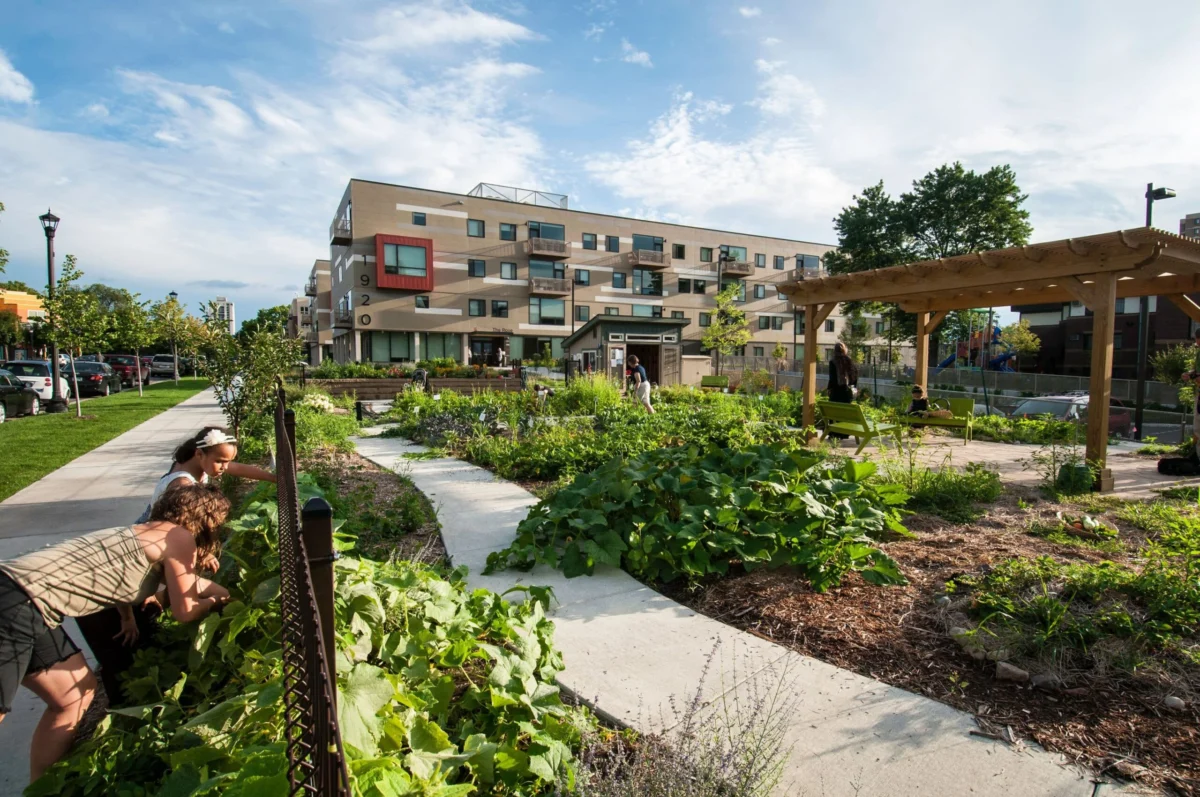
For Will Delaney, the process of securing insurance for Hope Community, Inc.—a Minneapolis-based nonprofit focused on affordable housing—was once a mundane administrative task. Back in 2008, the renewal season meant soliciting bids from a healthy field of competing carriers. It was a buyer’s market; premiums were predictable, and in some years, they even dipped.
Today, that competition has vanished. Since 2020, Hope Community has been relegated to the sidelines of the conventional insurance market. Only one standard carrier remains willing to offer a quote, and the terms are punitive. Over two recent renewal cycles, the nonprofit saw its premiums skyrocket by 46 percent, even as it was forced to absorb a massive increase in its deductible, jumping from $5,000 to $20,000.
Hope Community’s struggle is not an outlier; it is a symptom of a systemic breakdown. As the broader U.S. commercial property insurance market begins to soften—with rates falling 13 percent in the second quarter of 2026—affordable housing providers are being left behind. They are increasingly finding themselves forced into the "surplus lines" market, a high-cost, high-risk sector historically reserved for exotic liabilities like haunted houses or specialized entertainment venues. When apartment buildings, the bedrock of community stability, are treated as "unclassifiable" risks, the consequences for the national housing supply are dire.
The Shrinking Safety Net: A Chronology of Exclusion
The erosion of insurance access for affordable housing did not happen overnight. It is a multi-year trend characterized by a "death by a thousand cuts."
- Pre-2020: Competitive bidding was the norm. Nonprofits could leverage their track records and property quality to negotiate favorable premiums.
- 2020–2022: The turning point. Following the social unrest in cities like Minneapolis and a string of climate-related disasters nationwide, insurance appetite for "urban multifamily" began to contract. Carriers began quietly exiting markets or implementing rigid "riot exclusions."
- 2023–2025: The "Hard Market" phase. Premiums surged by double digits annually. According to reports from Novogradac, insurance expenses for Low-Income Housing Tax Credit (LIHTC) properties rose by 17.8 percent in 2024 alone, marking seven consecutive years of double-digit hikes.
- 2026–Present: The bifurcation of the market. While traditional commercial rates have begun to decline, affordable housing providers are experiencing a "shadow market." Many are being declined by standard carriers, leaving them no choice but to enter the unregulated surplus lines market, where transparency is minimal and consumer protections are virtually nonexistent.
The Data of Disparity
The financial strain on affordable housing providers is immense because their business model is inherently rigid. Unlike luxury developers, nonprofit owners cannot simply raise rents to cover surging operational costs. They are constrained by regulatory agreements, federal subsidies, and mission-driven rent caps.
When insurance premiums spike, the money has to come from somewhere. Often, it is siphoned away from building maintenance, capital reserves, or resident services. This creates a vicious cycle: deferred maintenance leads to deteriorating building conditions, which in turn gives insurers the justification they need to hike rates further or decline coverage entirely.
According to a 2025 survey by the Federal Reserve Bank of Minneapolis, nearly one-third of multifamily owners reported an increase in "hazard exclusions"—such as wind and hail—on their policies. This means that while they are technically insured, they are responsible for a larger portion of potential disaster-related costs. Furthermore, the Climate and Community Institute (CCI) found that a single broker serving roughly 100,000 units of affordable housing could identify fewer than 10 insurers willing to even consider quoting their clients.

The "Black Box" of Underwriting
One of the most persistent frustrations for owners like Delaney is the lack of transparency. Insurance underwriting is meant to be a risk-based calculation, but for many providers, the rationale behind a rejection or a premium hike remains a "black box."
Insurers claim to look at physical markers: building age, electrical systems, and claims history. However, industry critics suggest that carriers are using "proxy variables" to effectively blacklist affordable housing. These proxies include crime scores, neighborhood demographics, and the percentage of residents using Section 8 vouchers.
In 2022, the New York State Department of Financial Services investigated this practice and found explicit evidence of insurers rejecting applications based on a "lack of appetite for affordable housing." While New York has since prohibited the use of such criteria, policing the practice is difficult. Without standardized, transparent data, it is nearly impossible for a regulator to prove that an insurer is discriminating against affordable housing rather than simply applying "neutral" risk modeling.
The Surplus Lines Trap
When a property is rejected by admitted carriers, the "safety valve" is the surplus lines market. While these insurers are licensed to operate, they are not subject to the same rate regulation or state guarantee funds as standard insurers.
The shift to surplus lines is a double-edged sword. It keeps the doors open, but at a premium. Because these insurers have the freedom to set their own terms, they often include aggressive exclusions that can leave an owner vulnerable during a catastrophe. Furthermore, if a surplus lines carrier becomes insolvent, the policyholder has no state-backed safety net. For a non-profit managing hundreds of units, the gamble is existential.
Toward a New Model: Collective Risk Sharing
Faced with an unresponsive private market, some organizations are opting to build their own. The Housing Partnership Network (HPN) provides a blueprint for this transition. In 2004, they launched the Housing Partnership Insurance Exchange (HPIEx), a captive insurer owned by the organizations it covers.
HPIEx operates as a cooperative. By pooling the risk of over 100,000 units, the members control their own pricing and coverage standards. They have discovered that their loss ratios are significantly lower than the commercial industry average, suggesting that the "risk" associated with affordable housing is often overestimated by traditional insurers.

"The huge advantage of being in HPIEx is that the members really control their own destiny," says Brendan Dolan, president of HPIEx. By conducting their own inspections and focusing on loss prevention rather than profit-taking, the cooperative creates a stable environment where insurance is a tool for preservation, not an extractive cost.
Policy Implications and The Public Interest
The crisis in affordable housing insurance is, ultimately, a public policy failure. As Solomon Greene, executive director of the University of Denver’s Center for Housing Research and Innovative Solutions, notes: "This isn’t something we can just leave the industry to solve. Taxpayers pay when insurers flee markets and when owners can no longer afford coverage. You don’t need public money in a project for this to be a public policy issue."
There is an urgent need for state-level intervention. While Minnesota’s Task Force on Homeowners and Commercial Property Insurance has explored the possibility of expanding FAIR Plans—the "insurer of last resort"—the progress has been sluggish. Critics argue that simply expanding FAIR plans isn’t enough; the state needs to facilitate the creation of specialized insurance products for nonprofit multifamily properties that recognize the unique risk profile of mission-driven housing.
Conclusion: A Call for Transparency
The current insurance landscape is forcing nonprofit operators into a corner where they must either accept exorbitant costs or gamble on inferior coverage. The success of the HPIEx model proves that affordable housing is not the high-risk endeavor that the mainstream market assumes.
The path forward requires a three-pronged approach:
- Regulatory Transparency: States must mandate that insurers provide detailed, granular reasons for policy denials to prevent "proxy discrimination."
- Public-Private Collaboration: Policymakers must work with nonprofits to create state-backed or cooperative insurance alternatives that move beyond the outdated and ineffective "one-size-fits-all" commercial models.
- Risk-Reward Recognition: Insurers must be held to a standard where proactive safety investments by building owners are actually rewarded with lower premiums, restoring the logic of risk management that has been lost in the current oligopoly.
Until these changes occur, the "haunted house" logic of the insurance market will continue to treat the most vulnerable, stable parts of our housing infrastructure as an anomaly to be shunned, rather than a community asset to be protected. For now, owners like Will Delaney continue to do what they can, searching for a way to keep the lights on and the roofs intact in an industry that has seemingly forgotten the value of the homes they protect.


 Ammar Sabilarrohman

 Basiran