


 Basiran
The COVID-19 pandemic served as a watershed moment for global public health surveillance, necessitating an unprecedented level of data transparency and cross-border cooperation. As the world transitions into a new phase of post-pandemic management, the mechanisms used to track the virus—and the governmental responses to it—are undergoing significant structural changes. This report examines the current state of COVID-19 data, the discontinuation of certain policy tracking efforts, and the importance of maintaining robust, accessible information for future health security.
Main Facts: The Evolving Landscape of Pandemic Data
As of 2024, the landscape of COVID-19 monitoring has shifted from the frantic, daily updates of the 2020–2022 period to a more consolidated, weekly reporting structure. For stakeholders, researchers, and the public, understanding these shifts is critical.
The primary source for global COVID-19 mortality and morbidity data is now the World Health Organization (WHO) Coronavirus (COVID-19) Dashboard. Since March 7, 2023, the WHO has served as the central clearinghouse for international data, replacing the reliance on the Johns Hopkins University (JHU) Coronavirus Resource Center, which ceased its iconic tracking operations on March 10, 2023.
A vital correction was issued on March 18, 2024, to ensure historical accuracy in reporting. Data provided through these trackers now represents new cases and deaths aggregated over a full seven-day week, rather than a rolling daily average. This clarification is essential for epidemiologists and policy analysts, as it recalibrates how the "peaks and valleys" of infection waves are interpreted.
Furthermore, a notable gap has emerged in the tracking of government policy. The Oxford Covid-19 Government Response Tracker (OxCGRT), which served as the gold standard for monitoring social distancing, economic relief, and health systems measures, has ceased its active tracking of government responses. Consequently, while case data remains available, the "Policy Actions" tracker has been frozen to reflect the status of global policies as they stood at the end of 2022.
Chronology: From Rapid Response to Data Sunset
The history of COVID-19 tracking can be divided into three distinct phases: the emergency phase, the consolidation phase, and the sunsetting phase.
The Emergency Phase (2020–2021)
During this period, the urgency of the pandemic necessitated the creation of ad-hoc databases. Organizations like Johns Hopkins University and the Oxford Blavatnik School of Government filled the void where national health ministries were struggling to maintain standardized reporting. This era was characterized by daily updates, high-frequency data ingestion, and a reliance on crowdsourced or NGO-supported infrastructure.
The Consolidation Phase (2022–March 2023)
As the virus became endemic, global health institutions began to assume control over data pipelines. The WHO began to centralize the reporting process, and the academic efforts (such as JHU) began to transition their resources toward long-term archiving. This was a period of standardizing terminology, such as defining exactly what constitutes a "confirmed case" or a "COVID-19 death" across varying jurisdictional reporting standards.
The Sunsetting Phase (March 2023–Present)
The final phase has been marked by the cessation of real-time policy tracking. With the global health emergency declared over by the WHO, many nations have dismantled their specific COVID-19 reporting infrastructures, folding them into general respiratory surveillance programs. The "Policy Actions" tracker, for instance, is now a static historical record rather than a living, breathing tool.
Supporting Data: Understanding the Metrics
To effectively interpret the data provided in the current repositories, one must understand the methodology behind the numbers. The tracker provided by major health organizations utilizes data from the United Nations World Population Prospects (2021 estimates) to calculate per-capita impacts.
Case and Death Metrics
The data reflects a two-week lag, a byproduct of the time required for local health departments to verify and transmit information to national bodies, and for those bodies to report to international organizations. Because the tracker only retains the last 200 days of data to maintain web performance, researchers requiring longitudinal analysis must utilize external repositories, such as the GitHub-hosted datasets provided by KFF and others.
Categorizing Policy Actions
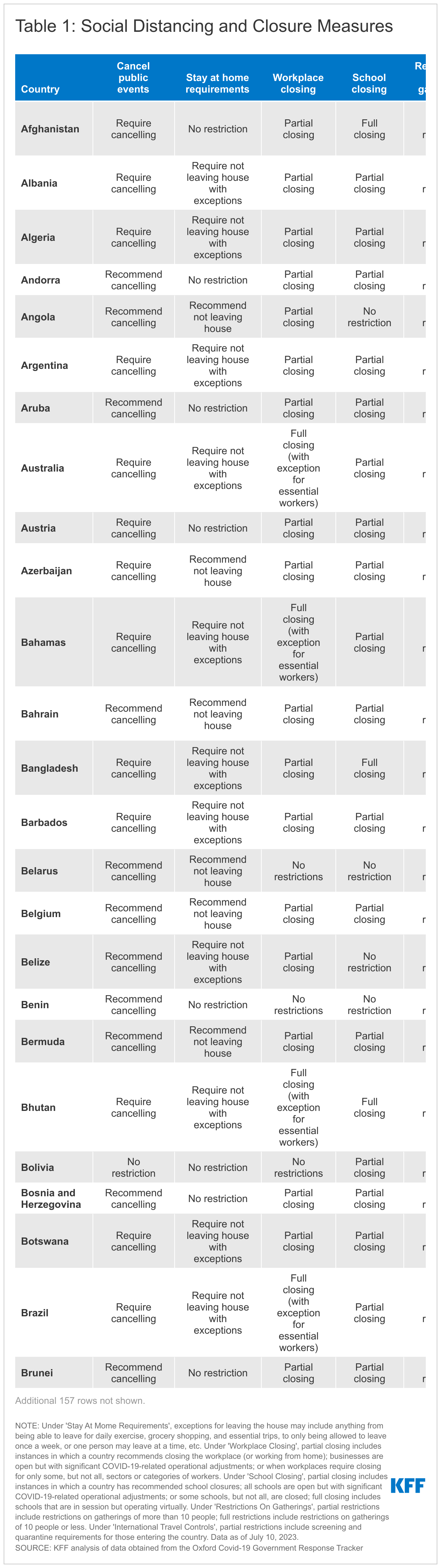
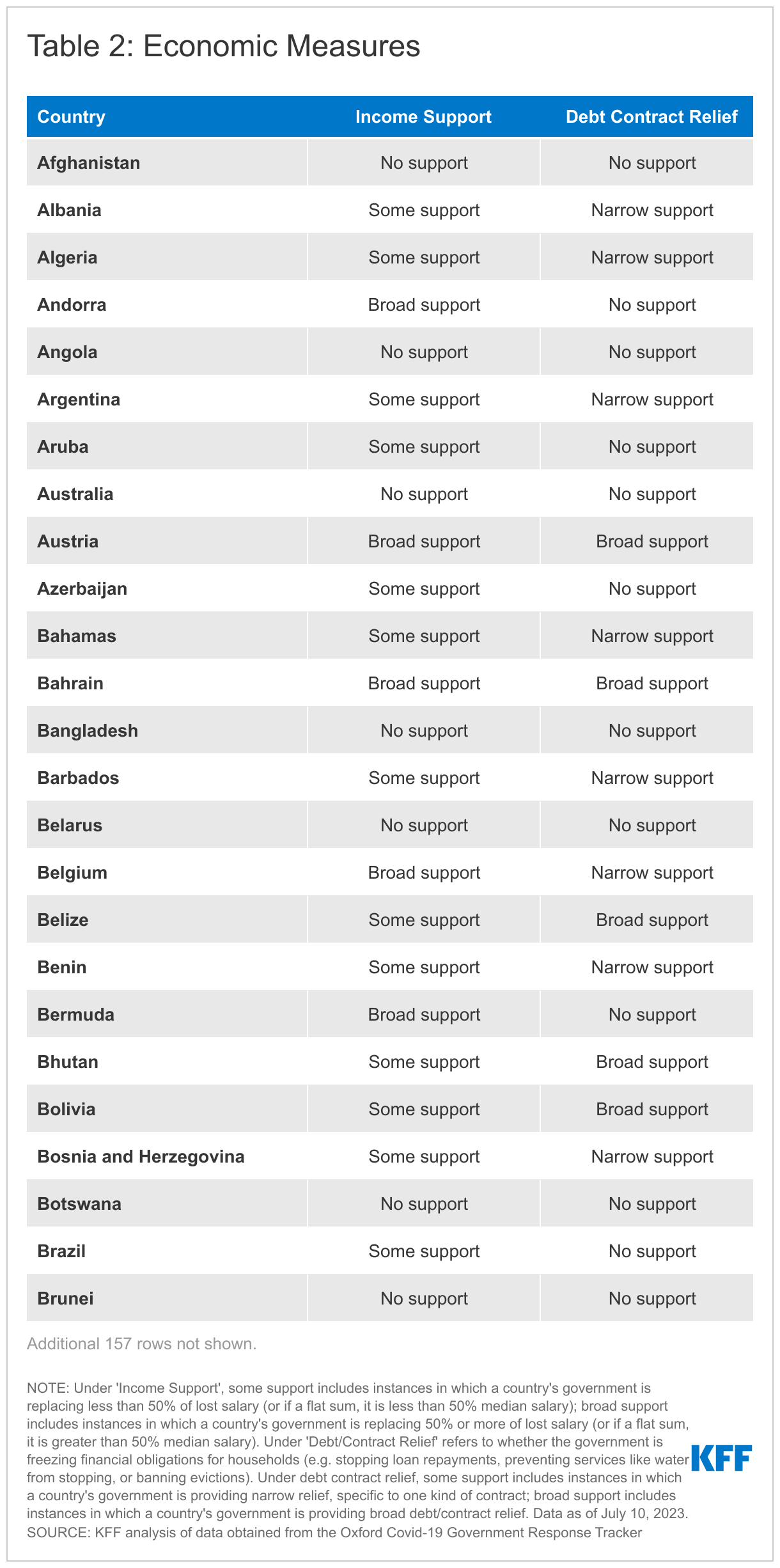
The policy tracking measures, now archived, were divided into three pillars:
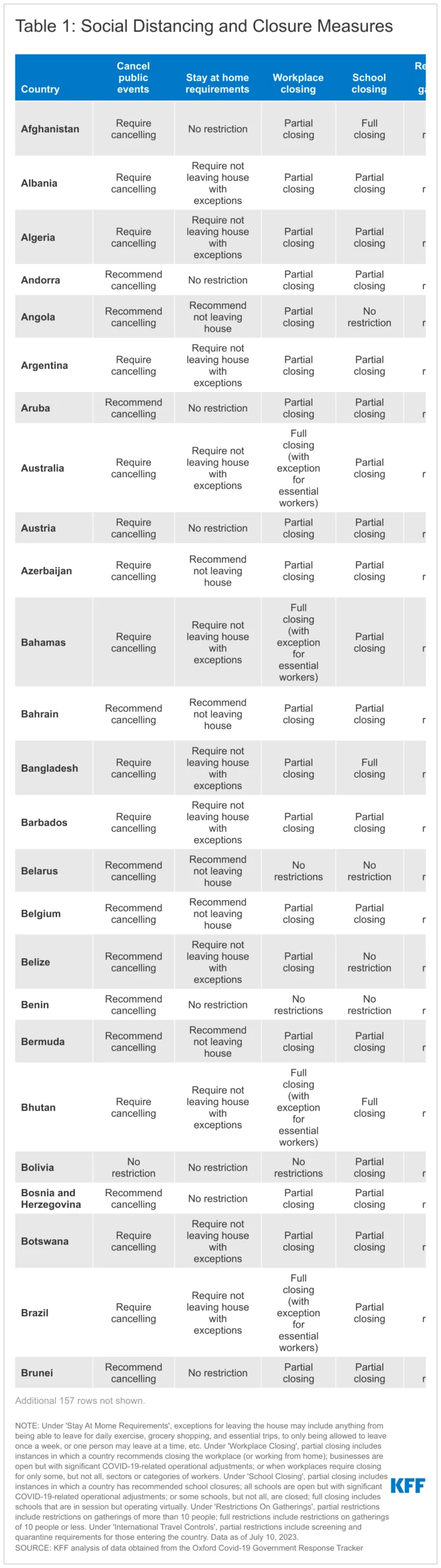
- Social Distancing and Closure Measures: This tracked the spectrum from "Stay At Home" orders (with various exemptions for exercise or essential travel) to school and workplace closures. "Partial" closures often included scenarios where businesses were allowed to remain open with significant operational adjustments, such as capacity limits or mask mandates.
- Economic Measures: These metrics tracked government intervention in the private sector. "Income Support" was defined by the percentage of lost salary replaced by government programs, while "Debt/Contract Relief" covered the suspension of financial obligations during lockdowns.
- Health Systems Measures: This included tracking vaccine eligibility—specifically how countries prioritized high-risk populations—and mask mandates. These metrics provided a snapshot of how state power was exercised to protect public health infrastructures from being overwhelmed.
Official Responses and Methodology
The methodology behind the data is as important as the figures themselves. The Oxford Covid-19 Government Response Tracker utilized a standardized coding system. For instance, in the realm of "International Travel Controls," the system distinguished between full border closures and partial restrictions, such as quarantine requirements for arrivals.
The reliability of these datasets relies on the transparency of the reporting countries. The World Bank’s country and lending groups provide the socioeconomic context, while WHO regional classifications ensure that data can be compared across geographic zones with similar health challenges.
Regarding the "Policy Actions" tracker, users are advised that the data currently available is a final snapshot. For those seeking to understand the ongoing evolution of government mandates, the Oxford repository remains the primary historical resource, but the lack of new data signifies that the era of globalized, real-time policy surveillance for COVID-19 has effectively concluded.
Implications for Future Health Security
The transition from active, granular tracking to static archival has profound implications for global health security.
The Risk of Data Siloing
One of the primary dangers of discontinuing a unified policy tracker is the fragmentation of knowledge. If future pandemics occur, the lessons learned regarding the efficacy of specific policies—such as the trade-offs between economic support and social distancing—may be lost if the data is not easily accessible in a comparative format.
The Importance of Infrastructure
The reliance on NGOs and academic institutions to track global health responses during the pandemic revealed a systemic weakness: global public health infrastructure should ideally be embedded within permanent international frameworks rather than dependent on the temporary funding and enthusiasm of academic projects. While these projects provided invaluable data, their closure highlights the need for a more sustainable, permanent, and adequately funded international surveillance system.
Preparing for the Next Threat
Moving forward, health policymakers must prioritize the creation of "living" databases that can be scaled up or down as needed. The current reliance on archived data suggests that the global community has moved toward a state of "pandemic fatigue." However, the data confirms that even as the crisis phase recedes, the virus continues to impact healthcare systems globally. By maintaining access to historical data through platforms like GitHub, researchers can continue to analyze the long-term impacts of policy decisions, ensuring that we are better prepared for future health crises.
In conclusion, while the COVID-19 tracking tools have been scaled back, the data they generated remains a vital asset. Understanding the shift in these reporting mechanisms is essential for any policy analyst or public health professional. The closure of the Policy Actions tracker marks a final chapter in the active response era, but the rigorous analysis of these historical datasets will likely influence public health strategies for decades to come. Users are encouraged to utilize the archived datasets and continue monitoring official WHO channels for the most current, albeit less frequent, updates on the ongoing status of the pandemic.


 Nila Kartika Wati
 Neng Nana






