



 Muslim

As the global community accelerates toward a net-zero future, the scientific instruments we use to peer into that future—climate models—are coming under intense scrutiny. A groundbreaking study published in the journal Science Advances has provided a comprehensive "report card" on how well these digital replicas of Earth’s systems have performed against the rapid onset of climate change. While the research confirms that models are highly effective at predicting the broad strokes of global warming, it simultaneously reveals "persistent discrepancies" that could hinder regional adaptation strategies.
Main Facts: The Accuracy of Our Digital Earth
Climate models are sophisticated mathematical simulations that integrate physics, chemistry, and biology to predict how the Earth’s climate will evolve under various greenhouse gas emission scenarios. For decades, these models have served as the bedrock for international policy, including the Paris Agreement.
The latest findings from the National Oceanic and Atmospheric Administration (NOAA) and collaborating research institutions indicate a bifurcated reality. On one hand, the models have demonstrated remarkable predictive power regarding global mean surface temperatures and the increasing frequency of extreme precipitation events. When scientists look at the "big picture"—the aggregate warming of the planet—the models and the actual observed data are largely in lockstep.
However, the study identifies critical "blind spots." Models consistently struggle to capture the complex, nuanced atmospheric and oceanic interactions in specific, high-stakes geographic zones. The tropical Pacific and the Southern Ocean represent the most significant areas of concern. In these regions, the models often miscalculate long-term temperature trends and circulation patterns. These mismatches are not merely academic; they represent a fundamental challenge in translating global trends into actionable local intelligence.
Chronology: A History of Refinement
To understand why these gaps persist, one must look at the evolution of climate modeling over the past forty years.
- The 1980s and 1990s (The Era of General Circulation): Early climate models were rudimentary, often failing to account for the complex role of clouds, aerosol particles, and deep-ocean currents. During this period, models were used primarily to prove the existence of the greenhouse effect rather than to predict regional impacts.
- The 2000s (The Integration Era): With the advent of supercomputing, researchers began integrating land-use changes, vegetation dynamics, and carbon cycle feedback loops. This was the era where models moved from "academic curiosities" to "policy tools."
- 2010–2020 (The High-Resolution Shift): As computing power exploded, scientists attempted to increase the "grid resolution" of models. While this allowed for better simulation of localized storms, it inadvertently created more "noise" in the data, as smaller-scale processes (like convective cloud formation) remained poorly understood.
- 2025 (The Confrontation Era): The recent study published in Science Advances marks a new phase. Instead of simply building more complex models, the scientific community is now engaging in a "confrontation" exercise—systematically pitting the latest generation of models against the most granular, real-world observational data available from satellites, ocean buoys, and atmospheric sensors.
Supporting Data: Where the Models Diverge
The core of the study lies in its methodology: comparing historical simulation data with actual observations from the last several decades. The data reveals three primary areas of divergence:
1. The Southern Ocean Anomaly
The Southern Ocean acts as a massive heat sink for the planet. Models have historically predicted that this region should be warming at a specific rate. However, observational data shows a far more erratic pattern. The study suggests that the models struggle with the interaction between melting Antarctic ice shelves and the upwelling of cold, deep-ocean water. This miscalculation has downstream effects on global sea-level rise projections.
2. Tropical Pacific Circulation
The tropical Pacific is the engine of global weather, driving phenomena like El Niño and La Niña. The study found that while models are getting better at predicting the timing of these events, they often fail to capture the intensity and the "spatial footprint" of the sea surface temperature anomalies. This leads to inaccuracies in predicting how rainfall patterns shift across the Americas and Southeast Asia during these cycles.
3. The Resolution vs. Accuracy Trade-off
A persistent theme in the data is that higher resolution does not always equate to higher accuracy. In some instances, adding more physical complexity introduced "biases" that were not present in simpler, older models. This phenomenon, often referred to as "over-parameterization," suggests that we may be adding detail to our models before we fully understand the underlying physics of those smaller-scale processes.
Official Responses and Expert Perspective
The scientific community has reacted to these findings with a mix of urgency and professional caution. Dr. Elena Vance, a lead researcher involved in the study, noted in a press conference that "this is not an indictment of climate science, but a maturation of it."
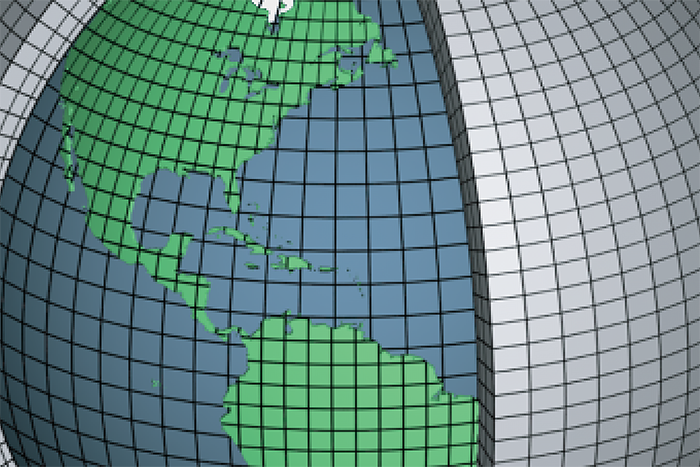
"We are moving past the ‘does global warming exist?’ phase," Dr. Vance stated. "We are now in the ‘what exactly will happen to my city, my coast, and my agriculture?’ phase. The models are like a high-end camera. They take an excellent photo of the planet, but when you zoom in on specific regions, the image starts to pixelate. Our job now is to sharpen that focus."
Policy makers, particularly those within the NOAA and the IPCC (Intergovernmental Panel on Climate Change), have indicated that these findings will be incorporated into the next cycle of model development. The goal is to move toward "ensemble modeling," where a variety of different models are weighted based on their past performance in specific geographic regions.
Implications: The High Cost of Uncertainty
The discrepancies identified in the study have profound implications for global climate resilience and disaster preparedness.
Infrastructure and Urban Planning
Cities rely on climate models to determine the height of sea walls, the capacity of drainage systems, and the zoning of floodplains. If a model miscalculates the intensity of a storm track in a specific region, a city could invest billions in infrastructure that ultimately fails to protect its citizens.
Agricultural Stability
Global food security is inextricably linked to the predictability of the monsoon seasons and heatwaves. In regions where the models show high uncertainty—such as parts of Africa and the tropical Pacific—farmers and governments face a "planning vacuum." If they cannot rely on long-term projections, they are forced to operate in a state of constant, expensive reactive crisis management.
The Financial Sector
The insurance and investment industries are increasingly reliant on "climate risk modeling" to price assets. Discrepancies in scientific models lead to a lack of consensus in risk assessment. When insurance companies cannot accurately price the risk of a wildfire or a flood, they often choose to pull out of the market entirely, leaving homeowners and businesses vulnerable and uninsured.
Moving Toward a More Resilient Future
The path forward for climate science is clear: a transition from generalist modeling to hyper-specialized, data-fused systems. This involves three key strategies:
- Increased Observational Density: We need more localized data, particularly from the Southern Ocean and the tropical Pacific, to feed into the models. Satellite data must be supplemented by an increase in autonomous underwater gliders and high-altitude atmospheric drones.
- Machine Learning Integration: AI and machine learning are being deployed to "correct" the biases in traditional physics-based models. By training algorithms on historical observation data, scientists can teach the models to recognize and mitigate their own systemic errors.
- Trans-disciplinary Collaboration: The study highlights that physics alone is not enough. Future climate models must incorporate better representations of human behavior, land-use changes, and socioeconomic shifts to create a holistic view of the Earth system.
In conclusion, while the recent study highlights that our climate models are "works in progress," it also underscores the vital importance of the work being done. The discrepancy between model and reality is not a signal to abandon these tools, but rather a clarion call for the next generation of supercomputing and observational technology. As we navigate an increasingly volatile climate, our ability to refine these digital mirrors will dictate the effectiveness of our global response to one of the greatest challenges in human history.
The models are not failing; they are evolving. By acknowledging their limits, scientists are ensuring that the next generation of climate projections will be the most accurate—and most useful—we have ever had.

 Siti Muinah
 Nila Kartika Wati