
 Jia Lissa
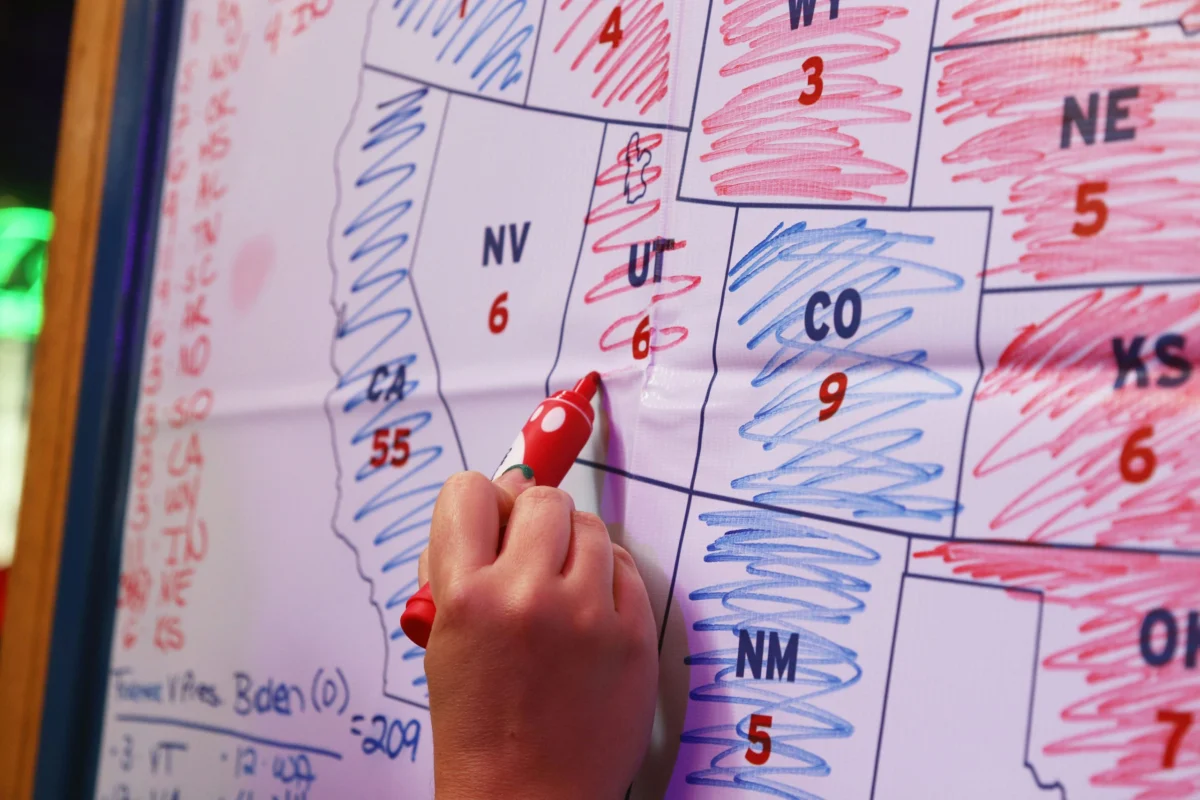
Democracy is not merely a collection of ideals; it is a machine. Like any complex system, it operates on rules, logic, and, fundamentally, mathematics. From the granular mechanics of how a single vote is tallied to the high-stakes geometry of drawing district maps, the bedrock of our political system is built on quantitative choices. Yet, in the modern American classroom, these two pillars—mathematics and civics—are frequently treated as separate, non-overlapping silos.
As the political landscape grows increasingly polarized, a growing movement of educators and researchers argues that this separation is a pedagogical failure. They contend that by integrating "civic quantitative literacy" into K-12 curricula, we can move beyond partisan rhetoric and equip the next generation with the tools to analyze, critique, and improve the democratic systems they will soon inherit.
The False Dichotomy of the Core Curriculum
For decades, school administrators have faced the "zero-sum" dilemma of curriculum design. In an era of high-stakes testing, the common belief is that time spent on one subject is time stolen from another. If a school focuses heavily on STEM, the arts are often marginalized; if the emphasis is on literacy and mathematics, social studies and civics are relegated to the background.
This is a false dichotomy, according to Anna Saavedra of the University of Southern California and Ismar Volić, a professor of mathematics at Wellesley College. Their research suggests that teaching math and civics as an integrated discipline—math-civics—does not subtract from student learning; rather, it amplifies it.
By applying mathematical rigor to civic concepts—such as the Electoral College, proportional representation, gerrymandering, and political data analysis—educators can solve two problems at once. They provide students with a clear answer to the age-old classroom question, "When am I ever going to use this?" while simultaneously grounding abstract political concepts in verifiable data.
A Chronology of a Curricular Shift
The push to merge these fields has gained momentum over the last five years, moving from theoretical discourse to empirical study.
Phase One: Mapping the Landscape
Recognizing that math-civics integration was rare and largely dependent on individual teacher initiative, a research team from the University of Southern California and Wellesley College launched a comprehensive study. They interviewed 123 educators, school officials, and curriculum providers across six states: California, Florida, Illinois, Massachusetts, New York, and Texas.
The Findings
The study, which spanned various grade levels, revealed a profound enthusiasm for the interdisciplinary approach. Educators noted that students were more engaged when the "math" involved real-world stakes. When students analyzed voter turnout by race, age, or income, they weren’t just practicing statistics; they were engaging in sociology and history. When they used fractions to calculate proportional representation, they weren’t just learning arithmetic; they were exploring the philosophy of fairness in governance.
Current Efforts
Following the publication of their executive summary, the research team is now moving into a phase of systemic implementation. This includes:
- Defining Learning Outcomes: The team is currently aligning math-civics concepts with existing state standards.
- Policy Advocacy: Researchers are engaging with state departments of education to advocate for the formal inclusion of these topics in state-mandated curricula.
- National Frameworks: The team is lobbying the National Assessment Governing Board to incorporate math-civics literacy into the new civics learning framework.
- Pilot Programs: Partnerships are being formed with core math curriculum providers to develop pedagogical supports that make these lessons "plug-and-play" for busy teachers.
Supporting Data: Why Numbers Matter in the Public Square
The necessity of this shift is underscored by the complexity of modern democratic disputes. Today’s headlines are dominated by debates that are, at their core, mathematical.
The Problem of Gerrymandering
When students study redistricting, they are learning about geometry and spatial analysis. By understanding the math behind "packing" and "cracking" districts, students gain an objective way to measure the fairness of a map, moving the conversation away from partisan accusations and toward structural analysis.
The Mechanics of Voting
Whether it is the "winner-take-all" system of the Electoral College or the nuances of Ranked-Choice Voting, different tallying methods produce radically different outcomes. Learning the functions and counting techniques behind these systems allows students to evaluate which systems best represent the will of the people.

Statistical Literacy and Misinformation
In an age of big data, the ability to interpret political polling, demographic trends, and economic indicators is a survival skill. Students who are trained to ask, "How was this sample size determined?" or "Is this data visualization misleading?" are far less susceptible to political misinformation and manipulation.
Perspectives from the Field: Teachers and Administrators
The feedback from the 123 educators surveyed was largely uniform: current civics instruction is often too abstract, and current math instruction is often too detached from reality.
"Teachers are desperate for ways to make their lessons feel consequential," says a school district leader involved in the study. "When you show a student that they can use a basic algebraic formula to determine whether a legislative body is truly representative of its population, the classroom environment changes. It stops being a chore and starts being a tool for empowerment."
However, the survey also identified significant barriers. Currently, math-civics literacy is an "extra" that depends on the curiosity of the instructor. Without a systematic overhaul of state standards, this knowledge remains a privilege for students whose teachers happen to have the time and initiative to innovate outside the textbook.
Implications for the Future of Democracy
The implications of failing to integrate these disciplines are clear. A citizenry that cannot understand the mathematical underpinnings of its own government is a citizenry that is easily disenfranchised.
Strengthening Democratic Resilience
The research suggests that students who are exposed to math-civics literacy are better equipped to identify institutional flaws. Rather than becoming cynical about democracy, these students are more likely to propose and evaluate specific reforms—such as changing voting methods or implementing independent redistricting commissions—because they understand the mechanics of how those changes would function.
A Prerequisite for Citizenship
If we view education as the preparation for democratic participation, then "civic quantitative literacy" is not a luxury or an elective. It is a prerequisite for a healthy, functioning republic. As the researchers note, without a mathematical component, civics education leaves students only partially prepared for the modern world.
The Road Ahead
The path to systemic change is fraught with the typical hurdles of education reform: rigid state standards, overcrowded schedules, and the sheer inertia of traditional school structures. Yet, the momentum is building. By partnering with core curriculum providers, the advocates of this movement are betting that if they make the tools easy to use, teachers will adopt them.
Conclusion: Toward a More Quantifiable Democracy
The marriage of mathematics and civics represents a rare opportunity to bridge the gap between abstract academic skills and the messy, vital work of participating in a democracy. It transforms the classroom from a place where students passively receive information to a laboratory where they analyze the machinery of their society.
As we look toward the future of K-12 education, the question is no longer whether we can afford to teach these topics. In an era where data and statistics have become the primary weapons of political influence, the question is whether we can afford not to. For the next generation of voters, leaders, and citizens, the ability to do the math is the best defense against the erosion of the democratic process.
By grounding our students in the numbers that define our government, we do more than teach them math or civics—we provide them with the structural literacy necessary to protect and improve the democracy they will eventually lead.


 Asro