


 Asro
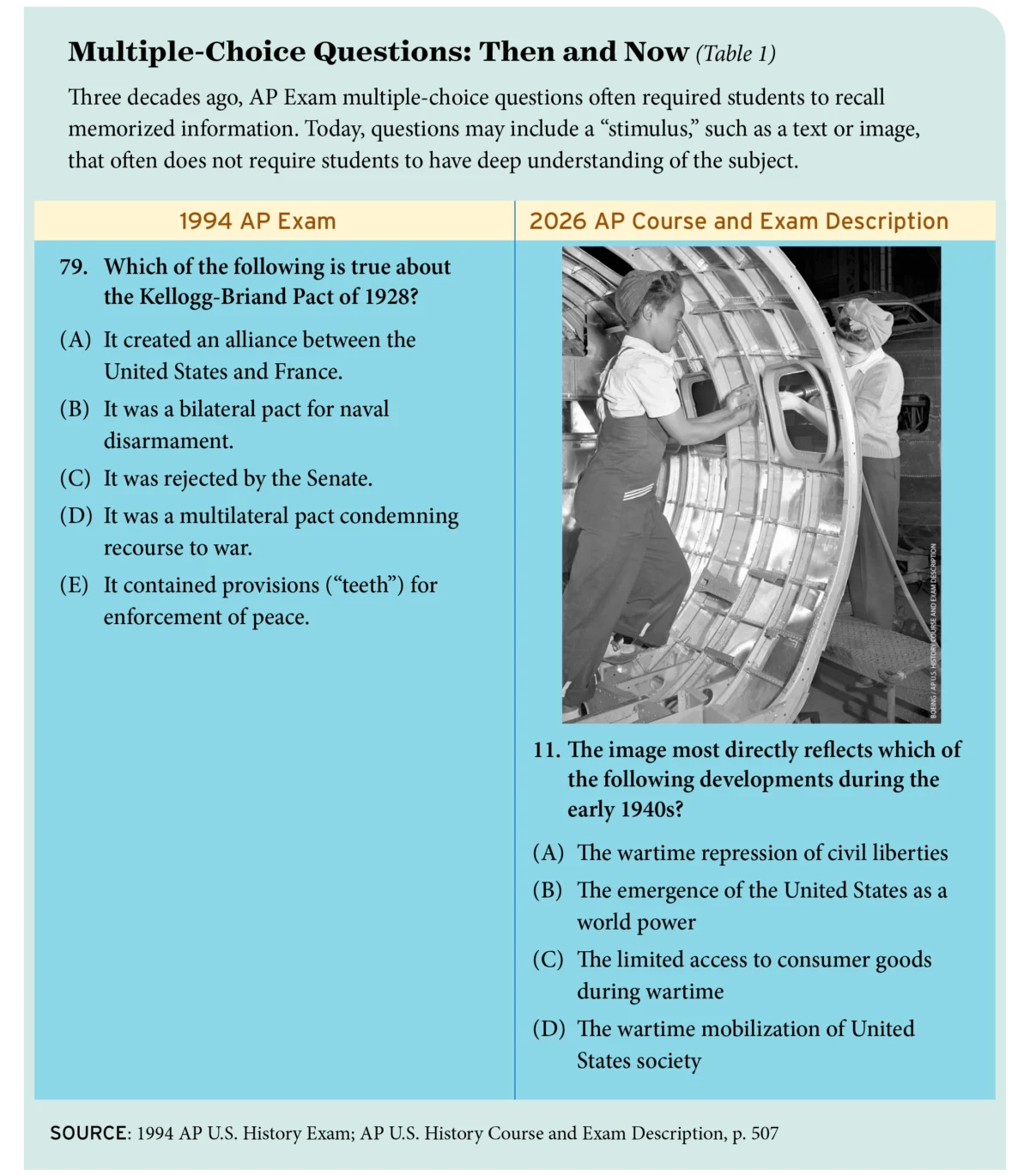
For decades, the Advanced Placement (AP) program served as the gold standard for American secondary education—a rigorous academic bridge designed to introduce high schoolers to the demands of university-level scholarship. However, a systemic transformation initiated over a decade ago has fundamentally altered the landscape of the program. What began as a well-intentioned effort to move away from rote memorization has, according to an growing chorus of educators, researchers, and university professors, devolved into a significant decline in academic rigor.
The current state of the AP program suggests that in the pursuit of “depth over breadth,” the College Board has inadvertently stripped away both, leaving a generation of students with a weakened foundation of knowledge and a distorted understanding of what true college-level work entails.
The Genesis of the Redesign: A Shift in Philosophy
The turning point for the AP program arrived in the early 2010s, marked by a series of aggressive “course redesigns.” The impetus for these changes was rooted in legitimate pedagogical concerns: critics argued that the existing AP curriculum was bloated with excessive content and prioritized the regurgitation of facts over critical analysis.
The College Board, under the leadership of incoming CEO David Coleman—an architect of the Common Core State Standards—sought to align the AP experience with a modern educational philosophy. The stated goal was to cultivate “deeper learning,” encouraging students to master complex concepts rather than memorize lists of dates, chemical formulas, or literary definitions.
However, the implementation of this vision has been widely criticized as a "dumbing down" of the curriculum. By de-emphasizing factual recall, the redesigned courses inadvertently signaled to students that foundational knowledge was secondary to "holistic" skills. As the Thomas B. Fordham Institute presciently warned in a 2007 report, there was an extreme risk that "big ideas" would eclipse the necessary facts, leading to a shallow education that lacked both the breadth of traditional curricula and the depth of genuine collegiate inquiry.
Chronology of a Curricular Decline
The systematic reduction of content did not happen overnight; it was a piecemeal dismantling of academic standards that spanned over a decade.
- 2010–2012: The initial push for "depth over breadth" begins. The College Board aligns AP frameworks with Common Core standards, focusing on skill-based assessment.
- 2013–2015: Significant overhauls to AP Biology and AP U.S. History spark immediate backlash. Critics argue that the removal of 40% of the content in Biology and the reorganization of History curricula limit students’ historical context and scientific literacy.
- 2018: AP World History faces intense scrutiny for narrowing its scope, effectively stripping away thousands of years of human history to focus on a truncated, modern-centric narrative.
- 2020–2024: The trend accelerates. Curricula across Latin, Spanish Literature, Statistics, and Chemistry undergo revisions that further reduce reading lists and mathematical requirements. Teachers and professors begin to publicly document that the exams no longer reflect the difficulty of university coursework.
In each instance, the College Board framed these changes as "refinements" intended to help students succeed. Yet, the cumulative effect has been the steady evaporation of content that once challenged the most capable high school students in the country.
The View from the Ivory Tower: A Crisis of Preparation
The most damning evidence of this decline comes from the institutions that receive these students: America’s colleges and universities. Professors across disciplines report a growing chasm between the credit students earn in high school and their actual readiness for university-level work.
The History Gap
At the University of Texas at Austin, the disconnect is quantifiable. Students who arrive with passing scores on the AP U.S. History exam are often found lacking the fundamental knowledge required to succeed in the second half of the university’s survey course. The department has been forced to implement a secondary, faculty-graded essay exam to verify that students possess the writing and analytical skills expected at a collegiate level—a move that effectively renders the AP score insufficient for placement.
The Writing and Humanities Crisis
The humanities have seen similar erosion. At Colby College, English faculty report spending the first several weeks of introductory courses "undoing the damage" caused by the AP system. The "holistic" approach to literature and writing, which favors formulaic responses over deep, independent engagement with texts, has left students ill-equipped for the nuance required in university-level literary analysis.
Mathematical and Scientific Dilution
The critique extends into STEM fields, where precision is paramount. A professor at Johns Hopkins University has argued that the equivalence between AP Calculus and university-level calculus is an "illusion," noting that the university’s own introductory courses would likely fail to pass the College Board’s current audit for rigor.
Similarly, in AP Economics, free-response questions are increasingly criticized for testing mid-level intuition rather than the rigorous analytical modeling expected in undergraduate economics. Even in AP Chemistry, veteran educators have noted that while they strive to maintain high standards, the exams themselves have seen a "plummeting" level of difficulty, leaving students unprepared for the intensity of college laboratory sciences.
Supporting Data: Why "Easier" Isn’t Better
The reduction of standards is not merely anecdotal; it is structural. Across the 42 AP courses currently offered, the College Board has consistently moved toward models that simplify assessment.
- Reading Requirements: AP Spanish Literature reduced its required reading list from 56 to 38 titles. AP Latin has slashed the required lines of the Aeneid in half.
- Mathematical Frameworks: The South Carolina Department of Education was forced to change its policies on AP Statistics, citing that the College Board’s removal of core mathematical content had lowered the rigor so significantly that it no longer qualified as a truly advanced course.
- Content Volume: The recurring theme across Biology, World History, and Computer Science is a reduction in volume. While the College Board claims this allows for "greater exploration," teachers argue that it prevents students from developing a comprehensive mental map of their subjects.
The result is a "shallow-learning" environment. When a student is taught to focus on "big ideas" without the bedrock of factual knowledge, they lack the tools to verify or analyze those ideas. The curriculum has become a series of "units" and "skills" that lack the structural integrity of a discipline.
The Teacher’s Perspective: A Silent Rebellion
Perhaps the most telling aspect of this crisis is the reaction from within the classroom. AP teachers, who are tasked with delivering this curriculum, have been among the most vocal critics. Many have expressed "outrage" and "dismay" at the shrinking scope of their subjects.
A veteran AP Chemistry teacher famously remarked that during test preparation, he had to inform his students that the actual AP exam would only feature the "easy things," not the rigorous material he was teaching in class. This creates a perverse incentive: teachers who maintain high standards are, in effect, over-preparing their students for an exam that has lowered its bar.
When the curriculum is "dumbed down," the best teachers are forced into a difficult position: follow the College Board’s simplified roadmap to ensure high pass rates, or maintain academic integrity at the risk of their students’ performance on a standardized metric.
Implications: The Long-Term Impact on Higher Education
The long-term implications of this trend are profound. As AP courses continue to lose their status as "college-level" in the eyes of university faculty, the prestige and utility of the program will inevitably decline.
- Grade Inflation and Credit Credibility: If universities continue to lose faith in the validity of AP scores, they will likely stop granting credit for them. This would undermine the primary value proposition of the AP program—the ability for students to earn college credit and save on tuition.
- The Inequality of Preparation: The decline in rigor disproportionately affects students who rely on AP courses as their primary exposure to academic excellence. While students at elite private schools may supplement this "dumbing down" with more rigorous independent study, students in under-resourced public schools are left with only the diluted AP curriculum, widening the achievement gap.
- The Erosion of Intellectual Depth: By prioritizing "skills" over "content," we risk producing a generation of students who are adept at navigating test formats but lack the depth of knowledge required for true innovation, research, and critical thinking.
Conclusion: A Call for Reform
The evidence is mounting that the AP program has strayed from its mandate. The attempt to trade breadth for depth has resulted in a paradoxical loss of both. For the College Board to restore the integrity of the AP program, it must engage in a transparent, honest dialogue with university faculty and secondary school educators.
This requires a departure from the current trend of simplifying assessments to boost participation numbers. Instead, it necessitates a return to the foundational principle that high school students are capable of—and deserve—rigorous, content-rich, and intellectually demanding education.
The "charade" that current AP courses are equivalent to university-level work must end. Either the College Board must significantly raise the rigor of its examinations to match the expectations of top-tier universities, or the academic community must stop pretending that these courses serve their original purpose. The future of American secondary education depends on the ability to recognize that excellence cannot be manufactured through simplification; it must be built on the sturdy, and sometimes difficult, foundation of actual, comprehensive knowledge.


 Sagoh
 Nana