


 Lina Irawan
As Mexico undergoes a historic transformation in its labor laws, the path toward genuine, independent trade unionism has never been clearer—or more fraught with challenges. For U.S. labor organizers seeking to support their counterparts across the border and build a unified front against multinational corporations, a new blueprint has emerged from a three-decade-old partnership.
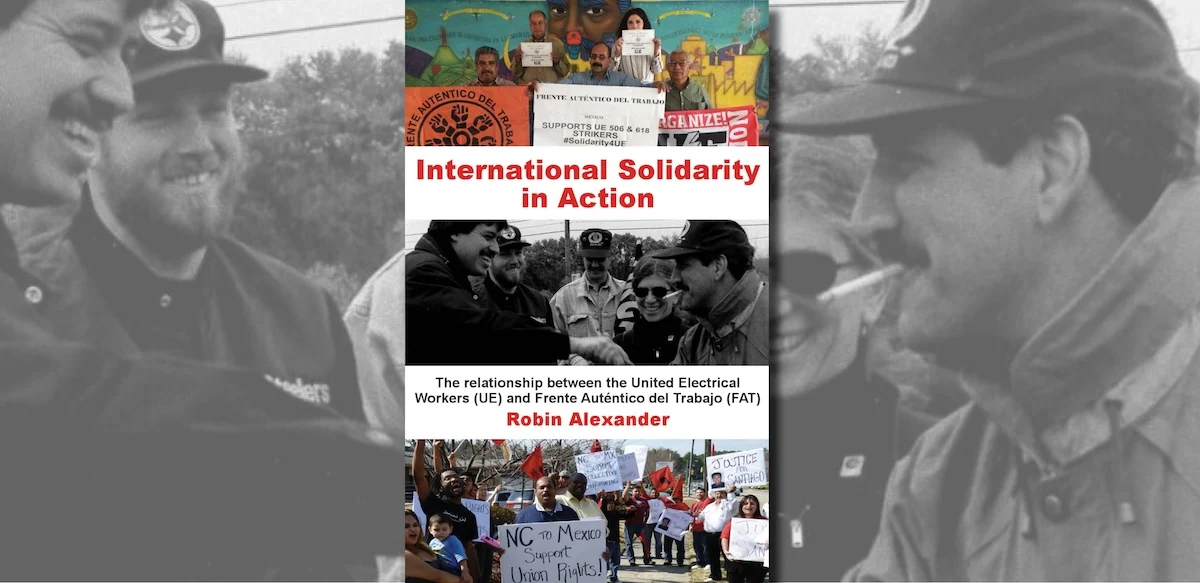
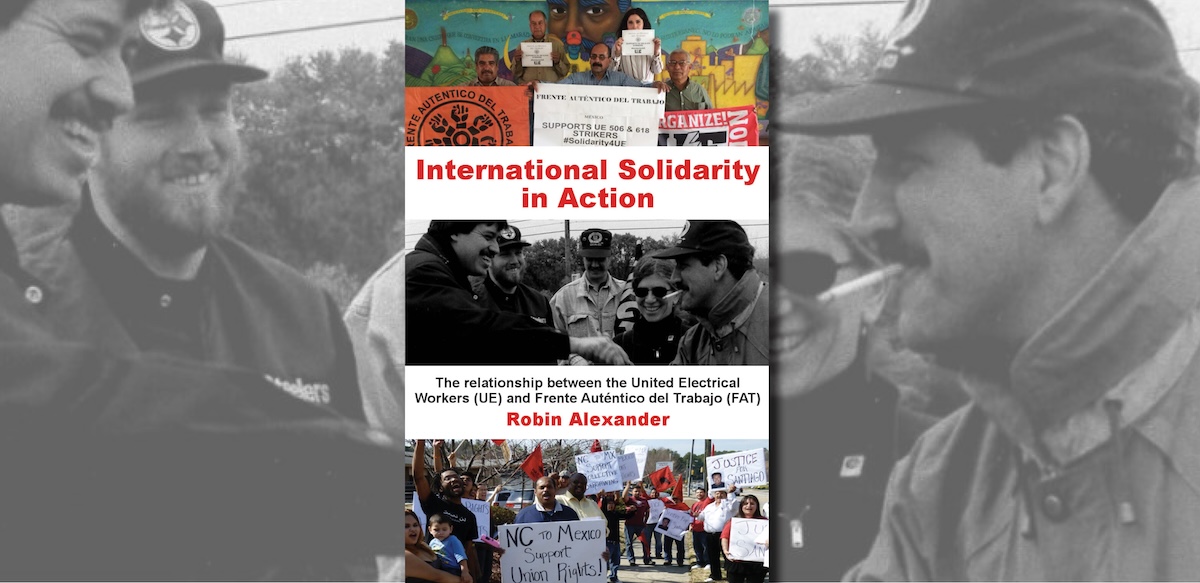
The e-book International Solidarity in Action: The Relationship Between the United Electrical Workers (UE) and Frente Auténtico del Trabajo (FAT) offers a comprehensive look at one of the most successful, long-standing cross-border labor alliances in North American history. Authored by Robin Alexander, the retired director of international affairs for the UE, the work provides a practical guide for modern unionists to confront common employers and bridge the divide between workers in the U.S. and Mexico.
The Genesis of an Alliance: A Response to NAFTA
The partnership between the United Electrical Workers (UE) and the Frente Auténtico del Trabajo (FAT) was born in 1992, at a time when the North American Free Trade Agreement (NAFTA) loomed as an existential threat to workers in both nations.
For the UE, the situation was clear: members were witnessing a steady exodus of manufacturing jobs as corporations shuttered U.S. plants to chase lower wages and longer hours in Mexico. The UE leadership reached a pivotal conclusion: the union could no longer operate in a domestic vacuum. They needed a strategic partner in Mexico—a labor organization that shared their ideological commitment to rank-and-file democracy and militant, independent unionism.
Their search led them to the FAT, the only major Mexican labor organization to openly oppose NAFTA. The FAT stood in stark contrast to Mexico’s historically state-dominated "protection unions," which served as instruments of the government’s low-wage industrial strategy. The alignment was immediate. Both organizations were committed to radical, grassroots mobilization and shared a vision of labor as an independent political force.
Chronology of Struggle: Three Decades of Solidarity
The UE-FAT alliance was not merely symbolic; it was a tactical, boots-on-the-ground operational partnership. Over thirty years, the two unions engaged in a series of high-stakes campaigns against transnational giants like General Electric and Echlin (an auto parts manufacturer later acquired by Dana).
The Echlin Case Study
The fight at Echlin serves as a harrowing example of the obstacles faced by Mexican workers. When employees attempted to address dangerous workplace exposures to asbestos and solvents while seeking to organize a democratic union, they were met with a systemic wall of opposition.
The company, in tandem with official unions and Mexican labor boards, utilized a litany of anti-labor tactics:
- Access Denial: Workers were systematically refused access to their own collective bargaining agreements.
- Retaliation: Dozens of independent union supporters were terminated.
- Bureaucratic Obstruction: The company challenged the legal standing of the independent metal workers’ union, stalling elections indefinitely.
- State-Sanctioned Intimidation: In a chilling display, the official union deployed 170 individuals—many armed with metal rods, clubs, and firearms—to the plant on the eve of a union vote.
- Forced Transparency: Workers were coerced into casting their ballots out loud, in the presence of company management and government labor officials.
Two-Way Solidarity
The alliance thrived because it was reciprocal. While the UE provided financial support, shareholder pressure, and filed legal complaints under the labor side agreement of NAFTA (NAALC), the FAT contributed in equally vital ways.
During a contentious organizing drive at a Milwaukee foundry, the FAT sent a Mexican organizer—a veteran activist previously fired from a GE plant in Ciudad Juárez—to assist. This organizer played a crucial role in building trust among the plant’s predominantly Mexican immigrant workforce, demonstrating that the UE was a fundamentally different breed of organization than the corrupt unions they had left behind in Mexico.
Supporting Data and International Advocacy
The impact of the UE-FAT partnership extended beyond the factory floor into the realm of international human rights law. When North Carolina—home to the UE Local 150, the North Carolina Public Service Workers Union—continued to enforce a ban on collective bargaining for public sector employees, the FAT stepped in.
By filing complaints with the International Labor Organization (ILO) and utilizing the NAALC framework, the FAT helped force an international spotlight on the state’s labor laws. While the ban in North Carolina remains, the intervention by the FAT provided a massive morale boost to Local 150 members. It reframed the discourse: instead of workers feeling that they "just don’t have the right" to bargain, they were empowered by the understanding that the state’s ban was, under international human rights standards, illegal.
Worker-to-Worker: The Power of Direct Exchange
A central pillar of the UE-FAT relationship was the commitment to rank-and-file, face-to-face exchanges. These were not top-down diplomatic meetings; they were opportunities for workers to walk picket lines together, tour each other’s plants, and share life experiences.
Alexander notes that these exchanges were essential for dismantling stereotypes. Whether it was members of UE Local 150 meeting with public sector workers from Mexico and Quebec or cross-border mural projects, the goal was to foster a "shared sense of struggle." One anecdote, recounted by Alexander, captures the essence of this bond: workers from both sides of the border found common ground in their shared indignation when their respective employers replaced promised bonuses with pizza.
These interactions proved that while digital connectivity is a tool, it is no substitute for the deep, sustained solidarity built through physical proximity and shared experience.
Implications for the Modern Labor Movement
The historical successes of the UE and the FAT carry profound implications for today’s labor movement.
Expanding the Vision
In Mexico, the "dreamers" who once advocated for secret-ballot elections and the elimination of protection contracts—the very people in the FAT—eventually saw their demands codified in the 2019 labor law reforms. The movement that once seemed impossible became the law of the land.
In the United States, the UE’s early involvement in grassroots politics—including their instrumental role in Bernie Sanders’ first congressional victory in 1990—paved the way for the resurgence of pro-worker, progressive politics in the current decade.
The Urgent Need for Internationalism
We live in an era where billionaire-backed nationalism is rising, designed specifically to pit workers against one another based on national origin. The UE-FAT partnership stands as a direct counter-narrative. It proves that small, under-resourced unions can exert significant influence if they are willing to expand their horizon beyond their national borders.
The call to action is clear: the U.S. labor movement must prioritize international education and cross-border solidarity. Reviving projects like the "Mexican Labor News and Analysis" and creating robust, worker-led exchange programs are not just "nice to have" luxuries; they are essential survival strategies.
For union leaders and rank-and-file organizers alike, International Solidarity in Action provides more than just history; it provides a map. By studying the successes and setbacks of the UE and the FAT, labor organizations can begin to build the international framework required to match the reach of the multinational corporations that currently dictate the terms of work in both the U.S. and Mexico.
The future of the labor movement depends on our ability to see our brothers and sisters abroad not as competitors, but as the indispensable partners in our shared struggle for dignity, safety, and economic justice.


 Nana Wu