
 Sagoh
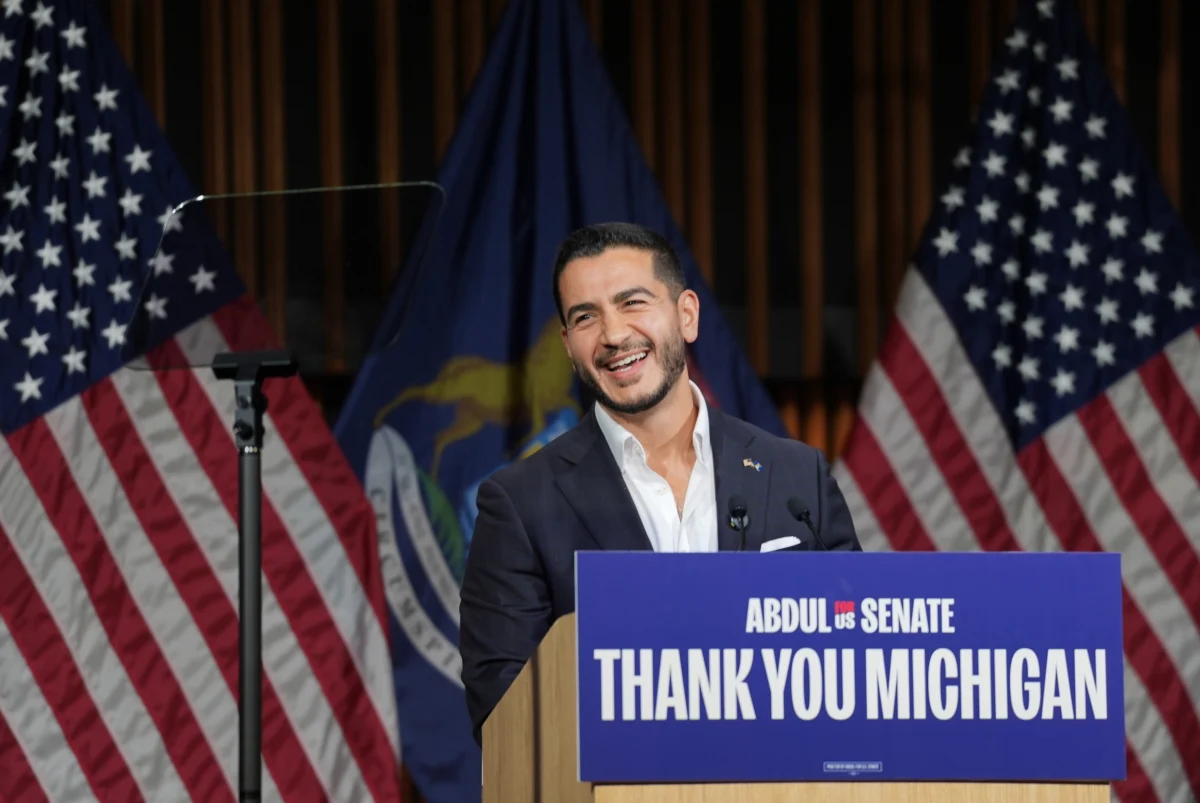
In a political climate defined by vitriol and intense polarization, the 2026 Michigan midterm elections concluded with a result that analysts are calling a watershed moment for American progressivism. Abdul El-Sayed, a physician and progressive activist, decisively defeated Republican challenger Mike Rogers to win a seat in the U.S. Senate. The victory, secured with 52.5 percent of the vote, represents more than just a partisan shift; it serves as a historic rebuke of an campaign strategy heavily reliant on Islamophobic rhetoric and coordinated attacks from both sides of the political aisle.
Main Facts: The Triumph of Substance Over Slurs
The race for the Michigan Senate seat was among the most expensive and contentious in the nation. Despite an unprecedented influx of dark money and a relentless stream of personal attacks from former President Donald Trump and other high-ranking GOP officials, El-Sayed maintained a consistent lead throughout the final weeks of the campaign.
The final tally—52.5 percent for El-Sayed to 45.5 percent for Rogers—mirrored the exact margin El-Sayed had projected in May, a testament to the stability and reach of his grassroots organizing strategy. His campaign platform, which emphasized universal healthcare through "Medicare for All," the removal of corporate money from the political system, and a principled stance against further military aid to Israel, resonated deeply with a diverse coalition of voters that mainstream pundits had largely written off.
In his victory speech delivered early Wednesday morning, El-Sayed addressed his supporters with a mix of defiance and optimism. "They went all in on one of the ugliest campaigns we’ve seen in our lifetimes," El-Sayed remarked. "They weren’t just attacking me. They were targeting and attacking you. They were targeting and attacking the very idea of America."
Chronology of a High-Stakes Campaign
The journey to this victory was marked by months of escalating hostility. As early as August, following El-Sayed’s primary victory, the tone of the opposition was set by his Republican rival, Mike Rogers. In a move that set the tone for the general election, Rogers attempted to frame the physician as a national security threat, stating, "I spent years hunting terrorists and bringing Osama bin Laden to justice," an insinuation that linked El-Sayed’s faith to extremism without a shred of evidence.
This narrative was aggressively amplified by Donald Trump. At a rally in late October, the former president escalated his rhetoric, labeling El-Sayed a "jihadist" and suggesting that the Senate floor should be equipped with metal detectors specifically to screen him.
The pressure on El-Sayed was not limited to the right wing. During the primary, AIPAC-backed opponent Haley Stevens utilized what critics described as racist tropes to undermine his campaign. The betrayal deepened just two days before the general election, when Stevens issued a surprise endorsement of the Republican, Mike Rogers, effectively attempting to cross party lines to stop the progressive surge.
Despite these obstacles, the final 48 hours of the campaign saw record-breaking voter turnout, particularly in cities like Dearborn, where citizens turned out in historic numbers to make their voices heard, effectively insulating the El-Sayed campaign from the "spoiler" narratives pushed by national media outlets.
Supporting Data: Debunking the Media Narratives
In the weeks leading up to the election, corporate media outlets consistently portrayed El-Sayed as a candidate in crisis. The New York Times published multiple reports suggesting he had alienated Jewish voters, while Politico ran a piece just days before the election claiming he had "struggled to win over Black voters."
The election results dismantled these narratives entirely:

- Coalition Strength: Exit polls indicated that Jewish voters supported El-Sayed in overwhelming numbers, contradicting reports of a fractured base.
- Black Voter Turnout: Data from VoteHub confirmed that El-Sayed carried majority-Black districts by an 81-point margin, a landslide that signaled the failure of the "Democrats for Mike Rogers" PAC. Investigations by Truthout later revealed that this PAC was a Republican front group designed to suppress Democratic participation.
- The AIPAC Factor: AIPAC spent an estimated $42 million in an attempt to defeat El-Sayed, making the race the largest test of the lobbying group’s influence to date. El-Sayed’s victory—his second against the group, including the primary—highlights a diminishing return on the massive capital expenditure aimed at influencing the Democratic platform.
Official Responses and the "Habibi" Jab
The emotional core of the victory occurred when El-Sayed took the stage to address his detractors directly. He was particularly pointed in his message to Vice President JD Vance and Donald Trump.
"JD, habibi," El-Sayed said, using the Arabic term of endearment, "there is this delicious irony that you’re constitutionally obligated to swear me in in January." He followed this with a sharp jab at the former president: "Donald, I know you struggled with my name. So after JD swears me in in January, you can just go on and call me senator."
His message to Mike Rogers was equally firm: "Mike, enjoy your retirement. You chose hate, and Michigan chose hope. May we never have to see the likes of you in this state ever again."
Regarding the funding against him, he remained steadfast in his moral framing. "If you believe that Palestinian kids should get to grow up in the land of their forefathers, to not be murdered by our tax dollars—if you believe in equal rights to peace, dignity, and self-determination—that’s not hate, it’s love."
Implications: A New Era for Progressive Politics
The ripple effects of this election extend far beyond the U.S. Senate. Michigan has effectively become the epicenter of a new, unapologetically progressive movement.
The victories were not isolated to the Senate race:
- William Lawrence: The Sunrise Movement co-founder defeated a Republican incumbent in the U.S. House, overcoming $23 million in GOP spending—the highest spend against a Democratic House candidate this cycle.
- Donavan McKinney: A Democratic Socialist who ran on an explicit platform of an arms embargo to Israel, McKinney won his race to represent Detroit in the U.S. House by a landslide.
- Amir Makled: The attorney who defended pro-Palestine student protesters at the University of Michigan won his seat to the Board of Regents in a massive blowout.
- Rashida Tlaib: The only Palestinian American in Congress saw a massive vote of confidence from her constituents, winning her reelection by a 55-point margin.
The Shift in Strategy
The 2026 election cycle in Michigan suggests that the "moderate" playbook—which often involves distancing oneself from controversial stances to appease corporate donors or center-right media—is losing its efficacy. Voters, particularly younger and marginalized demographics, proved that they are willing to turn out for candidates who offer a clear, principled vision for the future.
The defeat of the "Democrats for Mike Rogers" PAC and the record-breaking spending by AIPAC underscore a significant shift in political power. Voters proved that they can identify astroturfed movements and are increasingly inoculated against inflammatory rhetoric that relies on bigotry rather than policy.
As the nation looks toward the 2027 legislative session, all eyes will be on Washington. The entry of Abdul El-Sayed into the Senate marks the arrival of a new, bold voice in the chamber. Whether this momentum can be sustained in other states remains to be seen, but the Michigan blueprint—based on grassroot organization, moral consistency, and an refusal to yield to bigotry—has provided a clear path for the next generation of American leaders.
The "Senator" from Michigan has arrived, and he has made it clear that he intends to challenge the status quo, one name-tag at a time.

 Lina Irawan

 Nana Wu