
 Pevita Pearce
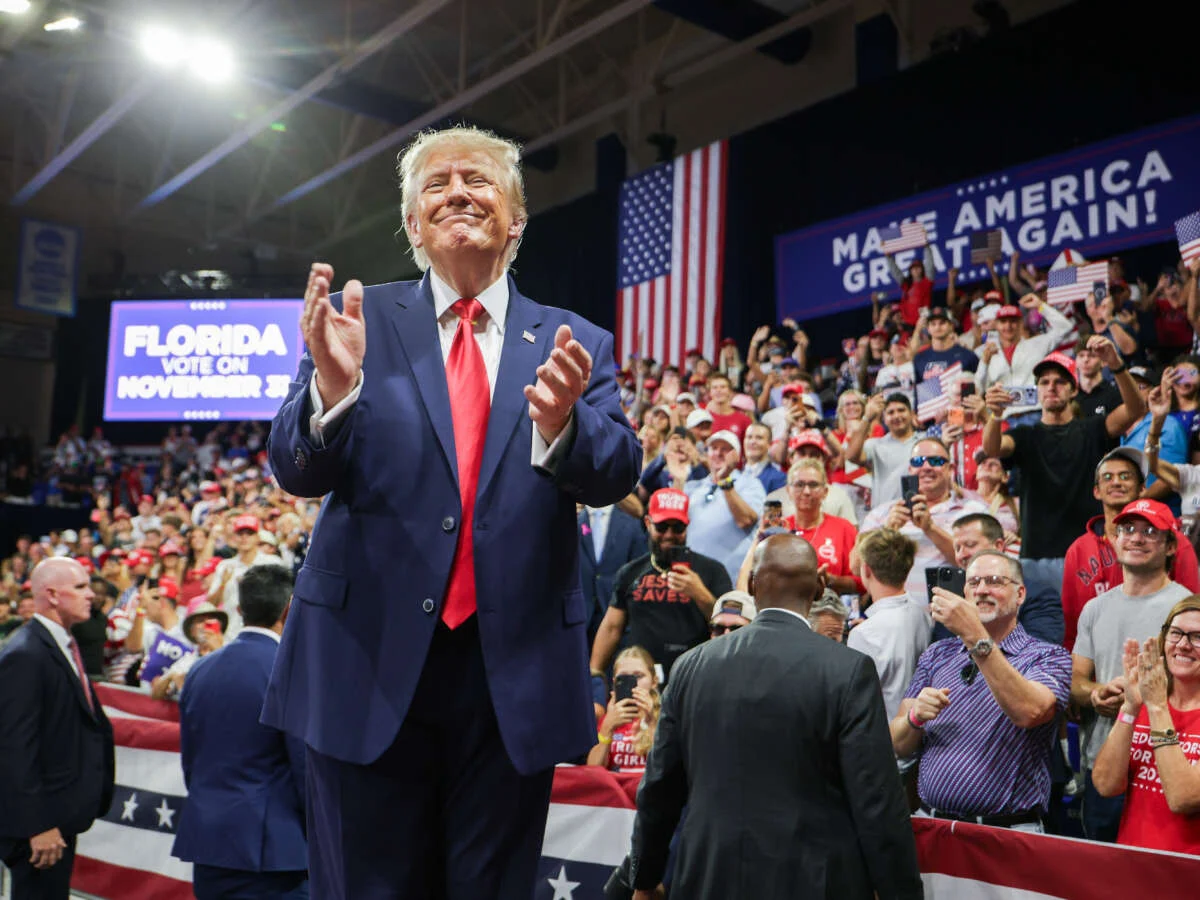
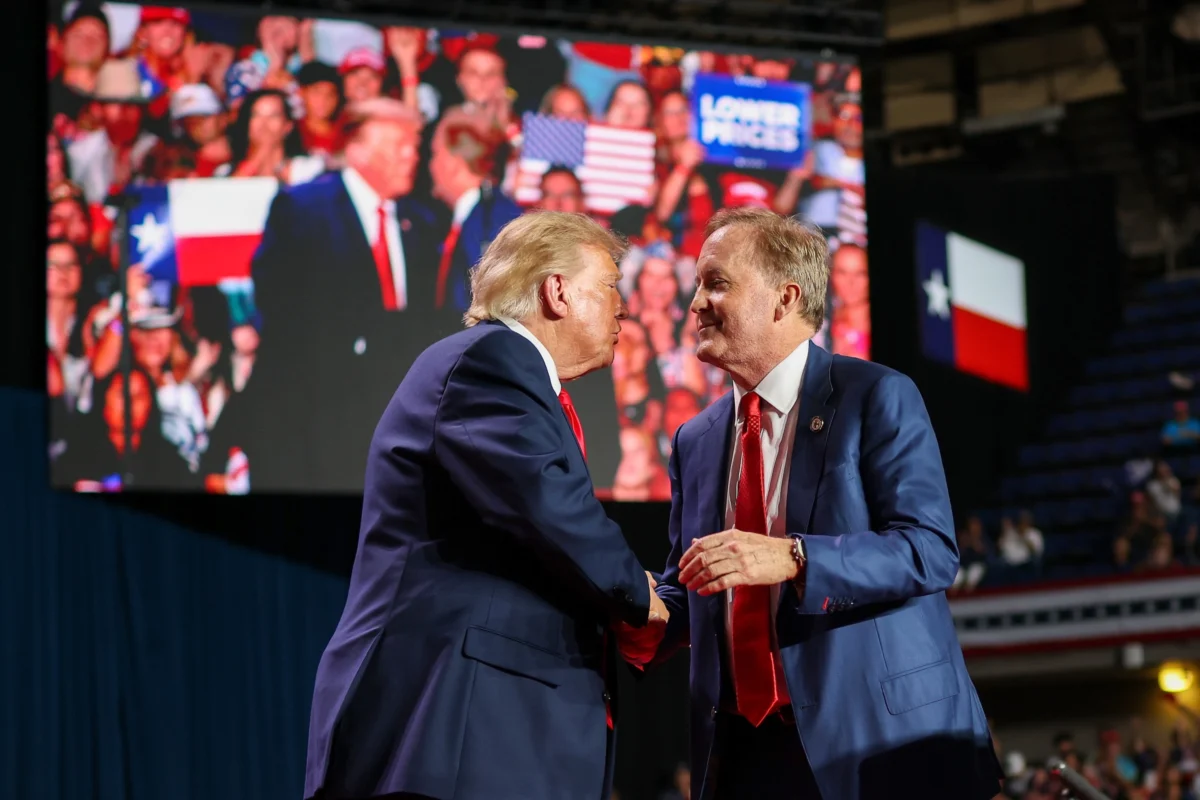
FORT MYERS, Florida – In a move that has sent shockwaves through global markets and diplomatic circles, President Donald Trump has signaled a potential escalation of military action against the Islamic Republic of Iran, appearing to reverse a previous commitment to suspend kinetic operations until after the 2026 midterm elections. Speaking to a fervent crowd at the Alico Arena on the Florida Gulf Coast University campus, the President’s rhetoric took a sharp turn toward aggression, just hours after he had publicly distanced himself from similar comments made by one of his top diplomatic envoys.
The development marks a significant pivot in what has become an eight-month-long undeclared war, characterized by naval blockades, targeted strikes, and a deepening humanitarian crisis in the Middle East. As the United States approaches a critical electoral cycle on November 3, the prospect of "another little Epic Fury"—a reference to the administration’s previous high-intensity bombing campaign—has raised questions about the administration’s long-term strategy and the stability of global energy corridors.
The Florida Flip-Flop: Conflicting Narratives on Escalation
The day began with a stark contradiction within the executive branch. On Friday morning, Tom Barrack, the U.S. Ambassador to Turkey and Special Envoy to Syria and Iraq, appeared in an interview with online commentator Mario Nawfal. Barrack, a long-time confidant of the President, was asked point-blank if a U.S. strike could occur over the weekend. His response was unequivocal: "Absolutely."
Barrack’s comments suggested that despite months of back-channel negotiations, the administration was prepared to use force to break the current diplomatic impasse. He outlined a complex "bargain" currently on the table, involving the unfreezing of Iranian assets and the lifting of certain sanctions in exchange for a permanent cessation of Iran’s nuclear enrichment and the guaranteed reopening of the Strait of Hormuz. However, he noted that the "kinetic option" remained a primary tool of U.S. persuasion.
Upon landing in Florida later that afternoon, President Trump initially appeared to rebuff Barrack’s assertion. When questioned by reporters on the tarmac about the possibility of a weekend strike, Trump seemed to mock the influence of his own envoy. "That was my ambassador? He’s a pretty powerful man, I guess," Trump remarked. "Well, if that’s the case. I don’t know anything about it."
However, the tone shifted dramatically once the President took the stage for his campaign rally. Abandoning the earlier pretense of ignorance, Trump leaned into the bellicose rhetoric that has defined his 2026 campaign. "We may do another little Epic Fury," he told the cheering crowd, referring to the "Operation Epic Fury" strikes launched earlier this year. This statement directly contradicted a Truth Social post from earlier this month, in which Trump had explicitly pledged that "we will not be attacking Iran at any time prior to the Midterm Elections."
Chronology of a Crisis: The Eight-Month War
To understand the weight of the President’s current threats, one must look at the escalation that has defined 2026. The current conflict, which critics have labeled an "illegal war" due to the lack of a formal Congressional declaration, began in early March following a series of maritime skirmishes in the Persian Gulf.
- March 2026: Following a breakdown in nuclear non-proliferation talks, the U.S. Navy began enforcing what it termed a "total maritime exclusion zone" around Iranian ports. Iran responded by threatening to close the Strait of Hormuz, a chokepoint for a fifth of the world’s oil supply.
- May 2026: Operation Epic Fury. The U.S. launched a 72-hour intensive air campaign targeting Iranian drone manufacturing sites and naval assets. This operation, while successful in degrading Iran’s immediate retaliatory capabilities, failed to bring Tehran back to the negotiating table on U.S. terms.
- July 2026: The Blockade Tightens. The U.S. effectively neutralized the Iranian oil industry, implementing a system where non-Iranian tankers are permitted passage through the Strait while Iranian-flagged vessels or those carrying Iranian crude are intercepted.
- October 2026: The Midterm Pledge. Facing domestic pressure over rising regional instability and the legal basis for the conflict, Trump announced via social media that he would halt all major strikes until after the November 3 midterms, seeking to project a "peace through strength" image to voters.
The sudden reversal on October 23 suggests that either the diplomatic "bargain" mentioned by Ambassador Barrack has collapsed, or the administration views a pre-election "show of force" as a political necessity.
Supporting Data: The Economic and Military Standoff
The administration’s strategy hinges on a "maximum pressure" campaign that has reached unprecedented levels of economic isolation. According to President Trump’s own metrics, the blockade has been highly effective in segregating Iran from global energy markets while maintaining a semblance of stability for other exporters.
In his recent communications, Trump highlighted that 22 million barrels of oil passed through the Strait of Hormuz in a single night—none of which originated from or was destined for Iran. This "selective blockade" is intended to starve the Islamic Republic of the hard currency needed to sustain its military operations without triggering a global oil price shock that could alienate American voters.
However, the cost of this military presence is staggering. Pentagon data suggests that the sustained carrier strike group presence and continuous drone surveillance in the region are costing the U.S. Treasury upwards of $1.2 billion per month. Furthermore, the "illegal" nature of the war—conducted primarily under the 2001 and 2002 Authorizations for Use of Military Force (AUMF)—has created a rift in Washington, with several constitutional scholars and members of the House Foreign Affairs Committee calling for a cessation of hostilities.

Official Responses: A Divided Front
The reaction to the President’s rally comments was swift and divided along predictable partisan and geopolitical lines.
The White House: Press Secretary Karoline Leavitt issued a clarifying statement late Friday night, attempting to bridge the gap between Trump’s "Epic Fury" comment and his earlier pledge. "The President remains committed to a peaceful resolution, but as Commander-in-Chief, he will never take the military option off the table if American interests or our allies, specifically Israel, are threatened. The ‘Epic Fury’ comments reflect the President’s resolve, not necessarily a change in the immediate timeline."
Tehran: A spokesperson for the Iranian Foreign Ministry denounced the threats as "theatrical bullying" and "election-year desperation." In a televised address, Iranian officials stated that "any further aggression will be met with a response that will make ‘Epic Fury’ look like a minor skirmish."
Capitol Hill: Democratic leaders were quick to condemn the President’s rhetoric. "We are ten days away from an election, and the President is playing chicken with a regional war to juice his rally numbers," said a senior member of the Senate Foreign Relations Committee. "This is a reckless escalation of an unauthorized conflict that has already lasted far too long."
The Diplomatic Core: Within the State Department, there are reports of significant friction. Sources suggest that Ambassador Barrack’s "weekend strike" comment may have been a calculated leak intended to pressure Iranian negotiators who have been stalling on the "unfreezing assets" portion of the deal.
Geopolitical and Domestic Implications
The implications of a potential "Epic Fury II" are twofold: they affect both the immediate security of the Middle East and the domestic political landscape of the United States.
1. The "October Surprise" Factor
Historically, "October Surprises"—major events occurring just before an election—can swing undecided voters. By threatening a strike, Trump may be attempting to project an image of a "wartime president," a role that traditionally boosts approval ratings. Conversely, if a strike leads to a spike in gas prices or American casualties, it could backfire, handing an advantage to the opposition in the midterms.
2. Regional Stability and Israel
Ambassador Barrack specifically mentioned "supplying the needed help to Israel" as a pillar of the current negotiations. A U.S. strike would likely be coordinated with Israeli intelligence, potentially targeting Iranian proxy infrastructure in Lebanon or Syria. This risks a broader regional conflagration that could draw in other actors, including Hezbollah or even regional powers like Turkey, where Barrack currently serves as Ambassador.
3. The Legal Precedent
The continuation of this "eight-month war" without a formal declaration continues to erode the War Powers Act. If Trump proceeds with a strike after publicly stating he would wait until after the elections, it further centralizes foreign policy power within the executive branch, bypassing both Congressional oversight and the advice of his own diplomatic staff.
Conclusion
As the sun sets over the Florida Gulf Coast, the world remains on high alert. President Trump’s penchant for contradictory messaging—dismissing his ambassador one moment and echoing his threats the next—has created a climate of strategic ambiguity. Whether "Epic Fury" returns this weekend or remains a rhetorical tool for the campaign trail, the underlying reality remains: the United States is entrenched in a high-stakes military standoff with Iran, and the "bargain" for peace appears further away than ever.
The next 48 hours will be a critical test of whether the administration’s "maximum pressure" can yield a diplomatic breakthrough or if the 2026 midterms will be preceded by the roar of American afterburners over the Persian Gulf.


 Jia Lissa
 Suro Senen