




 Laily UPN
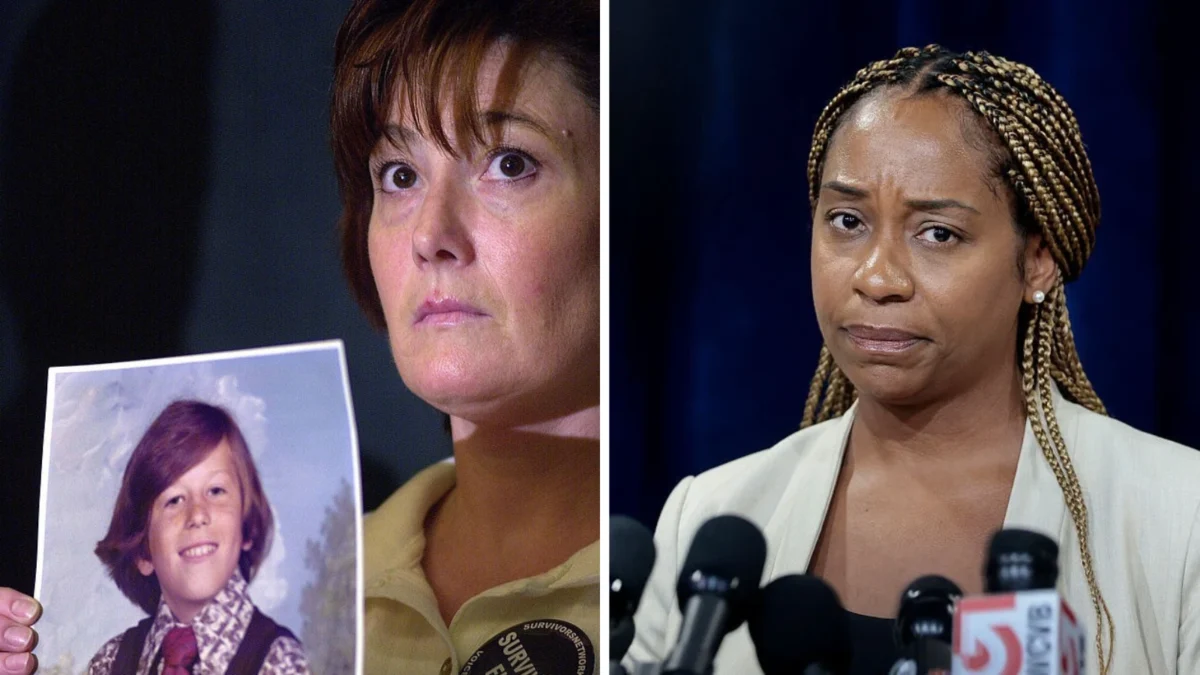
In a landmark accounting of institutional failure, Massachusetts Attorney General Andrea Campbell released a damning 203-page report on September 30, 2026, that sheds light on one of the most pervasive scandals in modern American history. The investigation, which spanned years of meticulous research, reveals that more than 270 Catholic priests systematically abused at least 1,000 children across the dioceses of Fall River, Springfield, and Worcester over the course of several decades.
For survivors who have waited years for this transparency, the document serves as a long-overdue validation of their suffering. "This report provides for the first time a public accounting of the unimaginable harms afflicted on children," Attorney General Campbell stated during the press conference. "For decades, survivors—including those who are no longer alive—have carried the devastating consequences of abuse, while the institutions entrusted with their care too often failed to protect them."
The Scope of the Investigation: A Multi-Year Effort
The investigation, which commenced in 2019, was an exhaustive undertaking that sought to pierce the veil of secrecy surrounding these three dioceses. Investigators reviewed over 300,000 pages of internal church records and conducted more than 100 interviews with a diverse array of stakeholders, including survivors, advocates, legal experts, diocesan employees, and current clergy members.
The resulting report paints a picture of a systemic, top-down culture of negligence. Church leadership, including bishops and high-ranking administrators, did not merely fail to stop the abuse; they actively facilitated it. The report details how officials routinely ignored reports of abuse, obstructed police investigations, and, perhaps most damningly, engaged in the "shuffling" of known offenders to new parishes, effectively handing them a fresh pool of vulnerable children.
Chronology of Institutional Failure
The abuse cataloged in the report spans from the 1950s through the 2010s, reflecting a period where the power of the Catholic Church was often shielded from the scrutiny of secular law enforcement.
The report highlights notorious cases, such as that of former priest James Porter. In the 1960s, church leadership in the Fall River diocese shielded Porter, despite clear knowledge of his predatory nature. Porter went on to abuse more than 100 children. His case was not an anomaly but a symptom of a broader, deeply entrenched policy of prioritization—where the reputation of the institution was consistently valued above the physical and mental safety of the youth in its care.
This 2026 report is the spiritual successor to the historic 2003 investigation into the Archdiocese of Boston, which uncovered similar widespread abuse and cover-ups. That investigation, which gained international attention through the Boston Globe’s Pulitzer Prize-winning reporting and the Academy Award-winning film Spotlight, forced the nation to confront the reality of clerical abuse. Yet, as the new findings suggest, the lessons of 2003 were not fully implemented in the Springfield, Fall River, and Worcester regions.
Supporting Data and the "Old Boys’ Network"
The report identifies the specific mechanisms that allowed these crimes to persist for generations. Central to the problem is what the Attorney General describes as an "old boy’s network"—a culture of insular, patriarchal power where priests protected one another, often dismissing predatory behavior as mere "temptation" or "sickness."
Current statistics highlight a stark disparity in transparency. While roughly 95 percent of Catholic dioceses in the United States maintain published lists of credibly accused clergy, the Worcester diocese remains a glaring outlier, standing as one of just 12 dioceses in the country that refuses to disclose such a list to the public.
Furthermore, the report highlights the ongoing financial support provided to abusers. Even today, these dioceses continue to pay for the pensions, housing, and healthcare of retired priests who were never laicized—defrocked—despite credible accusations of abuse. Because the statute of limitations for many of these crimes has long since expired, these men are effectively permitted to live out their lives with the financial backing of the very institution that shielded them from criminal prosecution.
The Broader Landscape of Clergy Abuse
The situation in Massachusetts is not an isolated phenomenon. It is part of a systemic crisis within male-dominated, hierarchical religious institutions. In 2018, a Pennsylvania grand jury published a 1,356-page report documenting similar patterns of abuse by more than 300 priests, citing systemic cover-ups that reached the highest levels of the Vatican. Similarly, in 2022, the Southern Baptist Convention was forced to release records revealing that its leadership and legal teams had spent two decades covering up sexual abuse and mistreating survivors.
Experts suggest that the structure of these organizations—where men are granted near-total, unchecked authority and are elevated to a status that precludes questioning—creates a fertile ground for predation. According to BishopAccountability.org, which tracks these incidents, there have been at least 30 major reports from grand juries and attorneys general across 15 states in recent years. These reports consistently point to a common strategy of avoidance: when faced with legal accountability, the Church often chooses to lobby against survivor-friendly legislation or, in extreme cases, files for bankruptcy to avoid paying court-ordered damages.
Official Recommendations and Legislative Action
Attorney General Campbell’s report is not merely a historical record; it is a call to action. The report outlines several critical recommendations to force institutional change:
- Legislative Reform: Campbell is urging the Massachusetts legislature to eliminate the statute of limitations for civil claims related to child sexual abuse and to implement an "indefinite lookback period." This would allow survivors whose cases have already been barred by time to finally seek justice and remediation.
- Ending "Charitable Immunity": The report calls for the removal of the $20,000 "charitable immunity cap." For years, this cap has served as a financial shield for the Church, limiting its liability and preventing victims from receiving meaningful restitution.
- Governance Overhaul: The report demands that diocesan review boards be given true, independent authority. Currently, these boards are often hampered by internal loyalties. Furthermore, the report calls for the active monitoring of former priests and a proactive stance against "grooming" behaviors within parishes.
The Human Cost: A Survivor’s Perspective
Behind the statistics are the thousands of individuals whose lives were shattered by the actions of those they were taught to trust. Frank Fitzpatrick, a survivor of the abuse perpetrated by James Porter and his associates, provided a haunting testimony included in the report. Recounting his experiences as a nine-year-old altar boy, Fitzpatrick wrote:
"I am that boy. I carry him with me, always. He took your violence, you shameful enablers who do nothing but cover up and perpetuate the cycle of systemic abuse. You call yourselves representatives of God. God has no place in anything you stand for. God is safety; God is nurturing; God is protection; God is Love."
Implications for the Future
The release of this report is a watershed moment for the state of Massachusetts and the Catholic Church at large. The institution now faces a choice: continue the decades-old cycle of obfuscation and legal maneuvering, or embrace a path of radical transparency and accountability.
For the survivors, the path forward is clear. They are no longer content to remain in the shadows while their abusers are protected by the coffers and the silence of the Church. As the legislative debate over the statute of limitations and liability caps heats up, the eyes of the public will be on the state legislature. The question remains whether the political and religious establishment will finally prioritize the safety of children over the preservation of institutional power.
Attorney General Campbell’s final message remains a guiding principle for the road ahead: "No institution should ever put its own reputation and interest above the safety and wellbeing of its constituents, especially children." Until that principle is codified into law and practice, the work of seeking justice for the survivors of the Fall River, Springfield, and Worcester dioceses will remain unfinished.


 Muslim

 Reynand Wu






