


 Nila Kartika Wati
TOLEDO, Ohio — An industrial accident of significant proportions paralyzed large swaths of Toledo, Ohio, this week, as a ruptured chemical tank emitted a persistent, white plume of vapor, forcing thousands to flee their homes and tens of thousands more to shelter in place. The crisis, which began late Tuesday night at an industrial facility operated by MC Tank Transport, has sparked widespread anxiety regarding air quality and long-term environmental exposure.
As of Wednesday afternoon, the situation remained volatile. While city officials reported that the chemical leak has begun to stabilize, the facility remains a "no-go zone" for emergency personnel due to the lingering threat of a secondary explosion.
The Sequence of Events: A Night of Uncertainty
The ordeal began under the cover of darkness late Tuesday evening. Reports emerged of a structural failure at the MC Tank Transport site, resulting in the breach of a tank containing glycidyl methacrylate—a volatile industrial agent used primarily in the production of high-performance coatings, plastics, and resins.
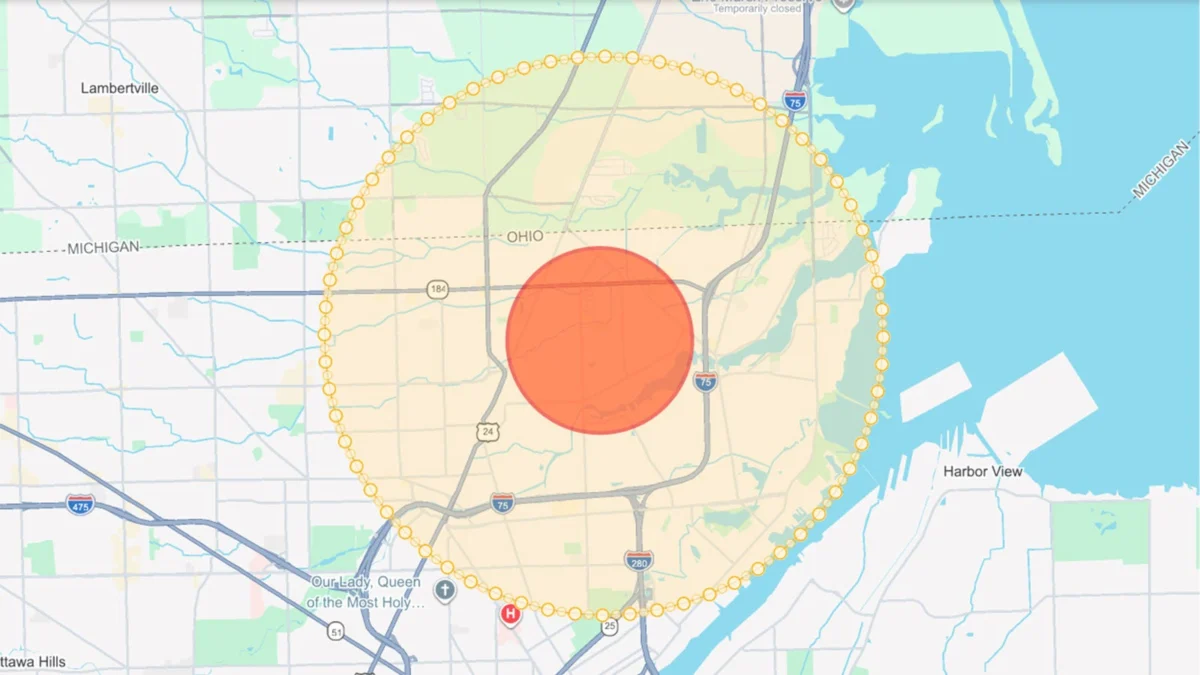
Within hours of the rupture, a thick, pervasive plume began to drift across the industrial corridor. By the early hours of Wednesday, the scale of the potential hazard became clear. Local authorities issued an immediate evacuation order for approximately 1,000 residents living within a one-mile radius of the facility. As the sun rose on Wednesday, the plume remained visible, continuing to swirl from the site more than 14 hours after the initial breach.
The ripple effects were immediate. A massive shelter-in-place order was enacted for a three-mile radius, encompassing over 50,000 residents across Toledo and reaching across the state line into Michigan. Schools across the city shuttered their doors, and major industrial operations—most notably the Stellantis Jeep assembly plant—halted production to protect their workforce.
Official Response and the "Controlled Venting" Strategy
Mayor Wade Kapszukiewicz, addressing the public in a mid-day press conference, urged calm while providing a candid assessment of the city’s strategy. City leaders, in coordination with state and federal environmental agencies, made the calculated decision to allow the chemical to vent into the atmosphere rather than attempting to cap the leak.
"There is no question the situation is improving," Mayor Kapszukiewicz stated. "Our drones are monitoring the thermal signature of the tank, and the temperature is steadily dropping. The plume is diminishing."
The Mayor defended the decision to avoid active intervention, citing the safety of first responders. According to officials, the facility contains multiple tanks, and the structural instability of the ruptured vessel creates a high probability of a catastrophic explosion if approached by heavy equipment or personnel. By allowing the pressure to dissipate through controlled venting, the city aims to prevent a more violent, localized disaster that could have devastated the surrounding infrastructure.
The Ohio Environmental Protection Agency (EPA) confirmed that the initial rupture was the result of a human error during the transfer of the chemical, though they have yet to release a detailed technical breakdown of the incident.
Chemical Risks: Understanding Glycidyl Methacrylate
The substance at the heart of the crisis, glycidyl methacrylate, has presented health officials with a complex set of challenges. While the substance is a staple of industrial manufacturing, its release into an uncontrolled residential environment poses acute health risks.
According to the Toledo-Lucas County Health Department, the chemical is highly irritating to the human respiratory system, eyes, and skin. Karim Baroudi, the department’s director, noted that while the substance is acutely toxic if ingested or touched, the primary concern for the general public is inhalation.
"We are currently working to quantify the concentration of the chemical in the air," Baroudi explained. "Our guidance to the public is simple: stay indoors, close your windows, and if you experience physical symptoms—such as burning in the eyes or throat—take a shower to remove any particulate residue and contact a medical professional."
Reports of adverse health effects have already surfaced. One sheriff’s deputy, who arrived early to the scene, was forced to seek hospital treatment after experiencing acute discomfort. Other residents have reported headaches, dizziness, and nausea—symptoms consistent with chemical exposure.
The Human Toll: Residents Caught in the Crossfire
For those living in the shadow of the industrial facility, the event has been a source of profound psychological and physical stress. Mark White Jr., a local resident, recounted the moment he realized the air quality had been compromised.
"I was sleeping with my windows open, which is my habit," White said. "I woke up to a smell I can only describe as burning plastic. It was sharp and immediate. Because of my asthma, I knew I couldn’t stay."
White evacuated to a local elementary school shelter, a sentiment shared by many who feel vulnerable to the unknown long-term effects of the exposure. Beyond the immediate evacuation zone, the concern has been equally palpable. Residents as far as several miles away reported a pervasive, chemical-like odor. While city officials have repeatedly stated that the odor does not inherently confirm the presence of harmful concentrations of the chemical, the reassurance has done little to soothe nerves.
Kristine Kowalinski, who lives on the periphery of the shelter-in-place zone, expressed deep concern over the "rain" of chemicals that may have settled on her property during the night. "My main concern is how this affected everything overnight—my car, my home, my garden," she said. "We don’t know what we are walking back into."
Economic and Long-term Implications
The economic footprint of the incident is significant. The closure of the Stellantis Jeep assembly plant underscores the fragility of supply chains and industrial operations when faced with environmental emergencies. Beyond the immediate costs of production loss, the city faces a long-term inquiry into industrial zoning and safety compliance.
MC Tank Transport, based in Arkansas, has issued a statement expressing their cooperation with the fire department and emergency management agencies. The company noted that their primary concern remains the safety of the residents and their own employees. "We are working diligently with local authorities to resolve this as quickly and safely as possible," a company spokesperson said.
However, as the dust settles—or in this case, as the plume dissipates—questions will inevitably turn to accountability. The Ohio EPA’s preliminary finding of "transfer error" suggests a failure in standard operating procedures that could have been avoided.
Moving Forward: The Path to Normalcy
As of Wednesday evening, authorities are still advising that it could take several more hours before the tank is sufficiently stable to be approached by hazardous materials teams. Once the scene is deemed safe, a massive cleanup and air-testing operation will commence.
The city of Toledo has committed to continued transparency, promising to release environmental data as soon as it becomes available. For the residents of the affected neighborhoods, the immediate future remains tied to the guidance of the health department.
The crisis serves as a stark reminder of the proximity between residential life and industrial activity in the American Midwest. As the city waits for the all-clear, the focus remains on the health of the 50,000 people who have spent the last 24 hours under the heavy, uncertain air of a city in crisis.
For now, the advice remains consistent: if you are in the affected radius, remain indoors. If you feel unwell, seek medical attention. The industrial plume may be fading, but the questions surrounding the safety, oversight, and management of these chemical transport facilities are only just beginning.



 Neng Nana






