

 Sagoh
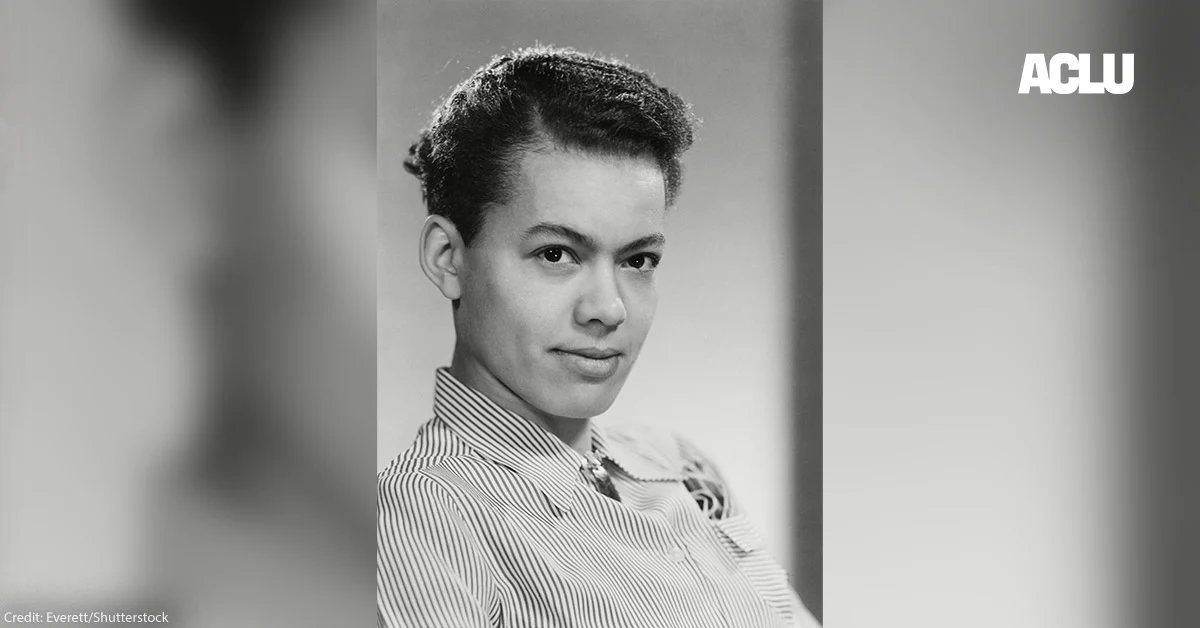
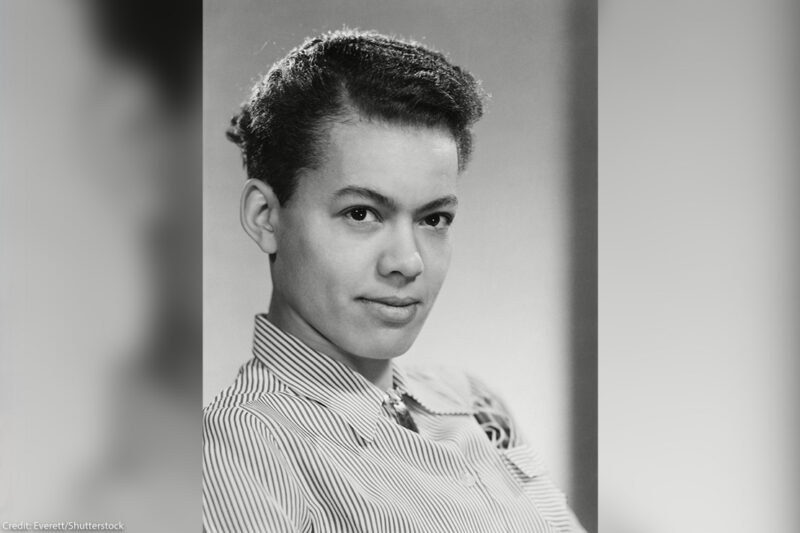
In the annals of American jurisprudence, few figures loom as large—yet remain as historically understated—as the Reverend Dr. Pauli Murray. A polymath whose life defied the rigid categorizations of their era, Murray was a civil rights activist, a pioneering legal scholar, an Episcopal priest, an author, and a poet. Their life’s work was not merely a series of professional achievements, but a radical reimagining of what the United States Constitution could mean for those it was designed to exclude.
The latest episode of the ACLU’s history podcast, Let the Record Show, brings Murray’s profound influence back into the spotlight. By examining the landmark 1965 case White v. Crook, hosts Matt Beat and Shereen Marisol Meraji illuminate how Murray’s visionary legal theories dismantled the barriers of race and gender, laying the groundwork for the intersectional advocacy that defines modern civil rights work.
A Life Defined by Defiance and Intellectual Rigor
Born Anna Pauline Murray in Baltimore in 1910, Murray was a descendant of enslaved people, a reality that deeply informed their understanding of systemic oppression. After losing both parents at a young age, Murray was raised by an aunt in Durham, North Carolina. It was here, in the heart of the Jim Crow South, that Murray first encountered the brutal absurdities of segregation.
Refusing to abide by the dehumanizing mandates of the era, a young Murray famously rejected segregated streetcars, opting to walk or cycle long distances rather than participate in their own subjugation. This early resistance was not merely an act of defiance; it was the genesis of a life-long philosophical rejection of power structures that sought to categorize and diminish human worth.
The Path to Legal Reform
Murray’s academic journey was defined by a series of "firsts." In 1929, they entered Hunter College, where they were one of only four Black students in a class of nearly 250. Their aesthetic choices—cutting their hair short and favoring trousers over the skirts expected of women at the time—were early indicators of a gender-expansive identity that they would navigate for the rest of their life.
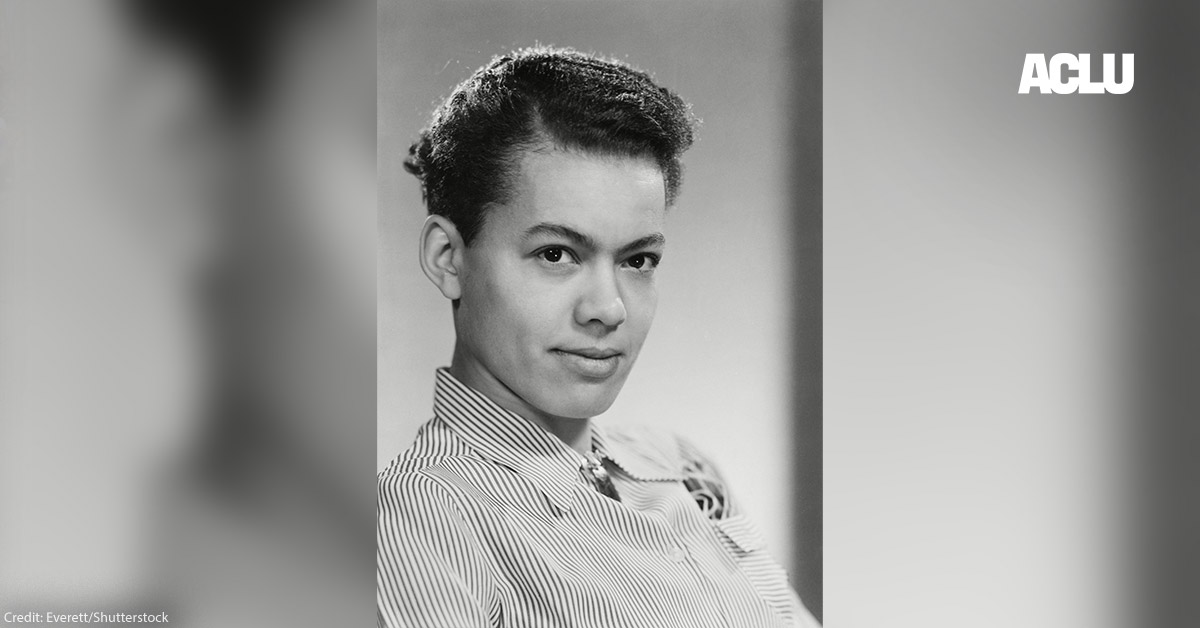
After graduating, Murray pursued a law degree at Howard University. In a male-dominated environment, Murray not only excelled, graduating first in their class, but they also began to articulate a sophisticated critique of American law. It was at Howard that Murray coined the term "Jane Crow," a conceptual framework used to describe the unique, compounded discrimination faced by Black women—a synthesis of racism and sexism that the law was, at the time, largely blind to.
Chronology: The Evolution of a Legal Visionary
- 1910: Born in Baltimore, Maryland.
- 1920s: Moves to North Carolina; develops a profound awareness of the injustices of Jim Crow.
- 1929–1933: Attends Hunter College, defying gender norms of the day.
- 1940s: Graduates at the top of their class from Howard Law School; develops the foundational theory for challenging Plessy v. Ferguson.
- 1965: Serves as a key legal mind in White v. Crook, successfully arguing that the Constitution forbids both race and sex discrimination in jury selection.
- 1977: Ordained as one of the first women to be an Episcopal priest.
- 1985: Passes away, leaving behind a legacy that would eventually be recognized as the backbone of modern equal rights litigation.
The Theory That Overturned ‘Separate but Equal’
Perhaps the most startling aspect of Murray’s intellectual output was their foresight regarding Plessy v. Ferguson. While still a student at Howard, Murray argued that the Equal Protection Clause of the Fourteenth Amendment provided the necessary vehicle to dismantle the "separate but equal" doctrine.
Though met with skepticism—and even derision—from professors and peers, Murray was undeterred, even betting a professor $10 that the Supreme Court would overturn Plessy within 25 years. They were correct. Thurgood Marshall, then a lead litigator for the NAACP, utilized the legal frameworks Murray developed to argue the historic Brown v. Board of Education (1954). Murray’s ability to see past the immediate constraints of the law and into a more just future remains a masterclass in legal imagination.
Supporting Data: The Intersectional Impact
The legal philosophy championed by Murray shifted the focus of civil rights advocacy from single-issue grievances to a holistic understanding of human rights. By arguing that race and gender discrimination often operate within the same power structure, Murray enabled the courts to perceive the totality of an individual’s lived experience.
In White v. Crook, the case featured in the latest Let the Record Show episode, Murray argued that the exclusion of Black people and women from jury service violated the Constitution. This was a radical expansion of the law. By successfully tethering the protection of these two groups together, Murray demonstrated that the Constitution’s promise of equality could not be fulfilled as long as it protected only one demographic at the expense of another.
Official Perspectives: Reflections on a Legacy
Chase Strangio, co-director of the ACLU’s LGBTQ and HIV Project, notes that his own career is deeply indebted to Murray’s intellectual courage. "As a lawyer, one of the things I’m endlessly frustrated by every day is how constrained law is and how unimaginative, therefore, many legal thinkers are," Strangio said. "Pauli had no patience for that."
Strangio emphasizes that Murray’s brilliance was not just in their legal briefs, but in their refusal to live within the "constraints of their time." This refusal, while it often resulted in societal marginalization and labels of "insanity," provided the oxygen for the radical legal shifts the ACLU continues to pursue today.
Areej Qadeer, a former ACLU fellow, echoes this sentiment. Reflecting on their own intersectional identity as a Muslim woman and the daughter of immigrants, Qadeer notes that Murray’s work provided a roadmap for self-actualization. "Murray’s example has given me the courage to stand confidently in my difference and recognize the very aspects of my identity that have exposed me to discrimination as beacons of strength," she stated.
Implications for the Future of Advocacy
The legacy of Pauli Murray is not static; it is a living, breathing component of the modern civil rights landscape. The establishment of the ACLU’s Pauli Murray Fellowship in 2022 serves as a commitment to this ongoing work, cultivating leaders who, like Murray, have navigated systemic barriers and are prepared to challenge the status quo.
Murray’s poetry, particularly the collection Dark Testament, serves as a reminder that their vision was fueled by more than just legal logic; it was fueled by an unwavering belief in human potential. In the poem, Murray wrote:

Hope is a song in a weary throat.
Give me a song of hope
And a world where I can sing it.
This request—for a world where one can live out their truth and humanity without fear—remains the central goal of the civil rights movement.
Conclusion: Beyond the Case Law
When we look back at the accomplishments of Pauli Murray, we must be careful not to reduce them to a list of legal victories. Murray was a person who dared to exist in a space that was not built for them. They were a Black, queer, non-binary, and highly intellectual individual in a mid-20th-century America that was actively hostile to each of those identities.
By honoring the person behind the caseload, we gain a clearer understanding of why their legal strategies were so effective. Murray understood the law not as a rigid set of rules, but as a tool for liberation. As the ACLU continues to fight against modern threats to racial and gender justice, the blueprint laid by Pauli Murray remains as relevant and necessary as ever. Their life serves as an enduring reminder that when we expand our definition of who the law protects, we ultimately expand the freedom of everyone.
To deepen your understanding of these contributions, the Let the Record Show podcast invites listeners to explore the case files and personal history of a figure whose "unimaginative" peers could never have predicted the scale of their impact. Pauli Murray did not just work within the law; they transformed it, and in doing so, they changed the trajectory of American democracy.

 Raul Delapena Setiawan