




 Asep Darmawan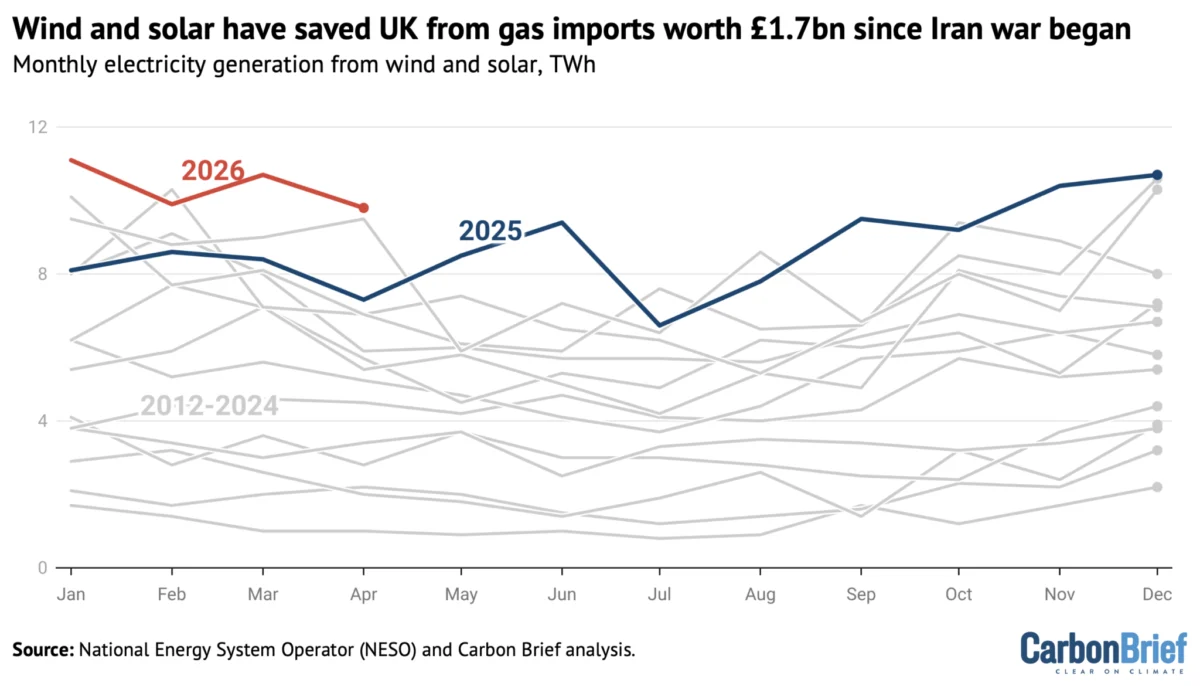
Welcome to Carbon Brief’s DeBriefed, your essential guide to the week’s most significant developments in the climate and energy landscape. This week, we examine a pivotal shift in European environmental policy, the geopolitical scramble for North Sea gas, and the alarming new research regarding the stability of the Amazon rainforest.
1. The Erosion of Environmental Standards: Methane and "Leeway"
The European Commission is facing intense scrutiny this week following reports that it is considering diluting its flagship methane emissions regulation. According to internal draft guidelines reviewed by Politico, Brussels is contemplating the introduction of "leeway" clauses that would allow fossil-fuel companies to bypass strict penalties.
The proposed exemptions, justified under the guise of "energy security," would grant national authorities the power to waive compliance for firms in critical energy sectors. This potential policy reversal has sent shockwaves through the environmental community, as methane—a potent greenhouse gas—is a primary target for global climate mitigation strategies. Reports suggest that this softening of the rules is not merely an internal bureaucratic pivot, but a direct response to intensified pressure from the Trump administration. Critics argue that by prioritizing short-term fossil fuel security over long-term planetary health, the EU risks undermining its own Green Deal ambitions and setting a dangerous precedent for international climate accountability.
2. The Geopolitical Scramble: Norway’s North Sea Pivot
In Northern Europe, the Norwegian government has drawn sharp rebukes from environmental organizations and climate scientists alike. The administration has officially approved plans to reopen three North Sea gasfields that have been dormant for nearly three decades.
Oslo’s stated rationale is the necessity of filling the energy supply gap exacerbated by the ongoing conflict in the Middle East. However, the scope of this expansion extends beyond existing fields; the government has also greenlit exploration permits for 70 new locations spanning the North Sea, the Barents Sea, and the Norwegian Sea. This "dash for gas" highlights the persistent tension between short-term geopolitical energy stability and the imperative to transition toward a decarbonized economy. Critics maintain that every new fossil fuel project locks in carbon emissions for decades, effectively contradicting the Paris Agreement’s temperature goals.
3. Financial Flows: The Renewables Surge
Contrasting with the expansion of fossil fuels, the financial markets are signaling a distinct appetite for clean energy. According to the Financial Times, investors are flooding into clean-power funds at the fastest pace seen in five years.

The global push for energy security, accelerated by the volatility in the Middle East, has inadvertently served as a catalyst for the renewable transition. In April alone, over £3bn was invested in global renewable energy funds, bringing their total net asset value to an impressive $43bn. This trend suggests that while governments may be hedging their bets with new gas exploration, private capital is increasingly betting on the longevity and profitability of wind, solar, and associated clean-tech infrastructure.
4. Chronology: A Week of Climate Volatility
- Late February 2026: The onset of hostilities between the US/Israel and Iran triggers a significant shift in global energy markets.
- Early May 2026:
- Tuesday: Reports emerge of the EU potentially weakening methane regulations under US pressure.
- Wednesday: Analysis reveals the dramatic economic impact of renewables in the UK, saving the nation £1.7bn in gas imports.
- Thursday: New research on Amazonian tipping points is unveiled at the European Geosciences Union general assembly.
- Friday: Discussion intensifies regarding the long-term impacts of the impending "super-El Niño."
5. Supporting Data: The Economic Value of Transition
New analysis from Carbon Brief provides concrete evidence of the economic benefits of the energy transition. Since the onset of the conflict in the Middle East, the UK has avoided importing gas worth £1.7bn—a feat achieved entirely through record-breaking electricity generation from wind and solar power.
Data shows that since the end of February, wind and solar generated a record 21 terawatt hours (TWh) of electricity. This output effectively displaced the need for 41TWh of imported natural gas, the equivalent of roughly 34 tankers of liquified natural gas (LNG). This data point serves as a powerful argument for proponents of energy independence, illustrating that the transition to renewables is not merely an environmental necessity but a robust economic strategy against global supply chain shocks.
6. Official Responses and Industry Stance
The push-and-pull between regulation and industry remains the defining feature of this week’s news cycle.
- The European Commission: Officials remain tight-lipped on the specific details of the methane exemptions, maintaining that "energy security" is a primary concern for member states during this period of high geopolitical risk.
- The Norwegian Government: Oslo defends its North Sea exploration as a responsible approach to European energy security, arguing that Norwegian gas is a necessary bridge fuel for a continent attempting to decouple from more volatile, authoritarian-controlled energy sources.
- The Scientific Community: Researchers, including Prof. Nico Wunderling, are calling for a strict adherence to deforestation limits in the Amazon. The consensus among the scientific community is that while global warming is a significant factor in ecosystem collapse, the localized impact of human-led deforestation is the "accelerant" that could trigger irreversible tipping points.
7. Implications: The Amazon’s "Tipping Trouble"
The most profound development of the week is the release of new research in Nature regarding the Amazon rainforest. Prof. Nico Wunderling of the Potsdam Institute for Climate Impact Research clarifies that the Amazon is not just a carbon sink; it is a self-regulating moisture machine.
The Feedback Loop
The rainforest generates a significant portion of its own rainfall through evapotranspiration. When this cycle is broken—either through direct deforestation or through the drought-inducing effects of global warming—the forest loses its ability to sustain itself.
The Threshold of No Return
Wunderling’s research provides a stark warning:
- Current Deforestation: Approximately 17% of the Amazon has already been lost.
- The Critical Threshold: The tipping point is estimated at 22-28% of total deforestation.
- The Synergy Effect: If global warming reaches 1.5-1.9C, and deforestation continues, the Amazon faces a transition from a tropical rainforest to a degraded, dry savannah across two-thirds to three-quarters of its current area.
Is it Inevitable?
Crucially, Prof. Wunderling argues that we have not yet crossed the point of no return. "We have multiple options," he notes. "We can stop global warming… but crucial for the Amazon is that deforestation levels are halted below 22-28%." Current trends show that conservation efforts in the region are beginning to yield results, offering a sliver of optimism in an otherwise sobering report.
8. Looking Ahead: The Climate Agenda
As we move into the coming weeks, attention will remain fixed on the implementation of the Santa Marta commitments. Political analysts are observing four key dynamics to determine if the recent conference on transitioning away from fossil fuels will result in substantive policy changes or remain a collection of empty pledges.
Furthermore, the scientific community is bracing for the impact of a severe El Niño, which threatens to disrupt climate patterns globally. The New York Times has described the coming event as "perhaps the most fearsome El Niño since before scientists even began modeling them," signaling that the coming year may bring unprecedented extreme weather events.
Conclusion
This week has underscored a fundamental truth: the world is trapped in a transitional tug-of-war. While the financial incentives for renewables are stronger than ever, the political temptation to revert to fossil fuel security in the face of conflict remains a powerful, if short-sighted, influence. As the Amazon edges closer to a irreversible tipping point, the decisions made in the boardrooms of Europe and the parliament buildings of Oslo will have ramifications that extend far beyond national borders—shaping the climate reality for the next century.
DeBriefed is edited by Daisy Dunne. To stay updated on these stories and more, subscribe to the Carbon Brief newsletter for free.


 Rifan Muazin
 Layla Zulfa