

 Jia Lissa
For years, the American education narrative has been dominated by a singular, convenient culprit: the COVID-19 pandemic. The sudden shift to remote learning, the isolation of lockdowns, and the subsequent "learning loss" became the standard explanation for sagging math and reading scores. However, a new, comprehensive analysis released today—the Education Scorecard—challenges this prevailing wisdom. Researchers from Stanford, Harvard, and Dartmouth have unveiled findings suggesting that the nation’s academic decline is not a recent phenomenon born of 2020, but a "learning recession" that began in the shadows of the previous decade.
The Main Facts: A Slow-Motion Crisis
The Education Scorecard paints a sobering picture of American public education. While pandemic-era school closures undoubtedly exacerbated existing problems, they were, in many ways, an accelerant poured onto a fire that had been burning since roughly 2013.
The core takeaway is that performance in reading and math began to stagnate and then decline years before the first case of COVID-19 was reported in the United States. According to the report, the trend line for student achievement has been moving downward for more than a decade. For education policymakers and stakeholders, this suggests that the path to recovery is not simply about "catching up" to pre-pandemic levels, but rather addressing the structural and cultural shifts that caused the decline in the first place.
Chronology: A Quarter-Century of Change
To understand the gravity of the current situation, researchers urge a look back at the trajectory of American schooling over the last 35 years.
1990–2013: The Era of "Astonishing Gains"
The period between 1990 and 2013 was characterized by a dramatic improvement in student performance. Stanford researcher Sean Reardon highlights the scale of this success, noting that the average fourth-grader in 2013 possessed math skills equivalent to what the average sixth-grader could demonstrate in 1990. This era saw a concerted national effort to improve literacy and numeracy, driven by high-stakes accountability and a focus on core competencies.
2013–2020: The Silent Decline
Around 2013, the momentum shifted. Reardon points out that in reading, scores were already in decline for four to six years prior to the pandemic. "In fact," Reardon notes, "you wouldn’t really know there was a pandemic effect if you just looked at the last 10 or 12 years of test scores. There’s been just a steady kind of decline."
2020–Present: The Accelerated Struggle
When the pandemic arrived in 2020, it hit a system that was already struggling with a decade of lost momentum. While the Education Scorecard notes that most states saw slight improvements in math last year, the path to recovery remains uneven, and reading scores continue to prove particularly resistant to rapid improvement.
Supporting Data: Why Did the Gains Vanish?
The Education Scorecard does not merely document the decline; it attempts to diagnose it. Researchers Tom Kane (Harvard) and Sean Reardon suggest two primary, though non-exclusive, theories for why the "astonishing gains" of the 1990s and 2000s evaporated.
The Retreat from Accountability
One prominent theory involves the dissolution of federal oversight. Under the "No Child Left Behind" (NCLB) Act, schools were held to strict, high-stakes standards. School leaders faced intense pressure to ensure that their students met proficiency benchmarks; if they failed, the consequences were tangible and immediate.
"Under No Child Left Behind, school leaders every year had to be nervous the day that their test results were being announced," explains Tom Kane. However, around 2013, the federal government began to move away from these rigid accountability frameworks. Critics argue that this transition removed the external pressure that kept schools focused on fundamental academic outcomes.
The Digital Transformation
A second, more cultural, explanation centers on the ubiquity of social media. The timeline of the decline in academic performance mirrors the rise of smartphone and social media adoption among teenagers. The theory suggests that as social media use skyrocketed, student focus, mental health, and time spent on academic enrichment were displaced. While researchers caution that more empirical evidence is needed to prove a direct causal link, the correlation is too stark to be ignored.
Official Responses and the "Science of Reading"
Despite the grim findings, the Education Scorecard provides a blueprint for optimism. Several states and districts that have bucked the national trend provide a "proof of concept" that the decline is not inevitable.
The most successful districts have moved decisively toward the "science of reading"—an evidence-based approach that prioritizes explicit, systematic phonics instruction over the "whole language" methods that dominated many classrooms for years.
The Baltimore Case Study
Baltimore City Schools serves as a standout example. CEO Sonja Brookins Santelises has led a decade-long crusade to reform literacy instruction. Under her leadership, the district made a firm break from traditional whole-language approaches. "The first thing that it did mean was that we all learn together how young people learn to read," Santelises explained. She famously gave her staff a choice: adopt the science of reading or seek employment elsewhere.
The results have been transformative. During the pandemic, Baltimore students lost significantly less ground than peers in comparable districts. By 2022, the city’s reading scores were on an upward trajectory. In classrooms like those of kindergarten teacher Kimberly Lowery, students are mastering complex phonics, demonstrating that when instruction is grounded in cognitive science, the "learning recession" can be reversed.
Implications: A New Path Forward
The implications of the Education Scorecard are profound. First, it forces a shift in the national conversation. If the decline predates the pandemic, then the solution cannot simply be a return to "normal." "Normal" was, by 2019, already a state of underperformance.
Second, the findings empower school leaders. As Sean Reardon emphasizes, the fact that American schools achieved such significant gains between 1990 and 2013 proves that the system is capable of excellence. The decline is not an inherent failure of American students, but a result of policy choices and environmental shifts that can be corrected.
Policy Recommendations
For policymakers, the Scorecard suggests several key areas of focus:
- Re-evaluating Accountability: Finding a balance between the high-pressure environment of NCLB and the current, more relaxed oversight, which provides enough support without crushing the educational environment.
- Literacy Reform: Institutionalizing the science of reading at the state level to ensure that all students receive evidence-based instruction, rather than relying on pedagogical trends.
- Digital Literacy and Regulation: Developing strategies to manage the impact of social media on the academic environment, ensuring that technology serves as a tool for learning rather than a distraction.
The Human Element
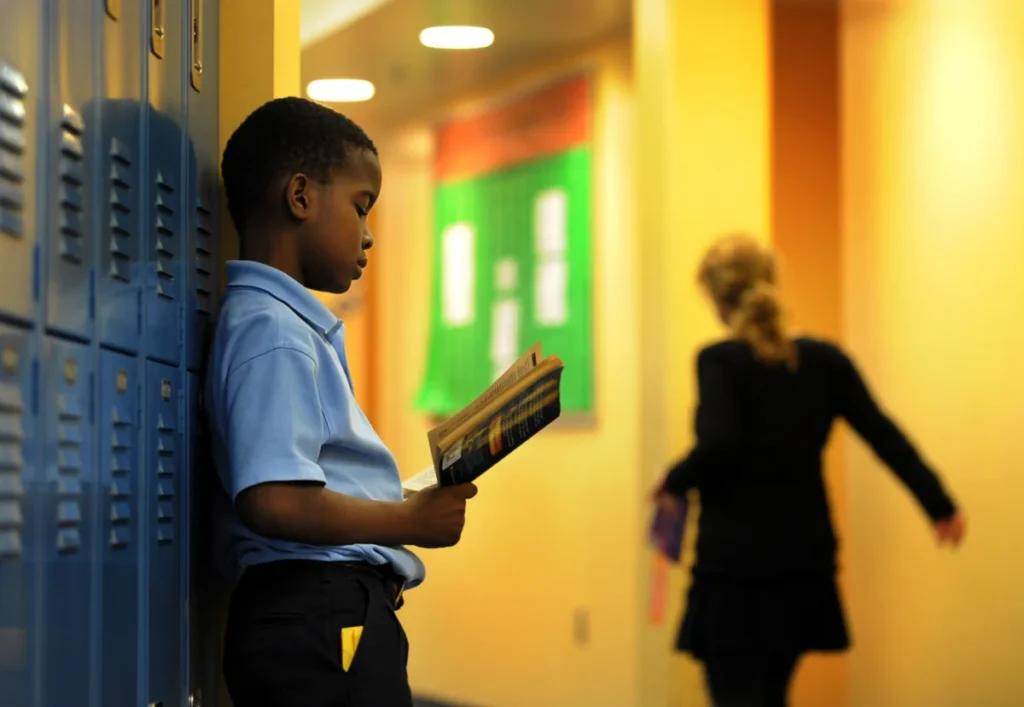
Beyond the data and the policy, the report underscores the importance of the classroom teacher. Success stories like those in Baltimore are not just about curriculum changes; they are about high expectations. In Mrs. Lowery’s classroom, when children master a new sound, they don’t just move on to the next page—they "kiss their brains" and celebrate their intelligence.
The Education Scorecard serves as a wake-up call. It confirms that the challenges facing American schools are systemic, deep-seated, and long-standing. However, by identifying the start of the decline, analyzing the potential causes, and highlighting successful interventions, the research provides a roadmap for the future. The era of the "learning recession" does not have to be the end of the story; with a return to evidence-based instruction and a renewed commitment to academic rigor, the next decade could potentially mirror the "astonishing" progress of the late 20th century.
The data is clear: the path to improvement is difficult, but it is well-trodden. The tools for success are available; the only remaining hurdle is the political and pedagogical will to use them.

 Raul Delapena Setiawan
 Laily UPN