


 Neng Nana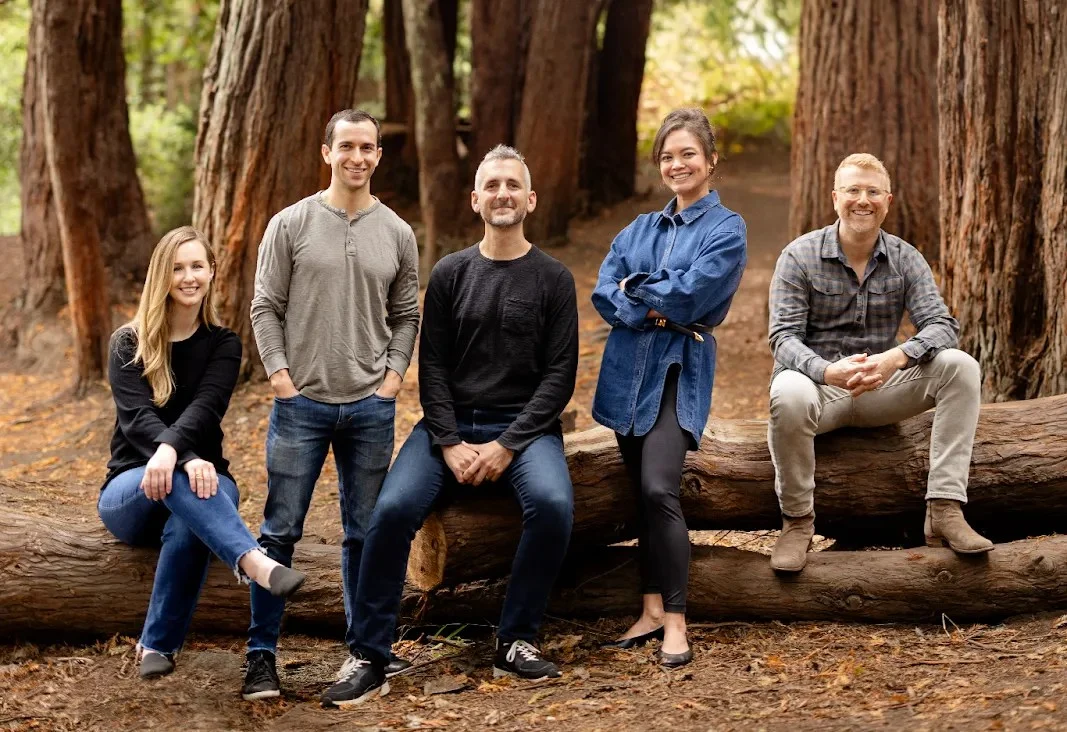
As the early onset of California’s fire season threatens historical sites near Los Angeles, the urgency of climate-driven disasters has shifted from a peripheral environmental concern to a core economic imperative. With property damage mounting and traditional insurance markets retreating from high-risk zones, a new frontier of venture capital has emerged: "Resilience Tech."
Leading this charge is Convective Capital, an early-stage venture firm that recently announced an $85 million fund—its second and largest to date. Led by Bill Clerico, a serial entrepreneur and former co-founder of WePay, the firm is pivoting from a specialized focus on wildfire mitigation to a broader mandate: providing risk management for a world increasingly defined by environmental volatility.
The Evolution of a Thesis: From Firetech to Resilience
Convective Capital’s origin story is rooted in the urgent need to address the "firetech" gap. In 2022, the firm launched its inaugural $35 million fund, backed largely by high-net-worth individuals, including Clerico himself—who successfully navigated his own startup, WePay, to a $300 million acquisition by JPMorgan Chase in 2017.
That initial fund targeted a specific niche: technologies capable of detecting, suppressing, and preventing wildfires. The portfolio reads like a roadmap of modern disaster defense:
- Pano: Utilizing AI-powered optical sensors to spot fires in their infancy.
- Raine: Deploying autonomous aircraft for precision water delivery.
- Burnbot: Developing robotic systems to clear brush and flammable vegetation.
- Stand: An insurance-focused startup designed to help homeowners harden their properties against environmental threats.
However, as the scale of climate-related disruption has intensified, so too has Convective’s strategy. With the new $85 million fund—now backed by institutional heavyweights, including major insurance firms and asset managers—the mandate has expanded. The firm is now targeting "risk management in the physical world," a thesis that acknowledges the reality of a $60 trillion real estate market under threat.
Chronology of an Emerging Market
The trajectory of Convective Capital reflects the maturing relationship between Silicon Valley and climate infrastructure.
- 2022: Launch of Fund I ($35M). The focus was purely on wildfire innovation, proving that private market solutions could exist where government agencies and legacy insurers were struggling to keep pace.
- 2023: A year of "stress-testing" the portfolio. Companies like Pano and Burnbot saw increased adoption as utility companies and municipalities faced massive liabilities from fire-related infrastructure failures.
- 2024: The announcement of Fund II ($85M). This represents a shift from "niche vertical" to "macro-resilience," acknowledging that the crisis has moved beyond wildfires to include grid instability, commodity volatility, and extreme weather events that threaten the global supply chain.
The firm’s early success is quantified by the numbers: portfolio companies from the first fund have collectively generated $100 million in revenue and achieved a total valuation of $2 billion. Perhaps most impressively, 79% of these startups have successfully transitioned from seed to Series A funding, a graduation rate that significantly outpaces broader industry benchmarks for early-stage investing.
Supporting Data: The Economics of Disaster
The economic argument for resilience tech is stark. According to Clerico, the U.S. economy hemorrhages roughly $1 trillion annually in costs associated with disaster mitigation and recovery.
"The silver lining is that it’s gotten so bad that the private markets can now take over," Clerico noted in an interview. "Utilities are going bankrupt, insurers are leaving big markets—these are very large economic events, and those create markets for new solutions and products."
The new fund has already begun deploying capital into companies that address the systemic nature of these risks:
- The Lumber Manufactory: Tackling forest management by making timber mills more economically viable.
- Drafted: Leveraging AI to optimize home design for climate resilience.
- Voltaire: A Y Combinator-backed drone firm specializing in power line inspection, a critical bottleneck for utilities trying to prevent grid-induced fires.
- Edge Technologies: Developing insurance products to hedge against volatile commodity prices, providing a buffer for companies exposed to climate-driven market swings.
Bridging the Gap: Utilities, Insurers, and Regulation
One of the primary challenges for startups in the resilience space is the customer base. Selling to utilities, government agencies, and legacy insurers is notoriously difficult, characterized by long sales cycles and a natural aversion to unproven technology.
Convective Capital has positioned itself not just as a financier, but as a bridge-builder. By actively fostering relationships between its portfolio companies and these legacy institutions, the firm is accelerating the adoption of new safety standards.
Clerico highlights a significant shift in the insurance industry: "There is a wave of new insurers stepping into the void left by incumbents. That’s a really amazing opportunity for us, but it’s also provoking a response from the incumbents who realize they need to change the way they do business."
This pressure is forcing a technological upgrade across the board. Insurers are no longer just passive payers of claims; they are becoming active investors in the mitigation technologies that reduce their own loss ratios.
The AI Paradox: A Double-Edged Sword
The integration of Artificial Intelligence is central to Convective’s strategy, but Clerico is acutely aware of the irony inherent in the current tech landscape.
While AI tools are essential for modeling fire behavior and analyzing satellite data, the massive build-out of physical data centers to support this AI revolution is itself straining the very systems these startups are trying to protect.
"AI is putting a lot of demand on the energy and water systems through data center construction," Clerico explained. "It’s not just something in our portfolio—it’s actually creating market opportunity for our portfolio by adding additional stress to our physical systems."
This creates a self-perpetuating cycle: the drive for digital innovation creates a physical strain, which in turn necessitates the "Resilience Tech" that Convective Capital is banking on.
Implications: The New Normal
The shift of $85 million into a dedicated resilience fund suggests that institutional investors are finally pricing climate risk into their long-term portfolios. For entrepreneurs, this signals a change in the venture landscape: the "move fast and break things" era of software is being superseded by a more deliberate, infrastructure-heavy approach that prioritizes longevity and survival.
As wildfires continue to encroach on populated areas and the costs of recovery continue to spiral, the demand for proactive, technology-driven risk management will only grow. Convective Capital is betting that the most valuable companies of the next decade won’t just be the ones that build the next social platform, but the ones that keep the lights on, the forests healthy, and the homes standing in a changing climate.
By professionalizing the "Resilience Tech" space and attracting institutional capital, Clerico is helping move these technologies from the fringes of "green innovation" to the center of the global economy. Whether this infusion of capital will be enough to offset the systemic risks of a warming planet remains to be seen, but the market, at least, has begun to take notice.
The era of passive climate adaptation is over; the era of active, engineered resilience has begun.


 Suro Senen
 Lina Irawan