 Nila Kartika Wati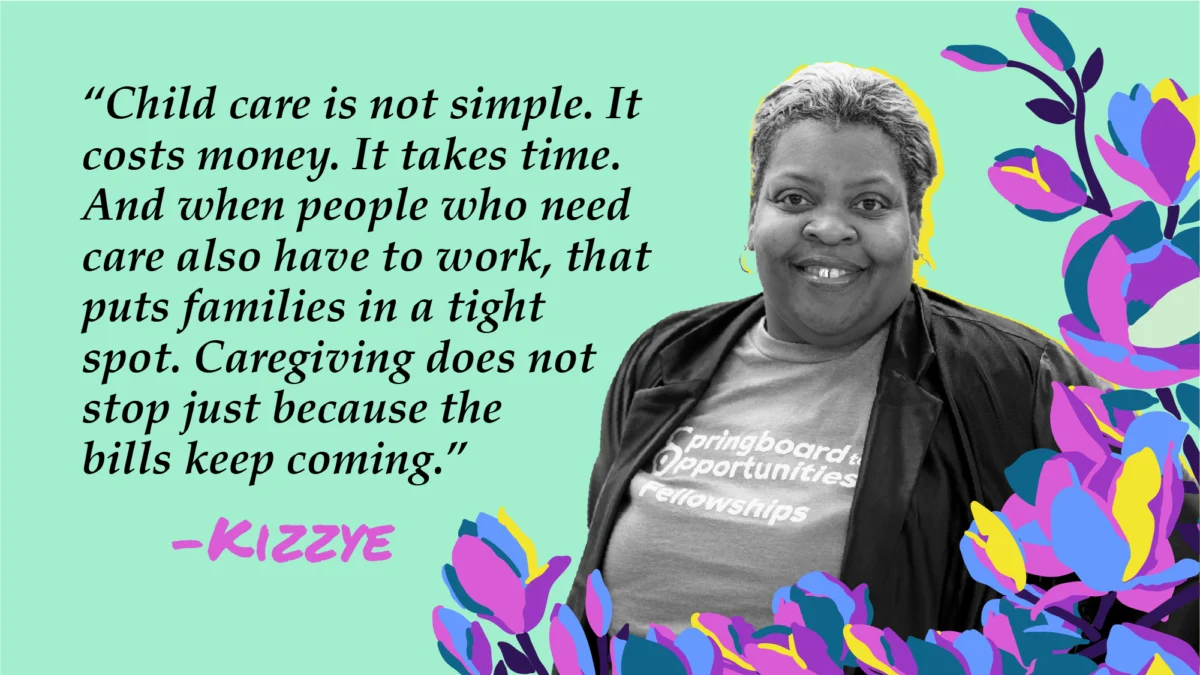
By Editorial Staff
Editor’s Note: This article is part of "Front and Center," a series produced in partnership with the Magnolia Mother’s Trust (MMT). The series spotlights the voices of Black women navigating the complexities of modern economic life, emphasizing how guaranteed income programs—such as the MMT’s initiative to provide $1,000 monthly for 12 months to 100 families—serve as a vital lifeline.
For Kizzye, a grandmother and lifelong caregiver, the act of nurturing is not merely a task—it is a vocation. From the delicate needs of a seven-month-old infant to the complex, sensitive requirements of aging relatives facing dementia or cancer, her life has been defined by the profound, often exhausting, and consistently unpaid labor of keeping families whole. Yet, as she balances the joys of raising a new generation with the stark realities of poverty, she confronts a sobering truth: compassion is an essential human trait, but it is not a currency that pays the rent or covers the cost of medical surgery.
The Architecture of Care: A Life in Service
Kizzye’s journey is representative of a vast, often invisible segment of the American workforce. Her day-to-day life is a testament to the "sandwich generation"—those squeezed between the demands of caring for aging parents and the needs of their own children and grandchildren.
Currently, Kizzye’s household revolves around the rhythms of three grandchildren, aged six, three, and seven months. As her daughter works shifts at the post office, Kizzye provides the foundational childcare that allows her daughter to remain in the workforce. This domestic labor is a critical component of the family’s economic stability, yet it is rarely calculated into the nation’s Gross Domestic Product (GDP).
A Chronology of Caregiving
Kizzye’s history of care is generational. Her path was shaped early by the example of her grandmother, who taught her that "when somebody in your family needs help, you help."
- Early Years: Kizzye’s introduction to heavy-duty caregiving began while she was still a young mother. Tasked with caring for her grandmother, who suffered from cancer, she had to balance childcare for her own children while learning the complexities of clinical home care, including managing colostomy bags and medication schedules.
- Mid-Life Responsibilities: As the years progressed, the scope of her care expanded. She navigated the specialized needs of her grandfather, who suffered from dementia, provided mobility assistance to her aunt, and served as a primary caregiver for a nephew recovering from a severe accident.
- Professional Care: Her experience extended into the professional sphere, where she worked in nursing homes. There, she witnessed firsthand the emotional toll of aging. She recounts the plight of an elderly resident who daily requested to be taken home to check on his business—a heart-wrenching reminder that loss of agency is one of the most painful aspects of the aging process.
The Economic Paradox: Too Much for Some, Not Enough for Others
The narrative of the "American Dream" often presumes that hard work leads to stability. For individuals like Kizzye, however, the reality is a state of perpetual "middle-class" insecurity. She finds herself in a common administrative trap: earning just enough to be disqualified from certain assistance programs, yet lacking the resources to handle major life expenses.
The Healthcare Hurdle
Kizzye’s current struggle is emblematic of the systemic failures within the U.S. social safety net. She currently suffers from fibroids and requires surgery to improve her quality of life and health. However, after losing her health insurance, the procedure has become an unreachable luxury.
"You make too much for one thing and not enough for another," Kizzye explains. "Then you just end up stuck in the middle." This "benefits cliff" prevents families from achieving true mobility, keeping them trapped in a cycle where they must choose between essential medical care and daily survival.
Supporting Data: The Value of Guaranteed Income
The Magnolia Mother’s Trust (MMT) was created to address the systemic gaps that trap families in poverty. By providing $1,000 a month in direct cash assistance, the program acknowledges that mothers and grandmothers are the experts in their own lives.
Why Direct Cash Works
Unlike restrictive voucher programs, which often come with heavy administrative burdens and "cliffs," unconditional cash provides "breathing room." For Kizzye, this infusion of capital meant the ability to cover gas, manage household maintenance, and address the "little things" that otherwise escalate into crises.
Data from the MMT indicates that when Black women, who are disproportionately represented in low-wage caregiving roles, receive direct support, they invest it back into their communities. They prioritize:
- Nutritional Security: Improving the quality of food for children and elderly dependents.
- Educational Stability: Paying for school supplies or extracurricular activities.
- Debt Reduction: Avoiding the high-interest predatory loans that often target low-income households.
Official Responses and Societal Implications
The discourse around caregiving has shifted recently, moving from the periphery of feminist theory to the center of national economic policy. However, the disconnect between policy and reality remains vast.
The Failure of the "Village" Model
Kizzye observes a decline in the "village" mentality that once defined her upbringing. "When I was growing up, if a child was in the street, everybody told them to get out. That was community," she says. Today, that sense of collective responsibility is frequently met with suspicion.
Sociologists argue that the decline in communal care is a direct result of the atomization of the American family and the erosion of social cohesion due to economic anxiety. When survival is a constant battle, the "village" becomes harder to maintain.
Policy Implications
The policy implications of stories like Kizzye’s are clear:
- Infrastructure Investment: Caregiving must be treated as essential infrastructure, similar to roads and bridges. Without a robust, affordable, and high-quality caregiving system, the workforce participation of millions of women is threatened.
- Standardization of Wages: If we continue to rely on informal, family-based care, we must create systems—such as tax credits or direct stipends—that compensate those who provide this labor, ensuring they are not penalized in their own retirement years.
- Healthcare Reform: The ability to access surgery or routine health screenings should not be tied to an arbitrary employment status that leaves workers vulnerable when they are most in need.
Conclusion: The Purpose of Care
Despite the hardships, Kizzye maintains a philosophical commitment to her role. She rejects the notion that caregiving is a burden, reframing it as a fundamental human connection. "Babies can’t help themselves. Kids can’t help themselves. Older adults can’t either. We all get to a point where we need somebody," she notes.
Her story is not one of helplessness, but one of resilience against a system that has historically undervalued the very labor that sustains society. As the nation continues to debate the merits of guaranteed income and social safety net reform, the voices of those at the "front and center" of these issues are not just anecdotal—they are the blueprints for a more equitable future.
Kizzye’s purpose is clear: to care for her people with dignity and respect. The challenge for policymakers is to ensure that society affords her that same level of respect in return.
For more information on the Magnolia Mother’s Trust and the Front and Center series, readers are encouraged to visit the Springboard to Opportunities website or contact the Ms. Magazine editorial team regarding inquiries into the intersectional impacts of guaranteed income.


 Ali Ikhwan
 Sagoh
Sagoh