

 Lina Irawan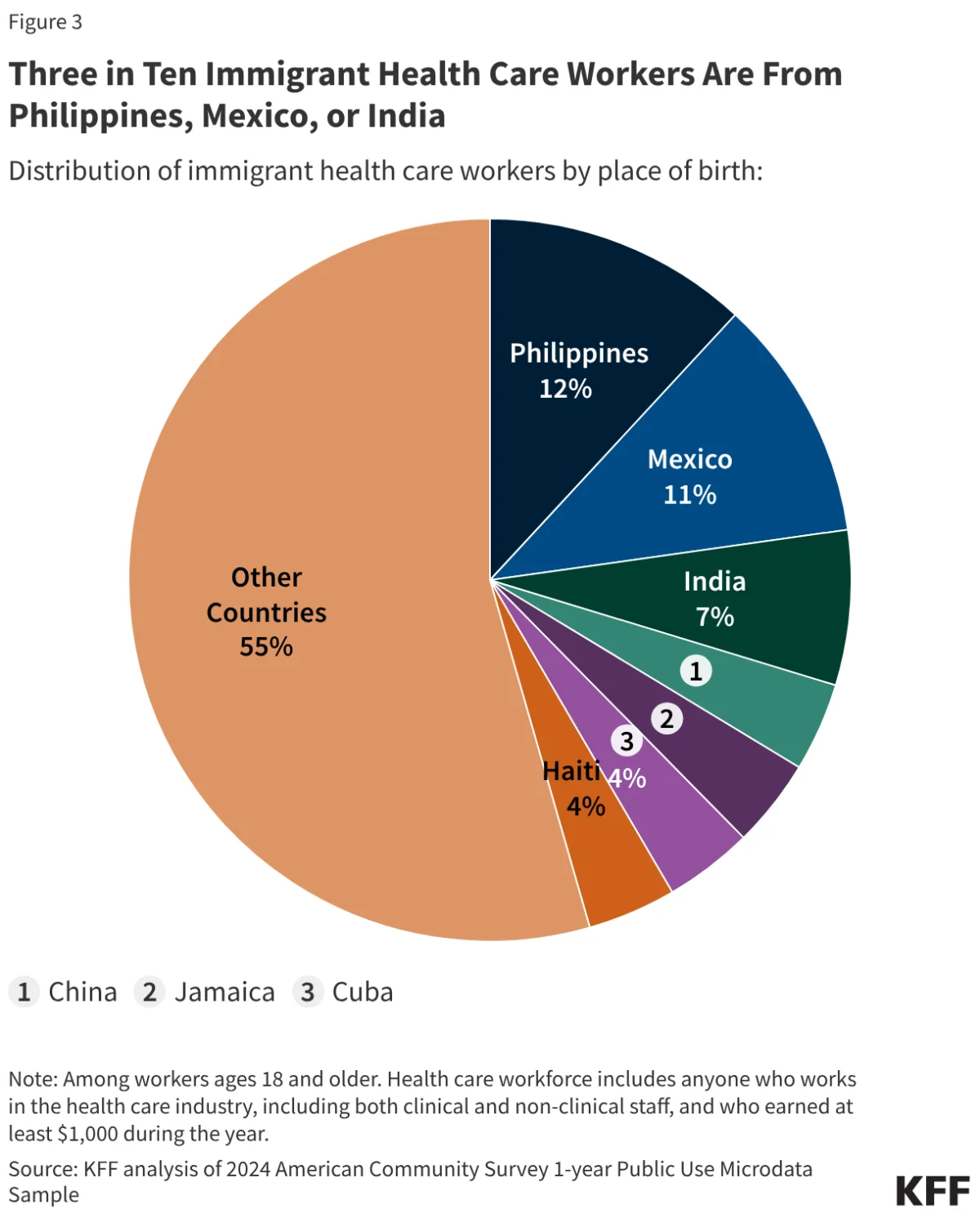
Introduction
The American labor market is currently navigating a period of profound transformation. Recent policy pivots by the Trump administration—ranging from the aggressive reevaluation of Temporary Protected Status (TPS) designations to significant restrictions on visa issuances and heightened interior enforcement—have placed the nation’s immigrant workforce at the center of a complex economic debate.
As of 2024, immigrants constituted roughly 19% of the U.S. workforce, representing nearly 31 million individuals. These workers are not merely supplementary; they are foundational to critical sectors including healthcare, agriculture, and infrastructure. A new analysis from KFF, utilizing data from the Current Population Survey (CPS) and the American Community Survey (ACS), reveals that while the total number of immigrant workers has remained relatively stable, the composition of that workforce is shifting rapidly. These demographic changes, driven by policy-induced uncertainty, pose significant questions about the long-term sustainability of the U.S. economy, particularly as the domestic population ages.
Chronology: A Snapshot of Workforce Turbulence (Jan 2025–April 2026)
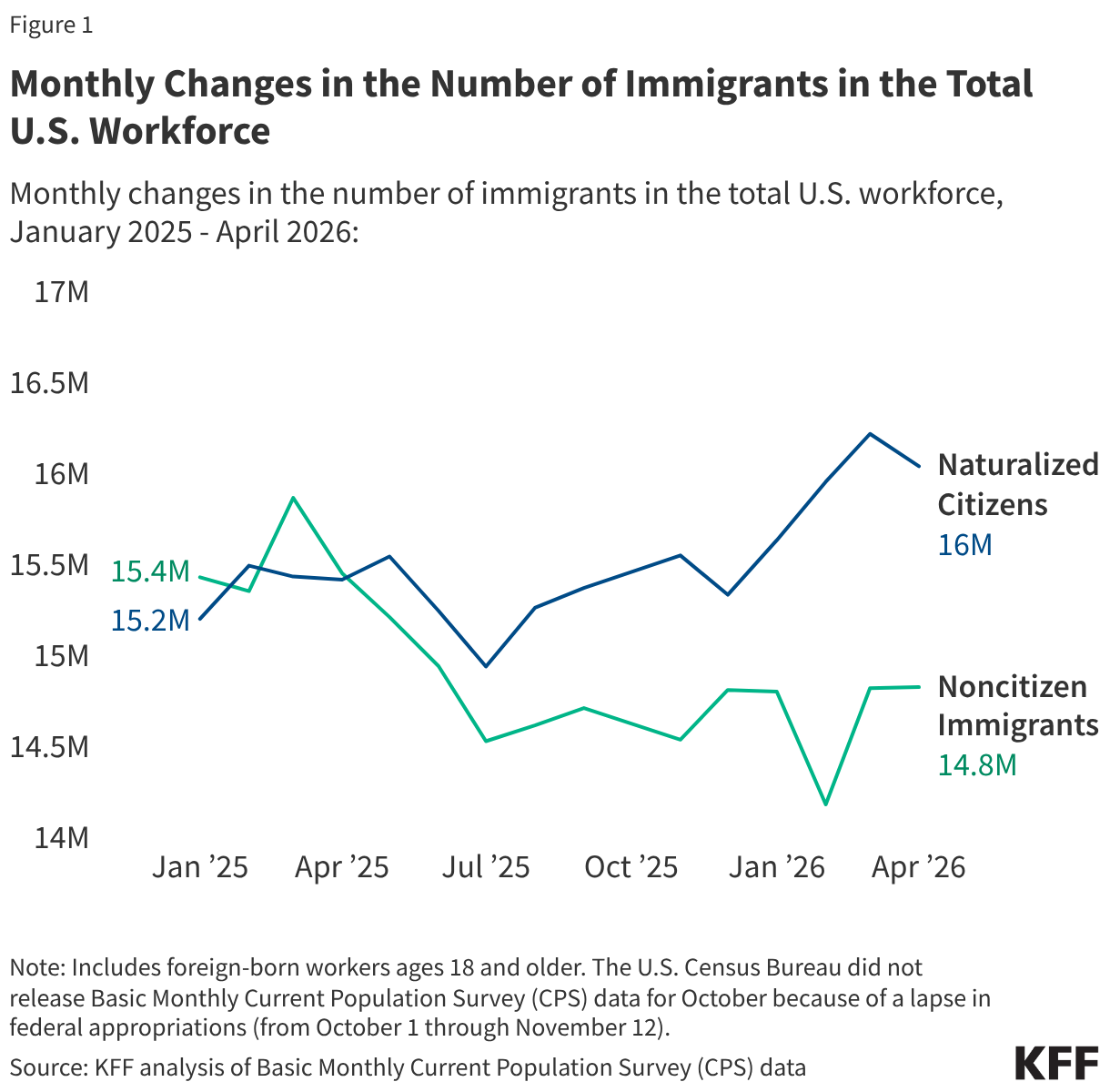
The period between January 2025 and April 2026 serves as a bellwether for the impact of current immigration policies. During this 16-month window, the U.S. labor market experienced a notable bifurcation in its immigrant population.
- The Noncitizen Decline: The number of noncitizen immigrant workers dropped by approximately 600,000—a 4% contraction—falling from 15.4 million to 14.8 million. This trend correlates closely with the administration’s focus on strict enforcement and the narrowing of pathways for temporary workers.
- The Naturalization Offset: Conversely, the number of naturalized citizen workers surged by over 800,000, or roughly 6%, rising from 15.2 million to 16.0 million. This suggests that while some segments of the immigrant population are exiting the workforce or losing status, those who have successfully secured citizenship are filling the vacuum.
- The U.S.-Born Constant: The native-born workforce saw a modest growth of 1%, increasing from 125.6 million to 126.7 million, failing to compensate for the volatility observed in the noncitizen segment.
- Healthcare Industry Dynamics: Within the healthcare sector, total employment rose by 1% (130,000 workers). However, this aggregate figure masks a deeper internal shift: while the number of U.S.-born and noncitizen healthcare workers increased, there was a startling decline in naturalized citizen healthcare workers, dropping from 2.5 million to 2.3 million.
Supporting Data: The Immigrant Contribution
To understand the potential impact of these trends, one must look at the outsized role immigrants play in specific, high-stakes industries.
The Healthcare Backbone
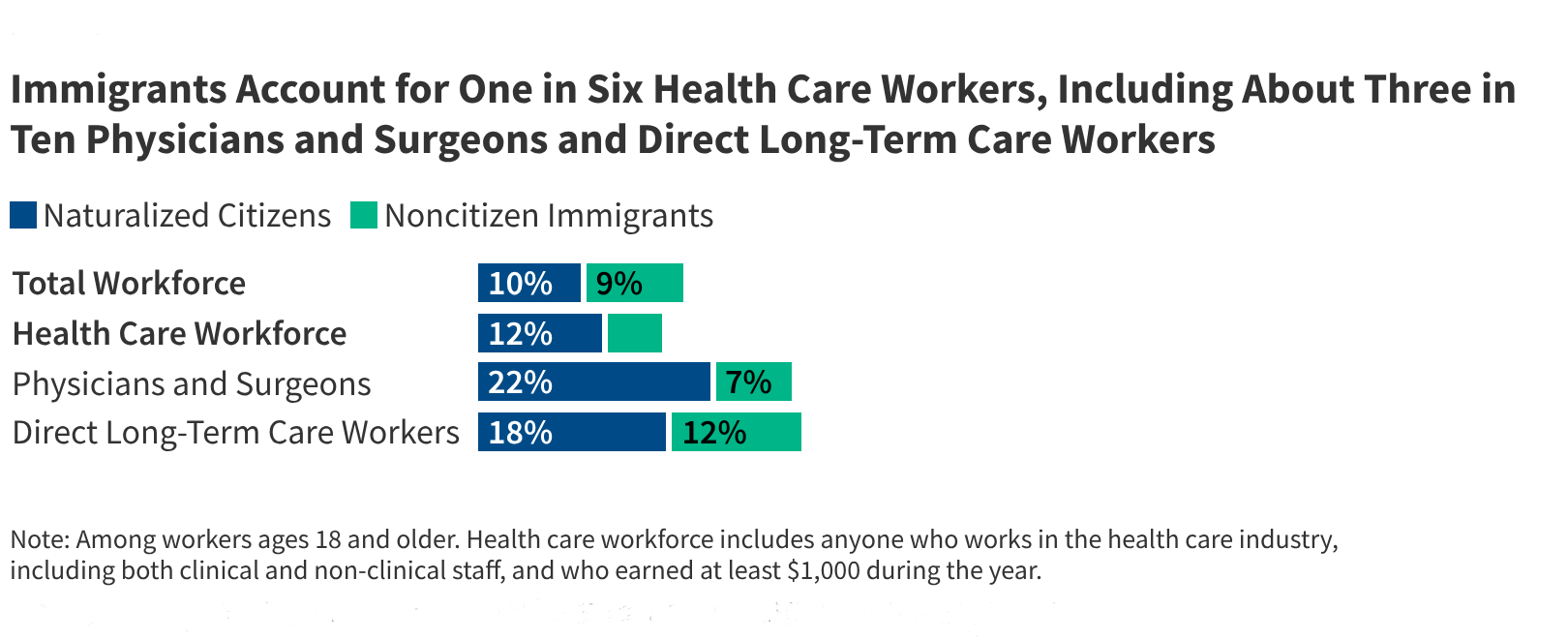
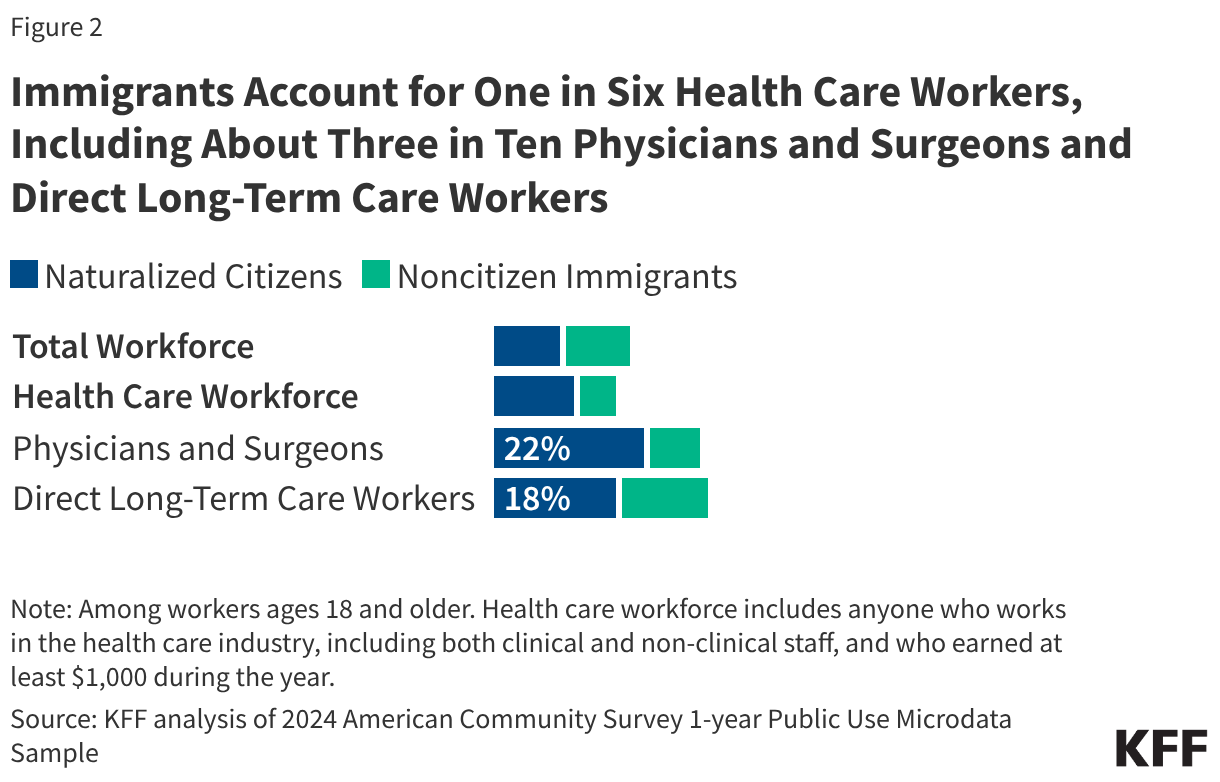
Immigrants represent 17% of the total U.S. healthcare workforce. Their presence is not distributed evenly; it is heavily concentrated in the most demanding and critical roles.
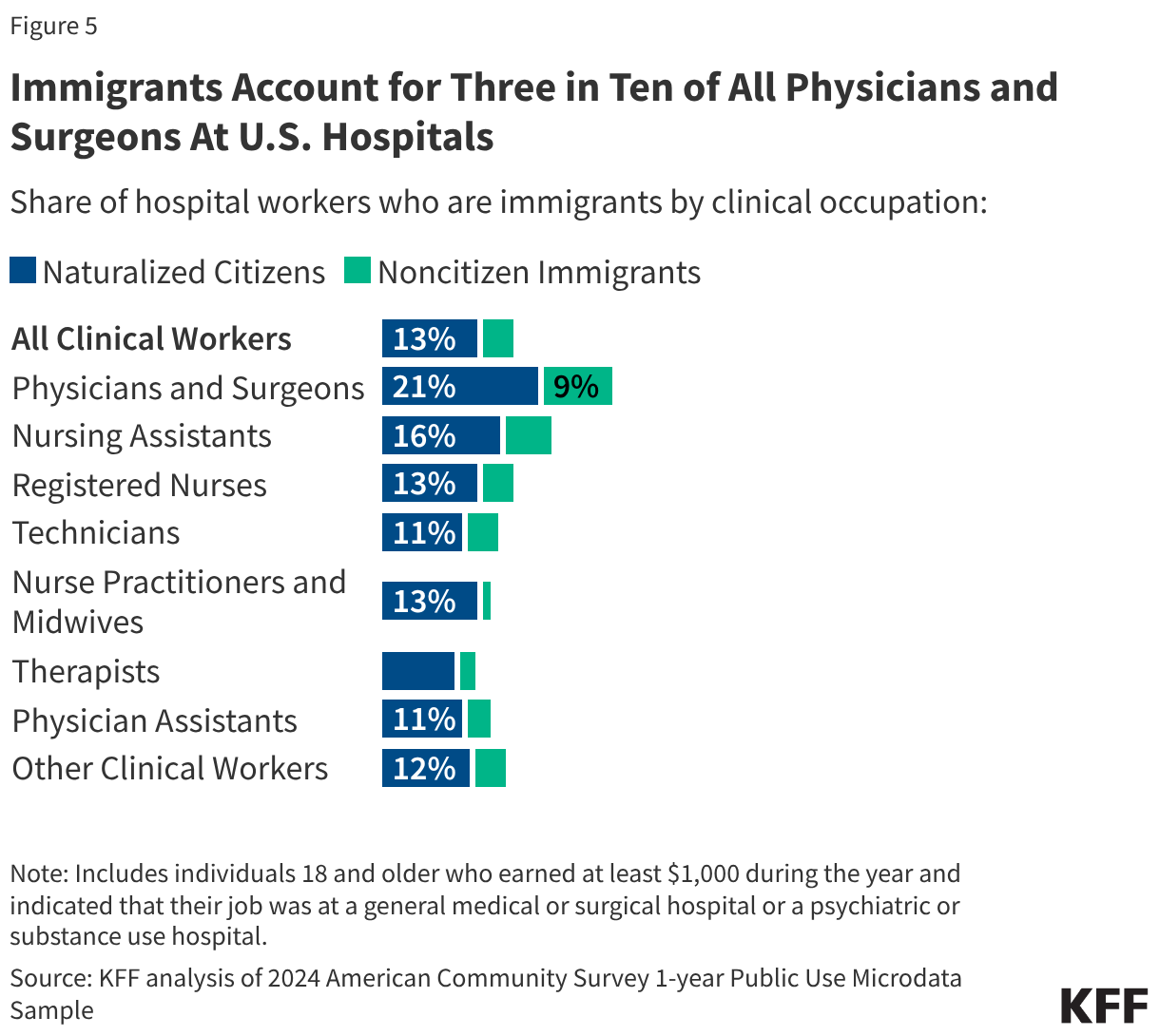
- Physicians and Surgeons: Approximately 28% of all physicians and surgeons in the U.S. are immigrants. This figure jumps to 30% when looking exclusively at hospital settings.
- Long-Term Care: As the "Silver Tsunami"—the aging of the Baby Boomer generation—accelerates, the reliance on immigrant labor for direct long-term care becomes even more apparent. 30% of direct care workers in these settings are immigrants.
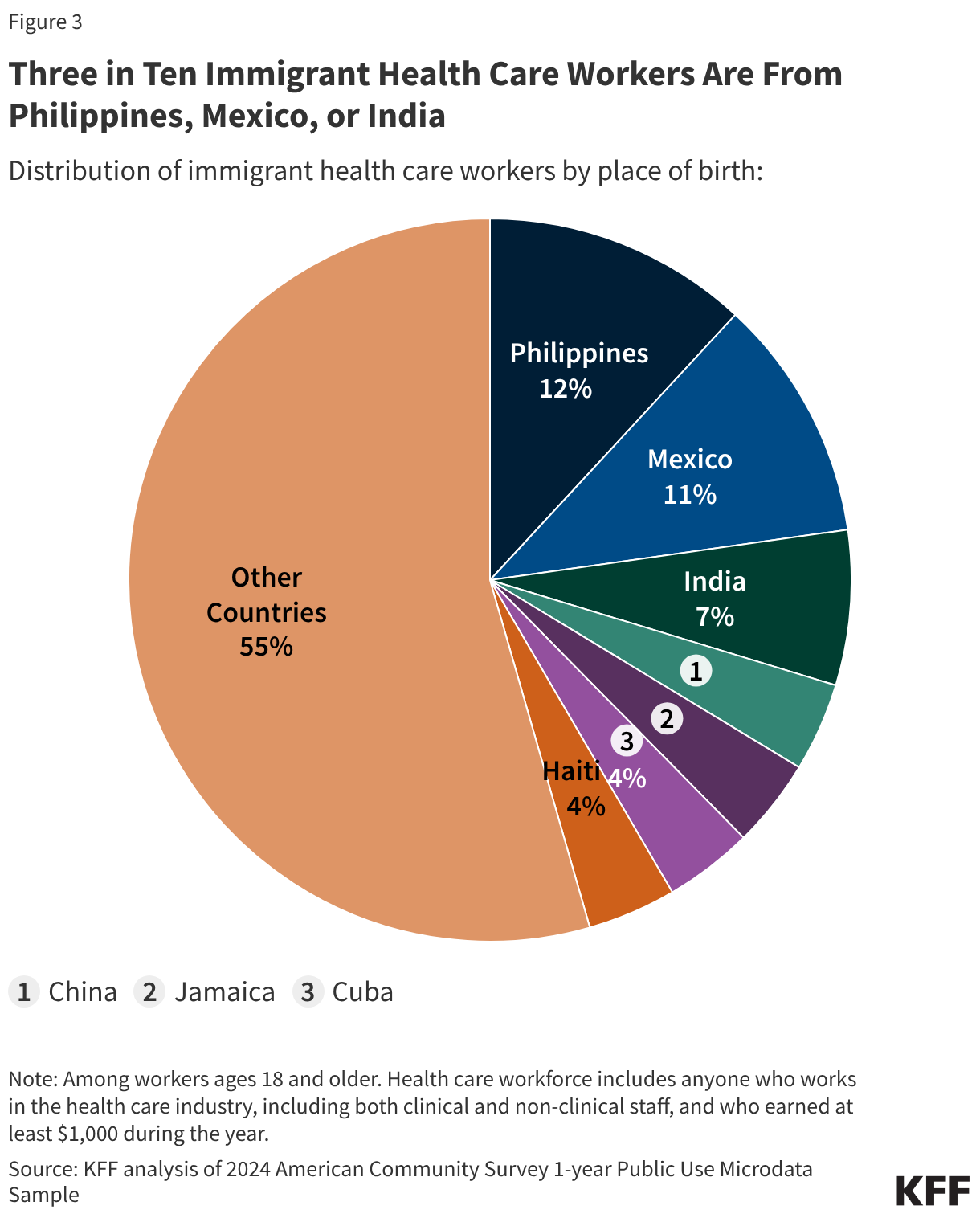
- Diversity of Origin: The global nature of this workforce is striking. Immigrants from the Philippines (12%), Mexico (11%), and India (7%) form the largest cohorts of healthcare workers. Among physicians, India alone accounts for 21% of the immigrant population, highlighting the dependence of the U.S. medical system on foreign-trained talent.
Essential Services and Manual Labor
Beyond the hospital walls, the reliance on immigrant labor is even more pronounced in the sectors that keep the economy running:
- Agriculture: 33% of agricultural workers are immigrants, with the vast majority being noncitizens.
- Construction: 26% of the workforce is immigrant-led, providing the labor necessary for the nation’s housing and infrastructure projects.
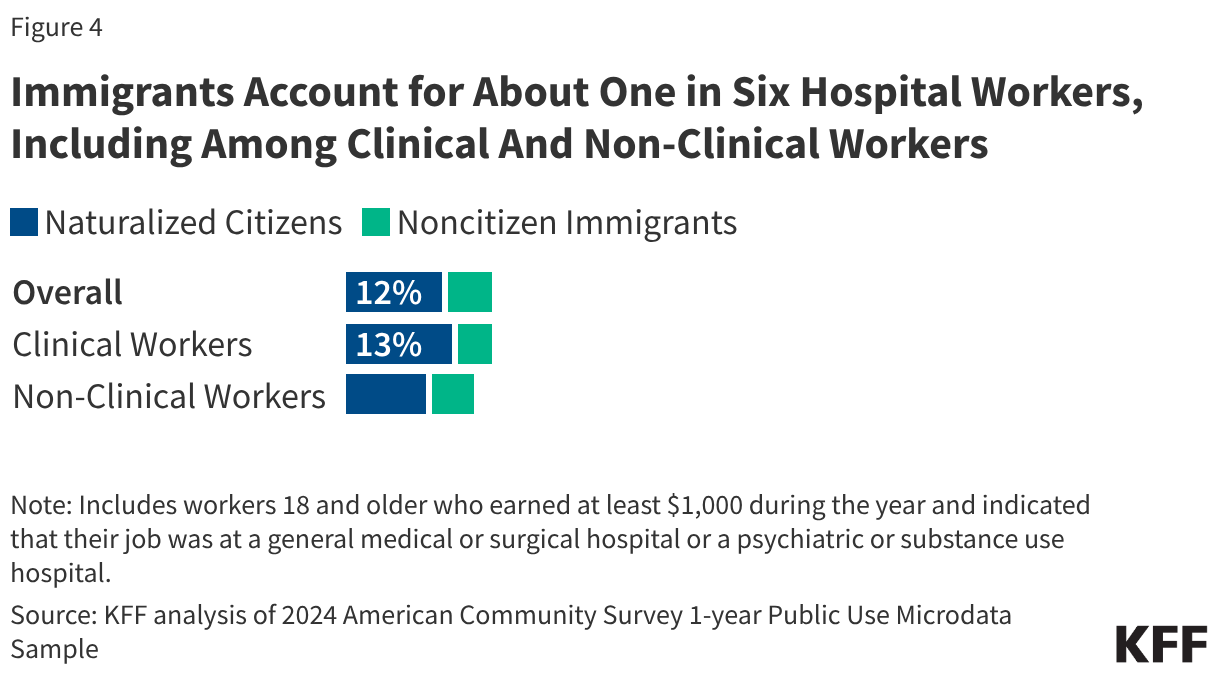
- Service and Maintenance: 23% of food service, building maintenance, and personal care workers are immigrants. In hospitals, 29% of cleaning and maintenance staff are immigrants, highlighting their role in maintaining clinical safety and hygiene standards.
Official Responses and Policy Perspectives
The Trump administration has consistently framed these policy changes as a necessary measure to protect domestic labor and restore the rule of law. By pausing certain visa programs and increasing detention efforts, the administration aims to prioritize U.S.-born workers and those who have followed traditional naturalization pathways.
However, many economists and healthcare advocates argue that these policies fail to account for the "replacement rate" of the U.S. workforce. With the domestic population over the age of 65 growing rapidly, the supply of new, U.S.-born workers entering the workforce is insufficient to replace those retiring.
Critics of the current policy trajectory point to the "chilling effect" that heightened enforcement has on data collection. Researchers note that because survey participation in the CPS and ACS often relies on voluntary reporting, fear of government retaliation among noncitizen populations may lead to underreporting. This creates a feedback loop where policymakers are making decisions based on data that may significantly underestimate the actual number of immigrants currently active in the workforce.
Implications: A Looming Economic Crisis?
The long-term implications of these trends are far-reaching and potentially destabilizing.
The Healthcare Shortage
The most immediate risk lies in the healthcare sector. The U.S. is already facing a projected shortage of hundreds of thousands of nurses, doctors, and home health aides over the next decade. If the reliance on immigrant labor is severed or significantly reduced without a corresponding increase in U.S.-born workers entering these fields, the healthcare system could face a crisis of access. For the elderly and those requiring long-term care, this means longer wait times, reduced quality of service, and higher costs.
Economic Productivity and Inflation
Industries such as agriculture and construction operate on razor-thin margins. A sudden reduction in the labor pool often leads to wage-push inflation—where companies must raise wages significantly to attract a shrinking pool of workers, costs which are then passed on to consumers. In agriculture, this could result in increased food prices and supply chain disruptions. In construction, it could further exacerbate the national housing shortage, as projects face delays and increased labor costs.
The Demographic Gap
The fundamental issue remains one of demographics. The U.S. birth rate has remained below the replacement level for several years. Without a sustained inflow of immigrant workers, the tax base required to support Social Security and Medicare for an aging population will continue to shrink.
Conclusion
The current administration’s efforts to restrict immigration are fundamentally altering the composition of the U.S. workforce. While the shift from noncitizen to naturalized citizen workers suggests some level of integration success, the overall contraction in specific labor sectors cannot be ignored. As the U.S. faces a future of an aging population and a tightening labor market, the data suggests that the policies designed to "protect" the workforce may inadvertently be creating a significant deficit in the very industries that sustain the American quality of life. The challenge for policymakers will be to balance the stated goal of enforcement with the pragmatic reality that the U.S. economy, as it is currently structured, is heavily reliant on the immigrant workforce to function.


 Dwi Wanna
 Reynand Wu