

 Nana Muazin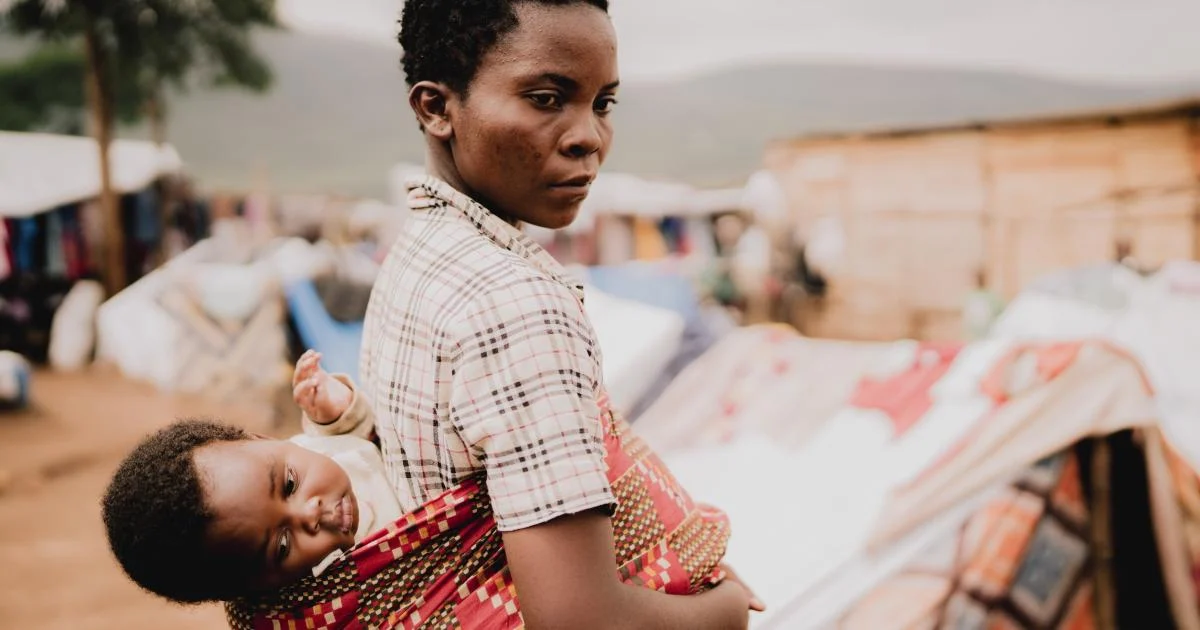
Across the sprawling, dusty corridors of Africa’s refugee landscape, a singular, haunting refrain unites over 1.2 million displaced people from the Democratic Republic of the Congo (DRC): “Where are my loved ones?”
From the newly carved, flood-prone encampments in Burundi to the established, multi-generational settlements in Uganda, the humanitarian crisis in the DRC has transcended simple displacement. It has evolved into a profound crisis of separation, where families are fractured by the velocity of violence, the opacity of borders, and the digital divide.
The Anatomy of a Crisis: Main Facts and Scale
The statistics provided by the UNHCR for 2025 paint a picture of a region in perpetual upheaval. Last year alone, more than 5.4 million people worldwide fled their homes due to violence and persecution. Within this global figure, the DRC stands as a epicenter of human suffering.
By the close of 2025, an estimated 5.7 million people remained internally displaced within the DRC, while an additional 1.2 million had sought safety across international borders. Uganda, a long-standing beacon of hospitality in the region, now hosts approximately 1.9 million refugees, with over 640,000 originating from the DRC—a 16% surge fueled by the intensified, brutal fighting in the country’s eastern provinces.
These numbers, however, remain abstract until placed against the backdrop of the individuals living them. The chaos of the eastern DRC—where armed conflict, recurring epidemics, and climate-induced instability converge—does not just force people to move; it systematically dismantles the nuclear family. A mother flees one path, a father another; a child is separated in the darkness of a night crossing; a phone is lost or rendered useless, severing the final tether to a lost life.
Chronology of a Displaced Generation
The current wave of displacement is not a sudden anomaly but the latest chapter in a long-standing regional instability.
- Pre-2025: Eastern DRC faces decades of fluctuating, localized conflict, creating a permanent state of precariousness.
- Early 2025: An escalation in armed hostilities in the eastern provinces triggers a massive surge in cross-border flight, overwhelming existing infrastructure.
- February 2025: Refugees begin arriving in record numbers at sites like Musenyi and Busuma in Burundi. These areas, previously agricultural or low-lying land, are rapidly converted into makeshift camps that quickly exceed their designed capacity.
- March 2026: Field observations in Ugandan and Burundian camps confirm that while the influx continues, the primary challenge has shifted from immediate survival to the "silent accumulation of loss"—the search for missing family members.
The River and the Rescue: Furaha’s Story
The human cost of this displacement is best illustrated by the story of Furaha Salima. Living in a village in the DRC, Furaha heard the gunfire approaching—the sound that has dictated the lives of millions. Her response was instinctual: she gathered her children and fled toward the Rusizi River, the natural border between the DRC and Burundi.
At the riverbank, amidst the panic, she encountered a small girl, entirely alone. With no time to process the complexity of the situation, Furaha took the child by the hand, leading her across the water into safety.
Today, Furaha lives in the Musenyi camp in Burundi. She arrived pregnant in February 2025 and has since given birth. She is now raising six children, including the girl she rescued. Yet, her life is punctuated by the search for the girl’s original family. "We haven’t found anyone yet," she says, her voice echoing the uncertainty shared by thousands. "We’re not sure if we have the right address."
The Digital Lifeline: Connectivity as Humanitarian Aid
In the 21st century, the ability to reconnect with family is often synonymous with the ability to access digital infrastructure. In Burundi’s Musenyi and Busuma camps, the International Committee of the Red Cross (ICRC) and the Burundi Red Cross have established connectivity centers.
These centers are not merely logistical hubs; they are lifelines. For refugees like Maryam Batacoka, who arrived in Busuma in December 2025, the center provided the only path to clarity. After fleeing Luvungi and leaving two children behind, she used the center’s resources to reach an aunt in Uvira. The news was a mix of relief and despair: her aunt was safe, but the conditions in the camp were dire.
The demand is overwhelming. Last year, over 10,000 calls were facilitated in Burundi alone. For others, like Annuarite Yamwaka—who lost contact with three of her children while fleeing Lubarika—the center is a place of daily pilgrimage. She believes her children are in the capital, Bujumbura, and she returns to the center with the hope that each phone call will finally yield a connection.
Uganda: The Long Wait of Nakivale
If the Burundian camps represent the raw, urgent face of the current conflict, Nakivale in Uganda represents the weight of historical displacement. Established in 1958, it is Africa’s oldest refugee settlement. It is a vast, 72-square-kilometer microcosm of a town, housing refugees from nine different nationalities.
In Nakivale, the drama is not one of immediate arrival, but of endurance. Michael Mugishu, who arrived in 2025, exemplifies the crushing loneliness of this life. Fleeing with his family, he became separated and arrived at the settlement alone. He has ten siblings, yet he has no information on any of them, nor his parents.
"I have tried here and there," he says, "but I haven’t found my family."
Anastasia Heri, who fled Goma, experiences a different kind of uncertainty. She has heard rumors that a younger brother might be in a nearby camp, but her parents remain missing. For her, the connectivity center is a psychological anchor. "You really encourage me by being able to find information about my relatives," she notes. "I feel like maybe my parents are not dead."
The Volunteers: Those Who Have Been There
The effectiveness of these programs relies heavily on the volunteers who run them. Jessica, a refugee from the DRC who arrived in Uganda in 2018, now works at a Nakivale connectivity center. She knows the struggle of rebuilding contact firsthand. She works with children who arrive entirely alone, tasked with the impossible weight of seeking parents who may or may not still be alive.
Stewart Kukundapu, the coordinator of the program in Nakivale, emphasizes that the volunteer base is intentionally composed of refugees. "These volunteers have gone through this," he explains. "They know what it means to be a refugee, to be separated from a family member."
The services offered are deceptively simple:
- The Three-Minute Call: A dedicated window for refugees to share news.
- Red Cross Messages: Handwritten letters carried across borders when phone numbers are unavailable.
- Tracing Requests: An institutionalized search for individuals when only a general location is known.
- Digital Infrastructure: Providing charging points and Wi-Fi to keep the search alive.
Implications: A Future Defined by Connection
The crisis in the DRC and the subsequent displacement into Uganda and Burundi is a reminder that humanitarian aid in the modern era cannot be limited to food, water, and shelter. The psychological toll of forced separation is a long-term public health crisis that requires a digital response.
The "rhythm" of camp life—charge, call, message, return—has become a surrogate for home. It is a slow, methodical process that stands in stark contrast to the sudden, explosive violence that causes the separation in the first place.
As the international community monitors the 2025 UNHCR figures, the focus must remain on the individuals behind the 1.2 million figure. The infrastructure of the Red Cross connectivity centers is, at present, the only bridge between a fractured past and a potential future. Without this, millions of families would be left in a permanent state of limbo, their stories incomplete, their questions unanswered.
For Furaha, for Michael, and for thousands like them, the search is not a secondary task—it is the very essence of their survival. Until the borders open or the conflict subsides, the connectivity center remains the most vital place on earth.

 Pevita Pearce
 Raul Delapena Setiawan