

 Ali Ikhwan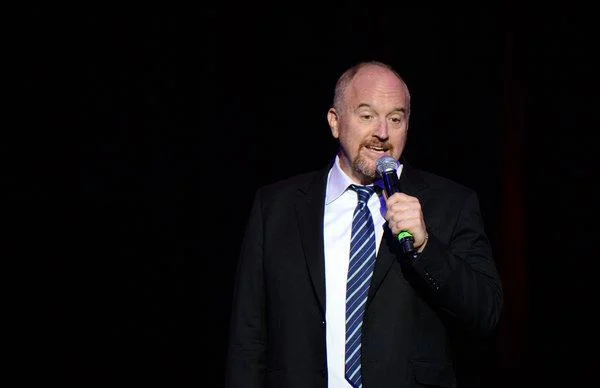
The American political and cultural landscape is currently undergoing a volatile reckoning, defined by a recurring tension between the desire for institutional accountability and the reactionary pushback against what many characterize as "political correctness." From the halls of power in Richmond, Virginia, to the comedy clubs of New York, the debate over what constitutes acceptable speech and appropriate behavior has reached a fever pitch. However, a deeper analysis reveals that the outrage surrounding "PC culture" is less about the preservation of free speech and more about a fundamental resistance to the shifting power dynamics of a more inclusive society.
The Crucible of Scandal: The Virginia Crisis
The last several weeks have seen the Commonwealth of Virginia rocked by a series of government scandals that have tested the boundaries of modern political ethics. The turmoil began with the emergence of a photograph from Governor Ralph Northam’s 1984 medical school yearbook, which depicted a person in blackface and another in Ku Klux Klan regalia. While the Governor initially apologized and later denied being in the photo, the revelation sparked an immediate outcry.
This was compounded by admissions from Attorney General Mark Herring, who acknowledged wearing blackface at a college party in the 1980s, and serious allegations of sexual assault against Lieutenant Governor Justin Fairfax. The Democratic Party leadership’s swift call for the resignations of Northam and Fairfax was met with a chorus of voices from across the political spectrum, with many critics dismissing the demands as a manifestation of an "excessive" or "purity-obsessed" political culture. This characterization, however, masks a broader, more cynical attempt to avoid accountability by framing the pursuit of justice as a performative exercise in sensitivity.
Chronology of a Cultural Divide
The current atmosphere of performative outrage is not an isolated phenomenon; it follows a well-documented trajectory. In early 2019, Representative Rashida Tlaib ignited a firestorm when she referred to President Donald Trump using profanity while discussing impeachment. The media response was swift and disproportionate. A report from The Hill revealed that Tlaib’s comments received five times more cable news coverage than Representative Steve King’s explicit defense of white supremacy, which occurred during the same week.
This chronology of coverage highlights a disturbing disparity: vulgarity used by a woman of color in a position of power is treated as an existential threat to decorum, while dehumanizing rhetoric regarding white supremacy is treated as a matter of opinion. This pattern reinforces the notion that the outrage machine is selectively calibrated to silence marginalized voices while offering a pass to those who maintain the status quo.
Supporting Data: The Double Standard of Discourse
The data regarding media coverage and public discourse suggests that the "PC" label is applied inconsistently. When President Trump delivers addresses characterized by xenophobic rhetoric and false claims regarding border security—often at the expense of federal employees held hostage by a government shutdown—the defense of his actions frequently invokes the necessity of speaking "candidly." Yet, when marginalized individuals express their anger or demand the use of correct pronouns, the same critics who defend the President’s "brutality" as "authenticity" suddenly pivot to the defense of traditional decorum.
The implication is clear: "Political correctness" is a term used to police the boundaries of who is allowed to speak, how they are allowed to speak, and, most importantly, what they are allowed to challenge. It is a tool used to protect the sensibilities of those with institutional power, rather than a genuine defense of free speech.
The Comedy of Resentment: Louis CK and the Victim Complex
The intersection of comedy and political reactionism was best exemplified by the recent comeback attempt of Louis CK. In a leaked stand-up set, CK mocked the use of pronouns for transgender and non-binary individuals, likening them to "royalty" and using transphobic tropes to belittle a community that statistically faces significantly higher rates of violence and suicide than the general population.
This performance served as a microcosm of the "anti-PC" movement. CK, who admitted in 2017 to sexually harassing and masturbating in front of several women without their consent, framed his return to the stage not as a moment for reflection or atonement, but as an opportunity to portray himself as a victim of a culture that no longer tolerates his abuses. By positioning himself as the target of "sensitivity," CK utilized the classic tactic of the powerful: claiming that the victim’s demand for dignity is, in itself, an act of aggression.
Official Responses and Institutional Silencing
The discourse surrounding these events has been heavily influenced by institutions that view "political correctness" as an obstacle to public life. When political leaders or public figures are held accountable for racist, sexist, or abusive behavior, the immediate response is often to label the critique as "out-of-touch" or "the radical left."
This strategy serves two purposes:
- Delegitimization: It casts the victim’s experience as subjective, "soft," or exaggerated.
- Deflection: It shifts the focus from the act of abuse to the reaction of the public, thereby turning the conversation away from the harm caused to marginalized communities.
This institutional response effectively silences those who are attempting to participate in the democratic process on their own terms. When a woman of color, an LGBTQ individual, or a victim of harassment speaks out, they are not merely "offended"; they are often speaking to their own survival.
Implications for Democracy and Free Speech
The most critical implication of this ongoing debate is the narrowing of who is truly afforded the right to free speech. If free speech is reserved only for those whose ideas do not challenge the foundational hierarchies of our society, then it is not truly free; it is a protected, private privilege.
True free speech should empower the marginalized to name their oppression, to call out dehumanizing rhetoric, and to set the terms of their own identity. When marginalized groups demand that their humanity be recognized, they are exercising the most fundamental aspect of the First Amendment. They are responding to bigotry with, "That demeans me," or "That hurts me." To characterize these responses as the "excesses of political correctness" is to suggest that the comfort of the oppressor is more important than the safety and dignity of the oppressed.
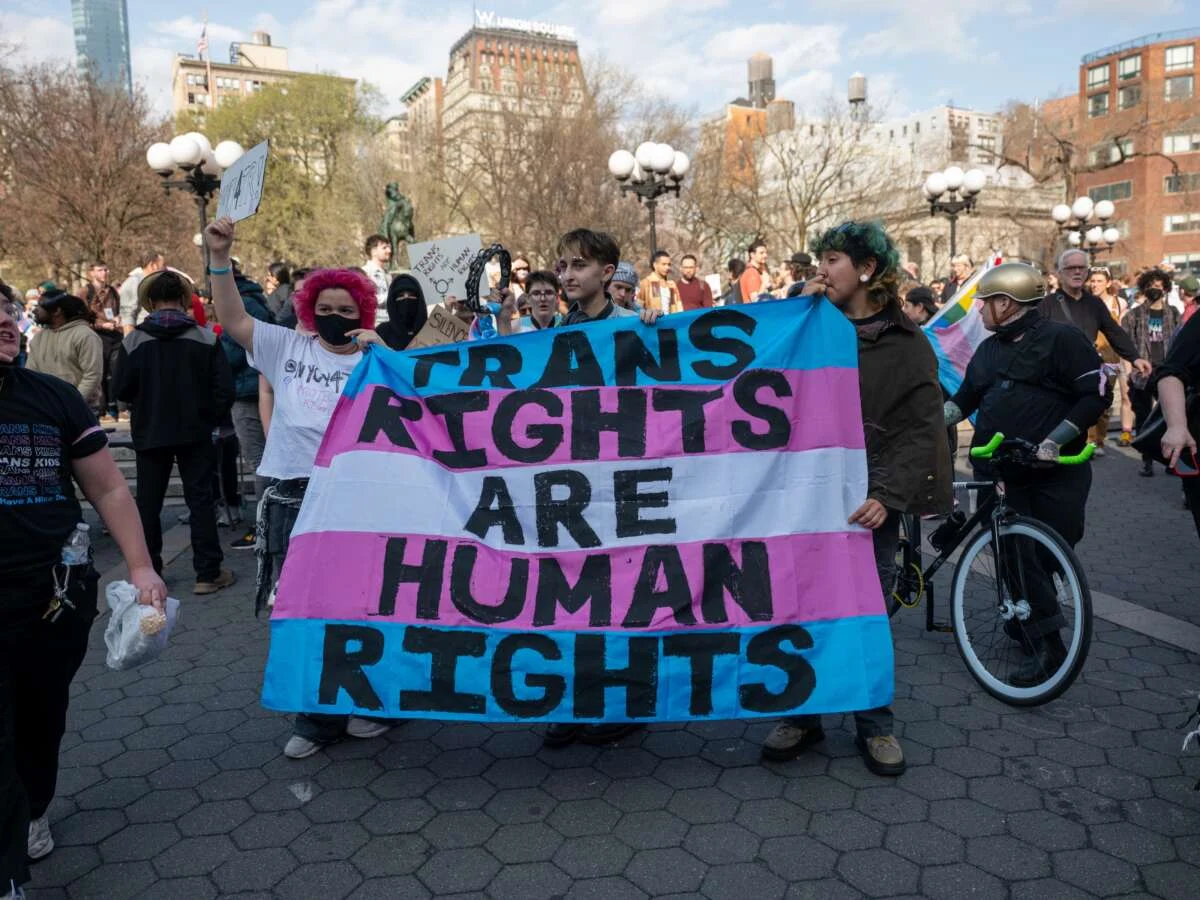
Furthermore, the dismissal of these voices has tangible, violent consequences. Whether it is the rise in maternal mortality rates among women of color, the threats against abortion clinics, or the systemic violence faced by trans individuals, the issues often labeled as "PC" are, in reality, matters of life and death. The refusal to listen to these concerns is not a defense of liberty; it is a complicit participation in the continuation of systemic harm.
Conclusion: Reframing the Conversation
It is time to discard the term "political correctness" as a useful framework for debate. It has become a hollow vessel, used primarily to insulate those with privilege from the consequences of their actions and to mock the efforts of those seeking a more equitable world.
The conversation must instead shift toward the protection of voices that have been historically silenced. We must promote a culture of inclusivity, thoughtfulness, and safety, not as a restriction on speech, but as a necessary condition for a functioning democracy. A society that prioritizes the dignity of all its citizens is not one that has "gone too far" with sensitivity; it is one that has finally begun to live up to the promise of its founding ideals. The goal is not to police language for the sake of compliance, but to foster an environment where every individual has the agency to demand the respect they are rightfully owed. By centering the experiences of the marginalized, we do not stifle debate—we expand it to include the millions of voices that were previously relegated to the margins.

 Sagoh
Sagoh
 Raul Delapena Setiawan