 Ammar Sabilarrohman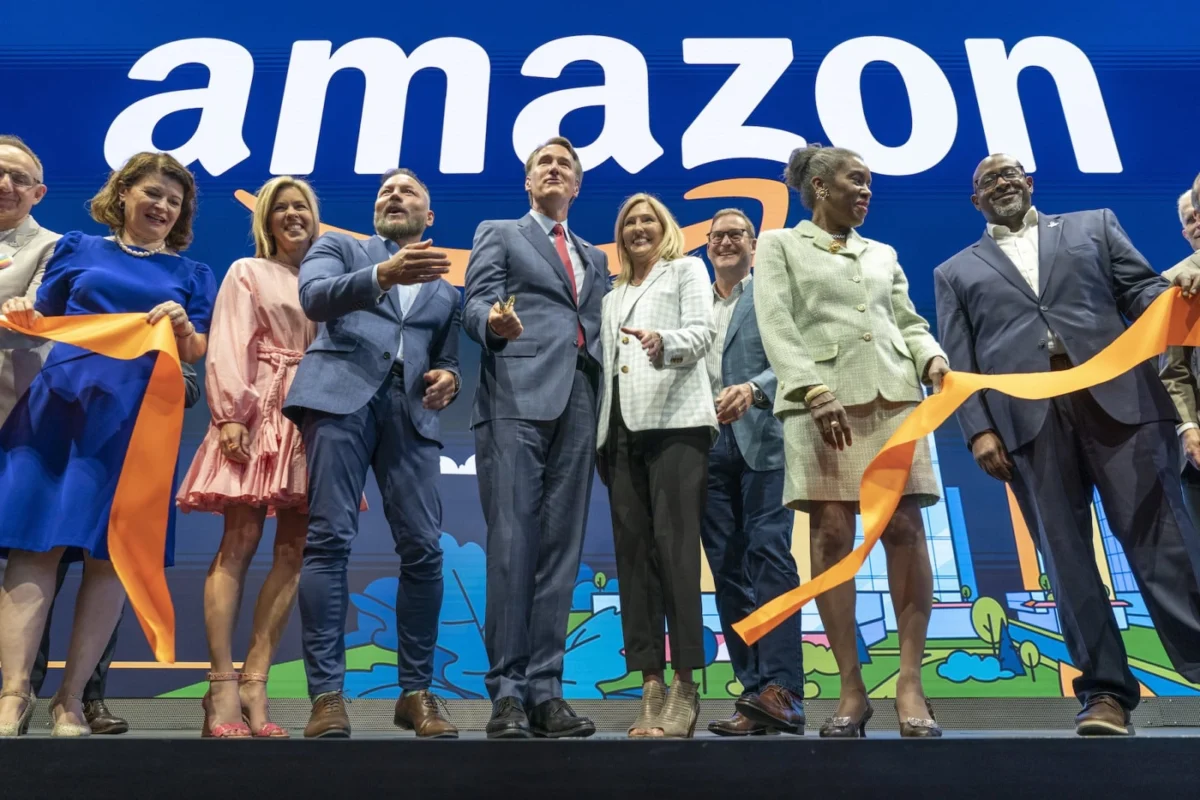
For decades, the standard playbook for American urban development has been remarkably uniform: identify a corporate titan, dangle a suite of massive tax incentives, and hope the promise of a "headquarters" generates a localized economic miracle. From the bulldozing of the South Bronx by Robert Moses in the 1950s to the glitzy ribbon-cutting ceremonies at Amazon’s HQ2 in Arlington, the underlying philosophy has remained constant: prioritize large-scale efficiency, rationalize land use, and subsidize the biggest players to secure regional prestige.
However, a growing chorus of urbanists, economists, and policymakers is now challenging this paradigm. They argue that this "attraction-retention" model has not only failed to generate broad-based prosperity but has actively eroded the very foundations of urban vitality. As New York City pivots under Mayor Zohran Mamdani toward an "economic justice" framework, the nation is watching a high-stakes experiment: Can a global city reclaim its generative capacity, or has the logic of monopoly become too entrenched to reverse?
The Historical Failure: Efficiency vs. Vitality
To understand the modern crisis of economic development, one must look back at the mid-20th-century obsession with "rationalizing" cities. Robert Moses’ construction of the Cross Bronx Expressway was the hallmark of this era, displacing 60,000 residents and severing the organic, informal economic networks that fueled local innovation.
Jane Jacobs, in her seminal work The Economy of Cities, provided the definitive critique of this approach. She argued that what planners labeled "inefficiencies"—the dense, messy, overlapping networks of small businesses, suppliers, and customers—were actually the friction required to generate new economic sectors. By forcing cities into legible, specialized zones, planners effectively eliminated the city’s "generative capacity."
The consequences are visible today. The middle of the American economy has thinned as new business formation has stagnated. According to the Economic Innovation Group, new business startups per capita fell by nearly half between 1978 and 2012. While the economy has become more efficient for stockholders and equity firms, it has become less hospitable to the small and mid-sized enterprises (SMEs) that serve as the connective tissue of a healthy local economy.
Chronology of an Economic Misstep
- 1950s–1970s: The "Urban Renewal" era. Massive infrastructure projects like the Cross Bronx Expressway prioritize automobile efficiency over neighborhood stability, destroying diverse economic ecosystems.
- 1980s–1990s: The rise of the "Attraction-Retention" model. Cities begin competing in a race to the bottom, offering billions in subsidies to lure large corporations, predicated on the false belief that high-value "white collar" intellectual property work can replace industrial manufacturing.
- 2000s–2020: The era of Mega-Incentives. State and local governments spend approximately $50 billion annually on corporate subsidies. The gap between corporate tax breaks and support for local SMEs widens into a chasm.
- 2023: Amazon’s HQ2 grand opening in Arlington marks the apex of the traditional incentive-based strategy.
- 2026: The Mamdani Administration signals a pivot in New York City, appointing Julie A. Su as the inaugural Deputy Mayor for Economic Justice and reorienting the NYC Economic Development Corporation (EDC).
The Data: The High Cost of "Big Fish" Strategies
The reliance on corporate attraction is not merely a philosophical error; it is a financial one. Recent data from the Citizens Budget Commission (CBC) highlights that New York City and State are the nation’s largest spenders on economic development, reaching $11 billion annually during the pandemic—a figure that has remained stubbornly high.
When analyzed against the returns, the data is grim. Research from the Upjohn Institute suggests that the "attraction-retention" model has a remarkably weak evidence base for long-term growth. In contrast, modeling shows that shifting resources toward customized services for locally rooted firms—such as technical assistance, workforce development, and infrastructure tied to existing industries—generates significantly higher income gains, particularly for lower-income residents.
Furthermore, place-based firms are more likely to recirculate profits within the regional economy, whereas externally owned "anchor" firms often extract earnings, limiting local spillover effects. As the 2024 McKinsey report on Generative AI notes, New York faces a massive shift: by 2030, nearly 1.1 million occupational shifts will be required in the region. Relying on a handful of large tech or finance companies to solve this transition is a precarious strategy.
The "Process Knowledge" Problem
A critical element in the decline of American innovation is the loss of "process knowledge"—a concept recently explored by Dan Wang in his book Breakneck. Process knowledge is the tacit, embodied understanding of how to manufacture and build, gained through years of iteration and failure.
When cities move production offshore or rely entirely on external suppliers, this knowledge atrophies. The stagnation of productivity in the U.S. construction industry is a primary example. While international competitors have embraced modular, factory-based building systems that allow for continuous improvement, the U.S. remains wedded to site-built projects, driving up costs and limiting the ability of local firms to scale.
By separating design from production, the U.S. has hollowed out the very sectors that once provided middle-class wages and sparked innovation. As the Wright Brothers proved, true innovation often comes from "tinkering" in a dense environment where mechanics, designers, and engineers work in proximity.
Official Responses and the Mamdani Pivot
The administration of Mayor Zohran Mamdani is currently attempting to move beyond the traditional growth-at-all-costs mandate. The appointment of Julie A. Su as Deputy Mayor for Economic Justice is the clearest signal of this intent.
"The goal is not to stop being a global economic hub, but to ensure that the machinery of our city serves the people who build it," a city official noted in internal briefings. The administration’s move to reorient the EDC is intended to treat economic development as "ecosystem management" rather than "corporate matchmaking."
However, this transition faces significant hurdles. Critics argue that the EDC must remain capable of executing massive, capital-intensive infrastructure projects—projects that require the very balance sheet and "big fish" relationships that the economic justice framework seeks to challenge. The challenge for the Mamdani team is to prove that "economic justice" and "economic growth" are not mutually exclusive, but interdependent.
Implications: A New Path for U.S. Cities?
If New York succeeds in rebalancing its economic machinery, the implications for the rest of the country would be profound. It would offer a template for cities currently trapped in the attraction-retention cycle to pivot toward:
- Prioritizing Density: Investing in the "messy" urban environments that foster small business growth.
- Supporting "New Work": Creating conditions where small firms can evolve into mid-sized powerhouses by providing shared infrastructure and technical assistance.
- Localizing Supply Chains: Encouraging place-based firms that recirculate capital and knowledge within the city.
- Addressing the AI Disruption: Focusing on workforce resilience rather than chasing transient corporate headquarters.
The era of the "big fish" strategy has left many American cities vulnerable, economically stratified, and structurally brittle. As the 2024 McKinsey findings suggest, the coming wave of AI-driven creative destruction will force a reckoning in cities that have neglected their own internal economic diversity.
Jane Jacobs famously remarked that cities have the capacity to provide something for everybody only when they are created by everybody. By shifting the focus from the corporate boardrooms of the few to the diverse, productive, and innovative ecosystems of the many, New York City is attempting to rewrite the plot of 21st-century urban development. Whether this experiment succeeds will depend on the city’s ability to maintain its global competitiveness while fostering the messy, human, and local processes that truly sustain a city’s life.

 Iffa Jayyana
 Rifan Muazin